Cycling can be one of the most effective forms of cardio for weight loss because it lets you do meaningful work without the joint impact of running. It can burn a substantial number of calories, improve fitness, and fit very different lifestyles, whether you prefer outdoor rides, a spin bike, or short indoor sessions before work.
The part that matters most is not whether cycling is “good for weight loss.” It is. The better questions are how to use it well, how indoor and outdoor riding compare, how much you need to do, and what kind of weekly plan actually helps you lose fat without burning out. This article breaks down the benefits, calories, training structure, and common mistakes so you can build a cycling plan that works in real life.
Table of Contents
- Why cycling works for weight loss
- Indoor vs outdoor cycling for fat loss
- How many calories cycling burns
- Best cycling intensity for fat loss
- 4-week cycling training plan
- How to eat and recover while cycling
- Common cycling mistakes that slow weight loss
- What results to expect from cycling
Why cycling works for weight loss
Cycling helps with weight loss for the same reason any useful exercise does: it increases energy expenditure, improves fitness, and makes it easier to stay active enough to support a calorie deficit. The advantage of cycling is that it can do that with less pounding than higher-impact cardio, which means many people can tolerate more total training time.
That matters more than people think. A workout only helps if you can recover from it and repeat it often enough to matter. Cycling tends to sit in a sweet spot between intensity and sustainability. It can be gentle enough for beginners, but it can also be hard enough to challenge experienced exercisers. That gives it range. You can use it for easy recovery rides, moderate steady sessions, hard intervals, commuting, or longer endurance work.
Cycling is especially helpful for people who:
- want a low-impact option for fat loss
- have a higher body weight and find running uncomfortable
- enjoy longer cardio sessions more than short all-out efforts
- need indoor options for weather, time, or schedule reasons
- want an activity that can improve cardiovascular fitness quickly
Another reason cycling works well is that it scales. A beginner can start with short rides of 20 to 30 minutes, while someone more advanced can accumulate a lot of weekly training volume without the same orthopedic stress they might get from high-mileage running. That makes cycling one of the more practical ways to build up total weekly cardio.
Still, cycling does not bypass the basics. It supports fat loss; it does not replace the need for a calorie deficit. Many people overestimate what a ride burned and underestimate what they eat afterward. That is why even a strong cardio habit works best when it is paired with a simple nutrition structure. If you need the bigger picture, a calorie deficit for weight loss still determines whether your body weight trends down.
There is also a body-composition point worth understanding. Cycling can help you lose weight, but if fat loss is the goal, it works best when it is not the only thing you do. Long-term results are usually better when cardio is paired with resistance training and enough protein. Cycling is excellent for energy expenditure and fitness, but it is not the best tool for preserving muscle all by itself.
What makes cycling valuable is not just calories burned during the ride. It also improves work capacity. As your aerobic fitness improves, you can do more total training, recover better between sessions, and feel less drained by everyday movement. That can make the rest of your activity plan easier to maintain too.
In short, cycling works for weight loss because it is efficient, adaptable, and repeatable. Those three qualities matter more than hype. The best exercise for fat loss is rarely the flashiest one. It is usually the one that lets you show up again tomorrow.
Indoor vs outdoor cycling for fat loss
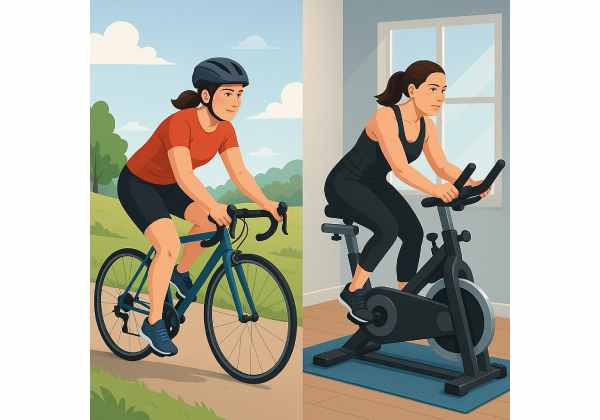
Indoor and outdoor cycling can both help with fat loss. Neither one has a built-in advantage that makes it automatically better for weight loss. The right choice usually depends on consistency, comfort, safety, and whether the format matches your schedule.
Indoor cycling is often easier to control. Resistance, cadence, intervals, and session length are straightforward. You do not lose momentum to traffic lights, weather, descents, or route logistics. That makes indoor rides especially useful for structured training. If your goal is to complete a 35-minute interval session exactly as planned, an indoor bike often makes that easier.
Outdoor cycling has different strengths. It can be more enjoyable, more mentally refreshing, and easier to stretch into longer rides without feeling trapped in one place. For many people, that improves adherence. A pleasant 75-minute outdoor ride can feel easier to repeat than 45 minutes on a stationary bike, even if the indoor ride is more controlled.
A simple comparison makes the trade-offs clearer:
| Factor | Indoor cycling | Outdoor cycling |
|---|---|---|
| Convenience | Very high | Depends on weather, route, and setup |
| Control of intensity | Excellent | More variable |
| Time efficiency | Usually better | Can be lower because of stops and setup |
| Enjoyment | Mixed, depends on preference | Often higher for many riders |
| Skill and safety demands | Low | Higher |
| Long-ride appeal | Lower for many people | Usually higher |
For fat loss, the practical rule is simple: the better option is the one you will do consistently enough to accumulate weekly volume. If that is a spin bike in your spare room, great. If it is road riding on weekends and short trainer sessions during the week, that can be even better.
Indoor cycling is often the best starting point for beginners who want structure without traffic, balance concerns, or route planning. It is also a strong option for anyone who needs predictable sessions before work or during winter. If that is your main setup, stationary bike workouts for weight loss can give you more session ideas.
Outdoor cycling tends to shine when enjoyment and lifestyle fit are the priorities. Commuting, recreational rides, and longer weekend rides can all increase your weekly activity without making exercise feel like a chore. That matters because fat loss plans fall apart when every session feels like punishment.
There is no reason to treat indoor and outdoor riding as competing camps. For many people, the strongest setup is hybrid:
- indoor rides for intervals and time-efficient weekday training
- outdoor rides for longer endurance work and enjoyment
- optional extra low-intensity movement on non-cycling days
That mix gives you the control of indoor cycling and the adherence benefit of outdoor riding. From a weight-loss standpoint, that combination is hard to beat.
How many calories cycling burns
Cycling can burn a meaningful number of calories, but the exact total depends on body size, effort, terrain, wind, fitness level, and ride duration. The main mistake people make is asking for one universal number. There is no single correct calorie count for “a cycling workout.”
In general, calorie burn rises with three things:
- higher body mass
- higher intensity
- longer duration
That means a lighter rider doing an easy 30-minute spin may burn a modest amount, while a heavier rider doing a hard 60-minute session may burn a lot more. It also means that long moderate rides can compete very well with shorter harder rides simply because total time adds up.
A practical estimate for adults looks like this:
| Ride type | 30 minutes | 45 minutes | 60 minutes |
|---|---|---|---|
| Easy recovery ride | 150 to 250 | 225 to 375 | 300 to 500 |
| Moderate steady ride | 220 to 350 | 330 to 525 | 440 to 700 |
| Hard interval or vigorous ride | 300 to 450 | 450 to 675 | 600 to 900 |
These are broad estimates, not guaranteed outputs. Bike computers, gym bikes, and apps often exaggerate calorie burn, sometimes by a lot. Treat those numbers as rough guidance, not as permission slips to eat back everything the machine claims.
What matters more than the display is the pattern. If cycling lets you add 200 to 500 calories of expenditure several times per week, that can support fat loss meaningfully over time. It does not need to be perfect to matter.
Another useful point: cycling can be more comfortable than some other cardio at higher body weights, which means people often tolerate longer sessions. That matters because total work done across the week is often more important than how dramatic a single workout looks. A plan that includes three moderate 45-minute rides and one longer weekend session can create a serious weekly calorie contribution without feeling extreme.
At the same time, more calories burned in training does not automatically mean better fat loss. Some people unconsciously compensate by moving less later in the day or eating more because they feel they earned it. That is one reason people sometimes say cardio “stopped working” when the real issue is compensation. If that sounds familiar, exercise compensation and daily fat loss is often the hidden factor.
The most useful way to view cycling calories is this: they are helpful, but they are only one part of the system. Calories burned on the bike can widen your margin for error, make the deficit easier to maintain, and help you keep food intake less restrictive. That is a major advantage. It just works best when paired with realistic expectations and stable eating habits.
Best cycling intensity for fat loss
The best cycling intensity for fat loss is not always the hardest ride you can survive. It is the intensity mix that you can recover from, repeat consistently, and pair with good nutrition and adequate recovery.
For most people, the strongest setup includes mostly moderate riding, some easy riding, and a smaller amount of hard interval work. That balance works better than trying to turn every ride into a max-effort session.
You can think of cycling intensity in three useful buckets:
- Easy: very conversational, low strain, used for recovery, habit-building, and extra calorie burn
- Moderate steady: breathing is deeper but controlled, you can still speak in short sentences, good for longer rides and foundational fitness
- Hard intervals: uncomfortable and focused, used in brief doses to improve fitness and create time-efficient workload
Easy and moderate rides often do more of the heavy lifting for fat loss than people expect. They are easier to recover from, easier to accumulate over the week, and less likely to spike hunger in some people. That makes them very effective for building volume. Harder intervals are useful too, but more is not always better. They are best treated like seasoning, not the whole meal.
A practical weekly intensity balance for many riders looks like this:
- 1 harder interval session
- 2 to 3 moderate rides
- 1 optional easy recovery ride or long low-intensity ride
This is one place where people get seduced by the idea of “fat-burning zones” and assume there must be one perfect heart rate for body fat loss. In reality, total energy expenditure, consistency, and adherence matter far more than chasing one ideal number. Moderate-intensity riding is often a strong default because it is hard enough to improve fitness while still being sustainable. If you like structured pacing, Zone 2 cardio for weight loss can be especially useful for steady rides.
Intervals have a clear role, especially when time is tight. A 25- to 35-minute indoor session with repeated hard efforts can deliver strong training stimulus in less time than a long steady ride. But interval work also creates more fatigue. Too much can backfire by making your legs heavy, reducing motivation, and increasing the urge to skip sessions.
A good rule is to earn intensity with consistency. If you are not yet riding regularly, build frequency first. Once you are handling 3 or 4 weekly rides well, then add structured harder work.
For beginners, a very solid starting approach is:
- Start with mostly easy to moderate rides.
- Build total weekly minutes for 2 to 3 weeks.
- Add one interval session only after steady riding feels manageable.
- Keep at least one truly easy day in the week.
That keeps the plan challenging without making it fragile.
If your schedule is hectic, intensity can also rotate with your week. A harder indoor ride midweek, a steady ride on another day, and a longer relaxed weekend ride often works better than trying to hit the same type of session over and over. Fat loss usually improves when training feels organized, not random.
4-week cycling training plan
This plan is designed for beginners or people returning to regular exercise who want to use cycling for weight loss. It combines indoor and outdoor options so you can adapt it to your setup. The plan assumes 3 to 4 rides per week, plus general daily movement.
Before each ride, spend 5 minutes building gradually from very easy pedaling to your working pace. After each ride, cool down for a few minutes and get off the bike before your legs turn to stone.
| Week | Ride 1 | Ride 2 | Ride 3 | Optional ride |
|---|---|---|---|---|
| 1 | 25 to 30 min easy to moderate | 30 min moderate steady | 35 min easy | 20 min recovery spin or walk |
| 2 | 30 min with 4 x 1 min harder efforts | 35 min moderate steady | 40 min easy to moderate | 20 to 25 min recovery spin |
| 3 | 35 min with 5 x 2 min hard efforts | 40 min moderate steady | 45 to 50 min easy to moderate | 25 min easy |
| 4 | 30 min lighter week, mostly easy | 35 min moderate steady | 40 min with 4 x 2 min hard efforts | Optional long easy ride 45 min |
How to use it:
- Ride 1 is your more structured workout.
- Ride 2 builds steady aerobic fitness.
- Ride 3 adds volume without excessive strain.
- Optional ride is only for weeks when you feel good.
If you ride indoors, use resistance and cadence to control effort. During hard efforts, you should feel like you are working but not sprinting blindly. During recovery, the legs should settle down enough that you could continue the workout. If you ride outdoors, use landmarks, short hills, or timed efforts rather than obsessing over speed. Wind, traffic, and terrain can distort pace.
A few important adjustments make this plan work better:
- If you are very new, stay with Week 1 for two weeks.
- If your legs feel constantly heavy, drop the optional ride first.
- If you have knee or saddle discomfort, reduce duration before increasing resistance.
- If fat loss is your main goal, focus on completing the plan rather than chasing bigger numbers every ride.
You can also combine this plan with two brief strength sessions each week to better preserve muscle and improve body composition. That is often more effective than adding endless extra cardio. If you want a broader weekly structure, a weekly workout schedule for weight loss can help you fit cycling around the rest of your training.
After four weeks, the next step is not to double everything. Instead, make one upgrade at a time:
- add 5 to 10 minutes to one steady ride
- add one extra interval to the harder session
- add one easier fourth ride
- improve consistency before adding intensity
That slower progression is usually what keeps people moving forward without flaming out.
How to eat and recover while cycling
Cycling supports fat loss best when your nutrition and recovery choices match your training. The goal is not to fuel like a Tour de France rider for a 35-minute home session, but it is also not to under-eat so badly that you become ravenous later and undo the deficit at night.
For most weight-loss-focused riders, the biggest priorities are:
- enough protein to help preserve muscle
- enough total food to avoid rebound overeating
- enough hydration to keep rides feeling normal
- enough recovery that you can repeat quality sessions
Protein matters because cycling alone is not very protective of lean mass during weight loss. If you are dieting and doing lots of cardio with too little protein, you raise the chance of becoming lighter but softer and weaker. A solid daily protein target can make a big difference. If you need help setting it up, protein intake for weight loss is often the first nutrition issue to fix.
Pre-ride eating depends on session length and intensity. For shorter easy rides, you may not need much. For longer or harder rides, a light meal or snack 1 to 3 hours before can help performance and reduce the chance of overeating later. That could be yogurt and fruit, toast with eggs, or oatmeal with protein.
After the ride, you do not need a giant “reward meal,” but you also should not ignore hunger and then crash later. A balanced meal with protein, fiber, and a moderate amount of carbs is usually the best move. This is especially true after harder interval sessions or longer outdoor rides. Post-workout meals for weight loss are most useful when they help recovery without turning into a calorie free-for-all.
Recovery also matters more than many cyclists admit. When weight loss is the goal, it is tempting to push volume higher and higher. But poor recovery can lead to worse rides, more soreness, less daily movement, and stronger food cravings. Signs your cycling plan may be outpacing recovery include:
- heavy legs for days
- falling performance at the same effort
- irritability or low motivation
- unusually strong hunger after rides
- poor sleep
- nagging knee, hip, or saddle discomfort
Hydration is another easy win. Mild dehydration can make a moderate ride feel much harder than it should, especially indoors where sweating is heavy and airflow is poor. Water is enough for many shorter sessions. Longer or hotter rides may need more fluid and, in some cases, electrolytes.
The final recovery piece is sleep. Better sleep improves training quality, appetite regulation, and consistency. That matters because weight loss is not just a math problem. It is a behavior problem too. A good cycling plan works much better when you are not trying to execute it while exhausted.
Common cycling mistakes that slow weight loss
Cycling is effective, but people still make predictable mistakes that reduce the payoff. Usually the issue is not that the bike “stopped working.” It is that the overall system around it broke down.
The most common mistakes include:
1. Overestimating calories burned
This is the classic problem. Machines, apps, and watches often produce flattering numbers. If you eat back everything a screen tells you that you burned, your deficit can disappear quickly.
2. Riding hard all the time
Many people think every ride has to leave them drenched and destroyed. In practice, too much hard riding often leads to fatigue, skipped sessions, and more hunger. Most weekly progress comes from repeatable work, not heroic suffering.
3. Ignoring resistance training
Cycling is great cardio, but it does not replace lifting if your goal is better body composition. Adding strength work helps preserve muscle, improve power, and reduce the risk of ending up lighter but weaker. Readers pairing cardio with lifting often benefit from understanding how to combine cardio and weights effectively.
4. Treating weekend rides like a license to overeat
Longer outdoor rides can create a strong “I earned this” mindset. Sometimes that turns a good training day into a net calorie surplus.
5. Using poor bike setup
A bad saddle height, poor reach, or uncomfortable indoor setup can turn a sustainable plan into an injury or consistency problem. Discomfort is not always a willpower issue. Sometimes the bike fit is just poor.
6. Depending on cycling alone
Cycling can help a lot, but if your daily activity outside rides is very low, you may be missing a big opportunity. General movement still matters. Walking, standing more, and keeping non-exercise movement up can help prevent the drop in activity that sometimes happens when people start formal workouts.
7. Progressing too quickly
Longer rides, more intervals, and more weekly sessions all at once is usually a recipe for burnout. Build one variable at a time.
Another mistake is psychological: comparing your plan to athletes. A lot of cycling content online is aimed at people chasing performance, not fat loss. That is a different goal. A weight-loss rider does not need every ride to be optimized for race output. The priority is sustainable weekly workload, not pretending you are in a training camp.
A better checklist is simple:
- Are you riding consistently?
- Is your food intake aligned with your goal?
- Are you recovering well?
- Are you adding some strength work?
- Is your weekly plan realistic enough to repeat?
If the answer to most of those is yes, your plan is probably stronger than you think.
What results to expect from cycling
Cycling can absolutely help you lose weight, but the results are usually more gradual and more behavior-dependent than people expect. The best outcomes come when cycling increases total weekly activity enough to support a consistent calorie deficit, rather than when it is used as a short burst of motivation for two weeks.
If you are starting from a low fitness level and low activity baseline, results can come from relatively modest riding. Three or four rides per week may improve stamina, help your mood, raise daily energy expenditure, and start moving the scale. If you are already fairly active, cycling may still help, but the effect can be smaller unless it meaningfully changes your weekly workload or replaces a less effective routine.
Realistic short-term changes often include:
- better cardiovascular fitness in 2 to 4 weeks
- easier breathing at a given effort
- improved tolerance for longer rides
- modest weight loss if food intake supports it
- better leg endurance and overall activity confidence
Visible fat loss usually depends less on one spectacular ride and more on what happens over 8 to 16 weeks of consistent training. That is why expectation management matters. Cycling can create very real changes, but it usually works best as a repeatable weekly habit rather than a quick fix.
A reasonable expectation for many people is that cycling helps create a moderate rate of fat loss, especially when paired with sensible nutrition and some strength work. It can also be a powerful maintenance tool. Many people find that even after the initial weight-loss phase, regular riding makes it much easier to keep results because it provides a reliable way to keep energy expenditure up.
Cycling may not be enough on its own if:
- your eating pattern is highly inconsistent
- you compensate by eating more after rides
- your total weekly volume is low
- you rely only on short intense sessions and skip the easier consistent work
- you are losing weight but not preserving muscle well
That does not mean the bike is the problem. It usually means the plan around it needs adjustment.
The most helpful mindset is to treat cycling as a lever. It can make fat loss easier, improve health, and increase the number of calories you can eat while still progressing. That is valuable. But it works best when you stop asking it to do everything alone.
If you build a plan around repeatable rides, realistic nutrition, and gradual progression, cycling can be one of the best long-term cardio choices for weight loss. It is accessible, adaptable, and easier on the body than many people expect. Those advantages are exactly why it tends to stay useful long after the early motivation fades.
References
- WHO guidelines on physical activity and sedentary behaviour 2020 (Guideline)
- 2024 Adult Compendium of Physical Activities: A third update of the energy costs of human activities 2024 (Review)
- Aerobic Exercise and Weight Loss in Adults 2024 (Systematic Review)
- Obesity Management in Adults: A Review 2023 (Review)
- Health Benefits of Indoor Cycling: A Systematic Review 2019 (Systematic Review)
Disclaimer
This article is for general educational purposes only and is not a substitute for medical advice, diagnosis, or treatment. If you have joint pain, heart or lung symptoms, balance issues, or a medical condition that affects exercise tolerance, speak with a qualified health professional before starting or significantly increasing cycling training.
If this article helped you, please share it on Facebook, X, or your preferred platform so more people can build a smarter cycling plan for weight loss.