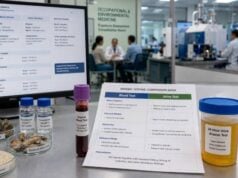
An ethylene glycol blood test measures the amount of ethylene glycol in the bloodstream after possible exposure to antifreeze, radiator coolant, de-icing fluid, or certain industrial products. Ethylene glycol itself can cause drunkenness-like symptoms, but the serious danger comes after the body breaks it down into acids that can damage the kidneys, disturb calcium balance, and cause severe metabolic acidosis. A normal or undetectable result is reassuring only when the timing fits the exposure history and other labs are stable. A high or rising concern pattern needs urgent care, even before the confirmatory blood level returns. Because many hospitals must send this test to a reference laboratory, doctors often act on the whole picture: osmolal gap, anion gap, bicarbonate, pH, creatinine, urine crystals, symptoms, and whether ethanol or fomepizole has slowed metabolism.
- The ethylene glycol blood test measures antifreeze alcohol in serum or plasma, usually reported in mg/dL.
- A normal result is generally undetectable, but early or delayed testing can be misleading without acid-base and kidney labs.
- Levels around 20–25 mg/dL or higher may trigger antidote treatment in many conservative protocols, especially when exposure is likely.
- Kidney risk rises when ethylene glycol is metabolized into glycolic and oxalic acids, which can cause acidosis and calcium oxalate crystal injury.
- Urgent care is needed after a known or suspected ingestion, even if the person looks only mildly intoxicated at first.
Table of Contents
- What the Ethylene Glycol Blood Test Measures
- When Testing Is Needed
- Normal, Toxic, and Dangerous Results
- Osmolal Gap, Anion Gap, and Supporting Labs
- Kidney Risk and Symptom Timeline
- Treatment Monitoring and Repeat Testing
- Limitations and Common Misunderstandings
What the Ethylene Glycol Blood Test Measures
The ethylene glycol blood test measures the parent alcohol ethylene glycol, a clear, sweet-tasting chemical found in many antifreeze and coolant products. It may also be present in some de-icing products, solvents, brake fluids, and industrial materials. The test is usually performed on blood serum or plasma and reported in milligrams per deciliter, written as mg/dL.
This is a toxic alcohol test. It is not the same as a routine alcohol test for ethanol, and it is not included in a standard blood chemistry panel. In many hospitals, ethylene glycol is measured by gas chromatography or a similar specialized method. That makes the result more specific than indirect screening clues, but it also means the result may not be available quickly.
The parent compound is important, but it does not tell the whole story. Ethylene glycol becomes dangerous when alcohol dehydrogenase, an enzyme in the liver and stomach lining, begins converting it into toxic metabolites. Glycolic acid is a major driver of the high anion gap metabolic acidosis. Oxalic acid can bind calcium and form calcium oxalate crystals, which can injure kidney tubules.
That is why a person can have serious poisoning even when the blood ethylene glycol level is already falling. A falling level may mean the body is clearing the chemical, but it may also mean the chemical has already been metabolized into the acids that cause organ damage.
The test is often ordered with a broader toxic alcohol panel when the history is unclear or when doctors also need to consider methanol, isopropanol, or ethanol. It is also commonly interpreted alongside electrolytes, kidney markers, blood gas results, and serum osmolality.
Ethylene glycol versus its toxic metabolites
Ethylene glycol is the measurable starting chemical. Glycolic acid, glyoxylic acid, and oxalic acid are downstream products. Most routine hospital laboratories do not directly measure these metabolites quickly, so clinicians infer their effect from changes in bicarbonate, blood pH, anion gap, calcium, creatinine, and urine microscopy.
This distinction explains a common emergency pattern: early after ingestion, the ethylene glycol level and osmolal gap may be high while the anion gap is still normal. Hours later, the osmolal gap may fall while the anion gap and acidosis worsen. Both phases can be dangerous.
When Testing Is Needed
Ethylene glycol testing is needed when there is a known ingestion, a strong suspicion of exposure, or an unexplained lab pattern that looks like toxic alcohol poisoning. The test is urgent because treatment works best when started before a large amount of toxic acid has formed.
A clinician may order the test when a person has:
- Possible antifreeze, coolant, or de-icing fluid ingestion
- Unexplained drunkenness without a matching ethanol level
- Vomiting, abdominal pain, confusion, sleepiness, seizures, or coma after a possible exposure
- High osmolal gap, high anion gap metabolic acidosis, or low bicarbonate
- New kidney injury after an unexplained intoxication-like illness
- Calcium oxalate crystals in urine
- Low calcium, QT interval changes, or severe acid-base disturbance
Testing is also important when the history is unreliable. A person may be too confused to explain what happened. A container may be missing. Exposure may be intentional, accidental, or mixed with alcohol or other drugs. Children and pets may ingest products because ethylene glycol can taste sweet, although the presence of bittering agents does not guarantee safety.
When self-harm is possible, clinicians usually check for other dangerous ingestions at the same time. Acetaminophen, salicylates, ethanol, methanol, and other drugs may need separate testing because they can change symptoms, acid-base results, and treatment choices. A broad toxicology blood test panel may be used when the exposure is unknown.
Why doctors may treat before the result returns
A confirmatory ethylene glycol result can take hours or longer if the sample must be sent out. Waiting can be unsafe when the history and labs strongly suggest poisoning. Fomepizole can stop further metabolism while the team confirms the diagnosis, monitors the acid-base pattern, and decides whether dialysis is needed.
This does not mean every possible sip requires aggressive treatment. Small, witnessed, accidental exposures may be assessed with dose estimates, serial labs, poison center guidance, and observation. But a suspected significant ingestion is handled as an emergency because early symptoms can look deceptively mild.
Normal, Toxic, and Dangerous Results
A normal ethylene glycol blood test is usually undetectable. There is no nutritional, therapeutic, or “optimal” ethylene glycol level. Any confirmed level should be interpreted in context, especially if symptoms, acidosis, kidney injury, or a credible exposure history is present.
Many references use conservative treatment thresholds around 20–25 mg/dL. Some clinical discussions use higher thresholds, such as about 62 mg/dL, when there is no acidosis, no kidney injury, and careful specialist interpretation supports that approach. In real emergencies, the number alone is not enough. A lower level can still be serious if metabolism has already produced acid, and a higher level may be less immediately damaging if fomepizole or ethanol has blocked metabolism early.
| Result pattern | Possible meaning | Why context matters |
|---|---|---|
| Undetectable | No measurable ethylene glycol in the sample | Usually reassuring if timing is reliable and bicarbonate, anion gap, pH, and kidney markers are stable |
| Detectable but low | Exposure may have occurred, or the level may be falling after time has passed | Doctors look for acidosis, kidney injury, symptoms, and whether treatment has already started |
| About 20–25 mg/dL or higher | Often treated as clinically important in conservative protocols | Antidote decisions depend on timing, symptoms, acid-base status, kidney function, and toxicology guidance |
| High level with normal bicarbonate and creatinine | May be early poisoning before toxic metabolites accumulate | Early fomepizole can prevent worsening; serial labs are still needed |
| Lower or falling level with severe acidosis | Ethylene glycol may already have been converted into toxic acids | This can be more dangerous than the parent level suggests and may require dialysis |
A single result also depends on the timing of the blood draw. Ethylene glycol is absorbed fairly quickly after ingestion. If the sample is collected early, the parent level may be high and the acid level may not yet be obvious. If the sample is collected late, the parent level may be lower while glycolic acid and oxalate-related injury are already causing serious illness.
Ethanol also changes interpretation. Ethanol competes for alcohol dehydrogenase and can delay ethylene glycol metabolism. A person who drank alcohol at the same time may have a persistent osmolal gap and less acidosis early on, then worsen later as ethanol clears.
Why “toxic level” is not one fixed number
People often look for one toxic cutoff. In practice, clinicians treat the patient and the pattern, not just the number. A level above a treatment threshold may call for fomepizole even before symptoms become severe. A level below a threshold may still require urgent attention if the person has high anion gap acidosis, low bicarbonate, kidney injury, or a convincing exposure.
The most dangerous result is not simply the highest ethylene glycol number. The more dangerous pattern is ethylene glycol exposure plus worsening acidosis, falling bicarbonate, rising creatinine, abnormal mental status, seizures, or electrolyte problems.
Osmolal Gap, Anion Gap, and Supporting Labs
Ethylene glycol poisoning is often recognized by combining the direct blood test with supporting labs. These indirect labs may be available faster than the ethylene glycol level, and they help show whether the poison is still mostly in parent form or has already become toxic acid.
The osmolal gap estimates the difference between measured serum osmolality and calculated osmolality. Ethylene glycol is osmotically active, so it can raise the osmolal gap early. As it is metabolized, the osmolal gap may fall.
The anion gap rises when unmeasured acids accumulate. In ethylene glycol poisoning, glycolic acid is a major reason for high anion gap metabolic acidosis. A high anion gap pattern may overlap with diabetic ketoacidosis, alcoholic ketoacidosis, lactic acidosis, kidney failure, salicylate toxicity, and other poisonings. Articles on anion gap and bicarbonate patterns can help explain why these markers are interpreted together.
Supporting tests often include:
- Basic metabolic panel or comprehensive metabolic panel
- Sodium, chloride, bicarbonate, glucose, BUN, and creatinine
- Measured serum osmolality
- Blood gas for pH and acid-base severity
- Ethanol level
- Methanol and isopropanol levels when available
- Salicylate and acetaminophen levels when overdose is possible
- Urinalysis and urine microscopy for calcium oxalate crystals
- Calcium, magnesium, and sometimes lactate
- Electrocardiogram if calcium disturbance or severe illness is present
A basic metabolic panel is especially useful because it gives bicarbonate, creatinine, and several electrolytes that help track the course of poisoning. A low bicarbonate result can signal metabolic acidosis, while rising creatinine suggests kidney stress or injury.
Osmolal gap can help, but it cannot rule poisoning out
A high osmolal gap supports possible toxic alcohol exposure, but it is not specific. Ethanol, methanol, isopropanol, propylene glycol, mannitol, ketoacidosis, kidney failure, and other conditions can also affect osmolality.
A normal osmolal gap does not rule out ethylene glycol poisoning. The gap may be normal if the person presents late, if much of the parent alcohol has already been metabolized, or if the baseline osmolal gap was not known. This is one reason clinicians do not rely on osmolal gap alone.
Anion gap may rise as the osmolal gap falls
The classic teaching pattern is an inverse shift: the osmolal gap is higher early, then falls as the anion gap rises. This happens because the parent alcohol contributes to osmolality, while the metabolites contribute to acidosis.
That pattern is helpful, but real cases vary. Co-ingested ethanol can delay the rise in anion gap. Early medical treatment can stop the pattern from progressing. Kidney disease, dehydration, ketoacidosis, lactic acidosis, and other ingestions can blur the picture.
Kidney Risk and Symptom Timeline
Ethylene glycol poisoning can progress through phases, although not every person follows the timeline neatly. Timing depends on the dose, stomach contents, co-ingested ethanol, treatment, kidney function, and when the person reaches care.
Early symptoms often resemble alcohol intoxication. The person may appear drunk, dizzy, sleepy, unsteady, nauseated, or confused. Vomiting and abdominal discomfort may occur. At this stage, the ethylene glycol level and osmolal gap may be high, while acidosis may still be mild or absent.
After several hours, toxic metabolites can build up. Glycolic acid drives metabolic acidosis. Breathing may become deep or rapid as the body tries to compensate. The person may become more confused, weak, agitated, or critically ill. Seizures and coma can occur in severe cases.
Kidney injury often becomes a major concern later. Oxalic acid binds calcium and can form calcium oxalate crystals that deposit in kidney tubules. This can cause flank pain, reduced urine output, rising creatinine, blood or crystals in the urine, and acute kidney injury. A rising creatinine blood test after suspected toxic alcohol exposure is a serious warning sign.
| Approximate timing | Common pattern | Tests that may change |
|---|---|---|
| First few hours | Drunkenness-like symptoms, nausea, vomiting, dizziness, sleepiness | Ethylene glycol level and osmolal gap may be elevated; anion gap may still be normal |
| Several hours later | Worsening metabolic acidosis, rapid breathing, confusion, severe illness | Bicarbonate and pH may fall; anion gap may rise |
| Later course | Kidney injury, reduced urine output, electrolyte problems, calcium oxalate crystals | Creatinine may rise; calcium may fall; urine findings may appear |
Kidney injury can be reversible with prompt treatment, but delayed diagnosis can lead to dialysis, prolonged recovery, or death. Some survivors need nephrology follow-up after discharge, especially if creatinine remains high or urine output was reduced.
Why calcium and urine crystals matter
Calcium oxalate crystals in urine can support the diagnosis, especially when paired with high anion gap acidosis and suspected exposure. However, crystals may be absent early, missed on microscopy, or appear after damage is already underway. Their absence does not rule out poisoning.
Low calcium can occur because oxalate binds calcium. Severe hypocalcemia may contribute to muscle spasms, seizures, QT prolongation, or heart rhythm problems. Calcium replacement is handled carefully because extra calcium may theoretically add to calcium oxalate precipitation unless there are symptoms or dangerous ECG changes.
Treatment Monitoring and Repeat Testing
Treatment decisions are made urgently and usually involve emergency medicine, medical toxicology, nephrology, and sometimes critical care. The main treatment goals are to stop further toxic metabolism, correct dangerous acidosis and electrolyte problems, protect kidney function, and remove ethylene glycol or metabolites when needed.
Fomepizole is commonly preferred because it directly inhibits alcohol dehydrogenase, is easier to dose than ethanol, and does not intentionally intoxicate the patient. Ethanol can also inhibit alcohol dehydrogenase and may be used when fomepizole is unavailable, but it requires close monitoring and careful dosing.
Hemodialysis may be used when poisoning is severe. Dialysis can remove ethylene glycol and glycolate while also correcting severe acidosis and supporting kidney failure. It is more likely to be considered when there is severe metabolic acidosis, kidney dysfunction, major electrolyte disturbance, very high levels, or clinical deterioration despite antidote therapy.
Repeat testing may include:
- Serial bicarbonate and anion gap
- Blood pH and lactate pattern
- Creatinine, BUN, and urine output
- Ethylene glycol levels when available
- Ethanol level if ethanol therapy or co-ingestion is involved
- Calcium and other electrolytes
- Urinalysis findings
- Drug levels for other suspected ingestions
The ethylene glycol level is often followed until it falls below the treatment target used by the clinical team and the acid-base status has normalized. Different protocols use different stopping points, so the number is interpreted with the patient’s clinical recovery.
Fomepizole changes the lab timeline
After fomepizole is given, ethylene glycol metabolism slows dramatically. This can keep the parent ethylene glycol level detectable for longer, but that is often the point: it prevents conversion into the acids that cause the worst damage. A persistent ethylene glycol level after fomepizole is not automatically a sign that treatment is failing. The team looks for improving bicarbonate, pH, anion gap, symptoms, and kidney markers.
During hemodialysis, fomepizole dosing must be adjusted because dialysis can remove the medication. This is one reason treatment is managed with specialist input rather than by a single lab number.
How doctors decide when the danger is passing
The danger is usually decreasing when the person is clinically stable, mental status is improving, bicarbonate and pH are normalizing, the anion gap is closing, creatinine is stable or improving, urine output is adequate, and the ethylene glycol level has fallen to a safe stopping range for that protocol.
A patient may still need observation after the ethylene glycol level improves. Kidney injury can lag behind the parent alcohol level. Discharge decisions depend on the full course, not one normal-looking result.
Limitations and Common Misunderstandings
The biggest limitation of the ethylene glycol blood test is timing. A level drawn too early may not show the later acid burden. A level drawn late may be lower because metabolism has already occurred. A level drawn after fomepizole or ethanol may remain detectable longer because metabolism has been blocked. None of these situations can be understood without the accompanying labs and treatment timeline.
Another limitation is availability. Many hospitals cannot perform rapid ethylene glycol testing onsite. When results are delayed, clinicians use the exposure history, osmolal gap, anion gap, bicarbonate, pH, creatinine, urine findings, and response to treatment to guide care.
A third limitation is false reassurance from indirect markers. Normal osmolal gap, normal urine microscopy, or lack of early symptoms does not safely exclude poisoning. Early ethylene glycol poisoning can look like ordinary intoxication. Late poisoning can look like unexplained kidney failure or metabolic acidosis.
Common misunderstandings include:
- “No symptoms means no poisoning.” Early symptoms can be mild, delayed, or masked by ethanol or other sedatives.
- “A normal osmolal gap rules it out.” It does not, especially later in the course.
- “A low ethylene glycol level is always safe.” It may be unsafe if toxic metabolites have already formed.
- “Urine crystals must be present.” They can support the diagnosis but may be absent.
- “Antifreeze poisoning only affects kidneys.” It can also affect the brain, acid-base balance, calcium level, lungs, heart rhythm, and circulation.
- “Activated charcoal fixes it.” Activated charcoal does not reliably bind ethylene glycol and is not the main treatment unless another poison was also ingested.
Because ethylene glycol poisoning overlaps with other causes of metabolic acidosis, clinicians often compare it with methanol, salicylate poisoning, ketoacidosis, lactic acidosis, kidney failure, and severe dehydration. A related methanol blood test may be ordered when the exposure is unknown, especially because methanol has different organ risks, including vision injury.
A careful follow-up plan may include repeat kidney testing after discharge. If creatinine rose during the illness, doctors may recheck kidney function, electrolytes, urinalysis, and blood pressure. Persistent kidney abnormalities should be followed by a clinician, and severe cases may need nephrology care.
What to do after possible exposure
Known or suspected ethylene glycol ingestion needs immediate medical advice. Do not wait for symptoms, do not try to “sleep it off,” and do not drink alcohol as a home antidote. Ethanol treatment, when used, is a controlled hospital therapy with monitoring.
Bring the product container if it can be done safely. The label may help identify concentration, co-ingredients, and whether the product contains ethylene glycol, propylene glycol, methanol, or another substance. If the exposure was intentional or self-harm is possible, urgent medical and mental health support are both part of safe care.
References
- Ethylene Glycol Toxicity 2022 (Review)
- Toxic Alcohols 2018 (Review)
- Antidotes for poisoning by alcohols that form toxic metabolites 2016 (Review)
- Toxic alcohol diagnosis and management: an emergency medicine review 2018 (Review)
- Fomepizole for ethylene glycol and methanol poisoning 2009 (Review)
- CDC – NIOSH Pocket Guide to Chemical Hazards – Ethylene glycol 2019 (Official Resource)
Disclaimer
Ethylene glycol exposure can be life-threatening and requires urgent medical evaluation. This article is for general education about blood testing and related lab interpretation, not for diagnosing or treating poisoning at home. If ingestion is known or suspected, contact emergency services or a poison center immediately.