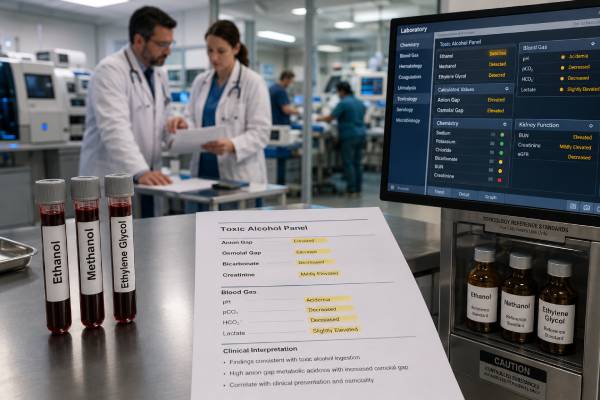
Blood alcohol and toxic alcohol panels help identify alcohols that can cause intoxication, acidosis, organ injury, or death. The word “alcohol” can be misleading because ethanol, methanol, ethylene glycol, and isopropanol behave very differently in the body. Ethanol is the alcohol found in beer, wine, and spirits. Methanol can damage the optic nerve and cause blindness. Ethylene glycol can injure the kidneys. Isopropanol can cause deep intoxication and ketosis but usually does not cause the same high anion gap acidosis pattern.
These tests are often ordered in emergency settings when someone has unexplained confusion, coma, severe metabolic acidosis, an elevated osmolal gap, suspected antifreeze or windshield washer fluid ingestion, or intoxication that does not match the story. Results are interpreted with timing, symptoms, electrolytes, acid-base markers, kidney function, and sometimes serial levels, not as isolated numbers.
- A toxic alcohol panel may measure ethanol, methanol, ethylene glycol, and isopropanol, but availability and turnaround time vary widely.
- A high osmolal gap can appear early after toxic alcohol ingestion, while a high anion gap acidosis often appears later as toxic metabolites accumulate.
- Methanol mainly threatens vision and the brain because it is metabolized to formic acid.
- Ethylene glycol mainly threatens the kidneys because it is metabolized to glycolic and oxalic acids.
- Ethanol in the blood can delay methanol or ethylene glycol toxicity by competing for alcohol dehydrogenase.
- Suspected methanol or ethylene glycol poisoning is urgent even before confirmatory levels return.
Table of Contents
- What a Toxic Alcohol Panel Measures
- How Results Change Over Time
- Ethanol, Methanol, Ethylene Glycol, and Isopropanol Patterns
- Osmolal Gap, Anion Gap, and Acid-Base Clues
- Toxic Levels and Urgent Treatment Thresholds
- Common Pitfalls in Interpreting Results
- Follow-Up Testing and Monitoring
What a Toxic Alcohol Panel Measures
A toxic alcohol panel is a focused laboratory test used when clinicians suspect exposure to alcohols that can poison the brain, eyes, kidneys, or acid-base balance. The exact panel depends on the laboratory, but it commonly includes ethanol, methanol, ethylene glycol, and isopropanol. Some labs also report acetone, especially when isopropanol has been ingested.
These tests are different from a routine blood alcohol level. A standard ethanol blood test measures ethanol only. A toxic alcohol panel looks for other alcohols that may not cause an obvious odor, may not show on routine drug screens, and may not cause their most dangerous effects until hours later.
Toxic alcohol panels are most often ordered when there is:
- Unexplained confusion, coma, seizure, or severe intoxication
- High anion gap metabolic acidosis without a clear cause
- Elevated measured serum osmolality or osmolal gap
- Suspected ingestion of antifreeze, windshield washer fluid, fuel additives, solvents, hand sanitizer, or rubbing alcohol
- Vision complaints after possible alcohol or solvent exposure
- Kidney injury after suspected ethylene glycol exposure
- A history that does not match the patient’s mental status or lab pattern
The result is usually reported in mg/dL in the United States, though some laboratories use mmol/L. Interpretation depends heavily on timing. A level drawn soon after ingestion may show the parent alcohol before much acid has formed. A later level may be low or even undetectable while the toxic metabolites are already causing acidosis, kidney injury, or visual symptoms.
Direct measurement versus indirect clues
Direct levels are ideal when they return quickly. Methanol and ethylene glycol are often measured by gas chromatography, which may not be available around the clock in smaller hospitals. In urgent cases, clinicians may start treatment based on the story, symptoms, osmolal gap, anion gap, bicarbonate, pH, kidney function, and urine findings rather than waiting for confirmation.
That is why toxic alcohol interpretation usually involves two tracks at once: identify the alcohol if possible, and decide whether the patient’s physiology already shows dangerous metabolism. A “pending” level does not make the exposure safe.
How Results Change Over Time
Toxic alcohol poisoning is dynamic. The parent alcohol causes early intoxication and raises the osmolal gap. The metabolites cause many of the severe complications. As metabolism continues, the parent level can fall while the patient becomes sicker.
This timing explains one of the most important patterns in toxic alcohol testing: the osmolal gap may be high early and lower later, while the anion gap may be normal early and high later. A single normal osmolal gap does not reliably exclude toxic alcohol poisoning, especially if several hours have passed.
The enzyme alcohol dehydrogenase drives much of this pattern. It metabolizes ethanol, methanol, and ethylene glycol. Ethanol has a strong affinity for this enzyme, so a high ethanol level can slow the conversion of methanol or ethylene glycol into toxic acids. This can delay symptoms and delay the rise in the anion gap.
Early phase: parent alcohol predominates
In the early phase, the blood may contain a significant amount of methanol or ethylene glycol, but severe acidosis may not have developed yet. The patient may appear drunk, sleepy, nauseated, or uncoordinated. The osmolal gap may be elevated because small alcohol molecules add osmoles to the blood.
This is the phase when treatment can prevent the most damage. Fomepizole or ethanol can block alcohol dehydrogenase and reduce formation of toxic metabolites. In severe cases, hemodialysis removes both parent alcohol and acids.
Later phase: metabolites predominate
Later, the parent alcohol may be partly or mostly metabolized. The osmolal gap can fall, which may create false reassurance. At the same time, bicarbonate falls, pH drops, and the anion gap rises.
With methanol, formic acid can cause visual symptoms, optic nerve injury, brain injury, coma, and death. With ethylene glycol, glycolic acid drives much of the acidosis, while oxalate can bind calcium and deposit as calcium oxalate crystals, especially in the kidneys. This can lead to flank pain, hematuria, low calcium, and acute kidney injury.
Ethanol, Methanol, Ethylene Glycol, and Isopropanol Patterns
Different alcohols create different lab patterns. The panel result becomes most useful when it is paired with the patient’s symptoms, acid-base status, and likely exposure source.
| Alcohol | Common sources | Main danger | Typical lab pattern |
|---|---|---|---|
| Ethanol | Alcoholic beverages, some hand sanitizers, extracts, mouthwash | CNS depression, respiratory depression at high levels, aspiration risk, hypoglycemia in some patients | Elevated ethanol level; osmolal gap may rise; high anion gap acidosis is not typical from ethanol alone |
| Methanol | Windshield washer fluid, fuel, solvents, contaminated spirits, some industrial products | Visual injury, severe acidosis, coma, death | Early osmolal gap; later high anion gap metabolic acidosis; methanol level may fall as formate rises |
| Ethylene glycol | Antifreeze, de-icing fluids, some brake fluids and industrial products | Severe acidosis, kidney injury, hypocalcemia, neurologic injury | Early osmolal gap; later high anion gap metabolic acidosis; calcium oxalate crystals may appear in urine |
| Isopropanol | Rubbing alcohol, disinfectants, some hand sanitizers and cleaning products | Deep intoxication, low blood pressure, gastritis, bleeding risk in severe cases | Ketosis without high anion gap acidosis; acetone may be elevated |
A methanol blood test is most urgent when there are visual symptoms, severe acidosis, or a history of contaminated alcohol or windshield washer fluid exposure. Vision complaints can include blurred vision, “snowfield” vision, light sensitivity, eye pain, or reduced visual acuity. These symptoms may not appear immediately.
An ethylene glycol blood test becomes especially important when there is suspected antifreeze ingestion, high anion gap acidosis, kidney injury, low calcium, or calcium oxalate crystals in the urine. Ethylene glycol may initially look like ordinary drunkenness, then progress to cardiopulmonary and kidney complications.
An isopropanol blood test is usually interpreted differently. Isopropanol is metabolized to acetone, so it commonly causes ketosis and an elevated osmolal gap, but it usually does not cause the same high anion gap metabolic acidosis seen with methanol or ethylene glycol. A patient with high ketones, severe intoxication, and no major acidosis may fit isopropanol exposure better than methanol or ethylene glycol.
Why ethanol changes the interpretation
Ethanol can confuse toxic alcohol interpretation in two ways. First, it contributes to the osmolal gap. Second, it can delay metabolism of methanol or ethylene glycol. A patient who drank ethanol along with methanol may initially have a high ethanol level and fewer signs of acidosis. When ethanol clears, methanol metabolism can accelerate and the patient can worsen.
This is why clinicians do not dismiss methanol or ethylene glycol exposure just because ethanol is present. Co-ingestion can buy time, but it can also delay the dangerous phase and make early results look less alarming.
Osmolal Gap, Anion Gap, and Acid-Base Clues
The osmolal gap and anion gap are indirect clues, not substitutes for toxic alcohol levels. They are useful because direct methanol and ethylene glycol results may be delayed, while acid-base testing is usually available quickly.
Serum osmolality measures the concentration of dissolved particles in blood. Calculated osmolality estimates the expected value from sodium, glucose, and blood urea nitrogen, often with ethanol included when present. The osmolal gap is the difference between measured and calculated osmolality. A large gap suggests unmeasured osmoles, which can include ethanol, methanol, ethylene glycol, isopropanol, acetone, mannitol, and other substances.
A serum osmolality test is most helpful early, before toxic alcohols have been metabolized. Once metabolism advances, the parent alcohol concentration drops, and the osmolal gap may shrink.
The anion gap reflects unmeasured anions, especially acids. Methanol and ethylene glycol become dangerous because metabolism produces acids. A rising anion gap with falling bicarbonate suggests that toxic metabolites are accumulating. A focused review of anion gap and bicarbonate patterns can help distinguish toxic alcohol poisoning from diabetic ketoacidosis, lactic acidosis, kidney failure, and salicylate toxicity.
The classic gap sequence
The classic sequence is:
- High osmolal gap with little or no acidosis soon after ingestion.
- Mixed high osmolal gap and high anion gap as metabolism progresses.
- High anion gap acidosis with a smaller osmolal gap later.
- Organ injury, such as visual toxicity with methanol or kidney injury with ethylene glycol.
This sequence is helpful, but real cases are messy. Co-ingested ethanol, delayed presentation, vomiting, dehydration, kidney disease, ketoacidosis, shock, and prior treatment can all change the pattern.
Common acid-base and chemistry findings
In suspected toxic alcohol poisoning, clinicians often review:
- Sodium, potassium, chloride, and bicarbonate
- Blood urea nitrogen and creatinine
- Glucose
- Measured serum osmolality
- Arterial or venous blood gas pH
- Lactate
- Ketones or beta-hydroxybutyrate
- Calcium
- Urinalysis and urine microscopy
- Ethanol level
- Methanol, ethylene glycol, and isopropanol levels when available
An electrolyte panel is central because bicarbonate and the anion gap often show the severity of poisoning before confirmatory alcohol levels return. Creatinine and urine findings help identify kidney risk, especially with ethylene glycol.
Toxic Levels and Urgent Treatment Thresholds
Toxic alcohol levels should be interpreted as emergency decision points, not routine abnormal results. Many hospitals use practical thresholds to trigger antidotal therapy, dialysis consultation, or both, but treatment can begin even before a level returns when the history and physiology are concerning.
For methanol and ethylene glycol, levels around 20 mg/dL or higher are often treated as potentially toxic, especially when the exposure is recent or the patient has symptoms. Some protocols use 20 to 25 mg/dL as a threshold for antidotal therapy. Lower levels may still matter if the patient has acidosis, symptoms, or delayed presentation, because the parent compound may already be metabolized.
For ethanol, clinical effects vary widely with tolerance. People without tolerance may show impairment at relatively low levels, while people with heavy chronic use may appear less impaired at higher levels. Very high ethanol levels can cause coma, respiratory depression, low body temperature, low blood sugar, aspiration, and death. Ethanol also affects the interpretation of the osmolal gap and can delay toxic alcohol metabolism.
For isopropanol, severe toxicity is usually judged more by clinical status than by a single number. Deep coma, low blood pressure, respiratory depression, or very high levels may require intensive supportive care. Hemodialysis is less commonly needed for isopropanol than for methanol or ethylene glycol, but it may be considered in severe cases.
When treatment should not wait
Urgent treatment is commonly considered when there is a credible exposure plus any of the following:
- Severe metabolic acidosis
- High anion gap without another clear cause
- Elevated osmolal gap with compatible symptoms
- Methanol or ethylene glycol detected on testing
- Visual symptoms after possible methanol exposure
- Acute kidney injury after possible ethylene glycol exposure
- Coma, seizure, shock, or severe respiratory depression
- A delayed presentation after suspected ingestion
Fomepizole is often preferred because it blocks alcohol dehydrogenase without causing intoxication and does not require the same intensive blood ethanol monitoring as ethanol therapy. Ethanol can still be used when fomepizole is unavailable, but it requires careful dosing and monitoring.
Hemodialysis may be needed when there is severe acidosis, end-organ injury, very high toxic alcohol levels, kidney failure, visual symptoms in methanol poisoning, or clinical deterioration. Dialysis removes methanol, ethylene glycol, and toxic metabolites while correcting acidosis and electrolyte problems. Decisions are usually made with a medical toxicologist, poison center, nephrologist, or critical care team.
Common Pitfalls in Interpreting Results
Toxic alcohol testing has several traps. The biggest is treating one lab value as definitive when the timing is unclear.
A normal osmolal gap does not rule out methanol or ethylene glycol poisoning. If the patient presents late, the parent alcohol may already be converted into acids. In that situation, the osmolal gap can be modest while the anion gap is high and the patient is critically ill.
A normal anion gap early after ingestion also does not rule out poisoning. Acidosis can take time to develop, especially when ethanol is present. Early treatment may be needed because waiting for acidosis means allowing toxic metabolites to form.
Another pitfall is assuming that a routine drug screen detects toxic alcohols. Standard urine drug screens do not reliably identify ethanol, methanol, ethylene glycol, or isopropanol. A broader toxicology blood test panel may help in overdose evaluation, but clinicians still need specific alcohol testing or indirect metabolic clues.
False reassurance from a falling level
A falling methanol or ethylene glycol level is not always good news. If the fall reflects metabolism rather than removal, the patient may be producing more toxic acid. The level must be interpreted with pH, bicarbonate, anion gap, symptoms, and organ function.
A patient with a low methanol level and severe acidosis may be more concerning than a patient with a higher methanol level very soon after ingestion but normal acid-base status, because severe acidosis means toxic metabolites are already present.
Confusion with other high anion gap conditions
Methanol and ethylene glycol are part of the broader differential diagnosis for high anion gap metabolic acidosis. Other causes include lactic acidosis, ketoacidosis, kidney failure, salicylate poisoning, propylene glycol exposure, and some rare metabolic disorders.
Lactate can also mislead interpretation. Some ethylene glycol metabolites may interfere with certain lactate assays, creating a “lactate gap” when one testing method reports a much higher lactate than another. This is not available everywhere, but when seen, it can support ethylene glycol poisoning.
Ketoacidosis can raise both the anion gap and osmolal gap. Alcoholic ketoacidosis, diabetic ketoacidosis, and starvation ketoacidosis may resemble toxic alcohol poisoning. Isopropanol causes ketosis because it is metabolized to acetone, but it usually does not cause marked high anion gap acidosis by itself.
Unit and conversion errors
Toxic alcohol results may appear in mg/dL, g/L, mmol/L, or mg/L depending on the lab and country. Misreading units can lead to major errors. For example, 20 mg/dL is not the same as 20 mg/L. Critical treatment thresholds should be checked against the reporting unit.
The lab method also matters. Some rapid enzymatic ethylene glycol assays can be affected by propylene glycol or other compounds. Gas chromatography is more specific but may take longer. When results do not fit the clinical picture, repeat testing or confirmatory testing may be needed.
Follow-Up Testing and Monitoring
Follow-up testing tracks whether the patient is improving, whether toxic metabolism has stopped, and whether organ injury is developing. In serious cases, monitoring happens in an emergency department, intensive care unit, or dialysis-capable setting.
For methanol and ethylene glycol, serial testing often includes toxic alcohol levels, pH, bicarbonate, anion gap, measured osmolality, ethanol level if relevant, electrolytes, creatinine, calcium, and urine output. Clinicians may repeat levels every few hours depending on treatment, dialysis status, and lab availability.
If fomepizole is used, dosing intervals may change during hemodialysis because fomepizole is dialyzable. If ethanol is used as the antidote, ethanol levels must be monitored closely to keep the concentration therapeutic without causing dangerous intoxication.
Methanol monitoring
Methanol follow-up focuses on acidosis, neurologic status, and vision. Eye symptoms should be treated as urgent. Visual acuity, pupil findings, funduscopic examination, and ophthalmology involvement may be needed. Folinic acid or folic acid is often used to support formate metabolism, depending on local protocol.
Improvement is suggested by a falling methanol level, closing anion gap, rising bicarbonate, improving pH, and stable or improving vision and mental status. Persistent acidosis, visual symptoms, coma, or high levels may support dialysis.
Ethylene glycol monitoring
Ethylene glycol follow-up focuses on acid-base status and kidney injury. Creatinine, urine output, potassium, calcium, and urinalysis are especially important. Calcium oxalate crystals can support the diagnosis, but their absence does not rule it out.
Kidney injury can develop after the initial intoxication phase. Some patients require temporary dialysis for kidney failure even after the toxic alcohol has been cleared. Recovery can take days to weeks depending on severity, timing of treatment, and other medical problems.
Interpreting improvement
A patient is generally moving in the right direction when:
- Mental status improves
- pH and bicarbonate normalize
- The anion gap closes
- The osmolal gap falls for the right reason: clearance, not metabolism into acids
- Methanol or ethylene glycol levels fall below treatment thresholds
- Kidney function and urine output remain stable or improve
- Vision symptoms are absent or improving
- No new electrolyte complications develop
Stopping treatment is a medical decision based on the full pattern, not one number. Antidotal therapy is usually continued until the toxic alcohol level is low, acidosis has resolved, and the patient is clinically stable. Dialysis decisions depend on the alcohol involved, level, acidosis, symptoms, kidney function, and response to treatment.
References
- Recommendations for the role of extracorporeal treatments in the management of acute methanol poisoning: a systematic review and consensus statement 2015 (Guideline)
- Methanol Toxicity 2024 (Review)
- Ethylene Glycol Toxicity 2024 (Review)
- Medical Management Guidelines for Ethylene Glycol 2014 (Guideline)
- Fomepizole for ethylene glycol and methanol poisoning 2009 (Review)
Disclaimer
Toxic alcohol poisoning is a medical emergency. This article is for general education and cannot determine whether a specific exposure is safe or whether treatment is needed. Anyone with suspected methanol, ethylene glycol, isopropanol, antifreeze, solvent, or unknown alcohol ingestion should contact emergency services or a poison center immediately.