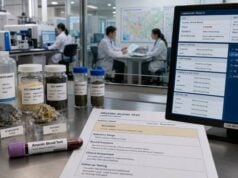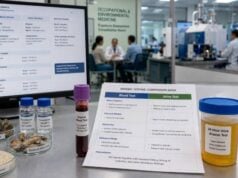
An ethanol blood test measures the amount of alcohol, or ethyl alcohol, in the blood at the time the sample is collected. It is most often used when recent drinking may affect safety, medical care, workplace decisions, or legal questions. Unlike longer-term alcohol biomarkers, a blood ethanol result mainly reflects current or very recent alcohol exposure, usually within hours of drinking. A high result can explain slurred speech, poor coordination, confusion, vomiting, coma, or dangerous breathing problems, but the same number does not affect every person in the same way. Body size, drinking speed, food, medications, tolerance, and other drugs can all change how impaired someone appears at a given blood alcohol concentration. The result is also time-sensitive: alcohol levels may still be rising after drinking stops, and they fall only as the body metabolizes alcohol.
- An ethanol blood test measures recent alcohol in blood, usually reported as BAC, percent, g/dL, or mg/dL.
- A BAC of 0.08% equals 0.08 g/dL or 80 mg/dL and is a common U.S. legal driving limit for many adult drivers.
- Symptoms can begin at low levels; serious intoxication, vomiting, blackouts, coma, and breathing legal driving limit for many adult drivers.
- Symptoms can begin at low problems become more likely as BAC rises.
- No special preparation is usually needed, but the timing of the blood draw strongly affects interpretation.
- Emergency care is needed for confusion, inability to wake, seizures, slow or irregular breathing, blue or pale skin, or repeated vomiting.
Table of Contents
- What the Ethanol Blood Test Measures
- Why the Test Is Ordered
- How Results Are Reported
- Blood Alcohol Levels and Symptoms
- Legal Limit and Driving Risk
- Timing, Detection Window, and Metabolism
- What Can Affect the Result
- Follow-Up Tests and Urgent Care
What the Ethanol Blood Test Measures
An ethanol blood test measures ethyl alcohol, the alcohol found in beer, wine, liquor, and many household products. The result shows how much ethanol is circulating in the blood sample at that moment. In everyday language, this is often called a blood alcohol level, blood alcohol concentration, blood alcohol content, BAC, blood ethanol level, or alcohol level.
The test is mainly a marker of recent drinking. Ethanol is absorbed from the stomach and small intestine, moves into the bloodstream, and reaches the brain and other tissues. The liver then breaks it down, mostly through alcohol dehydrogenase and related pathways. Because this process takes time, drinking faster than the liver can clear alcohol causes blood ethanol levels to rise.
A blood ethanol test is different from tests used to evaluate a longer pattern of alcohol use. For example, phosphatidylethanol, or PEth, can reflect drinking over a longer period, while carbohydrate-deficient transferrin, or CDT, may be used in some settings to evaluate heavier repeated drinking. Those tests answer a different question than a same-day ethanol level. When the concern is current intoxication, recent drinking, a crash, a workplace incident, or an unconscious patient, the direct blood ethanol result is usually more relevant. Longer-term alcohol biomarkers such as PEth testing and CDT testing are not substitutes for a real-time BAC.
The specimen may be whole blood, serum, or plasma, depending on the lab and the purpose of testing. This detail matters. Whole blood is commonly used for legal or forensic interpretation, while hospital chemistry testing may use serum or plasma. Serum or plasma alcohol results can be somewhat higher than whole-blood results because alcohol distributes into the water portion of blood. A report should be interpreted according to the specimen type, lab method, and reporting units.
Why the Test Is Ordered
An ethanol blood test may be ordered for medical, legal, employment, safety, or monitoring reasons. The same lab number can carry different meaning depending on the setting.
In emergency care, the test may help explain symptoms such as confusion, slurred speech, poor balance, vomiting, drowsiness, low body temperature, or coma. It can also help clinicians avoid anchoring on alcohol alone. A person who smells of alcohol may still have a head injury, stroke, low blood sugar, infection, seizure, opioid exposure, sedative overdose, or diabetic ketoacidosis. A low ethanol result in someone who looks very impaired should prompt a search for other causes.
Hospitals may include ethanol testing when evaluating coma, altered mental status, trauma, suspected overdose, or possible poisoning. If the pattern suggests a more dangerous alcohol, such as methanol or ethylene glycol, clinicians may order a broader toxic alcohol panel and acid-base tests. Ethanol is the alcohol people drink, while methanol and ethylene glycol can cause severe metabolic acidosis, vision injury, kidney failure, and death.
Legal testing may be requested after a driving incident, crash, assault, workplace accident, probation requirement, or underage drinking concern. These tests often require strict collection, labeling, storage, and chain-of-custody procedures. A medical ethanol result may help clinical care but may not automatically meet forensic standards unless it was collected and handled under the required legal protocol.
Employers may use alcohol testing after an accident or when workplace safety rules require it. In some recovery or treatment programs, testing may be used to document abstinence, although urine, breath, saliva, PEth, EtG, or EtS testing may be chosen depending on the detection window needed.
How Results Are Reported
Blood alcohol results can look confusing because labs and legal systems use several units. The most common formats are percent BAC, grams per deciliter, milligrams per deciliter, grams per liter, and sometimes mmol/L.
A BAC of 0.08% is the same as 0.08 g/dL, 80 mg/dL, or 0.8 g/L. In mmol/L, 80 mg/dL is about 17.4 mmol/L. Many U.S. legal discussions use percent or g/dL, while hospital labs may report mg/dL. Always compare the result with the unit printed on the report, not just the number.
| Percent BAC | g/dL | mg/dL | g/L | Approximate mmol/L |
|---|---|---|---|---|
| 0.01% | 0.01 | 10 | 0.1 | 2.2 |
| 0.05% | 0.05 | 50 | 0.5 | 10.9 |
| 0.08% | 0.08 | 80 | 0.8 | 17.4 |
| 0.15% | 0.15 | 150 | 1.5 | 32.6 |
| 0.30% | 0.30 | 300 | 3.0 | 65.1 |
A negative result usually means ethanol was not detected above the lab’s cutoff. It does not always prove that no alcohol was consumed. The person may have stopped drinking long enough for ethanol to clear, the sample may have been collected late, or the amount consumed may have been below the detection limit.
A positive result confirms ethanol in the sample, but the number must be interpreted with timing. If a person was still absorbing alcohol, the BAC could have been lower at the time of testing than it became later. If several hours have passed, the result may be lower than the peak level. This timing issue is one reason legal and forensic cases may use careful documentation, repeat testing, or expert interpretation.
Blood Alcohol Levels and Symptoms
Higher BAC usually means more impairment, but symptoms vary. A person with little tolerance may look very impaired at a lower level, while a person with high tolerance may appear more awake at a dangerous level. Tolerance can mask outward signs, but it does not remove the risk of poor judgment, slowed reaction time, aspiration, injury, or respiratory depression.
| BAC range | Approximate mg/dL | Common effects |
|---|---|---|
| 0.01% to 0.05% | 10 to 50 | Mild relaxation, reduced alertness, slower reaction time, slight judgment changes. |
| 0.06% to 0.10% | 60 to 100 | Impaired coordination, lowered inhibition, poorer judgment, slower response, speech or balance changes. |
| 0.11% to 0.15% | 110 to 150 | Clear intoxication, slurred speech, poor coordination, impaired memory, higher injury risk. |
| 0.16% to 0.30% | 160 to 300 | Severe intoxication, vomiting, confusion, blackouts, difficulty walking, drowsiness, possible loss of consciousness. |
| Above 0.30% | Above 300 | High risk of coma, dangerously slow breathing, low body temperature, aspiration, and death, especially with sedatives or opioids. |
The table describes patterns, not guarantees. Some people develop serious symptoms at lower levels, especially children, older adults, people with low body weight, and people taking sedatives, opioids, sleep medicines, antihistamines, antidepressants, seizure medicines, or other substances that slow the brain. Mixed intoxication is common enough that clinicians may order a blood drug screen when symptoms are more severe than the ethanol result alone would explain.
A very high ethanol result is a medical emergency, but the exact danger level is not the same for everyone. A person who cannot stay awake, is breathing slowly, has repeated vomiting, has a seizure, looks blue or very pale, or feels cold and clammy needs emergency care regardless of the printed BAC.
Legal Limit and Driving Risk
A blood alcohol test may be used in driving cases because BAC is tied to crash risk and impaired performance. In many U.S. jurisdictions, 0.08% BAC is the per se legal limit for many adult noncommercial drivers. Lower limits may apply to drivers under 21, commercial drivers, people on probation for a prior offense, and certain occupations. Utah uses a lower adult driving limit of 0.05%. Outside the United States, limits vary widely, and some countries use zero-tolerance or near-zero limits.
The legal limit is not a safety line. Impairment can begin well below 0.08%. At low levels, alcohol can reduce divided attention, visual tracking, reaction time, judgment, steering control, and the ability to respond to sudden hazards. A person may feel only “buzzed” but still be unsafe to drive.
The number also does not protect someone from a legal charge when behavior shows impairment. In many places, a driver may face consequences below the per se limit if driving, field observations, crash evidence, or other facts show unsafe impairment. The opposite can also happen clinically: a person may appear less impaired than expected at a high BAC because of tolerance, but the crash and medical risks remain serious.
Only time lowers BAC. Coffee, cold showers, exercise, vomiting, sleep, fresh air, or drinking water do not speed alcohol clearance in a reliable way. Food can slow absorption if eaten before or while drinking, but it does not quickly remove alcohol after it has entered the bloodstream. When driving or operating machinery is possible, the safest decision is not to rely on how sober someone feels.
Timing, Detection Window, and Metabolism
Timing is one of the most important parts of blood alcohol interpretation. After drinking begins, ethanol may rise quickly, but the peak level depends on how fast the person drank, whether they ate, stomach emptying, beverage strength, body size, and individual metabolism. On an empty stomach, peak levels often occur within about 30 to 90 minutes, but the timing can be earlier or later.
Alcohol may still be absorbing after the last drink. This is why someone can stop drinking, seem stable for a short time, and then become more impaired. BAC can continue to rise while alcohol in the stomach and intestine moves into the bloodstream. This is especially important after rapid drinking, high-intensity drinking, or drinking large amounts shortly before an event.
Once absorption is complete, BAC generally falls as the liver metabolizes ethanol. A common rough estimate is about 10 to 20 mg/dL per hour, though rates vary. Some people clear ethanol more slowly, and people with chronic heavy alcohol use may clear it faster. Because the rate varies, back-calculating a BAC to an earlier time can be uncertain and is usually a forensic task, not something to do from a single lab value without context.
A blood ethanol test usually reflects recent alcohol exposure over a relatively short window, often up to about 12 hours after drinking. The practical window depends on the starting BAC and the person’s clearance rate. A low amount of alcohol may disappear sooner, while a very high BAC can remain positive longer.
Other tests answer different timing questions. Breath testing estimates current alcohol from exhaled air. Urine ethanol may reflect recent use but is less direct for current impairment. EtG and EtS can detect alcohol exposure longer than ethanol itself, but they do not measure current intoxication. Hair testing may reflect longer patterns, not same-day impairment.
What Can Affect the Result
Several factors affect the measured ethanol level and how impaired someone is at that level.
Drinking pattern has a major effect. Four drinks over six hours with food does not produce the same BAC as four drinks in one hour on an empty stomach. Rapid drinking raises the peak, and drinking games or shots can push BAC up before the person realizes how impaired they are.
Body water and size matter because alcohol distributes mainly into water-rich tissue. On average, a smaller person tends to reach a higher BAC from the same amount of alcohol than a larger person. Sex-related differences in body water and metabolism can also affect peak levels, though individual variation is large.
Food slows absorption, especially when it delays stomach emptying. A meal before drinking can reduce the speed and height of the BAC peak, but it does not eliminate impairment. A person can still become legally or medically intoxicated after drinking with food.
Medications and drugs can intensify impairment even when BAC is not extremely high. Opioids, benzodiazepines, sleep medicines, muscle relaxants, sedating antihistamines, some antidepressants, antiseizure medicines, and many recreational drugs can combine with ethanol to worsen confusion, falls, choking, and breathing problems. A BAC that might cause moderate impairment by itself can become dangerous when mixed with other depressants.
The sample and method also matter. For medical testing, a routine blood draw may be enough. For legal testing, collection may require a gray-top tube, secure labeling, sealed handling, and chain-of-custody documentation. Non-alcohol skin antiseptics are often preferred for forensic collection to avoid any challenge about contamination. Modern lab methods are designed to measure ethanol accurately, but specimen type, tube handling, storage, and documentation still affect how confidently a result can be used.
Blood alcohol results may also be interpreted alongside liver and metabolic markers. Heavy repeated drinking can affect liver enzymes, GGT, bilirubin, INR, albumin, triglycerides, and blood counts, but those markers do not prove current intoxication. When alcohol-related liver stress is a concern, patterns such as AST/ALT ratio with GGT or a broader liver function test panel may be more informative than ethanol alone.
Follow-Up Tests and Urgent Care
Follow-up depends on the reason for testing. A single ethanol result may answer whether alcohol was present, but it may not explain the whole situation.
In the emergency department, clinicians may check glucose, electrolytes, kidney function, liver enzymes, blood gases, lactate, osmolality, ketones, acetaminophen level, salicylate level, and a drug screen. These tests help identify dangerous mimics and combinations. For example, low blood sugar can look like intoxication. Head injury can look like intoxication. Methanol and ethylene glycol can cause severe acidosis even when ethanol is low or absent. Rhabdomyolysis, dehydration, aspiration, pancreatitis, trauma, and hypothermia may also need evaluation.
If the person has chronic heavy drinking or possible alcohol use disorder, follow-up may include liver tests, blood counts, thiamine assessment by clinical judgment, nutritional review, withdrawal risk assessment, and referral for treatment. Ethanol itself clears quickly, so a negative result later does not rule out an alcohol-related problem. A clinician may use history, screening tools, PEth, CDT, liver patterns, and safety assessment to understand the broader picture.
Emergency help is needed when alcohol exposure causes signs of overdose or poisoning. Call emergency services if someone:
- cannot be awakened or cannot stay conscious
- has slow breathing, irregular breathing, or long pauses between breaths
- has repeated vomiting, choking, or trouble protecting the airway
- has a seizure
- has blue, gray, pale, cold, or clammy skin
- is confused, severely agitated, injured, or very difficult to keep awake
- may have taken opioids, sedatives, sleep medicines, or other drugs
- may have consumed methanol, ethylene glycol, isopropanol, mouthwash, hand sanitizer, antifreeze, solvents, or unknown liquids
Do not leave an unconscious or heavily intoxicated person alone. Do not assume they can “sleep it off.” Alcohol can continue to absorb after drinking stops, and breathing or choking risk can worsen while the person is asleep or unconscious. Keep the person on their side if they are vomiting or very drowsy, and get medical help.
For legal or workplace results, follow-up may involve a qualified medical review officer, attorney, employer policy, or local legal process. Legal interpretation depends on jurisdiction, chain of custody, testing method, timing, and the exact specimen type. A health care professional can explain the medical meaning of the result, but legal advice should come from a qualified legal professional.
References
- Blood Alcohol Level 2025 (Official Medical Test)
- Blood alcohol concentration in the clinical laboratory: a narrative review of the preanalytical phase in diagnostic and forensic testing 2024 (Review)
- Understanding Binge Drinking 2025 (Official Resource)
- Understanding the Dangers of Alcohol Overdose 2025 (Official Resource)
- Drunk Driving | Statistics and Resources | NHTSA 2026 (Official Resource)
- Ethanol, Whole Blood 2026 (Laboratory Test Information)
Disclaimer
An ethanol blood test result should be interpreted by a qualified health professional in the context of symptoms, timing, medications, other drug exposure, and the reason for testing. Alcohol poisoning, severe confusion, repeated vomiting, slow breathing, seizures, or inability to wake is an emergency. Legal limits and testing rules vary by location, so legal questions about BAC results should be discussed with a qualified attorney or appropriate authority.