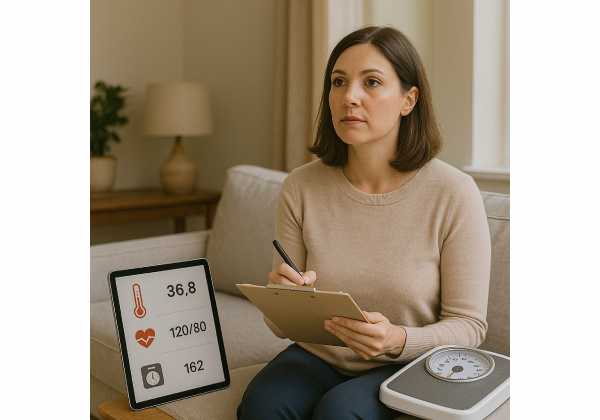
A useful longevity plan starts with honest measurement. Age alone tells little about how well your body is handling daily life, training, food, stress, sleep, and disease risk. A baseline self-assessment gives you a clear starting point before you change anything. It shows which habits already support healthspan, which numbers deserve medical attention, and which parts of your routine need the least effort for the greatest return.
The best baseline is simple enough to repeat. It combines home measurements, basic labs, physical capacity tests, symptom checks, and a short review of your environment. You do not need a full-body scan or a stack of wearables to begin. You need a structured snapshot of your current health, repeated at sensible intervals, so progress becomes visible and problems stand out early.
Table of Contents
- Start With a One-Page Longevity Snapshot
- Measure the Vital Numbers That Change Risk Early
- Test Physical Capacity, Not Just Exercise Intentions
- Map Your Daily Inputs: Food, Sleep, Stress, and Recovery
- Check Medical Screening, Medications, and Red Flags
- Score Your Baseline and Pick Your First Priorities
- Retest on a Sensible Schedule
Start With a One-Page Longevity Snapshot
A strong baseline fits on one page because the first job is clarity. Start with the facts that shape risk and daily function: age, sex, height, weight, waist, blood pressure, resting heart rate, sleep pattern, weekly movement, current diagnoses, medications, major family history, recent labs, and the three health concerns that most affect your life.
This page is not a judgment of discipline. It is a map. A person with good labs and poor balance needs a different first step than someone with strong legs, high blood pressure, and short sleep. A person with excellent training but rising fasting glucose needs a different plan than someone who walks daily but lacks strength. The baseline separates effort from outcome.
Use the same measurement conditions each time. Morning measurements after using the bathroom, before caffeine, and before exercise work well for weight, waist, resting pulse, and blood pressure. Record the date, recent illness, travel, poor sleep, alcohol, unusually hard training, and medication changes. These notes prevent overreacting to a single strange reading.
A practical snapshot includes four types of information:
- Current status: weight, waist, blood pressure, resting heart rate, labs, symptoms, medications, and diagnoses.
- Capacity: grip strength, walking pace, sit-to-stand ability, balance, cardiorespiratory fitness, strength, and mobility.
- Daily inputs: food pattern, protein, fiber, alcohol, nicotine, sleep timing, stress load, social connection, and sunlight.
- Risk context: family history, smoking history, pregnancy history when relevant, menopause status, injuries, occupational exposures, and previous abnormal tests.
Do not try to fix everything while you measure. Spend one to two weeks collecting a truthful baseline. People often improve a few habits simply because they start paying attention, so write down the starting conditions before the first burst of motivation changes them.
A clean baseline also protects against the most common longevity mistake: chasing advanced tactics before the basics are stable. Supplements, fasting schedules, cold plunges, and experimental protocols matter far less when blood pressure, sleep, strength, glucose, nutrition, and smoking status remain unaddressed. Use the snapshot to see the large levers first.
Measure the Vital Numbers That Change Risk Early
The most useful longevity numbers are boring, repeatable, and tied to real disease risk. Blood pressure, waist size, glucose regulation, blood lipids, kidney markers, liver markers, and inflammation signals often shift years before symptoms appear. They also respond to better sleep, food quality, exercise, weight change, medication when needed, and reduced alcohol or nicotine exposure.
Home blood pressure deserves special attention because one clinic reading often misleads. White-coat readings run high in some people, while masked hypertension hides when the office reading looks fine. Use a validated upper-arm cuff, sit quietly for 5 minutes, keep feet flat, support the arm at heart level, and take two readings one minute apart. Track a morning and evening average for 7 days. The first day often runs higher, so clinicians often look at the remaining readings. A detailed approach to home blood pressure measurement helps make the numbers more useful.
Waist size gives a quick signal about visceral fat, the fat stored around organs. Measure at the midpoint between the lowest rib and the top of the hip bone, after a normal exhale, without pulling the tape tight. Waist-to-height ratio adds context across body sizes. A ratio below 0.5 is a useful general target, while rising values signal cardiometabolic risk even when body weight looks stable. This makes waist-to-height tracking one of the cheapest baseline tools.
Labs should match age, risk, history, and clinician judgment. A basic longevity-oriented panel often includes fasting glucose, A1c, fasting insulin when appropriate, lipids with ApoB or non-HDL cholesterol, kidney function with eGFR and urine albumin-to-creatinine ratio, liver enzymes, complete blood count, thyroid screening when symptoms or history point that way, ferritin or iron studies when indicated, vitamin B12 in higher-risk groups, and vitamin D when deficiency risk is high.
| Area | Useful baseline measure | Why it matters | Practical note |
|---|---|---|---|
| Blood pressure | 7-day home average | High pressure damages blood vessels, brain, heart, kidneys, and eyes over time. | Confirm high readings with a clinician before acting on one isolated value. |
| Body fat pattern | Waist and waist-to-height ratio | Central fat tracks closely with insulin resistance and cardiovascular risk. | Use the same tape location each time. |
| Glucose regulation | A1c, fasting glucose, fasting insulin when useful | Early insulin resistance often appears before diabetes. | A1c and insulin testing show different parts of the picture. |
| Atherogenic particles | ApoB or non-HDL cholesterol | ApoB reflects the number of cholesterol-carrying particles that enter artery walls. | ApoB and non-HDL are often clearer than LDL cholesterol alone. |
| Kidney health | eGFR and urine albumin-to-creatinine ratio | Kidney strain often develops silently. | Albumin in urine adds information that blood creatinine alone misses. |
| Liver and metabolic health | ALT, AST, platelets, triglycerides, waist | Fatty liver often travels with insulin resistance. | Persistent elevation deserves follow-up, not guesswork. |
Use lab ranges carefully. “Normal” on a lab report often means typical for a broad population, not ideal for prevention. At the same time, chasing perfect numbers creates anxiety and unnecessary testing. Treat your baseline as a risk discussion, especially when family history, smoking history, early menopause, pregnancy complications, inflammatory disease, kidney disease, or previous cardiovascular events change the stakes.
Symptoms also belong beside the numbers. Chest pressure with exertion, fainting, shortness of breath out of proportion to effort, one-sided weakness, blood in stool or urine, unexplained weight loss, new severe headaches, and rapidly worsening fatigue deserve prompt medical care. Longevity self-assessment works best when it identifies problems early, not when it replaces diagnosis.
Test Physical Capacity, Not Just Exercise Intentions
Physical capacity shows how much reserve your body has. Weekly exercise minutes matter, but they do not fully capture strength, balance, walking speed, power, mobility, and recovery. Two people both “work out three times a week” while one struggles to rise from a chair and the other hikes uphill with ease.
Use simple tests you can repeat safely. Warm up first. Stop any test that causes chest pain, dizziness, unusual shortness of breath, severe joint pain, or a feeling that something is wrong. For older adults, people with heart disease, significant balance problems, recent surgery, or unexplained symptoms, a clinician or physical therapist should guide testing.
Useful baseline tests include:
- Resting heart rate: measure on waking for 7 days and average it. A sudden rise often reflects poor sleep, illness, alcohol, stress, dehydration, or overtraining.
- 6-minute walk: walk as far as safely possible in 6 minutes on a flat route. Record distance, breathlessness, and heart rate response if available.
- Gait speed: time a usual-paced 4-meter or 10-meter walk. Slowing over time deserves attention.
- 5-times sit-to-stand: cross arms over chest, stand and sit 5 times from a firm chair, and record time.
- Grip strength: use a hand dynamometer when available, or track practical grip tasks such as carrying bags, hanging, or farmer’s carries.
- Single-leg balance: stand near support and record the best safe time on each side.
- Cardio benchmark: use a consistent hill, stairs, bike, rower, or brisk walk and record pace, heart rate, and perceived effort.
These tests become more useful when paired with notes. Did your knee hurt? Did breathlessness stop you before the legs did? Did balance differ strongly from one side to the other? Did you recover within a few minutes, or did the effort affect the rest of the day? The pattern tells you where to train first.
For deeper guidance, functional longevity tests offer a simple way to organize grip, gait speed, and sit-to-stand results. If strength is the weak area, a basic weekly strength plan usually beats random workouts. The best early strength baseline includes movement patterns, not just machines: squat or sit-to-stand, hip hinge, push, pull, carry, and step-up.
Cardiorespiratory fitness deserves a baseline too. Lab-measured VO₂max is useful, but most people start with field tests. Choose a repeatable option: a 12-minute walk/run, a set-distance brisk walk, a bike time trial at steady effort, or a hill climb. Record the route, conditions, heart rate, and effort. The number matters less than the trend.
Power and balance belong in longevity because falls and loss of quick movement threaten independence. Test cautiously. A low step-up, gentle medicine-ball throw, or controlled fast sit-to-stand gives early information without turning baseline day into a competition. Mobility checks should focus on daily tasks: getting to the floor and back up, reaching overhead, turning the head while walking, loading groceries, climbing stairs, and carrying laundry.
Map Your Daily Inputs: Food, Sleep, Stress, and Recovery
Daily inputs create the background conditions for aging well. Food supplies building blocks, sleep restores the nervous system and metabolism, movement signals tissues to stay capable, stress changes blood pressure and glucose, and relationships shape behavior. A baseline that ignores daily life becomes a lab report without a plan.
Start with a 7-day food log, but keep it useful rather than obsessive. Record meal timing, protein at each meal, plant foods, fiber-rich foods, alcohol, sugary drinks, ultra-processed snacks, restaurant meals, and late-night eating. Photos work well. Do not count every calorie unless weight change is a primary concern or your clinician recommends it.
A simple food baseline asks:
- Do most meals include a clear protein source?
- Do you eat vegetables, fruit, beans, lentils, whole grains, nuts, seeds, or fermented foods daily?
- Do you reach at least 25–38 g of fiber most days?
- Do you regularly eat fish, extra-virgin olive oil, nuts, seeds, or other unsaturated fat sources?
- Do alcohol, sweets, refined grains, and packaged snacks crowd out nutrient-dense food?
- Do meals support training, sleep, and steady energy?
Protein deserves specific attention after midlife because muscle becomes harder to maintain. A common practical range is 1.2–1.6 g/kg/day for active adults and older adults, adjusted for kidney disease, appetite, body size, and clinician guidance. Spreading protein across meals often works better than saving most of it for dinner.
Sleep baseline should cover duration, timing, quality, and breathing. Record bedtime, wake time, awakenings, naps, caffeine timing, alcohol, late meals, morning light, screen use, snoring, witnessed pauses in breathing, morning headaches, and daytime sleepiness. Adults often do best with at least 7 hours of sleep, but regularity and quality matter too. Wearables help with trends, not perfect staging. A guide to what to track in sleep wearables helps prevent overreacting to imperfect sleep-stage estimates.
Stress deserves a practical inventory. Write down the top three stressors, the time of day they hit, the physical signs they trigger, and the recovery habits that actually help. Rumination, constant urgency, conflict, caregiving strain, financial pressure, loneliness, and poor boundaries all show up in physiology. A 5-minute breathing practice, a walk after dinner, a fixed shutdown time for work, or one honest conversation often beats a complex stress protocol.
Recovery is not just rest. It is the gap between demands and restoration. Track soreness, motivation, appetite, irritability, resting heart rate, sleep quality, and exercise performance. If several markers worsen together, the issue is often accumulated load rather than lack of willpower.
| Input | Green signal | Warning signal | First adjustment |
|---|---|---|---|
| Food | Protein, plants, fiber, and mostly minimally processed meals | Frequent skipped meals, low protein, low fiber, heavy evening snacking | Build two repeatable meals before changing everything. |
| Sleep | Regular timing, refreshing sleep, low daytime sleepiness | Loud snoring, pauses in breathing, insomnia, morning headaches | Stabilize wake time and discuss apnea signs with a clinician. |
| Stress | Daily recovery window and clear stress outlets | Persistent rumination, irritability, high resting pulse, poor sleep | Add a protected decompression block after the hardest part of the day. |
| Movement | Daily steps plus strength and conditioning | Long sitting blocks and weekend-only exercise | Add 5–10 minutes of walking after meals. |
| Connection | Regular contact with supportive people | Isolation, caregiving strain, conflict, loss of purpose | Schedule one recurring social anchor each week. |
The pattern matters more than any single day. One poor night, one restaurant meal, or one missed workout is noise. A baseline becomes useful when it shows repeated friction: no breakfast protein, caffeine too late, no daylight before noon, alcohol on most evenings, sitting for 6 hours without a break, or training hard without recovery.
Check Medical Screening, Medications, and Red Flags
Longevity self-assessment needs a medical safety layer. Screening finds silent disease, medication review reduces avoidable harm, and red-flag symptoms stop you from treating serious problems as lifestyle issues.
Start with age-appropriate screening. Depending on age, sex, history, and country-specific guidance, this includes blood pressure, diabetes risk, cholesterol or cardiovascular risk assessment, colon cancer screening, cervical cancer screening, breast cancer screening, prostate discussion when appropriate, bone density in higher-risk groups, dental care, eye exams, hearing checks, skin exams for high-risk people, vaccination review, and depression or anxiety screening.
Family history changes the baseline. Early heart attack, stroke, sudden cardiac death, colon cancer, breast or ovarian cancer, aneurysm, dementia, diabetes, kidney disease, osteoporosis, and autoimmune disease deserve a written note with ages and affected relatives. “My father had heart disease” is less useful than “father had a heart attack at 52.” Early disease in a first-degree relative often moves screening earlier and raises the value of more precise tests.
Medication and supplement review belongs in every baseline. List prescription drugs, over-the-counter drugs, supplements, hormones, sleep aids, antihistamines, pain relievers, antacids, and recreational substances. Include dose, frequency, reason, and start date. Bring the list to a clinician or pharmacist, especially with dizziness, falls, constipation, confusion, low libido, fatigue, high blood pressure, bruising, reflux, poor sleep, or kidney disease.
Pay close attention to drugs with anticholinergic effects, long-term sedatives, frequent NSAID use, unnecessary duplicate supplements, high-dose fat-soluble vitamins, stimulant use, and interactions with blood thinners, blood pressure drugs, diabetes drugs, thyroid medication, or antidepressants. The safest longevity plan removes unnecessary risk before adding more interventions.
Some findings deserve prompt care rather than tracking. Keep a separate list of red flags and act on them. A fuller review of longevity red flags helps distinguish watchful tracking from signs that need medical evaluation.
Urgent or timely medical review is important for:
- Chest pressure, fainting, new irregular heartbeat, or breathlessness with light activity
- Stroke-like symptoms, sudden weakness, facial droop, trouble speaking, or sudden vision loss
- Blood in stool or urine, black stools, or unexplained anemia
- Unexplained weight loss, night sweats, persistent fever, or severe fatigue
- New severe headache, seizure, or rapidly worsening balance
- Persistent blood pressure around or above 180/120 mm Hg, especially with symptoms
- New breast, testicular, skin, or lymph node changes
- Severe depression, suicidal thoughts, or inability to function safely
A clinician turns your baseline into safer decisions. Bring your one-page snapshot, home blood pressure log, medication list, family history, recent labs, and top three concerns. Clear notes make appointments more productive. A structured approach to working with clinicians on longevity goals also helps avoid vague testing and scattered follow-up.
Score Your Baseline and Pick Your First Priorities
A simple score turns a pile of measurements into action. Rate each domain from 0 to 2: 0 means unstable or unmeasured, 1 means partly in place, and 2 means strong and consistent. The point is not perfection. The point is to find the few areas where effort changes the most risk or function.
| Domain | 0 points | 1 point | 2 points |
|---|---|---|---|
| Blood pressure | Unknown or repeatedly high | Measured but inconsistent or borderline | Reliable home average in a healthy range or managed with care |
| Metabolic health | Unknown glucose status or abnormal results without follow-up | Known results with some concerns | Stable glucose markers and clear nutrition/activity plan |
| Lipids | Unknown ApoB/non-HDL or high-risk history without review | Known results but unclear target | Risk-based target discussed and tracked |
| Body composition | Rising waist or unknown waist | Measured, with moderate concern | Stable waist and enough muscle-focused training |
| Strength and function | Difficulty with stairs, chair rise, balance, or carrying | Some training but weak spots | Repeatable strength, balance, and walking benchmarks |
| Cardiorespiratory fitness | No benchmark or very low activity | Regular walking or cardio without progression | Consistent aerobic work with a repeatable benchmark |
| Sleep and recovery | Short, irregular, or poor sleep; apnea signs ignored | Improving but inconsistent | Regular sleep window and recovery signals mostly stable |
| Food pattern | Low protein, low fiber, heavy ultra-processed intake | Several good meals mixed with weak defaults | Reliable protein, plants, fiber, and heart-healthy fats |
| Medical prevention | Screening, dental, eye, or medication review overdue | Partly current | Current screenings and clear follow-up plan |
| Connection and purpose | Isolation, low support, or chronic conflict | Some support but inconsistent contact | Regular meaningful connection and roles that matter |
After scoring, choose priorities using three filters: risk, readiness, and leverage. Risk means the issue carries a large health consequence, such as high blood pressure, smoking, diabetes-range labs, severe sleep apnea symptoms, or falls. Readiness means you have the willingness and resources to act now. Leverage means one change improves several domains at once.
For example, a 10-minute walk after lunch and dinner improves glucose handling, digestion, step count, stress, and sleep pressure. Two full-body strength sessions improve insulin sensitivity, bone loading, balance, muscle, joint function, and confidence. Earlier caffeine cutoff improves sleep, blood pressure, appetite regulation, and training recovery. A medication review reduces dizziness, falls, constipation, fatigue, or cognitive fog when drug burden contributes.
Do not pick more than three first priorities. Most plans fail from overload, not lack of information. A strong first month might be:
- Measure blood pressure correctly for 7 days and book follow-up if the average is high.
- Train strength twice weekly using basic movement patterns.
- Build a repeatable breakfast with 30–40 g protein and a fiber-rich plant food.
Another person might need a very different first month:
- Discuss loud snoring and daytime sleepiness with a clinician.
- Walk 10 minutes after dinner 5 days per week.
- Replace weeknight alcohol with a non-alcohol evening routine.
Use the baseline to sequence change. If you want a more complete structure after the first assessment, building a longevity plan turns these findings into priorities, experiments, and follow-up decisions.
Retest on a Sensible Schedule
Retesting works best when the interval matches the marker. Weight, waist, blood pressure, sleep, and training logs change quickly. A1c reflects roughly three months of glucose exposure. Lipids need enough time after diet, weight, medication, or training changes to show a stable response. Strength and gait improve over weeks to months. Bone density changes slowly.
Do not retest everything constantly. Frequent measurement helps when it guides behavior, but it becomes noise when it creates anxiety or random course corrections. Decide in advance what result would change your next step.
| Measure | Reasonable interval | Act sooner when |
|---|---|---|
| Blood pressure | 7-day logs monthly during changes; less often once stable | Readings are very high, symptoms appear, or medication changes |
| Waist and weight | Weekly to monthly | Unexplained rapid gain or loss occurs |
| A1c and glucose markers | About every 3 months during active change; less often when stable | Symptoms of high or low blood sugar appear |
| Lipids and ApoB | About 8–12 weeks after a major change; then risk-based | Medication changes or very high values need follow-up |
| Functional tests | Every 8–12 weeks | Falls, new pain, or sudden decline occurs |
| Sleep pattern | Weekly review during habit changes | Snoring, pauses in breathing, or severe sleepiness appears |
| Medication list | At every medical visit and after any new prescription | Dizziness, falls, confusion, bleeding, constipation, or fatigue begins |
Keep a short “baseline version history.” Write what changed and when: started resistance training, changed blood pressure medication, stopped alcohol on weekdays, began treatment for sleep apnea, increased protein, changed work schedule, recovered from flu, or started menopause hormone therapy. Without this context, trends become hard to interpret.
Progress rarely moves in a straight line. Weight drops before waist in some people. Strength rises before labs change. Sleep improves before energy catches up. Blood pressure responds quickly for one person and slowly for another. Look for converging evidence: better readings, better function, better symptoms, and better consistency.
A good longevity baseline leaves you with three things: a current snapshot, a short priority list, and a retest date. That is enough to begin. The work becomes sustainable when measurement supports action rather than replacing it.
References
- Integrated care for older people (ICOPE): guidance for person-centred assessment and pathways in primary care, 2nd ed 2025 (Guideline)
- Hypertension in Adults: Screening 2021 (Recommendation Statement)
- Prediabetes and Type 2 Diabetes: Screening 2021 (Recommendation Statement)
- 2026 Dietary Guidance to Improve Cardiovascular Health: A Scientific Statement From the American Heart Association 2026 (Position Statement)
- WHO Guidelines on Physical Activity and Sedentary Behaviour 2020 (Guideline)
- Sleep is essential to health: an American Academy of Sleep Medicine position statement 2021 (Position Statement)
Disclaimer
This article is educational and does not replace care from a qualified health professional. Baseline self-assessment helps organize information, but abnormal results, concerning symptoms, medication questions, and screening decisions deserve individualized medical guidance. Seek urgent care for severe or sudden symptoms such as chest pain, stroke-like signs, fainting, severe shortness of breath, or suicidal thoughts.