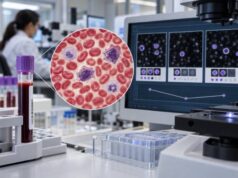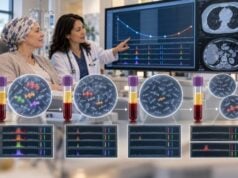
The Galleri test is a prescription blood test designed to look for a shared cancer signal from many cancer types in people who do not already have a cancer diagnosis. It analyzes methylation patterns in cell-free DNA, then uses a machine-learning classifier to report either Cancer Signal Detected or No Cancer Signal Detected. When a signal is found, the test also predicts the most likely cancer signal origin to help guide diagnostic evaluation.
Galleri is a screening test, not a diagnostic test. A positive result requires follow-up with established medical procedures, while a negative result cannot rule out cancer and should never replace recommended breast, cervical, colorectal, lung, or other appropriate screening. As of September 2026, Galleri is available in the United States as a laboratory-developed test but has not been cleared or approved by the FDA. Evidence is growing, including prospective and large randomized studies, but whether multi-cancer blood screening reduces cancer mortality remains unresolved.
- Galleri analyzes cancer-associated methylation patterns in plasma cell-free DNA and can also predict the likely cancer signal origin.
- Cancer Signal Detected is not a cancer diagnosis; confirmatory imaging, laboratory testing, endoscopy, biopsy, or other evaluation is still required.
- No Cancer Signal Detected does not rule out cancer and does not replace routine guideline-recommended screening or evaluation of symptoms.
- There is no numeric “normal range”; the main reported result is a classifier call based on methylation patterns rather than a standard blood concentration.
- Galleri is marketed for adults at elevated cancer risk, such as people age 50 or older, but it remains an emerging screening approach without proven mortality benefit.
Table of Contents
- What the Galleri Test Measures
- Who the Test Is Intended For
- What Cancer Signal Detected Means
- What No Cancer Signal Detected Means
- How Accurate the Galleri Test Is
- What Recent Trials Show
- How to Decide and Plan Follow-Up
What the Galleri Test Measures
Galleri is a multi-cancer early detection (MCED) test. It starts with cell-free DNA, or cfDNA, circulating in plasma. Most cfDNA comes from normal cells, but cancers can also shed DNA into the bloodstream. Galleri does not mainly search for a short list of inherited cancer-risk genes or individual tumor mutations. Instead, it looks at DNA methylation patterns.
Methylation is a chemical marking system that helps regulate which genes are active or inactive. Cancer cells often develop abnormal methylation patterns. Because these patterns can also reflect the tissue that released the DNA, they can be used for two related tasks:
- deciding whether the sample contains a cancer-associated signal; and
- predicting where in the body that signal most likely originated.
This is different from a ctDNA mutation panel, which is generally used in people who already have cancer to identify tumor mutations that may guide treatment. Galleri is aimed at detection before a known diagnosis, not at selecting a targeted drug.
It is also one specific version of a broader blood-based multi-cancer early detection test. Other MCED platforms may use mutations, proteins, fragment patterns, methylation, or combinations of signals, so performance from one test cannot be assumed for another.
The result is not a measurement such as “12 ng/mL” with a normal reference interval. Galleri’s algorithm classifies the sample. If the classifier finds enough cancer-associated methylation evidence, the report says Cancer Signal Detected and provides one or more predicted cancer signal origins according to the test’s reporting rules.
Who the Test Is Intended For
The manufacturer recommends Galleri for adults with an elevated risk of cancer, such as people age 50 or older. It is prescription only. The manufacturer also states that use is not recommended in people who are pregnant, age 21 or younger, or undergoing active cancer treatment.
Those recommendations do not mean every healthy adult over 50 should automatically be tested. The decision is best made through shared discussion of baseline risk, standard screening status, medical history, possible downstream testing, cost, and uncertainty about long-term benefit.
Galleri is intended for people without a current cancer diagnosis who are considering additional screening. It is not designed to answer several different clinical questions:
- It is not a germline genetic test for inherited cancer risk.
- It is not a tumor-genomic test for choosing targeted therapy.
- It is not a surveillance substitute for someone receiving active cancer treatment.
- It is not a diagnostic shortcut for a person who already has a suspicious mass, unexplained bleeding, progressive weight loss, or another concerning symptom.
Symptoms should be evaluated directly. Screening tests are built for people without signs or symptoms of the disease being sought, while diagnostic testing is chosen to investigate a specific concern.
Routine cancer screening remains essential. A negative Galleri result does not cancel mammography, cervical screening, colorectal screening, or low-dose CT for people who meet established criteria. The National Cancer Institute continues to state that no multi-cancer detection test has been FDA authorized and that randomized trials are needed to determine whether these tests provide net screening benefit.
A practical way to view Galleri is as a possible additional layer, not a replacement layer. That distinction matters because the test’s sensitivity is not the same across cancer types or stages. Some early cancers may not shed enough abnormal cfDNA to be detected.
What Cancer Signal Detected Means
Cancer Signal Detected means the methylation classifier found a pattern associated with cancer strongly enough to cross the test’s positive threshold. It does not mean cancer has been confirmed. The next step is diagnostic evaluation focused initially on the predicted cancer signal origin and the person’s clinical context.
Follow-up may include combinations of:
- a targeted history and physical examination;
- diagnostic blood or urine tests;
- ultrasound, CT, MRI, PET/CT, mammography, or other imaging;
- endoscopy or organ-specific procedures; and
- biopsy when a suspicious lesion is identified.
The predicted cancer signal origin can make workup more efficient by pointing clinicians toward one or a small number of likely organs. However, it is a prediction, not proof of where cancer is located. If initial testing of the predicted organ is negative, clinicians may need to consider another origin or a broader evaluation.
A positive result can ultimately be classified as a true positive if cancer is diagnosed or a false positive if a sufficiently complete evaluation does not identify cancer. False-positive results matter because they can lead to imaging, invasive procedures, incidental findings, cost, and anxiety even when no malignancy is found.
The probability that a positive result represents real cancer is called positive predictive value (PPV). PPV changes with the population being tested. Older adults and other higher-risk groups have a higher underlying cancer prevalence than young low-risk groups, so the same test can have a different PPV in each setting.
PATHFINDER, a prospective study of adults age 50 or older, returned a cancer signal in 92 of 6,621 participants with analyzable results. Cancer was diagnosed in 35 of those 92 participants, while 57 did not receive a cancer diagnosis after evaluation. This demonstrates both the potential value of a positive signal and the reality that some positive results will not lead to a confirmed cancer.
What No Cancer Signal Detected Means
No Cancer Signal Detected means the assay did not find enough cancer-associated methylation signal to cross its positive threshold in that blood sample. It does not mean the person is cancer-free.
False negatives can occur for several reasons. Small tumors may release very little DNA. Some cancer types shed more cfDNA than others. Tumors confined to certain anatomical sites may contribute less circulating material. Even within the same cancer type, stage and biological behavior influence detectability.
This is why a negative result should not change care in ways the test was never validated to support. Someone due for a colonoscopy or other recommended screening should still complete it. Someone with persistent symptoms or abnormal imaging should continue a diagnostic workup. Someone at very high inherited risk may need an intensified organ-specific screening plan regardless of the Galleri result.
The distinction between specificity and sensitivity is useful here. Galleri has shown high specificity, meaning most people without cancer receive a negative result. Sensitivity—how often the test finds cancer when cancer is present—is lower and varies substantially by stage and tumor type. Early-stage sensitivity is generally lower because early cancers often shed less abnormal DNA.
A negative result can reduce concern only within the limits of the test’s demonstrated sensitivity. It should not be treated as a universal “all clear.” The cell-free DNA signal in blood is a biological sample of what tumors release into circulation, not a direct scan of every organ.
If a person develops new symptoms after a negative test, the previous result should not delay assessment. Cancer can have been present below the detection threshold, can arise after the test, or can be a type that sheds little measurable signal.
How Accurate the Galleri Test Is
There is no single accuracy number that fully describes Galleri. Performance depends on whether researchers are measuring sensitivity, specificity, PPV, cancer signal origin accuracy, cancer type, stage, and the population tested.
| Measure | Question it answers | Main interpretation issue |
|---|---|---|
| Sensitivity | How often is a cancer signal found when cancer is present? | Varies widely by stage and cancer type |
| Specificity | How often is the result negative when cancer is absent? | Small false-positive rates still matter in large screening populations |
| Positive predictive value | How often does a positive result lead to confirmed cancer? | Depends strongly on baseline cancer prevalence and follow-up completeness |
| Cancer signal origin accuracy | How often does the predicted origin match the diagnosed cancer? | Only assessable when cancer and its site are ultimately established |
A 2025 systematic review of MCED tests found Galleri sensitivity estimates ranging from about 20.8% to 66.3% across included general-population-relevant studies, with specificity around 98.4% to 99.5%. The wide sensitivity range reflects differences in study design, stage distribution, and populations. The review also found that sensitivity was generally lower for stages I–II than for stages III–IV.
Large real-world data published in 2025 included more than 111,000 Galleri tests. The cancer signal detection rate was 0.91%. Clinical outcome information was available for only part of the positive group, which is important when interpreting real-world PPV. Among cases with reported outcomes, many cancers were confirmed and the predicted cancer signal origin frequently matched the diagnosed site.
Headline percentages should therefore be read with their denominators and study design. A case-control validation can estimate analytical discrimination, while a prospective screening cohort is better for understanding what happens when asymptomatic people are actually tested. Randomized trials are needed to determine whether a screening program changes stage at diagnosis and, ultimately, mortality.
What Recent Trials Show
PATHFINDER showed that returning MCED results to clinicians is feasible and that a predicted origin can guide a diagnostic workup. It also showed the burden of follow-up: participants with positive results frequently underwent imaging and laboratory testing, and diagnostic resolution could take weeks to months, especially when cancer was not ultimately found.
The much larger NHS-Galleri randomized trial has added crucial evidence. More than 140,000 adults were enrolled in England and offered repeated annual testing in the intervention arm. Results disclosed in 2026 showed that the trial did not meet its primary endpoint of reducing the combined number of stage III and stage IV cancers over three years. That is an important limitation and prevents a simple claim that the test has already proved a population-level stage-shift benefit.
At the same time, secondary findings were more encouraging. The disclosed data showed fewer stage IV diagnoses in later screening rounds, and a 2026 peer-reviewed editorial reported high specificity and PPV as well as strong cancer signal origin accuracy. The editorial also emphasized that the main endpoint was not met and that mortality benefit remains unknown.
This mixed result is exactly why screening evidence must go beyond test accuracy. Detecting a cancer earlier can create lead-time bias: survival measured from diagnosis appears longer simply because diagnosis happened sooner, even if the date of death is unchanged. Screening can also find slow-growing cancers that might never have caused harm, known as overdiagnosis.
The strongest endpoint is a reduction in cancer deaths with acceptable harms. Those data require longer follow-up. As of September 2026, evidence supports that Galleri can detect a subset of otherwise undiagnosed cancers and often predict their origin, but it does not yet establish that routine use reduces cancer mortality.
The current regulatory status is also important. Galleri remains a laboratory-developed test and is not FDA cleared or approved. Availability should not be confused with FDA premarket authorization or with endorsement by major population-screening guidelines.
How to Decide and Plan Follow-Up
Before ordering Galleri, it helps to decide in advance what a positive or negative result would change. Screening is most useful when there is a clear plan for acting on the result.
Useful questions to discuss with a clinician include:
- Am I up to date on established screening first? An MCED test should not substitute for proven screening programs.
- What is my baseline cancer risk? Age, smoking history, family history, prior cancer, inherited syndromes, and other factors can affect the decision.
- What would happen after a positive result? Ask which specialists, imaging tests, or procedures might be needed and how they would be coordinated.
- What costs are covered? The blood test and follow-up diagnostic testing may have different insurance coverage.
- How will a negative result be interpreted? Make sure it will not delay routine screening or symptom evaluation.
- What evidence matters to me? Some people are comfortable using an emerging test with uncertainty; others may prefer to wait for stronger randomized evidence.
If the result is Cancer Signal Detected, follow-up should be prompt but organized. The predicted origin usually guides the first diagnostic steps. If that workup is negative, the clinician may need to decide whether evaluation was sufficiently complete, whether another predicted origin should be investigated, or whether interval follow-up is appropriate.
If the result is No Cancer Signal Detected, continue the existing prevention and screening plan. Keep routine appointments and report new symptoms. A negative MCED result should never be used to postpone a biopsy, scan, endoscopy, or other diagnostic test that is already medically indicated.
Galleri represents a significant advance in what a blood sample can reveal about hidden cancer signals. Its value is most realistically understood as an emerging screening tool with high specificity, meaningful but incomplete sensitivity, and a need for diagnostic confirmation. The key unanswered question is no longer whether methylation-based cfDNA can detect cancer—it can—but whether adding this type of test to standard screening produces enough earlier, clinically meaningful diagnoses to improve long-term outcomes without excessive harm.
References
- Outcomes from the NHS-Galleri trial: the good, the bad, and the uncertain 2026
- Real-world data and clinical experience from over 100,000 multi-cancer early detection tests. 2025
- Multi-cancer early detection tests for general population screening: a systematic literature review 2025 (Systematic Review)
- Blood-based tests for multicancer early detection (PATHFINDER): a prospective cohort study. 2023
- What Cancer Screening Tests Check for Cancer? 2024
- The Galleri Test 2026
Disclaimer
Galleri is a screening test and does not diagnose or rule out cancer. A Cancer Signal Detected result requires medical diagnostic evaluation, while a No Cancer Signal Detected result should not replace guideline-recommended screening or delay evaluation of symptoms. Decisions about MCED testing should be made with a qualified healthcare professional who can review individual cancer risk, follow-up options, and current evidence.