High blood pressure during pregnancy needs careful monitoring because it can affect both the pregnant person and the baby, yet it often causes no symptoms at all. Some people enter pregnancy with chronic hypertension, while others develop gestational hypertension or preeclampsia after 20 weeks. The risks range from needing medication and extra fetal-growth checks to serious complications such as stroke, placental abruption, preterm birth, or eclampsia. The good news is that modern treatment is more proactive than it once was. Evidence now supports treating mild chronic hypertension during pregnancy to reduce important complications without increasing the risk of a small-for-gestational-age baby. The key is not to wait until you feel unwell. Blood pressure should be checked at every prenatal visit, and some people need home monitoring, urine testing, blood tests, or extra ultrasounds. Severe readings or symptoms such as a persistent severe headache, vision changes, upper abdominal pain, breathing difficulty, or neurologic symptoms require urgent assessment.
Table of Contents
- Types of High Blood Pressure in Pregnancy
- Why High Blood Pressure in Pregnancy Matters
- Symptoms and Warning Signs
- How Blood Pressure Is Monitored
- Treatment During Pregnancy
- Preeclampsia Prevention and Fetal Monitoring
- Postpartum Blood Pressure and Long-Term Heart Risk
Types of High Blood Pressure in Pregnancy
Pregnancy-related hypertension is not one diagnosis. The timing of the high readings and whether other organs are affected help determine what is happening.
Chronic hypertension is high blood pressure that was present before pregnancy, is diagnosed before 20 weeks of pregnancy, or persists well beyond the postpartum period. Some people know they have hypertension before conceiving; others discover it at an early prenatal visit.
Gestational hypertension begins after 20 weeks in someone who previously had normal blood pressure and does not have the organ findings used to diagnose preeclampsia. The usual threshold is a systolic blood pressure of at least 140 mm Hg or a diastolic pressure of at least 90 mm Hg on appropriately confirmed readings.
Preeclampsia also develops after 20 weeks, but it involves more than blood pressure. It may include protein in the urine or evidence that organs such as the kidneys, liver, brain, blood-clotting system, or lungs are being affected. Protein in the urine is common, but it is not required when other qualifying organ abnormalities are present.
Preeclampsia superimposed on chronic hypertension occurs when someone with preexisting hypertension develops new signs of preeclampsia. This can be harder to recognize because the blood pressure was already high before the pregnancy complication began.
Severe-range hypertension is generally a systolic pressure of at least 160 mm Hg or a diastolic pressure of at least 110 mm Hg. In pregnancy, persistent severe-range blood pressure is an urgent problem because maternal stroke risk rises and treatment should not be delayed.
Pregnancy thresholds differ from the categories often used for nonpregnant adults. If you are comparing your prenatal numbers with general adult charts, keep that distinction in mind. A basic guide to normal blood pressure readings is useful background, but your obstetric team should interpret pregnancy readings in the pregnancy-specific context.
Why High Blood Pressure in Pregnancy Matters
High blood pressure can place stress on the mother’s blood vessels and organs and can also affect blood flow through the placenta. The exact risk depends on the diagnosis, how high the pressure is, how early it begins, and whether preeclampsia or other complications develop.
Maternal complications can include:
- Severe hypertension and stroke
- Preeclampsia or eclampsia, which is preeclampsia with seizures
- HELLP syndrome, involving hemolysis, elevated liver enzymes, and low platelets
- Kidney or liver injury
- Fluid in the lungs
- Placental abruption, when the placenta separates from the uterine wall too early
- Need for hospitalization, intravenous medication, or early delivery
Potential fetal and newborn complications include:
- Poor fetal growth because of placental dysfunction
- Preterm birth, either spontaneous or medically indicated
- Lower birth weight
- Need for neonatal intensive care
- In severe cases, fetal or neonatal death
Risk is not the same for everyone. Mild chronic hypertension that is well controlled is different from rapidly worsening preeclampsia with severe features. That is why clinicians look beyond one number to the entire clinical picture.
The CHAP trial changed an important part of chronic-hypertension care. In pregnant people with mild chronic hypertension, actively treating to keep blood pressure below 140/90 mm Hg reduced a composite of serious pregnancy complications without increasing the proportion of babies who were small for gestational age. Professional guidance now supports continuing or starting pregnancy-compatible antihypertensive therapy rather than waiting for severe hypertension to develop.
A history of a hypertensive pregnancy also matters after the pregnancy ends. These conditions identify people who have a higher long-term risk of chronic hypertension and cardiovascular disease. That makes pregnancy an early cardiovascular “stress test,” not an isolated event.
Risk is higher in some pregnancies from the start. Chronic hypertension, kidney disease, type 1 or type 2 diabetes, autoimmune disease, a previous pregnancy affected by preeclampsia, and multifetal pregnancy are important examples. Other factors such as first pregnancy, higher maternal age, obesity, family history, and certain social or access-to-care factors can also raise risk. Risk factors do not diagnose preeclampsia, but they influence how closely someone is monitored and whether preventive low-dose aspirin is recommended.
Placental problems are central to many hypertensive pregnancy disorders. In preeclampsia, abnormal placental development and widespread blood-vessel dysfunction can affect multiple organs. That explains why the condition can show up as much more than a high cuff reading: proteinuria, low platelets, liver irritation, kidney dysfunction, neurologic symptoms, and pulmonary edema may all be part of the same disease process. The fetus can be affected when placental blood flow and nutrient delivery become inadequate.
The timing matters too. Hypertension or preeclampsia that begins early in pregnancy tends to raise more concern for placental insufficiency and preterm delivery than a mild problem discovered near term. Clinicians therefore consider gestational age alongside the blood-pressure number when deciding how intensively to monitor and when delivery is safest.
Symptoms and Warning Signs
High blood pressure itself is often silent. You can feel completely normal with readings high enough to need treatment. That is why routine blood-pressure checks are essential during prenatal care.
Preeclampsia can also begin without obvious symptoms. When symptoms occur, warning signs may include:
- A severe or persistent headache that does not improve as expected
- Vision changes such as blurred vision, flashing lights, spots, or temporary loss of vision
- Pain in the upper abdomen, especially under the right ribs, or severe epigastric pain
- New shortness of breath or trouble breathing
- Sudden or marked swelling, particularly of the face or hands
- Rapid weight gain related to fluid retention
- New nausea or vomiting later in pregnancy, especially with other warning signs
- Confusion, weakness, numbness, difficulty speaking, or other neurologic symptoms
Swelling of the feet and ankles can occur in normal pregnancy, so swelling alone does not diagnose preeclampsia. Likewise, headaches are common in pregnancy and can have many causes. What raises concern is a new, severe, persistent, or unusual symptom, especially when combined with high blood pressure or other abnormalities.
Seek urgent medical assessment for a blood pressure in the severe range, particularly if it remains elevated on repeat measurement, or for severe headache, vision changes, chest pain, shortness of breath, severe upper abdominal pain, seizure, fainting, confusion, or stroke-like symptoms. Do not wait for the next routine prenatal appointment.
It is also important not to rely on symptoms to decide whether to measure. “I feel fine” is not evidence that blood pressure is normal. The silent nature of hypertension is one reason scheduled prenatal checks and home monitoring can be so valuable.
How Blood Pressure Is Monitored
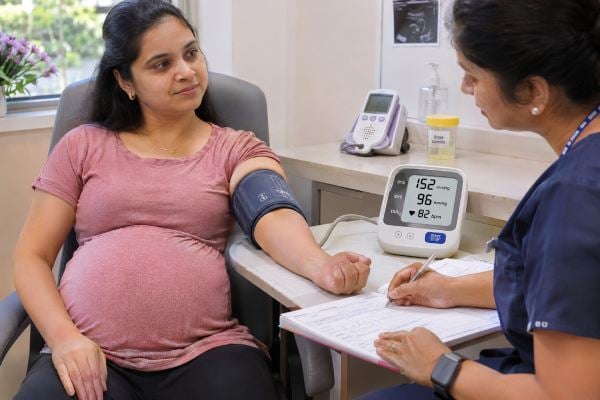
Blood pressure should be checked at every prenatal visit. People with chronic hypertension, gestational hypertension, or preeclampsia often need more frequent assessment and may be asked to measure at home.
Accurate technique matters. Use a validated upper-arm cuff of the correct size. Sit quietly for at least five minutes, keep your back supported and feet flat, and support your arm at heart level. Avoid talking during the measurement. If a reading is unexpectedly high, follow your care team’s instructions for repeating it and deciding when to call.
A home log should include the date, time, systolic and diastolic values, and relevant symptoms. Some clinicians also want two readings one minute apart. The goal is to identify a pattern, not to produce dozens of measurements a day. Excessive checking can add anxiety without improving care.
For technique details, use how to measure blood pressure at home correctly. If you need a sustainable schedule rather than sporadic checks, a home blood-pressure monitoring routine can help you collect more useful trends.
Blood pressure is only one part of monitoring. Depending on the diagnosis, your obstetric team may order:
- Urine testing for protein
- Blood tests for kidney function, liver enzymes, and platelet count
- Ultrasound to assess fetal growth and amniotic fluid
- Nonstress testing or a biophysical profile later in pregnancy
- More frequent prenatal visits
The schedule is individualized. Someone with stable chronic hypertension may need periodic growth ultrasounds and routine office checks, while someone with preeclampsia may need frequent labs, fetal surveillance, or hospital monitoring.
Do not use a smartwatch or cuffless device as a substitute for a validated blood-pressure cuff when pregnancy decisions depend on the number. Treatment and delivery decisions can hinge on relatively small differences, so measurement quality matters.
If you are monitoring at home, ask your obstetric team for clear call parameters before you need them. Know which readings should be repeated after a short rest, which readings warrant a same-day call, and which symptoms or numbers require immediate evaluation. Keep the phone numbers for the obstetric office, labor and delivery unit, or maternity triage easy to find. A plan made during a calm visit is much easier to follow than trying to interpret a frightening number alone at home.
Bring the monitor to a prenatal appointment at least once if possible. Comparing it with the office device can uncover a cuff-size problem, positioning error, or inaccurate machine. Also bring your log rather than relying on memory. A short record of morning and evening values, medication times, and symptoms often gives the care team more useful information than one isolated clinic measurement.
Treatment During Pregnancy
Treatment aims to prevent severe maternal hypertension and pregnancy complications while maintaining a regimen that is appropriate for the developing fetus.
For chronic hypertension, contemporary guidance supports starting or continuing medication when blood pressure is 140/90 mm Hg or higher, with a treatment goal below 140/90 mm Hg in many patients. Your own target may differ depending on symptoms, other medical conditions, and specialist advice.
Commonly used pregnancy-compatible antihypertensive medicines include labetalol and extended-release nifedipine. Methyldopa is another established option but is used less often in some settings because of side effects and lower tolerability. The specific choice depends on heart rate, asthma, kidney disease, prior response, and other factors.
Some blood-pressure medicines used outside pregnancy are avoided because they can harm the fetus. These include ACE inhibitors and angiotensin receptor blockers. If you take medication for hypertension and become pregnant, contact your clinician promptly rather than stopping everything on your own. Abruptly untreated hypertension can also be dangerous.
Severe acute hypertension requires rapid medical treatment. Hospitals may use intravenous labetalol, intravenous hydralazine, or immediate-release oral nifedipine depending on the situation and local protocol. This is different from routine outpatient treatment.
Lifestyle still matters, but pregnancy is not the time for aggressive weight-loss dieting, dehydration, or extreme sodium restriction. Eat a balanced diet, stay physically active as medically appropriate, avoid smoking and alcohol, and follow individualized guidance for weight gain. Do not use herbal blood-pressure remedies or supplements as substitutes for obstetric treatment; pregnancy safety data are often limited.
If preeclampsia develops, management depends on gestational age, severity, maternal findings, and fetal status. Delivery is the definitive treatment for preeclampsia, but clinicians balance the maternal benefit of delivery against the risks of prematurity when the pregnancy is early and the condition is stable enough for expectant management.
Preeclampsia Prevention and Fetal Monitoring
Some people at increased risk of preeclampsia are advised to take low-dose aspirin. In the United States, the commonly recommended dose is 81 mg daily, usually started after 12 weeks and before 28 weeks, ideally before 16 weeks, and continued until delivery when clinically indicated.
High-risk factors include a history of preeclampsia, chronic hypertension, kidney disease, type 1 or type 2 diabetes, autoimmune disease, or multifetal gestation. Aspirin may also be recommended when more than one moderate-risk factor is present. Do not start aspirin simply because you have seen it recommended online; bleeding risk, allergies, and other medical details should be considered.
The fetus may need extra monitoring because chronic hypertension and preeclampsia can affect placental function and growth. Ultrasound can estimate fetal size and growth over time. Later in pregnancy, fetal well-being may be assessed with nonstress testing or a biophysical profile, especially when medication is required or complications are present.
Timing of delivery is individualized. Stable chronic hypertension often allows pregnancy to continue close to term, while severe hypertension, worsening preeclampsia, abnormal laboratory results, fetal-growth problems, or concerning fetal testing can make earlier delivery safer.
This is why prenatal monitoring can seem more intensive even when you feel well. Clinicians are looking for changes that can appear before symptoms: rising pressure, falling platelets, worsening kidney or liver function, increasing proteinuria, or slowing fetal growth.
A preeclampsia diagnosis also has implications beyond delivery. If you have had preeclampsia before, understanding preeclampsia history and future heart risk can help you plan long-term blood-pressure and cardiovascular follow-up.
Postpartum Blood Pressure and Long-Term Heart Risk
Delivery does not immediately end the risk. Blood pressure can rise after childbirth, and preeclampsia can first appear postpartum even in someone who had normal blood pressure during pregnancy.
Continue monitoring as directed after delivery. People with chronic hypertension or a hypertensive disorder of pregnancy often need blood-pressure follow-up within days, not just at the traditional six-week postpartum visit. ACOG patient guidance notes that people with chronic hypertension may be asked to monitor at home for one to two weeks after delivery, and medication may need to be restarted or adjusted.
Urgent postpartum warning signs are similar to those during pregnancy: severe or persistent headache, vision changes, severe upper abdominal pain, shortness of breath, chest pain, neurologic symptoms, seizure, or severe blood-pressure readings. Do not dismiss these symptoms as normal exhaustion from caring for a newborn.
Medication choices may change after delivery, and breastfeeding can influence which drugs are preferred. Ask before restarting a pre-pregnancy medication, especially if it was stopped because it was not pregnancy-compatible.
Long term, a history of gestational hypertension or preeclampsia is a cardiovascular risk marker. It is associated with a greater likelihood of later chronic hypertension, stroke, heart failure, and other cardiovascular disease. That does not mean future heart disease is inevitable. It means blood pressure, cholesterol, blood sugar, weight, smoking status, physical activity, and family history deserve deliberate follow-up.
A useful postpartum plan includes documenting the pregnancy complication in your permanent medical history, establishing primary-care follow-up, checking blood pressure after the postpartum period, and addressing modifiable cardiovascular risks over time. Pregnancy-related hypertension is not merely an obstetric footnote; it can be an early signal that helps guide prevention for decades.
References
- Hypertension in Pregnancy: Diagnosis, Blood Pressure Goals, and Pharmacotherapy: A Scientific Statement From the American Heart Association 2022 (Position Statement)
- Treatment for Mild Chronic Hypertension during Pregnancy 2022 (RCT)
- Society for Maternal-Fetal Medicine Statement: Antihypertensive therapy for mild chronic hypertension in pregnancy-The Chronic Hypertension and Pregnancy trial 2022 (Position Statement)
- Opportunities in the Postpartum Period to Reduce Cardiovascular Disease Risk After Adverse Pregnancy Outcomes: A Scientific Statement From the American Heart Association 2024 (Position Statement)
- Aspirin Use to Prevent Preeclampsia and Related Morbidity and Mortality: US Preventive Services Task Force Recommendation Statement 2021 (Guideline)
Disclaimer
High blood pressure in pregnancy can become urgent quickly, and individual treatment depends on gestational age, symptoms, medical history, and fetal status. Contact your obstetric care team for repeated high readings or concerning symptoms, and seek urgent care for severe-range blood pressure, severe headache, vision changes, chest pain, shortness of breath, seizure, or neurologic symptoms.