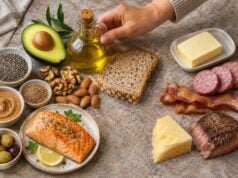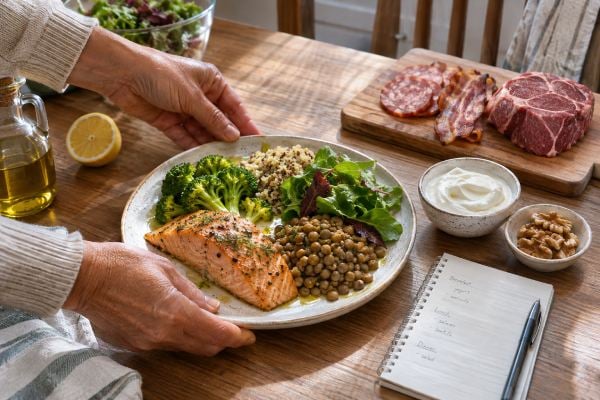
A high-protein diet does not automatically raise cholesterol. What matters most is where the protein comes from, what foods it replaces, and how much saturated fat, fiber, and total energy the diet contains. A high-protein pattern built around beans, lentils, soy foods, fish, skinless poultry, low-fat dairy, nuts, and seeds can fit well within a heart-healthy diet. A high-protein pattern dominated by fatty red meat, processed meat, butter, full-fat cheese, coconut oil, and low-fiber foods may push LDL cholesterol higher even if the protein target itself is reasonable. Research also suggests that replacing some animal protein with plant protein can modestly improve LDL and total cholesterol. The practical goal is therefore not simply to “eat more protein,” but to choose protein sources that support your lipid profile and overall cardiovascular risk. This guide explains how much protein is enough, why some high-protein diets raise LDL, what to monitor on blood tests, and how to build a higher-protein eating pattern without sacrificing heart health.
Table of Contents
- Does a High-Protein Diet Raise Cholesterol?
- What Matters More Than Protein Amount
- The Best Protein Sources for Heart Health
- How Much Protein Do You Actually Need?
- How to Build a Heart-Healthy High-Protein Day
- What to Monitor on a High-Protein Diet
- Who Should Use Extra Caution?
Does a High-Protein Diet Raise Cholesterol?
Protein itself is not the main dietary driver of LDL cholesterol. Saturated fat, overall dietary pattern, genetics, body weight, metabolic health, and the foods displaced by a high-protein diet are usually more important.
That is why two diets with the same protein target can produce very different lipid results. Consider these two 120-gram-per-day patterns:
- One uses oats with Greek yogurt, lentil soup, salmon, tofu, fruit, vegetables, olive oil, and nuts.
- The other uses bacon and eggs cooked in butter, several servings of fatty red meat, cheese, a low-fiber protein bar, and a cream-based shake.
Both can be called “high protein.” Only one is built around foods that align closely with current cardiovascular nutrition guidance.
Recent randomized-trial evidence suggests that higher-protein diets do not inherently worsen cardiovascular risk factors and may improve some measures depending on the macronutrient pattern. At the same time, the type of protein matters. Trials comparing plant-rich with animal-rich protein patterns have found modest improvements in LDL cholesterol when plant protein replaces some animal protein.
This distinction is especially important if your LDL has risen after starting a high-protein diet. The first question should not be, “Is protein bad for me?” It should be, “What protein foods and fats did I add, and what fiber-rich foods did I remove?”
If you are unsure what LDL, HDL, and triglycerides represent, start with cholesterol and triglycerides explained before changing the diet based on one number.
What Matters More Than Protein Amount
Several features of a high-protein diet have a stronger effect on cholesterol than the protein percentage by itself.
Saturated fat
Saturated fat tends to raise LDL cholesterol in many people. Major sources include fatty cuts of beef and pork, processed meats, butter, cream, full-fat cheese, and tropical fats such as coconut and palm oil. A high-protein diet that increases these foods substantially can raise LDL even if body weight and triglycerides improve.
The better move is not necessarily to reduce protein. It may be to swap the protein source: beans instead of sausage, fish instead of a fatty steak, nonfat or low-fat Greek yogurt instead of full-fat cheese, or skinless poultry instead of processed meat.
Current American Heart Association dietary guidance emphasizes healthy protein sources and replacing saturated-fat sources with unsaturated-fat sources. That means the fat that comes with the protein often deserves as much attention as the protein grams.
Fiber
Some high-protein plans accidentally become low-fiber plans. If bread, oats, beans, fruit, and whole grains are removed to make room for animal protein, soluble fiber intake can fall sharply. That matters because soluble fiber helps reduce LDL cholesterol by increasing bile acid excretion and changing cholesterol metabolism.
A heart-conscious higher-protein diet should still contain vegetables, fruit, legumes, and whole grains. If LDL is high, foods such as oats, barley, beans, lentils, and psyllium can be especially useful. See how soluble fiber helps lower LDL for practical intake targets.
What the protein replaces
Diet changes are substitutions. Adding 40 grams of protein means those calories usually replace carbohydrate, fat, or both. The result depends on what is removed.
Replacing sugary drinks, refined snacks, and oversized portions of refined starch with protein-rich whole foods may improve satiety, triglycerides, and glucose control. Replacing whole grains, legumes, nuts, and unsaturated fats with large amounts of fatty meat may move the diet in the opposite direction.
Total energy intake and weight change
Higher protein can improve fullness and help preserve lean mass during weight loss. If that makes a calorie deficit easier to sustain, weight loss can improve triglycerides, blood pressure, and insulin sensitivity. But “high protein” does not guarantee a calorie deficit. Cheese, fatty meat, nuts, nut butter, and shakes can add calories quickly.
The heart-health effect therefore depends partly on whether the diet helps you maintain a healthy weight without crowding out protective foods.
The Best Protein Sources for Heart Health
A useful hierarchy is to prioritize minimally processed protein sources that are low in saturated fat or naturally paired with fiber and unsaturated fats.
| Protein source | Why it can fit well | What to watch |
|---|---|---|
| Beans, lentils, peas | Protein plus soluble fiber, minerals, and little saturated fat | Sodium in canned or prepared versions |
| Soy foods such as tofu, tempeh, edamame | Complete plant protein; can replace higher-saturated-fat animal foods | Sodium in sauces and processed products |
| Fish and seafood | High-quality protein; many choices are low in saturated fat, and oily fish provide omega-3 fats | Preparation method and added salt |
| Skinless poultry | Lean protein when baked, grilled, roasted, or poached | Processed deli poultry and fried preparation |
| Low-fat or nonfat dairy | Protein, calcium, and convenient meal/snack options | Added sugar in flavored products |
| Nuts and seeds | Protein plus unsaturated fats and fiber | Calorie density and salted coatings |
| Eggs | Nutrient-dense, versatile protein source | Overall dietary pattern and what accompanies them |
| Lean unprocessed red meat | Protein, iron, zinc, vitamin B12 | Portion size, saturated fat, and frequency |
| Processed meat | Convenient protein | Often high in sodium and saturated fat; best limited |
Plant protein is particularly useful because it changes more than one nutrient at a time. Replacing a serving of processed meat with lentils reduces saturated fat and sodium while increasing fiber and potassium. That “package effect” helps explain why food-based recommendations can be more useful than arguing about protein grams in isolation.
For a deeper comparison of protein choices, see the best protein sources for heart health.
If you rely on shakes for convenience, check the entire label rather than the protein number alone. Some products contain large amounts of saturated fat, coconut-derived ingredients, added sugar, or sodium. A guide to choosing protein shakes when cholesterol is high can help you compare products.
How Much Protein Do You Actually Need?
The basic adult Recommended Dietary Allowance is 0.8 grams of protein per kilogram of body weight per day. That is designed as a minimum intake that meets the needs of most healthy adults, not necessarily the ideal target for every goal or life stage.
Many people reasonably eat more. Older adults, people dieting for fat loss, and people who do regular resistance training may benefit from higher intakes, often around 1.0–1.6 g/kg/day depending on age, activity, energy intake, health status, and training goals. Competitive athletes may use targets within or above that range under appropriate guidance.
To convert body weight from pounds to kilograms, divide by 2.2. For example:
- 150 lb is about 68 kg.
- 180 lb is about 82 kg.
- 220 lb is about 100 kg.
At 1.2 g/kg/day, those body weights correspond to roughly 82 g, 98 g, and 120 g of protein per day.
More is not automatically better. Once protein intake is sufficient for muscle maintenance, recovery, and appetite, pushing intake much higher may simply displace fiber-rich foods or add calories. A 200-gram target is not inherently superior to 120 grams just because it is more “high protein.”
Spread protein across the day
Instead of putting most protein into one large dinner, many people find it easier to use moderate portions across three meals, with a snack if needed. For example, 25–35 grams at each meal can produce a high daily total without requiring oversized portions of meat.
This approach also makes it easier to diversify sources: yogurt at breakfast, lentils at lunch, fish at dinner, and nuts or edamame as a snack.
How to Build a Heart-Healthy High-Protein Day
The simplest strategy is to keep the basic architecture of a heart-healthy diet and add protein within it rather than replacing plants with protein foods.
A practical plate can include:
- roughly one-quarter lean protein;
- roughly one-quarter high-fiber carbohydrate such as beans, lentils, barley, quinoa, or another whole grain;
- about half vegetables or a mix of vegetables and fruit;
- a modest amount of unsaturated fat such as olive oil, nuts, seeds, or avocado.
Here is an example day that provides substantial protein without turning into a low-fiber, high-saturated-fat pattern.
Breakfast
Plain Greek yogurt with oats, berries, chia seeds, and walnuts. This combines protein with soluble fiber and unsaturated fats. If you prefer eggs, pair them with vegetables and whole-grain toast rather than bacon, sausage, and butter-heavy sides. If eggs are a frequent part of your diet, eggs and cholesterol explains how they fit into the bigger pattern.
Lunch
A lentil-and-vegetable bowl with quinoa or another whole grain, leafy greens, and olive-oil vinaigrette. Add tofu, fish, or chicken if you need more protein. Beans and lentils are especially efficient because they contribute to both protein and fiber goals.
Snack
Edamame, fruit with a small handful of nuts, or low-fat cottage cheese with fruit can add protein without much saturated fat. A shake is also reasonable if it is convenient, but it should complement—not replace—the rest of the diet.
Dinner
Salmon, trout, tofu, tempeh, or skinless poultry with a large serving of vegetables and a whole grain or legume. Use olive oil or another liquid plant oil instead of butter as the default cooking fat.
The result is “high protein” because protein appears in every meal, not because every plate is dominated by meat.
What to Monitor on a High-Protein Diet
If you changed your diet substantially, use objective data rather than assumptions. A lipid panel after a consistent period on the new pattern can show how your body responds.
The most useful markers include:
- LDL cholesterol: the main cholesterol target for atherosclerotic risk reduction.
- Non-HDL cholesterol: captures cholesterol carried in all atherogenic particles.
- Triglycerides: often improve with weight loss and reduced refined carbohydrate, but can rise with excess alcohol or calories.
- HDL cholesterol: useful context, but a higher HDL does not cancel out a high LDL.
- ApoB: sometimes helpful when triglycerides are elevated, metabolic syndrome is present, or LDL and particle burden appear discordant. The article on ApoB testing versus LDL explains when it can add information.
If LDL rose after starting the diet, review the food pattern before abandoning the protein goal. Ask:
- Did saturated fat rise sharply?
- Did soluble fiber fall?
- Did red or processed meat replace beans, fish, or whole grains?
- Did I add butter, cream, cheese, coconut oil, or “keto” snacks?
- Did total calorie intake increase?
- Is the change large enough to suggest a strong genetic response to saturated fat?
A modest LDL rise may improve with targeted substitutions. A large increase—especially into a very high range—deserves clinician review rather than endless dietary experimentation. See cholesterol ranges and what they mean for context.
Give the change enough time, but not forever
Lipid values can change within weeks after a major diet change. Clinicians often reassess after a reasonable interval once the new pattern is stable. If you keep changing the diet every few days, it becomes difficult to know what caused the result.
Track the pattern, not every meal. A diet can include an occasional steak or full-fat dessert and still be heart-conscious if the overall week is built around healthier protein and fat sources.
Who Should Use Extra Caution?
A higher-protein diet is not appropriate in the same form for everyone.
People with chronic kidney disease may need individualized protein targets based on kidney function, stage of disease, urine protein, dialysis status, diabetes, and overall nutrition. A very high protein intake can be inappropriate for some people with kidney disease, while people receiving dialysis may need more protein. This is a situation for individualized medical nutrition therapy rather than a generic online target.
People with very high LDL cholesterol, familial hypercholesterolemia, or known cardiovascular disease should be especially careful with high-protein approaches that rely heavily on saturated fat. If LDL remains high despite a heart-healthy pattern, medication may be needed; diet and medication are not competing strategies.
People with gout, recurrent kidney stones, liver disease, pregnancy, eating disorders, or complex metabolic conditions may also need a tailored plan. The concern is not always protein itself; it may be hydration, purine load, mineral balance, total energy, or the foods used to meet the protein target.
Finally, beware of extreme versions of “high protein” that eliminate most plants. A diet can produce short-term weight loss while still worsening LDL or reducing fiber, potassium, and micronutrient diversity. If your goal is both body composition and cardiovascular health, those tradeoffs matter.
If your LDL rises after you increase protein
Do not assume protein itself is the cause. Compare the diet before and after the change. A common pattern is that added protein comes packaged with much more saturated fat: extra cheese, fatty ground beef, bacon, butter, cream, coconut products, and convenience bars made with saturated-fat-rich ingredients. Another is that oats, beans, fruit, and whole grains disappear, taking soluble fiber with them. Both changes can push LDL in the wrong direction even if total protein is reasonable.
A targeted correction is often easier than abandoning the whole plan. Keep the protein amount similar for several weeks but shift the sources toward fish, legumes, soy foods, skinless poultry, low-fat dairy, and protein powders that are low in saturated fat. Restore oats, barley, beans, fruit, vegetables, nuts, and seeds. Use olive or other unsaturated oils instead of butter or coconut oil. Then repeat lipids after a stable interval recommended by your clinician.
If LDL rises dramatically, remains very high after these substitutions, or there is a strong family history of premature cardiovascular disease, do not keep experimenting indefinitely. A pronounced response can uncover underlying genetic risk. The right next step may include ApoB testing, evaluation for familial hypercholesterolemia, or lipid-lowering medication in addition to diet.
The safest high-protein pattern is usually moderate rather than extreme: enough protein to support your goals, plenty of plant foods, unsaturated fats in place of saturated fats, and regular monitoring when you have lipid or cardiovascular risk factors. If your cholesterol worsens, adjust the protein sources before assuming you must choose between muscle, satiety, and heart health.
References
- 2026 Dietary Guidance to Improve Cardiovascular Health: A Scientific Statement From the American Heart Association 2026 (Position Statement)
- Impact of Quantity and Type of Dietary Protein on Cardiovascular Disease Risk Factors Using Standard and Network Meta-analyses of Randomized Controlled Trials 2025 (Systematic Review)
- Protein intake and cardiovascular diseases: an umbrella review of systematic reviews for the evidence-based guideline on protein intake of the German Nutrition Society 2025 (Systematic Review)
- Animal versus plant-based protein and risk of cardiovascular disease and type 2 diabetes: a systematic review of randomized controlled trials and prospective cohort studies 2023 (Systematic Review)
- Dietary Macronutrient Intake and Cardiovascular Disease Risk and Mortality: A Systematic Review and Dose-Response Meta-Analysis of Prospective Cohort Studies 2024 (Meta-Analysis)
Disclaimer
This article provides general nutrition information and is not a personalized diet prescription. People with kidney disease, very high cholesterol, cardiovascular disease, pregnancy, or other medical conditions should discuss major protein changes with a qualified clinician or registered dietitian. Do not stop prescribed lipid-lowering medication because of diet changes without medical guidance.