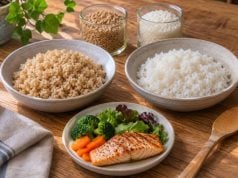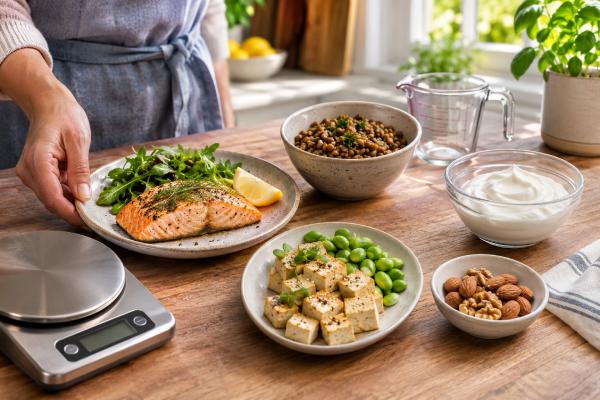
Protein is essential for muscle, enzymes, hormones, immune function, and recovery, but for heart health the source often matters more than simply eating more. A diet built around beans, lentils, soy foods, nuts, seeds, fish, low-fat dairy, and modest amounts of lean unprocessed meat generally brings more fiber, unsaturated fat, and micronutrients—and less saturated fat and sodium—than one centered on processed meat or fatty cuts.
Most adults can meet protein needs without supplements or oversized servings. The basic U.S. Recommended Dietary Allowance is 0.8 grams per kilogram of body weight per day, although older adults, athletes, people recovering from illness, and those trying to preserve muscle during weight loss may need more. Kidney disease and certain medical conditions can change the target substantially. The practical goal is to get enough protein while choosing foods that also support LDL cholesterol, blood pressure, body weight, and blood sugar. Spreading protein across meals usually makes that easier than chasing one very high daily number.
Table of Contents
- How Much Protein Do You Need?
- Why Protein Source Matters for the Heart
- Best Protein Sources for Heart Health
- Protein Sources to Limit or Choose More Carefully
- How to Build Heart-Healthy Protein Into Each Meal
- When Higher Protein Intake Makes Sense
- Common Protein Mistakes
How Much Protein Do You Need?
For a generally healthy adult, the RDA is 0.8 g of protein per kilogram of body weight per day. This is a minimum intake designed to cover the needs of most healthy adults, not necessarily the ideal target for every goal or life stage.
To estimate it, divide body weight in pounds by 2.2 to get kilograms, then multiply by 0.8.
| Body weight | Body weight in kg | Protein at 0.8 g/kg |
|---|---|---|
| 120 lb | 55 kg | 44 g/day |
| 150 lb | 68 kg | 54 g/day |
| 180 lb | 82 kg | 66 g/day |
| 220 lb | 100 kg | 80 g/day |
Many people benefit from more than the RDA. Older adults often need a higher intake to help preserve muscle, particularly when appetite is low or during recovery from illness. People who lift weights, train for endurance events, or are dieting for fat loss may also use a higher range. In sports nutrition, intakes around 1.2 to 1.6 g/kg/day are common depending on training and goals, and some athletes use more.
That does not mean everyone with heart concerns should pursue a high-protein diet. Increasing protein can crowd out fiber-rich foods if it is done by adding meat, cheese, bars, and shakes while reducing whole grains, legumes, fruit, and vegetables. The cardiovascular effect depends on what foods supply the protein and what foods they replace.
If you have chronic kidney disease, advanced liver disease, certain metabolic disorders, or have been given a protein restriction, use the target from your clinician or dietitian instead of a general formula.
A practical approach for most adults is to include a meaningful protein source at breakfast, lunch, and dinner rather than trying to make up the entire day at one meal. This helps support fullness and muscle maintenance without requiring extreme portions.
Why Protein Source Matters for the Heart
Protein itself is not usually the main cardiovascular problem. The “package” it comes in matters.
A cup of lentils provides protein along with fiber, potassium, magnesium, and very little saturated fat. A serving of salmon provides protein plus unsaturated fats and omega-3 fatty acids. A serving of processed sausage may provide similar protein but also much more sodium and saturated fat.
Recent systematic reviews generally suggest that replacing some animal protein with plant protein improves LDL cholesterol and may be associated with lower cardiovascular risk. Randomized trials also find that plant-protein-rich patterns can improve lipid measures compared with animal-protein-rich patterns.
This does not mean animal protein must be eliminated. Fish, low-fat dairy, eggs, and lean poultry can fit well in a heart-healthy diet. The strongest dietary pattern is usually one that prioritizes plants and seafood, includes lean animal foods as desired, and minimizes processed meat.
The replacement effect is important. Swapping steak for beans may reduce saturated fat and increase fiber. Swapping plain yogurt for a pastry may increase protein and improve satiety without adding much saturated fat if the yogurt is low-fat. Swapping chicken for refined crackers would increase protein but would not necessarily improve the overall diet.
For people with high LDL cholesterol, the type of fat that travels with the protein deserves special attention. A guide to saturated versus unsaturated fat explains why replacing saturated fat with unsaturated fat is more helpful than simply cutting total fat.
Best Protein Sources for Heart Health
The best choices provide protein plus other nutrients that support cardiovascular health.
Beans, lentils, peas, and chickpeas
Legumes are among the most useful protein foods for the heart because they combine protein with fiber. Fiber can support lower LDL cholesterol, better blood sugar control, and greater fullness.
One cup of cooked lentils provides roughly 18 g of protein; many beans provide around 14 to 16 g per cooked cup. They also work as direct meat replacements in chili, soups, tacos, salads, pasta sauces, curries, and grain bowls.
If you are not used to eating legumes, increase them gradually to reduce gas and bloating. The guide to beans and lentils for heart health includes practical portions and meal ideas.
Soy foods
Tofu, tempeh, edamame, and unsweetened soy milk provide high-quality plant protein. Soy protein has a modest LDL-lowering effect in controlled studies, especially when it replaces foods higher in saturated fat.
A half cup of firm tofu typically provides around 10 to 20 g of protein depending on the product. One cup of shelled edamame can provide roughly 17 g. Soy foods are particularly useful for people who want plant protein without relying heavily on powders or highly processed meat substitutes.
Fish and seafood
Fish is a strong protein choice because many species are low in saturated fat, while oily fish such as salmon, sardines, mackerel, and trout provide omega-3 fats. These fats can lower triglycerides and are part of heart-healthy dietary patterns.
The American Heart Association recommends regular fish and seafood intake as part of a healthy eating pattern. Avoid turning fish into a less heart-friendly meal through deep-frying, heavy butter sauces, or very salty breading. For specific options, see fatty fish for heart health.
Nuts and seeds
Nuts and seeds provide protein along with unsaturated fats, fiber, magnesium, and other nutrients. They are more calorie-dense than legumes, so portion awareness helps if weight loss is a goal.
A small handful—about 1 ounce—of many nuts supplies roughly 4 to 7 g of protein. Peanut butter and other nut butters can also be useful, but choose versions without large amounts of added sugar or hydrogenated fat.
Low-fat or fat-free dairy
Milk, yogurt, cottage cheese, and other dairy foods can provide substantial protein. For people watching LDL cholesterol, lower-fat versions reduce saturated fat while keeping most of the protein.
Plain Greek yogurt can provide roughly 15 to 20 g of protein per serving. Compare labels because flavored yogurts can contain significant added sugar, while some cottage cheeses are high in sodium.
Eggs
Eggs are nutrient-dense and provide about 6 g of protein each. For many healthy people, moderate egg intake can fit into a heart-healthy diet. People with dyslipidemia, diabetes, or very high LDL may need to consider the whole dietary pattern and individual guidance rather than assuming unlimited intake is harmless.
Lean poultry and unprocessed meat
Skinless poultry and lean cuts of beef or pork can be included in moderate portions. Choose unprocessed versions and cooking methods such as roasting, grilling, baking, or stewing rather than deep-frying.
A 3-ounce cooked portion of meat or poultry is roughly the size of a deck of cards and usually provides around 20 to 25 g of protein.
A useful way to compare protein foods is to ask what comes with each 20 to 25 g of protein. Reaching that amount from lentils or beans usually brings several grams of fiber. Getting it from salmon brings unsaturated fat and omega-3s. Getting it from plain low-fat Greek yogurt brings calcium with little saturated fat. Getting it from salami can also bring a large sodium load and more saturated fat. Protein grams alone hide those differences.
Cost and convenience matter too. Canned beans, lentils, eggs, frozen edamame, canned salmon or tuna, peanut butter, and plain yogurt can be economical ways to keep protein available. Rinsing canned beans can reduce some of their sodium. Choosing no-salt-added beans, lower-sodium canned fish, and unsalted nuts can make these staples work even better for people with blood pressure goals.
Plant and animal proteins do not have to compete at every meal. A mixed approach can work very well: add beans to turkey chili, use lentils to replace half the ground meat in pasta sauce, pair fish with a whole-grain-and-bean salad, or use nuts and seeds to increase the protein of oatmeal. These changes improve the overall nutrient pattern without requiring a dramatic dietary identity change.
Protein Sources to Limit or Choose More Carefully
Not every high-protein food is a heart-healthy choice.
Processed meat deserves the most caution. Bacon, sausage, hot dogs, salami, pepperoni, jerky, and many deli meats can be high in sodium and saturated fat. Frequent intake is associated with greater cardiovascular risk. If these are routine foods, reducing them is more valuable than worrying about small differences between two kinds of protein powder.
Fatty red meat can be high in saturated fat. If you eat beef, pork, or lamb, choose leaner cuts and keep portions moderate. The question is not whether red meat must be banned, but how frequently it appears and what it replaces. See red meat and heart health for a fuller discussion.
Full-fat dairy can add saturated fat quickly. Cheese is especially easy to overeat because a small portion is calorie-dense and often salty. Low-fat milk and yogurt can provide similar protein with less saturated fat.
Fried protein foods may bring refined breading, excess calories, and less favorable fats. A fried chicken sandwich and a grilled chicken-and-bean bowl both contain protein, but they are not equivalent cardiovascular choices.
Protein bars and shakes vary widely. Some are mostly protein with modest sugar and saturated fat; others resemble candy bars or milkshakes. Protein powders can be convenient, but they are not automatically superior to food. If cholesterol is your focus, see choosing a protein shake for high cholesterol.
How to Build Heart-Healthy Protein Into Each Meal
You do not need to count every gram if meals are balanced and protein appears consistently.
A useful plate pattern is:
- about half the plate vegetables and/or fruit;
- about one-quarter whole grains or another high-fiber starch;
- about one-quarter protein, with plants and fish emphasized;
- a small amount of unsaturated fat such as olive oil, nuts, seeds, or avocado.
Breakfast is often the lowest-protein meal. Easy options include Greek yogurt with berries and nuts, oatmeal made with milk or soy milk plus seeds, eggs with vegetables and whole-grain toast, or a smoothie with plain yogurt or unsweetened soy milk.
Lunch can be a bean-and-grain bowl, lentil soup with whole-grain bread, tuna or salmon salad, hummus with vegetables and whole grains, or leftover chicken with a large salad.
Dinner might include salmon with roasted vegetables and barley, tofu stir-fry with brown rice, bean chili, lentil pasta with vegetables, or a small portion of lean poultry with whole grains and greens.
The exact grams do not need to be identical at every meal, but distributing protein is useful. A person aiming for 75 g/day could get about 20 to 25 g at each main meal plus smaller amounts from snacks.
For people trying to improve cholesterol and blood pressure simultaneously, the best protein choices often overlap with the broader best foods for heart health: legumes, fish, nuts, seeds, vegetables, whole grains, and minimally processed foods.
When Higher Protein Intake Makes Sense
Higher protein can be useful when the goal is preserving or building muscle, improving fullness during weight loss, or supporting recovery from training. The key is to increase protein without turning the diet into a saturated-fat-heavy meat plan.
For example, a 75 kg active adult using 1.4 g/kg would target about 105 g/day. That can be achieved with ordinary food:
- breakfast: Greek yogurt, oats, and nuts, about 25 g;
- lunch: lentil bowl with whole grains, about 25 g;
- snack: milk or soy milk plus fruit, about 10 to 15 g;
- dinner: salmon or tofu with vegetables and a whole grain, about 35 to 40 g.
No giant steak or triple-scoop shake is required.
If a high-protein approach is helping with weight management, monitor what happens to the rest of the diet. Fiber should not collapse, vegetables should not disappear, and saturated fat should not surge. People often run into trouble when “more protein” becomes shorthand for bacon, cheese, red meat, and protein bars.
If you already have high cholesterol, high-protein diets and cholesterol require extra attention to the source of protein and the foods being displaced.
People with kidney disease need individualized advice because some stages of chronic kidney disease call for protein restriction, while dialysis can increase protein needs. Heart failure can also complicate the picture if sodium and fluid limits are important. Those are medical nutrition decisions, not one-size-fits-all internet targets.
Common Protein Mistakes
The first mistake is assuming that more protein is always better. Once needs are met, pushing intake higher does not automatically improve heart health, muscle gain, or fat loss.
The second is ignoring the food package. A protein source can be high in protein and still be high in sodium, saturated fat, refined carbohydrate, or calories.
The third is relying too heavily on supplements. Protein powder is useful when food is inconvenient, appetite is low, or intake targets are high, but whole foods bring fiber, vitamins, minerals, and other compounds powders may lack.
The fourth is neglecting plant protein because it is considered “incomplete.” Most adults who eat a varied diet do not need to combine specific plant proteins at every meal. Eating a mixture of legumes, whole grains, nuts, seeds, soy, vegetables, and other foods across the day provides the needed amino acids.
The fifth is making dinner enormous while breakfast contains almost none. Spreading protein across meals is generally easier on appetite and helps support muscle protein synthesis throughout the day.
Finally, do not let a protein target crowd out the dietary components that matter strongly for cardiovascular health: fiber, unsaturated fats, potassium-rich produce, whole grains, and minimally processed foods. Protein is one part of a heart-healthy pattern, not the organizing principle for every bite.
The best strategy is simple: eat enough for your body and goals, then make most of those grams come from foods that do more than supply amino acids. When beans, soy, fish, nuts, seeds, lower-fat dairy, and lean unprocessed proteins make up the core, protein can support muscle without working against cholesterol or blood pressure goals.
References
- Protein intake and cardiovascular diseases: an umbrella review of systematic reviews for the evidence-based guideline on protein intake of the German Nutrition Society 2025 (Systematic Review)
- Impact of Quantity and Type of Dietary Protein on Cardiovascular Disease Risk Factors Using Standard and Network Meta-analyses of Randomized Controlled Trials 2024 (Systematic Review)
- Animal versus plant-based protein and risk of cardiovascular disease and type 2 diabetes: a systematic review of randomized controlled trials and prospective cohort studies 2023 (Systematic Review)
- Effects of high-quality protein supplementation on cardiovascular risk factors in individuals with metabolic diseases: A systematic review and meta-analysis of randomized controlled trials 2024 (Systematic Review)
- Picking Healthy Proteins 2024
Disclaimer
This article provides general nutrition information and is not a substitute for individualized medical advice. People with kidney disease, heart failure, liver disease, diabetes, pregnancy, or other conditions that affect protein needs should use a protein target set by their healthcare professional or registered dietitian.