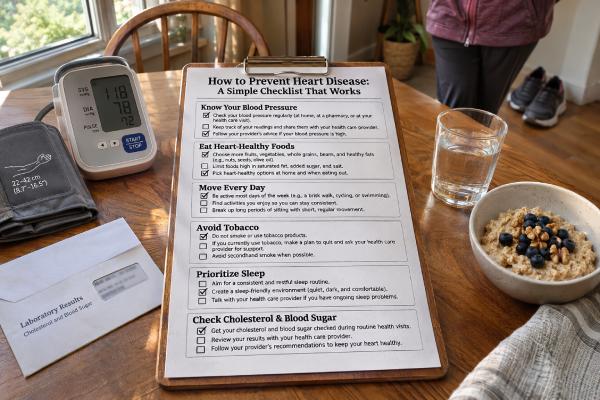
Heart disease prevention is less about finding one “perfect” food or supplement and more about keeping a small set of high-impact habits and health numbers in a safer range for years. The biggest wins are straightforward: avoid tobacco and nicotine, control blood pressure, improve cholesterol and blood sugar when needed, move regularly, eat mostly minimally processed foods, sleep well, and take prescribed medicines consistently. You do not need to change everything in one week. A practical prevention plan starts by knowing your current risk, choosing the next one or two actions that matter most, and checking whether they are actually working. Family history and age can raise risk, but they do not make heart disease inevitable. Likewise, feeling healthy does not prove that blood pressure, LDL cholesterol, or blood sugar are healthy. The checklist below turns prevention into concrete daily, weekly, and periodic steps, including when professional care or medication matters as much as lifestyle.
Table of Contents
- Know Your Starting Risk
- Protect Your Arteries From Tobacco and High Blood Pressure
- Build a Heart-Protective Eating Pattern
- Move, Sleep, and Manage Weight Consistently
- Track Cholesterol, Blood Sugar, and Medications
- Use a Simple Daily, Weekly, and Yearly Checklist
- Know When Prevention Needs Medical Help
Know Your Starting Risk
The first prevention step is to measure what you can change. Heart disease often develops quietly over many years, so waiting for symptoms is not a useful screening strategy. Blood pressure, cholesterol, blood sugar, smoking exposure, activity, sleep, weight, kidney health, and family history together give a much clearer picture than any single number.
For most adults, a useful baseline conversation with a healthcare professional includes:
- Blood pressure measured correctly, with home readings when office values are high, inconsistent, or being treated.
- A lipid panel that includes total cholesterol, LDL cholesterol, HDL cholesterol, and triglycerides. Non-HDL cholesterol is also useful, and some people benefit from ApoB or lipoprotein(a) testing.
- Blood glucose or A1C when diabetes or prediabetes screening is appropriate.
- Tobacco and nicotine use, including vaping and secondhand smoke exposure.
- Family history, especially premature heart attack or stroke in a first-degree relative.
- Kidney function and other conditions that raise cardiovascular risk.
- Current medicines, including whether a cholesterol- or blood-pressure-lowering medicine is indicated.
Blood pressure below 120/80 mm Hg is considered normal under current U.S. guidance. Readings of 130–139 systolic or 80–89 diastolic fall in stage 1 hypertension, while readings of at least 140 systolic or 90 diastolic fall in stage 2. One unusual reading does not define your usual blood pressure, which is why a consistent home blood pressure monitoring routine can be more informative than checking only when you feel stressed.
Risk is not simply “low” or “high” forever. It changes with age, new diagnoses, pregnancy history, kidney disease, smoking, and treatment. A person with modestly elevated LDL at age 35 may need a different approach from someone with the same LDL after a heart attack. Prevention is therefore a process of reassessment, not a one-time physical.
One useful mindset is to separate fixed risk from actionable risk. You cannot change your age or genes, but those factors can make controlling blood pressure, LDL, diabetes, or smoking exposure more urgent. A strong family history is a reason to act earlier, not a reason to assume prevention will fail.
Protect Your Arteries From Tobacco and High Blood Pressure
If you smoke, quitting is one of the highest-value steps you can take for your cardiovascular system. Cigarette smoke promotes inflammation, blood-vessel injury, clotting, and atherosclerosis. Nicotine also raises heart rate and blood pressure in the short term. Benefits begin after quitting and continue to accumulate over time; the goal is complete tobacco cessation rather than merely reducing cigarettes indefinitely. If stopping feels difficult, evidence-based treatment can combine counseling with nicotine replacement, varenicline, bupropion, or another clinician-recommended option. A more detailed look at what changes after you quit smoking can help make the benefits feel less abstract.
Blood pressure deserves the same priority because high pressure repeatedly stresses artery walls, the heart, brain, kidneys, and eyes. Many people with hypertension feel completely normal. Prevention therefore depends on measurement, not symptoms.
For accurate home readings, use a validated automatic upper-arm cuff that fits your arm. Avoid caffeine, exercise, and smoking for about 30 minutes beforehand when possible. Empty your bladder, sit quietly for five minutes, support your back and feet, keep the cuffed arm at heart level, and take two readings about one minute apart. Record the results rather than reacting to a single number.
Lifestyle changes that can lower blood pressure also improve overall cardiovascular health:
- Follow a DASH-style or similar heart-healthy eating pattern.
- Reduce excess sodium, especially from packaged and restaurant foods.
- Eat potassium-rich foods unless kidney disease or medication makes extra potassium unsafe.
- Get regular aerobic activity and resistance exercise.
- Lose excess weight when appropriate; even modest sustained loss can help.
- Reduce or avoid alcohol, especially if blood pressure rises with drinking.
- Improve sleep and address suspected sleep apnea.
- Take prescribed blood pressure medicine consistently.
Current U.S. guidance recommends medication for all adults with average blood pressure at or above 140/90 mm Hg and for selected people at or above 130/80 mm Hg when cardiovascular risk or conditions such as diabetes, kidney disease, prior stroke, or known cardiovascular disease raise the stakes. Lifestyle remains important even when medicine is needed; it is not an either-or choice. For a practical lifestyle framework, see habits that lower blood pressure naturally.
Build a Heart-Protective Eating Pattern
The most useful heart-health diet advice focuses on the pattern of foods you eat repeatedly, not on whether one ingredient is “good” or “bad.” A strong pattern is rich in vegetables, fruit, whole grains, beans, lentils, nuts, seeds, fish, and other minimally processed foods, with unsaturated plant oils replacing much of the butter, coconut oil, fatty meat, and other major saturated-fat sources.
A simple plate method works well for many meals: fill about half the plate with non-starchy vegetables, one quarter with a high-fiber carbohydrate such as beans or whole grains, and one quarter with a protein source. Add fruit, plain yogurt, nuts, or another nutrient-dense food as needed. There is no requirement to eat perfectly at every meal; the weekly pattern matters more.
Pay special attention to four label-and-menu targets:
- Sodium. Packaged breads, deli meats, pizza, sauces, soups, snack foods, and restaurant meals can supply far more sodium than the salt shaker. U.S. blood pressure guidance uses less than 2,300 mg per day as a practical upper goal and notes that about 1,500 mg per day can provide greater blood-pressure benefit for many adults.
- Saturated fat. Replacing saturated fat with unsaturated fats generally improves LDL cholesterol more than simply replacing fat with refined carbohydrate. Olive or canola oil, nuts, seeds, avocado, and fish are practical swaps.
- Fiber. Soluble fiber from oats, barley, beans, lentils, fruit, and psyllium can help reduce LDL cholesterol. Whole foods also improve fullness and diet quality.
- Added sugar and refined starch. Frequent sugary drinks, sweets, and highly refined foods can make weight, triglycerides, and blood sugar harder to control.
A practical guide to the best foods for overall heart health can help turn these principles into meals. When LDL cholesterol is a main concern, emphasize viscous soluble fiber, nuts, legumes, and unsaturated fats while cutting back on foods that are high in saturated fat.
Do not let health halos override the Nutrition Facts panel. A granola, plant-based snack, protein bar, or “natural” frozen meal can still be high in sodium, added sugar, or saturated fat. Compare similar products by serving size and nutrient amounts, then choose the option that fits the rest of your day.
Alcohol is not required for heart health. If you do not drink, do not start for prevention. If you do drink, less is generally better for blood pressure and several other health outcomes.
Move, Sleep, and Manage Weight Consistently
Regular movement improves blood pressure, insulin sensitivity, fitness, mood, sleep, and weight regulation. Adults should aim for at least 150 minutes of moderate-intensity aerobic activity per week or about 75 minutes of vigorous activity, plus muscle-strengthening activity on at least two days. More activity can provide additional benefit, but people who are inactive gain meaningful health value from starting below those targets and building gradually.
Moderate intensity means your breathing is faster but you can still speak in short sentences. Brisk walking, cycling, swimming, dancing, and active household or yard work can all count. You do not need a gym membership. A realistic plan might be 20–30 minutes of brisk walking on five days plus two short strength sessions. If long sessions are difficult, several shorter bouts can still be useful. Walking for heart health is a practical starting point because the dose is easy to adjust.
Strength training matters because muscle supports glucose control, function, and long-term independence. Use major movement patterns such as squatting to a chair, pushing, pulling, hinging, carrying, and core work. Beginners can start with light loads, controlled breathing, and one or two sets before progressing.
Weight is a risk marker, but the goal is not to chase a specific scale number at the expense of sustainable habits. If you have overweight or obesity, even a modest sustained reduction can improve blood pressure, triglycerides, glucose, sleep apnea, and mobility. Focus first on behaviors that you can repeat: higher-fiber meals, fewer liquid calories, planned snacks, regular activity, adequate protein, and consistent sleep.
Sleep belongs on the prevention checklist too. Most adults function best with roughly seven to nine hours, though individual needs vary. Short sleep, irregular schedules, and untreated sleep apnea can worsen blood pressure, appetite regulation, and cardiometabolic risk. Loud snoring, witnessed breathing pauses, morning headaches, or severe daytime sleepiness deserve medical attention. Building sleep habits that support heart health can be as important as adding another workout.
Finally, break up long periods of sitting. Standing, walking for a few minutes, taking stairs, and moving during calls will not replace planned exercise, but they reduce the amount of the day spent completely inactive.
Track Cholesterol, Blood Sugar, and Medications
Heart disease prevention becomes much more effective when lifestyle changes are paired with treatment of measurable risk factors. LDL cholesterol, other atherogenic lipoproteins, blood sugar, and blood pressure are not moral grades; they are signals that help guide the amount of prevention you need.
LDL cholesterol is a major driver of atherosclerotic cardiovascular disease. Diet, activity, weight change, and smoking cessation can improve the lipid profile, but they may not lower LDL enough for people with very high baseline levels, familial hypercholesterolemia, diabetes, established plaque, or high overall risk. Statins remain foundational when medication is indicated, and other LDL-lowering medicines can be added when needed. The 2026 U.S. dyslipidemia guideline recommends checking a lipid profile about 4–12 weeks after starting or changing lipid-lowering therapy and then generally every 6–12 months once treatment is stable, with timing individualized. If your LDL is elevated, review causes and treatment options for high LDL cholesterol with the bigger risk picture in mind.
Blood sugar matters because diabetes substantially increases cardiovascular risk. A1C estimates average glucose over roughly two to three months. People with diabetes who are stable and meeting goals may need A1C testing about twice a year; testing is commonly repeated about every three months when treatment changes, glucose is unstable, or goals are not being met. The target itself should be individualized. Learn more about why A1C and blood sugar control matter for heart risk.
Medication adherence is part of prevention. If a medicine causes side effects, costs too much, or does not fit your routine, tell the prescriber rather than quietly stopping it. Many problems can be solved by changing dose, timing, formulation, or drug class.
Do not add aspirin on your own just because it is sold over the counter. Aspirin can reduce clotting but also increases bleeding. Its role in primary prevention is selective and depends on cardiovascular risk, age, bleeding risk, and clinician judgment. People who already have cardiovascular disease may have a different indication than people trying to prevent a first event.
Use a Simple Daily, Weekly, and Yearly Checklist
A prevention plan works better when it is specific enough to follow. Instead of trying to “be healthy,” use repeatable actions and a small set of measurements.
| Frequency | What to do | What you are protecting |
|---|---|---|
| Daily | Avoid tobacco; take prescribed medicines; eat plants and high-fiber foods; limit excess sodium; move; protect sleep | Blood vessels, blood pressure, lipids, glucose, weight |
| Most weeks | Reach toward 150 minutes of moderate activity and 2 strength sessions; plan groceries and meals | Fitness, insulin sensitivity, blood pressure, body composition |
| As advised | Check home blood pressure, especially after diagnosis or treatment changes | Hypertension control and medication response |
| Periodically | Recheck cholesterol, A1C/glucose, weight or waist trend, and kidney-related labs when indicated | Hidden cardiometabolic risk |
| At routine visits | Review family history, symptoms, vaccines, medications, sleep, tobacco exposure, and overall cardiovascular risk | Early detection and treatment decisions |
If this feels like too much, choose the highest-impact unfinished item. A smoker with mildly elevated cholesterol usually gains more by successfully quitting than by obsessing over a minor dietary detail. A nonsmoker with persistent blood pressure of 160/95 mm Hg needs prompt blood-pressure treatment, not months of experimenting with supplements. A person with diabetes and high LDL may need both lifestyle work and medication.
Use a “minimum viable” version of each habit for difficult weeks. Ten-minute walks are better than abandoning activity. Frozen vegetables are better than skipping produce because fresh options ran out. A simple bean-and-whole-grain meal is better than relying on takeout every night. Prevention succeeds through repetition, not perfection.
Know When Prevention Needs Medical Help
Prevention includes knowing when self-care is not enough. New chest pressure, severe shortness of breath, fainting, sudden weakness or numbness on one side, difficulty speaking, or other possible heart attack or stroke symptoms require urgent evaluation rather than a lifestyle experiment.
Very high blood pressure also needs the right response. If a home reading is above 180/120 mm Hg, rest briefly and repeat it using correct technique. If it remains that high and you have chest pain, shortness of breath, neurologic symptoms, major vision change, severe weakness, or another new concerning symptom, treat it as an emergency. Severe readings without acute symptoms still deserve prompt medical contact.
You should also seek routine medical review when:
- Blood pressure remains above your recommended range despite consistent home measurements.
- LDL cholesterol is very high or there is premature heart disease in your family.
- A1C or fasting glucose is in the diabetes range or rising over time.
- You develop exertional chest discomfort, unexplained shortness of breath, fainting, or persistent palpitations.
- You suspect sleep apnea.
- You want to quit smoking but repeated attempts have not worked.
- Medication side effects or cost are making adherence difficult.
The prevention goal is not to do everything without medicine. It is to reduce the chance of heart attack, stroke, heart failure, and other cardiovascular problems using the safest combination of habits, monitoring, and treatment for your actual level of risk.
References
- Life’s Essential 8: Updating and Enhancing the American Heart Association’s Construct of Cardiovascular Health: A Presidential Advisory From the American Heart Association 2022 (Position Statement)
- The Role of Primary Care in Achieving Life’s Essential 8: A Scientific Statement From the American Heart Association 2024 (Position Statement)
- 2025 AHA/ACC/AANP/AAPA/ABC/ACCP/ACPM/AGS/AMA/ASPC/NMA/PCNA/SGIM Guideline for the Prevention, Detection, Evaluation and Management of High Blood Pressure in Adults: A Report of the American College of Cardiology/American Heart Association Joint Committee on Clinical Practice Guidelines 2025 (Guideline)
- 2026 ACC/AHA/AACVPR/ABC/ACPM/ADA/AGS/APhA/ASPC/NLA/PCNA Guideline on the Management of Dyslipidemia: A Report of the American College of Cardiology/American Heart Association Joint Committee on Clinical Practice Guidelines 2026 (Guideline)
- WHO clinical treatment guideline for tobacco cessation in adults 2024 (Guideline)
- 2021 Dietary Guidance to Improve Cardiovascular Health: A Scientific Statement From the American Heart Association 2021 (Position Statement)
Disclaimer
This article provides general cardiovascular prevention information and is not a substitute for personalized medical care. Your blood pressure, cholesterol, glucose, medication, aspirin, and screening targets may differ based on age, pregnancy, kidney disease, prior cardiovascular disease, and other factors. Seek emergency care for symptoms that could indicate a heart attack, stroke, or hypertensive emergency.