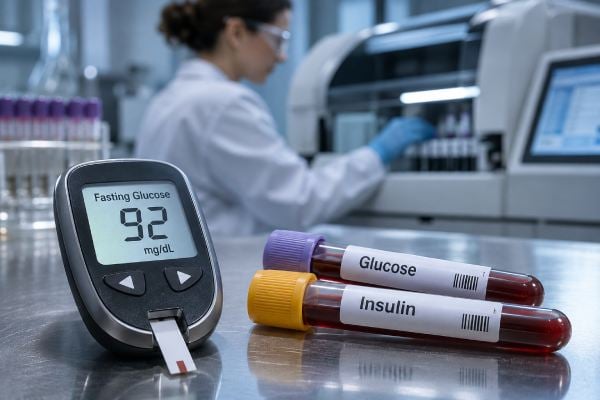
Insulin naturally rises after you eat. It helps move glucose out of the bloodstream and into cells that can use it or store it for later. When your blood sugar stays in range after a meal, insulin is doing part of the work that keeps it there. A post-meal rise is an expected part of digestion, and a glucose reading alone cannot show how much insulin your body released.
The picture changes when your body repeatedly needs more insulin to handle the same amount of glucose. Insulin resistance can do that sometimes years before fasting glucose or A1C climbs. A single insulin result, a smooth glucose curve, or an afternoon slump does not prove it is happening.
If a lab result prompted the question, start with when and why the blood was drawn. If diabetes runs in your family or you feel shaky after meals, those concerns point to different next steps. The aim is simple: understand what your readings can actually tell you, then improve how your body responds to insulin over time.
Table of Contents
- Why insulin rises when glucose stays normal
- When normal glucose deserves a closer look
- Which tests help and how to read them
- What shakiness or fatigue after eating means
- Meal changes that can help
- How to improve insulin sensitivity over time
- What to do next based on your results
Why insulin rises when glucose stays normal
Between meals, your pancreas releases small amounts of insulin. This helps regulate how much glucose your liver sends into the bloodstream. After you eat, it usually releases more. Insulin tells muscles to take up glucose and signals the liver to slow its own glucose output. As the meal is absorbed, insulin generally falls back toward its earlier level.
Carbohydrate drives much of this response because digestion turns many carbs into glucose. Some amino acids from protein can also prompt insulin release, and gut hormones released during digestion help shape the overall pattern. That is why two meals can produce similar glucose readings even if the insulin response differs.
“Insulin spike” is an everyday phrase for a sharp rise in insulin. There is no widely accepted cutoff that defines an unhealthy rise after an ordinary meal. How much insulin appears in the blood depends on the food, when the sample is taken, how sensitive your tissues are to insulin, and how quickly your body clears the hormone. An insulin level taken 30 minutes after lunch answers a different question from one taken before breakfast.
How resistance can change the response
With insulin resistance, tissues such as muscle, liver, and fat respond less strongly to insulin. The pancreas can often make more to keep glucose in range. This is called compensatory hyperinsulinemia. In plain terms, the body makes up for a weaker response by releasing more insulin.
Imagine two people with the same fasting glucose of 92 mg/dL. One may maintain that level with less insulin. The other may need more because the liver is less responsive to insulin’s signal to slow glucose release. The glucose result is the same in this example. It tells you how much glucose was in the blood at that moment, while leaving the insulin response unknown.
Over time, if the pancreas can no longer release enough insulin to keep up with demand, glucose may rise into the prediabetes or diabetes range. The timing varies, and progression isn’t inevitable. A rise in insulin after food, an elevated fasting insulin result, and a rising A1C each describe a different part of that picture.
When normal glucose deserves a closer look
A normal result is reassuring for what the test measures. A fasting lab result reflects one point in time, while A1C reflects average glucose over roughly three months. An at-home reading two hours after dinner captures one moment after that particular meal. Knowing which “normal” result you have helps you decide whether there’s a reason to do any further testing.
Most people with insulin resistance feel fine. Your medical history and trends over time give a clinician more to work with than hunger, tiredness, or cravings alone. It’s worth discussing your screening schedule if you have any of these factors:
- A parent or sibling with type 2 diabetes, or a history of gestational diabetes.
- Polycystic ovary syndrome (PCOS) or metabolic dysfunction-associated steatotic liver disease, a form of fatty liver often called MASLD.
- An increasing waist size, especially alongside high triglycerides, low HDL cholesterol, or high blood pressure.
- Dark, thickened, velvety skin, often on the neck or underarms. A clinician can check whether it’s acanthosis nigricans, one of several possible skin signs of insulin resistance.
These factors help guide decisions about what to check and when. If you’ve had gestational diabetes, for example, a normal glucose result today is a reason to continue with the screening schedule your clinician recommends. If your glucose is still in range but has crept up over several visits, bring the earlier values so your clinician can interpret the trend alongside your blood pressure, cholesterol, and family history.
A continuous glucose monitor, or CGM, measures glucose in the fluid under your skin. It can show the timing and direction of glucose changes. It has no insulin sensor, so a smooth curve can occur with different insulin responses. If a watch or app displays an “insulin score” based on meals or glucose data, treat it as an estimate generated by the app. A score derived from glucose cannot tell you what a blood insulin test would show.
Which tests help and how to read them
For most people, the useful first step is a standard lab test for prediabetes or diabetes. Clinicians choose among fasting plasma glucose, A1C, and sometimes a 75-gram oral glucose tolerance test. Each looks at glucose in a different way, so one can fall in the normal range while another falls in the prediabetes range.
| Test | What it measures | Normal range | Prediabetes range |
|---|---|---|---|
| Fasting plasma glucose | Blood glucose after at least eight hours without calories | Below 100 mg/dL | 100–125 mg/dL |
| A1C | Average glucose over roughly three months | Below 5.7% | 5.7%–6.4% |
| Two-hour glucose on a 75-gram oral glucose tolerance test | Blood glucose two hours after a standard glucose drink | Below 140 mg/dL | 140–199 mg/dL |
The ranges in the table apply to laboratory screening for high blood glucose. A home reading after a regular meal cannot be compared directly with the two-hour cutoff from the standard glucose drink. Conditions that affect red blood cells, including some types of anemia, can also affect how A1C is interpreted. If your A1C and fasting glucose consistently disagree, ask your clinician whether a repeat test or a different test would clarify the result.
An oral glucose tolerance test can pick up impaired glucose tolerance that a fasting test misses. It may be useful when a clinician has reason to suspect a glucose problem despite reassuring fasting results. Its standard use is to assess the glucose response. Adding insulin measurements produces a curve that is harder to interpret because insulin cutoffs at each time point are poorly standardized.
What if fasting insulin or HOMA-IR is high?
A fasting insulin test measures how much insulin is circulating at the time of the blood draw. A higher value with normal fasting glucose can be a clue to compensation, especially if you also have other metabolic risk factors. Confirm that the sample was taken under the instructions you were given and that you’re comparing it with the reference range printed by the lab. Testing methods can yield different results, so a cutoff quoted online may come from a different lab or study.
HOMA-IR is an estimate calculated from fasting glucose and fasting insulin. It’s useful in research for comparing groups. A result for one person depends on the insulin measurement and on the population used to set any proposed cutoff. There’s no universal HOMA-IR threshold that diagnoses insulin resistance in an individual.
Clinical laboratory guidelines advise against routine insulin or proinsulin testing for most people with diabetes or at risk for it. If you already have a flagged result, a practical question is whether it changes your care. Review the insulin value alongside the glucose drawn at the same time, your A1C, and your other risk factors. If the result would leave your screening plan and treatment the same, repeated insulin measurements may add little.
What shakiness or fatigue after eating means
Shakiness, sweating, hunger, a racing heart, or a sudden wave of fatigue after eating can feel like a blood sugar crash. These sensations have several possible causes, including caffeine, anxiety, and inadequate sleep. You cannot tell how much insulin your pancreas released from how you feel, and a glucose reading taken hours earlier cannot tell you whether your glucose was low during the episode.
When evaluating suspected reactive hypoglycemia in an adult without diabetes, clinicians look for three things together. Symptoms occur, glucose is documented to be low at the time, and symptoms improve when glucose comes back up. This is called Whipple’s triad. Feeling better after eating is one piece of the story. It can also happen when you were hungry and your glucose was in range.
If episodes keep happening, write down when they start, what you ate and drank, any medicines you took, any recent exercise, and how long the symptoms lasted. A clinician may ask you to check glucose during symptoms. Home meters and sensors can be less reliable at low values, so your clinician may need a laboratory measurement to confirm what happened. Mention any history of stomach or bariatric surgery, which changes the kinds of after-meal problems your clinician will consider.
If you take insulin or a diabetes medicine that can cause lows, follow your prescribed low-glucose plan and tell your care team about repeated episodes. Severe confusion, a seizure, loss of consciousness, or being unable to swallow safely calls for emergency help. Give emergency responders details about diabetes medicines or any available glucose reading.
Meal changes that can help
A useful place to start is with the meals you eat most often. If they regularly include a large serving of refined starch or a sweet drink, you can change the portion, add fiber-rich foods, or choose an unsweetened drink. These changes can help manage how quickly glucose enters the bloodstream and how much arrives at once. The insulin response to a mixed meal will still depend on several factors, including the protein in it.
Build a meal around fiber, protein, and a portion of starch
One simple way to compose a meal is to fill about half the plate with nonstarchy vegetables, a quarter with a protein food, and a quarter with a starchy food. The proportions are a starting point you can adjust for appetite, activity, and any medical needs. In a bowl, sandwich, or stew, the same idea can mean adding vegetables or beans and using a portion of starch that leaves room for the rest of the meal.
For example, if lunch is usually a large bowl of white rice, start with a smaller serving of rice and add tofu or chicken, broccoli, and edamame. For breakfast, try plain oats with berries and plain yogurt in place of sweetened instant oats. For dinner, add lentils and vegetables to a soup and have a slice of whole-grain toast alongside it. Beans, lentils, and intact whole grains are useful fiber-rich carbohydrate choices that can fit into regular meals.
Portions still matter. A large bowl of whole-grain cereal can contain more carbohydrate than a smaller bowl of another cereal. When comparing packaged foods you eat often, check the amount you actually serve, then look at total carbohydrate, fiber, and added sugar. For drinks, replacing a regular soda or sweet tea with water or unsweetened tea is a straightforward way to cut added sugar at that meal.
Keep meal timing and food rules practical
Start with a pattern you can sustain. If skipping lunch routinely leaves you ravenous at dinner, try a lunch you can reliably put together or pack. If you need a snack to bridge a long gap, choose one that fits your appetite and routine, such as fruit and plain yogurt or hummus and vegetables. People who take insulin or other medicines that can cause low glucose should check with their care team before substantially changing meal timing or carbohydrate intake.
Food-order tricks and products marketed to block spikes can turn meals into a string of rules. If you’re deciding where to put your effort, the foods you buy, the portions you usually eat, and how active you are across the week give you practical changes you can repeat. Even a smaller glucose rise after a meal cannot tell you exactly how much insulin the pancreas released.
How to improve insulin sensitivity over time
Physical activity helps muscles use glucose. During activity, muscle contractions help move glucose from the bloodstream into muscle cells. Regular activity also helps muscles respond better to insulin. In a review of short controlled trials, light walking breaks during prolonged sitting reduced glucose and insulin responses after meals on average. Most participants had overweight or obesity, and the studies measured effects over a day. The findings support getting up and moving during long periods of sitting, while leaving longer-term effects on insulin levels uncertain.
If you spend much of the day at a desk, try a few minutes of walking between calls. If evenings are easier, a walk after a meal can give you a regular time to move. Start with a length and pace that feel manageable. A common target in diabetes prevention programs is at least 150 minutes of moderate activity per week. A brisk 30-minute walk on five days is one way to get there, and shorter sessions can make it easier to build up.
Strength training gives your muscles another way to improve glucose use. Two sessions on separate days is a practical starting schedule for many adults. Chair sit-to-stands, wall push-ups, or resistance-band exercises can be enough to get started. Your pace and choice of movements can reflect your mobility, fitness, and any health guidance you’ve received.
Weight management can help when it fits your health needs. For adults with overweight or obesity at high risk for type 2 diabetes, losing about 5% to 7% of starting body weight as part of a prevention program can lower the risk of developing diabetes. For someone who starts at 200 pounds, that’s about 10 to 14 pounds. Whether weight loss makes sense for you depends on your health history and goals. Regular activity and a sustainable eating pattern are useful even when your weight stays steady.
Sleep is worth addressing alongside food and activity. If you regularly sleep too little, try identifying what cuts your sleep short and whether you can protect more of that time. If you snore loudly, wake up gasping, or feel persistently sleepy after a full night in bed, bring those symptoms to a clinician. Sleep apnea is associated with a higher risk of insulin resistance and prediabetes.
What to do next based on your results
Your routine glucose tests are normal, and you feel well. Continue screening at the interval appropriate for your age and risk. For many adults with normal results, a three-year interval is reasonable. Your clinician may recommend earlier testing if your risk changes. You can improve your activity and eating habits without measuring insulin before and after meals.
You have a high fasting insulin result and normal glucose. Bring the full lab report to your appointment, including units, the lab’s reference range, and any glucose measurement from the same draw. Mention how long you fasted and any medicines you take. Ask how the result fits with your A1C, blood pressure, cholesterol, triglycerides, and medical history. That discussion can help identify which findings are worth following and which changes would make a difference to your care.
One of your lab glucose tests falls in the prediabetes range. Discuss the result with your clinician. Follow-up generally includes testing for diabetes at least annually, with timing adjusted for your risk. A structured diabetes prevention program can help you turn general advice into a routine. Some adults at higher risk may also be candidates for medication such as metformin. That decision depends on the broader risk picture and your health history.
Symptoms are the main reason you’re concerned. Focus on what happens during the episode. An A1C can be normal in someone who has occasional lows, because it reflects an average. Likewise, a fasting insulin test drawn on a symptom-free morning cannot explain what happened after yesterday’s lunch. Bring a record of recurring episodes and any readings taken during them. If the readings stay in range, the clinician can consider other causes of your symptoms.
When you make changes, track what you can actually use. You might note how often you walk, which meals keep you comfortably full, or whether episodes of shakiness become less frequent. Over time, follow the health measures you and your clinician have chosen, such as A1C, fasting glucose, or blood pressure. Those measures can guide decisions while allowing insulin to rise and fall as it normally does with meals.
References
- Guidelines and Recommendations for Laboratory Analysis in the Diagnosis and Management of Diabetes Mellitus 2023 (Guideline)
- Insulin Resistance & Prediabetes 2025
- Non-Diabetic Hypoglycemia: Evaluation and Management in Adults 2025 (Review)
- The Acute Effects of Interrupting Prolonged Sitting Time in Adults with Standing and Light-Intensity Walking on Biomarkers of Cardiometabolic Health in Adults: A Systematic Review and Meta-analysis 2022 (Systematic Review)
Disclaimer
This article provides general information about insulin responses and glucose testing. Ask a clinician to interpret abnormal lab results or recurring symptoms, and check with your care team before changing meal timing or carbohydrate intake if you take medicine that can cause low blood sugar.