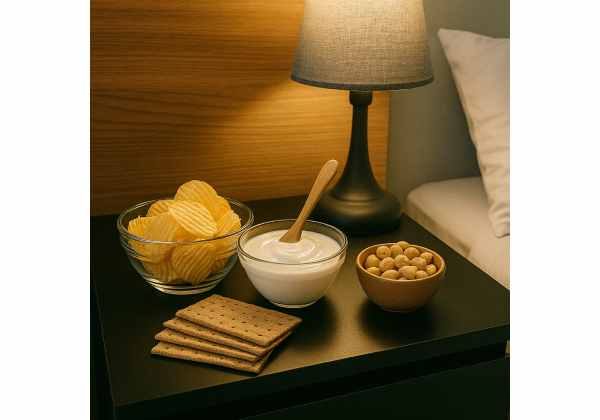
Late-night snacking can quietly flatten a calorie deficit even when the rest of the day looks disciplined. A few handfuls while watching TV, an oversized “healthy” bowl before bed, or repeated trips back to the kitchen can turn a decent day into maintenance without feeling like a binge. The fix is rarely a harsh food cutoff alone. Night eating usually reflects one of a few patterns: genuine hunger from under-eating earlier, stress relief, boredom, habit, poor sleep, or a more persistent night-eating pattern that deserves closer attention. The most effective approach is to match the solution to the cause, tighten the hours after dinner, and make evening eating more deliberate instead of automatic.
Table of Contents
- Why night snacking causes plateaus
- Identify your night snacking pattern
- Fix the daytime triggers first
- Build an evening routine that holds
- Choose night snacks that do less damage
- A two-week reset that tests the real problem
Why night snacking causes plateaus
Late-night snacking is not automatically “bad,” and eating after a certain hour does not magically create fat gain. The problem is that nighttime eating is often where structure breaks down. Portions get looser, hunger and tiredness are harder to tell apart, food choices skew more calorie-dense, and the eating tends to happen with distractions. That combination makes evening calories easier to miss and harder to control than calories eaten in a normal meal.
This is why night snacking is so often tied to stalled progress. A person can hit a reasonable breakfast, lunch, and dinner, then erase the day’s deficit with a few casual add-ons:
- chips while scrolling
- cereal poured directly from the box
- leftover takeout after dinner
- peanut butter, nuts, or granola that look small but add up fast
- alcohol plus snack foods
- repeated “just one more thing” trips to the kitchen
The effect is even stronger during plateaus because your calorie buffer is smaller than it was when you started losing weight. As body weight drops, maintenance needs usually drop too. The snacks that once fit without much consequence may now be enough to flatten weekly progress.
Another reason nighttime eating matters is that it often masks the real issue. Sometimes the problem is not the snack itself. It is under-eating protein earlier, skipping lunch, eating very light all day, relying on coffee to suppress appetite, or letting stress and fatigue build until evening feels like the only time to relax. When that happens, “more willpower at night” is the wrong fix.
It is also worth remembering that a plateau is not always a true fat-loss stall. Water retention, menstrual-cycle changes, sodium swings, constipation, tougher workouts, and inconsistent weigh-in timing can make progress look worse than it is. If you suspect the scale is noisy rather than truly stuck, compare your trend with the signs of a real plateau over two to four weeks. A steadier view of your data can also help, especially if you use a consistent weigh-in routine instead of reacting to one or two bad mornings.
The practical takeaway is simple: late-night snacking causes plateaus less because of the clock itself and more because it invites untracked, highly palatable, low-satiety eating at the point in the day when decision fatigue is highest. If you want a fix that lasts, you need to know which version of night eating you are dealing with.
Identify your night snacking pattern
Most late-night eating falls into a few recognizable patterns, and each one needs a different response. Lumping them together leads to blunt advice like “just stop eating after dinner,” which works for some people for three days and then fails for the same reason it failed before.
| Pattern | What it usually feels like | What helps most |
|---|---|---|
| True hunger | You are physically hungry, your stomach feels empty, and dinner did not hold you | More protein, fiber, and better meal timing earlier in the day |
| Habit eating | You snack because it is what you do while watching shows or cleaning up | Change the cue, portion the food, and break the kitchen loop |
| Stress or reward eating | You want relief, comfort, or a treat after a hard day | Alternative decompression routines and better emotional awareness |
| Tiredness misread as hunger | You feel snacky late, especially after poor sleep | Earlier bedtime, better evening wind-down, less screen-triggered grazing |
| Night-time sugar chasing | You want sweets specifically, often after restrictive eating all day | More balanced daytime intake and a more planned dessert strategy |
A quick self-check helps. Ask yourself four questions for the last seven nights:
- Was I physically hungry before I ate?
- What time did dinner happen, and how satisfying was it?
- Was I stressed, bored, lonely, or tired?
- Did I plan the snack, or did I drift into it?
If the answer is “I was not really hungry, I just wanted something,” the problem is probably cue-driven or emotional rather than nutritional. That does not make it trivial. It just means the solution should not be another set of food rules. People who eat at night for relief often need to work on the trigger itself. If that pattern sounds familiar, a guide to emotional eating triggers can help you separate appetite from coping.
If the late-night urge is strongly sweet-focused, look at what happened earlier in the day. Skipped meals, very low carbs, overly “clean” dieting, and under-eating at dinner often set up the classic night dessert spiral. A more specific breakdown of night-time sugar cravings is useful when the issue is not random snacking but a repeat drive for sweets.
There is also a more clinical pattern to be aware of. Night eating syndrome is not the same as ordinary evening snacking. Warning signs include consuming a large share of daily calories after dinner, waking to eat repeatedly, distress about the behavior, and a persistent pattern rather than occasional lapses. If that sounds like you, the goal is not stricter discipline. It is getting proper support.
Before you fix the night, name the pattern. People make faster progress when they stop treating all evening eating as the same problem.
Fix the daytime triggers first
One of the most common reasons late-night snacking persists is that the day was built in a way that almost guarantees it. You can call the evening behavior the problem, but often it is just the final expression of a weak setup.
A typical pattern looks like this: coffee for breakfast, light lunch, a “good” low-calorie salad, long gap before dinner, then a normal or even undersized dinner. By 9:30 p.m., hunger is real, but it arrives mixed with fatigue and the desire to switch off. That is when snack foods win.
Start by checking four daytime variables:
- Protein at breakfast and lunch.
Many people eat most of their protein at dinner and then wonder why the afternoon and evening feel unruly. - Meal timing gaps.
Long stretches of five or six hours without a real meal often backfire later. - Fiber and food volume.
Small meals made of refined carbs, drinks, or snack foods do not hold up well. - Dinner quality.
A dinner that is technically low calorie but low in protein and low in fiber is often a setup for grazing.
The best correction is usually not “eat less at night.” It is “eat better before night.” A few changes make a big difference:
- Eat a real breakfast or first meal.
A protein-heavy start often reduces the rebound hunger that shows up after dinner. If mornings are weak, borrow ideas from high-protein breakfasts that are fast enough to repeat. - Set a daily protein floor.
Plateau phases usually go better when meals are built around a clear protein target rather than vague healthy intentions. If your intake is guesswork, tighten it with a more practical view of daily protein needs for fat loss. - Make lunch and dinner more satisfying, not just lighter.
A meal should have a protein anchor, a bulky produce component, and some fiber-rich carbs or legumes. That is often more effective than trying to be ultra-light and then paying for it at 10 p.m. - Use an afternoon bridge if needed.
If dinner is late, a planned snack at 4 or 5 p.m. can prevent the “eat everything” mindset later. - Watch caffeine and alcohol timing.
Too much caffeine can suppress appetite early and worsen sleep later. Alcohol can lower restraint and make late eating feel automatic.
The broader point is that nighttime behavior often improves when daytime eating becomes more even, more filling, and less reactive. That is good news because it means you do not always need a heroic evening routine. Sometimes you just need a day that does not leave you biologically primed to overeat at night.
Build an evening routine that holds
If daytime hunger is under better control but evening snacking still happens, the next fix is environmental and behavioral. Night eating is heavily cue-driven. The couch, the show, the kitchen cleanup, the partner opening snacks, and the sense that the workday is finally over can all become triggers. A lasting solution needs to change the flow of the evening, not just your internal pep talk.
Start with one principle: make the easy action the one you want repeated.
That usually means building a short after-dinner routine such as:
- Clear the kitchen.
- Portion tomorrow’s lunch or breakfast.
- Brush teeth or use mouthwash.
- Make a hot drink if that suits you.
- Move to the room where you actually want to spend the rest of the night.
This sequence sounds basic, but it works because it gives the brain a new “kitchen is closed” signal. A more complete bedtime routine for weight loss can help if your nights currently have no structure at all.
Screen time also matters more than many people expect. Bright screens do not directly force overeating, but long evenings of passive scrolling or binge watching create the perfect setting for mindless eating. You are distracted, reward-seeking, and sitting near snacks. If your current pattern is “one episode and a snack” turning into three episodes and several rounds of food, treat the screen as part of the loop. Reducing late light exposure and tightening digital habits can support appetite control too, especially if poor sleep is already making evenings harder. A practical guide to blue light and sleep timing is useful when nights feel long, alert, and snack-heavy.
Other evening fixes that hold up well:
- Keep snack foods out of immediate sight.
- Do not eat directly from packages.
- Pre-decide whether tonight includes a snack or not.
- Use smaller bowls and plates for planned evening food.
- Move tempting foods out of the “first reach” zone in the kitchen.
- Pair TV with something incompatible with eating, such as tea, stretching, knitting, or a short walk after dinner.
None of this is about pretending snacks do not exist. It is about removing the repeated frictionless path from cue to overeating. The best routines feel boring in the best way: predictable, low-drama, and easy enough to repeat when life is busy.
If you only remember one line from this section, make it this: do not rely on nighttime motivation. Build an evening that asks for less of it.
Choose night snacks that do less damage
Sometimes a night snack is the right call. If dinner was early, training finished late, or you are genuinely hungry, the goal is not to white-knuckle your way to bed. The goal is to choose a snack that solves hunger without opening the door to a second dinner.
The best late-night snacks tend to have three features:
- enough protein to make the snack satisfying
- some fiber or volume when possible
- a clear stopping point
Good examples include:
- Greek yogurt with berries
- cottage cheese with fruit
- a small protein shake and an apple
- edamame
- high-protein pudding or skyr
- eggs on a slice of high-fiber toast
- a measured bowl of high-fiber cereal with milk
- hummus with crunchy vegetables
- air-popped popcorn plus a protein side if needed
These options are usually better than the classic danger foods of late-night eating: chips, cookies, ice cream straight from the tub, spoonfuls of peanut butter, trail mix, granola, leftover pizza, or random grazing from multiple containers. Those foods are not forbidden forever. They are just poor tools when the specific problem is nighttime overconsumption.
A useful rule is to make the snack single-serving, plated, and seated. If it comes from one bowl, one wrapper, or one plate, you are much less likely to turn it into a grazing session. If you want more ideas, a list of planned lower-calorie snacks can help you build a rotation before the urge hits.
Two practical filters work well here:
- Would this still seem appealing if I had to portion it and eat it at the table?
If not, the urge may be more about stimulation than hunger. - Will this snack reduce hunger for long enough to help me stop?
If not, it probably needs more protein, more structure, or a different choice entirely.
It also helps to decide whether your evenings are better with a planned dessert or with none at all. Some people do better when they deliberately include a modest sweet option after dinner and stop there. Others find that any sweet taste turns into a search for more. Knowing which type you are matters more than following someone else’s rule.
When real hunger is present, eat something that behaves like food, not like a trigger.
A two-week reset that tests the real problem
The fastest way to know whether late-night snacking is truly stalling your progress is to run a short, structured experiment. Not forever. Just long enough to see whether better evenings improve hunger, consistency, and your weekly trend.
Use this two-week reset:
- Define dinner.
Eat dinner at a reasonably consistent time and make it substantial enough to satisfy you. Include protein, vegetables, and a high-fiber carb or legume when possible. - Choose one evening rule.
Pick either “one planned snack only” or “kitchen closed after dinner unless I am physically hungry.” Keep it simple. - Pre-plan the snack list.
If snacks are allowed, pick three to five options in advance and keep them portion-friendly. - Add one closing ritual.
Brush teeth, make tea, set out breakfast, or go for a short walk. Use the same cue each night. - Track the pattern, not just calories.
Write down the time, what you ate, hunger level before eating, and what was happening emotionally. - Keep morning weigh-ins consistent.
Night eating can create next-day scale bumps from food volume, sodium, and carbohydrates, so look at the weekly average, not one number. - Review the trigger after seven days.
Was the urge strongest on poor-sleep nights, high-stress days, late-dinner days, or highly restrictive days?
This reset works because it gives you actual information. You learn whether the issue is hunger, habit, or emotion. You also learn whether a planned snack helps or whether it acts as a doorway to more eating. Many people discover that their plateau is not caused by one dramatic problem but by a repeated 200 to 500 extra calories at night that happen often enough to matter.
If nothing improves after a solid two-week effort, zoom out. Check medications, menstrual-cycle patterns, weekend eating, alcohol, sleep, and activity levels. Also consider whether the night eating is distressing, feels out of control, involves waking to eat, or is part of a broader pattern of compulsive eating. In those cases, it is worth reviewing when to involve a doctor about weight struggles rather than treating it like a minor habit issue.
The best plateau fixes last because they are realistic. A good night routine does not demand perfect discipline forever. It makes evening eating calmer, more planned, and much less capable of quietly canceling out your progress.
References
- The Impact of Meal Timing on Risk of Weight Gain and Development of Obesity: a Review of the Current Evidence and Opportunities for Dietary Intervention 2022 (Review)
- Sleep Deprivation: Effects on Weight Loss and Weight Loss Maintenance 2022 (Review)
- The role of insufficient sleep and circadian misalignment in obesity 2023 (Review)
- Night Eating Syndrome in Patients With Obesity and Binge Eating Disorder: A Systematic Review 2022 (Systematic Review)
- Overweight and obesity management 2025 (Guideline)
Disclaimer
This article is for general educational purposes only. Persistent night eating, waking to eat, binge-like episodes, reflux, insomnia, diabetes, eating-disorder symptoms, or unexplained trouble losing weight should be discussed with a qualified clinician, who can assess medical, psychological, sleep, and medication-related factors.
If this article helped, share it on Facebook, X, or your preferred platform so someone else dealing with stubborn evening snacking can use it too.