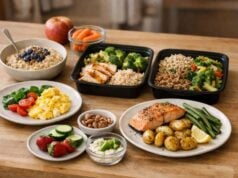
A late-night snack does not automatically ruin weight loss. What matters most is your total intake across the day, the size and type of the snack, and whether you are actually hungry or simply tired, stressed, or in the habit of eating at night. In many cases, a small, well-chosen snack can be a better move than going to bed ravenous and then waking up to overeat the next morning.
This article breaks down when eating before bed can fit a calorie deficit, what makes a bedtime snack weight-loss friendly, the best options to keep on hand, what foods tend to backfire, and how to tell the difference between real hunger and a late-night craving.
Table of Contents
- Does Eating Before Bed Really Hurt Weight Loss?
- What Makes a Good Bedtime Snack?
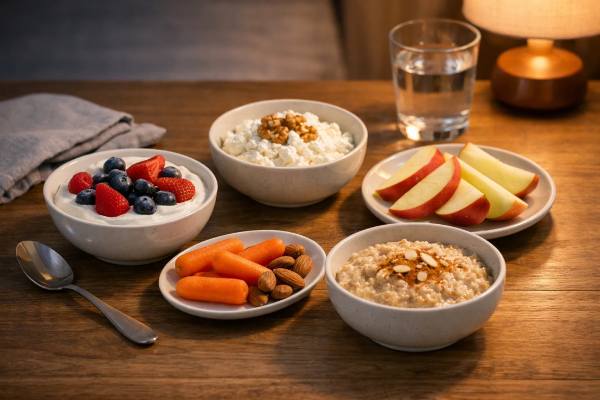
- Best Late-Night Snacks for Weight Loss
- Late-Night Foods That Backfire
- Real Hunger or Just a Craving?
- When Night Hunger Signals a Daytime Problem
- Special Cases and Red Flags
Does Eating Before Bed Really Hurt Weight Loss?
The idea that eating after a certain hour “turns into fat” is too simplistic. Your body does not stop using calories at night, and there is no universal cutoff where food suddenly becomes uniquely fattening. Weight loss still comes back to energy balance over time.
That said, late-night eating can still make fat loss harder in real life. The problem is usually not the clock alone. It is the pattern that often comes with it: bigger portions, more grazing, more ultra-processed snack foods, eating while distracted, and extra calories on top of meals that already met your needs. Night eating also tends to happen when willpower is lower and hunger cues are less reliable.
A small snack before bed can fit your plan when:
- dinner was early and bedtime is still several hours away
- you trained in the evening and want a light recovery option
- you are genuinely hungry enough that sleep will be harder without eating
- you tend to wake up overly hungry and overeat the next morning when you skip a snack
Where people get into trouble is treating night snacking like a second dinner or a dessert-plus-snack routine. A bowl of cereal, a handful of cookies, chips from the bag, ice cream straight from the carton, or constant “just a few bites” can quietly erase a calorie deficit.
Timing still matters somewhat because late eating often overlaps with poor routines. People who regularly eat very late may also struggle with shorter sleep, irregular meals, and more frequent cravings. That is why bedtime eating works best when it is deliberate rather than automatic. The goal is not “never eat at night.” The goal is to avoid unplanned eating that pushes you out of range.
A useful way to think about it is this: a controlled bedtime snack is a tool, not a free-for-all. It should solve a problem, such as real hunger, without creating a bigger one, such as mindless overeating. Readers who regularly eat very late may also find it helpful to review how late dinners and weight loss habits affect appetite and routine, especially when poor sleep is part of the picture. Sleep quantity matters too, because inadequate sleep can make nighttime hunger feel stronger and harder to manage, which is one reason sleep for weight loss deserves attention alongside food choices.
What Makes a Good Bedtime Snack?
The best late-night snacks for weight loss are boring in one very useful way: they are satisfying enough to take the edge off hunger, but not so hyper-palatable that they trigger a second, larger round of eating.
A strong bedtime snack usually has four features.
First, it is modest in calories. For many people, somewhere around 150 to 250 calories works well. That is enough to help with hunger without turning into a full extra meal. A smaller snack may be fine if dinner was adequate and you only need something light.
Second, it has a clear protein anchor. Protein helps more than refined carbs alone because it tends to be more filling and steadier. That might mean Greek yogurt, cottage cheese, milk, skyr, eggs, edamame, turkey, tofu, or a simple protein shake. People trying to improve fullness across the day often benefit from learning better protein per meal targets, because night hunger is often just daytime protein coming up short.
Third, it is easy to digest. Right before bed is not the best time for a giant serving of greasy food, very spicy food, or a heavy dessert. A snack should feel calm, not like a challenge to your stomach. Foods that are moderate in volume and not too rich tend to work best.
Fourth, it may include a little fiber or produce when that fits. Fiber can add staying power, but bedtime is not always the best moment for a huge fiber load if that leaves you bloated. Think a small apple with yogurt, berries with cottage cheese, or a few high-fiber crackers with turkey rather than a massive bran bowl. For people who feel hungry again soon after eating, improving fiber per meal during the day often helps more than loading it all into the last snack.
A good bedtime snack also passes a behavior test. You should be able to portion it in under a minute, eat it without turning it into a buffet, and move on. Single-serve or easy-to-measure foods are especially helpful at night because they reduce decision fatigue.
A simple formula works well:
- Pick one protein source.
- Add fruit, vegetables, or a controlled carb if needed.
- Keep the portion small enough that you still go to bed comfortable.
That approach is more sustainable than trying to win with pure restriction. Hunger ignored too long tends to come back louder. Hunger managed well tends to stay manageable.
Best Late-Night Snacks for Weight Loss
The best bedtime snacks are the ones you will actually eat in a controlled portion, without feeling deprived and without accidentally doubling the serving. In practice, protein-rich basics beat “diet snacks” most of the time.
Here are some of the most reliable options.
| Snack | Approximate calories | Why it works | Best fit |
|---|---|---|---|
| Plain Greek yogurt with berries | 140 to 200 | High protein, slightly sweet, easy to portion | When you want something cold and filling |
| Cottage cheese with cucumber or cherry tomatoes | 130 to 190 | Protein-rich and savory | When you are tired of sweet snacks |
| Skyr with cinnamon | 120 to 170 | Very high protein for the calories | When hunger is strong but calories are tight |
| Protein shake made with milk or water | 120 to 220 | Fast, controlled, low effort | After evening training or when you want convenience |
| Apple slices with a measured spoon of peanut butter | 170 to 230 | Crunchy, satisfying, mixes fiber and fat | When you want more chewing and staying power |
| Hard-boiled eggs with fruit | 150 to 220 | Simple protein plus a little carb | When you need something more substantial |
| Edamame | 140 to 200 | Protein and fiber in one food | When you want a warm savory snack |
| Turkey roll-ups with sliced bell pepper | 100 to 180 | Lean protein, low effort, low calorie | When dinner was light on protein |
| Small bowl of oats with protein stirred in | 180 to 250 | Comforting and more substantial | When you are truly hungry before bed |
| Air-popped popcorn with a side of yogurt | 170 to 240 | Volume plus protein | When you want a snack that feels bigger |
A few practical standouts deserve extra attention.
Greek yogurt or skyr is one of the best all-around choices because it combines convenience, protein, and portion control. Cottage cheese does the same for people who prefer savory foods. A protein shake works well when you are short on time or when cooking at night leads to extra snacking. Edamame is underrated because it offers both protein and fiber without feeling like dessert.
Fruit can work beautifully at night, especially when paired with protein. On its own, it may not be enough for stronger hunger, but paired with yogurt, cottage cheese, or eggs, it becomes more complete. Peanut butter can help too, but it is easy to overshoot calories, so measure it instead of free-pouring or scooping directly from the jar.
A snack does not need to be fancy to be effective. In fact, simple options are often better. The more steps a snack requires, the more likely it is to turn into “while I’m here, I’ll have a little of this too.” That is why keeping a short list of repeatable choices is smart. Readers looking for more ready-made combinations can get additional ideas from high-protein snack ideas and high-fiber snack ideas that fit a calorie deficit.
Late-Night Foods That Backfire
Some foods are not “bad” in a moral sense, but they are bad at solving late-night hunger without creating collateral damage.
The biggest problem foods before bed are those that are easy to overeat, low in fullness for the calories, and hard to portion once you start. That includes:
- chips, crackers, and snack mixes eaten from the package
- cookies, brownies, pastries, and ice cream
- sugary cereal in a large bowl
- takeout leftovers that turn into a second dinner
- peanut butter by the spoonful
- cheese and processed meats picked at mindlessly
- alcohol paired with snack foods
- giant “healthy” smoothies loaded with nut butter, oats, honey, and granola
These foods backfire for a few common reasons. They combine high palatability with weak stopping cues. They are often eaten while watching shows, scrolling, or working, so satiety registers late. They also invite “top-offs,” where one serving becomes two or three without feeling like a meal.
Heavy, greasy, or spicy foods can also be a poor choice even when calories are controlled. They may leave you physically uncomfortable, worsen reflux, or disrupt sleep quality. A snack is supposed to make bedtime easier, not noisier.
Another common trap is the “health halo” snack. Trail mix, granola, dark chocolate, dried fruit, flavored nuts, and nut-based bars can all fit a healthy diet, but they are dense enough that a casual serving is often much larger than expected. At 10 p.m., those foods are better treated as measured ingredients, not endless handfuls.
This does not mean you can never have a sweet snack before bed. It means sweet snacks need structure. A measured portion of Greek yogurt with cocoa powder and berries is a different situation from wandering through the kitchen assembling a dessert plate. A square or two of chocolate after a protein-based snack is different from using sweets as the whole snack.
When people say night eating “always” stalls fat loss, they are usually describing these patterns, not a controlled 180-calorie yogurt bowl. The less your bedtime snack resembles a reward spiral, the better it tends to work.
Real Hunger or Just a Craving?
This is the question that changes everything. Real hunger and late-night cravings can feel similar, but they usually lead to very different best moves.
Real hunger tends to build gradually. You would be willing to eat a simple, ordinary food such as yogurt, eggs, cottage cheese, or fruit. It is not tied to one exact item. Your stomach may feel empty, your concentration may drop, and going to bed sounds uncomfortable without eating something.
A craving is usually more specific and more emotional. You do not want “food”; you want chocolate, chips, cereal, ice cream, or something crunchy and sweet. It often arrives suddenly. It is also more likely to show up when you are bored, stressed, lonely, procrastinating, or trying to unwind.
A quick self-check helps:
- Would I eat a plain protein snack right now?
- Am I hungry in my body, or mostly in my mouth and mind?
- Did I eat enough at dinner?
- Am I tired enough that what I really need is sleep?
- Am I eating because a usual cue just happened, such as the end of a show?
If a plain snack sounds appealing, you are probably hungry. If only dessert sounds good, it is probably a craving or habit loop.
That does not mean cravings should be ignored forever. It means they should be handled on purpose. Sometimes the answer is brushing your teeth, making tea, leaving the kitchen, or going to bed earlier. Sometimes the answer is having a structured snack first, then deciding whether you still want the treat. Often the craving loses intensity once real hunger is addressed.
A useful rule is to wait 10 minutes and change the context. Stand up, turn off the screen, drink some water, and ask again. If the urge fades, it was likely situational. If it stays, a small planned snack may be the smarter move.
This distinction matters because many people are not battling a food problem at night so much as a cue problem. They are responding to fatigue, stress, or routine. That is why targeted strategies for night-time sugar cravings and practical ways to stop late-night snacking often work better than adding more food rules.
When Night Hunger Signals a Daytime Problem
A bedtime snack can be a useful fix. It should not be your only fix if late-night hunger keeps happening.
When you are hungry every single night, the issue often starts earlier in the day. Common causes include:
- your calorie deficit is too aggressive
- breakfast and lunch are too light
- protein is too low across the day
- meals are low in fiber and volume
- dinner is small, rushed, or unbalanced
- you are relying on coffee to suppress appetite
- sleep deprivation is making hunger feel louder
- you trained hard but did not eat enough afterward
In those situations, the best solution is not just “find a lower-calorie snack.” It is to rebalance the day so the snack becomes optional instead of inevitable.
Start with dinner. A satisfying dinner usually includes a substantial protein source, a high-volume produce component, and a controlled portion of carbs or fats depending on your preferences. Many people who struggle at night feel better when dinner is built around a more deliberate high-protein plate rather than a random mix of light foods that looks virtuous but does not satisfy.
Meal timing matters too. Long gaps between meals can create the kind of rebound hunger that shows up at 9 or 10 p.m. That is one reason regular meal timing habits for appetite control often help even when total calories stay the same.
Here is a practical pattern that works for many people:
- Eat a protein-forward breakfast or lunch instead of saving most protein for dinner.
- Include produce and fiber at two or three meals, not just once.
- Make dinner satisfying, not tiny.
- Decide in advance whether a bedtime snack is part of the plan.
- Keep only one or two go-to late-night options available.
The goal is not to eliminate night hunger at all costs. It is to stop being surprised by it. Once you understand whether it comes from under-eating, poor meal structure, or habit, you can respond much more effectively.
There is also an important mindset point here. Repeated late-night hunger does not mean you are weak. Sometimes it means your plan is asking too much from biology. A diet that leaves you fighting the fridge every night usually needs adjusting.
Special Cases and Red Flags
Not all bedtime eating issues are ordinary snacking problems. Some situations call for more care.
If you have reflux, heartburn, or indigestion, a lighter and earlier snack is usually smarter than a large one close to lying down. Greasy, spicy, acidic, or very large snacks may make symptoms worse. In that case, smaller portions and easier-to-digest foods matter more than chasing perfect macros.
If you have diabetes or take glucose-lowering medication, bedtime food decisions may affect blood sugar management. The right choice can depend on your medication schedule, glucose patterns, and overall meal plan, so individual guidance matters more than generic snack advice.
If you are on GLP-1 medications, your tolerance may be different. Some people feel best with a very small, plain snack. Others may find that eating too close to bed worsens nausea or fullness. “Healthy” does not help much if the food leaves you uncomfortable.
If you frequently wake up at night to eat, consume a large share of daily calories after dinner, or feel out of control once you start eating at night, this may be more than ordinary hunger. Persistent night eating can overlap with stress eating, binge-type patterns, sleep disruption, or night eating syndrome. That is worth addressing directly rather than trying to solve it only with better snack swaps.
Watch for these signs that you need a broader plan:
- you feel compelled to eat at night even when you are not hungry
- you regularly eat large amounts after dinner
- you hide or feel intense shame around nighttime eating
- your sleep is often poor and night eating is part of the cycle
- you are compensating the next day by severely restricting food
- the pattern feels repetitive, distressing, or hard to control
In those cases, a clinician or registered dietitian can help you sort out whether the main driver is hunger, sleep, medication effects, a restrictive diet, or an eating-behavior issue.
For everyone else, the main takeaway is straightforward: a late-night snack is not the enemy. An unplanned, oversized, easy-to-overeat snack is the problem. Choose something small, protein-centered, and portioned before you start eating. That is often enough to protect both sleep and your calorie deficit.
References
- The Impact of Meal Timing on Risk of Weight Gain and Development of Obesity: a Review of the Current Evidence and Opportunities for Dietary Intervention 2022 (Review)
- Meal patterns, including intermittent fasting – a scoping review for Nordic Nutrition Recommendations 2023 2024 (Scoping Review)
- Meal timing and its role in obesity and associated diseases 2024 (Review)
- A Narrative Review on Sleep and Eating Behavior 2025 (Review)
- Pre-sleep Protein Supplementation Affects Energy Metabolism and Appetite in Sedentary Healthy Adults 2022 (Clinical Trial)
Disclaimer
This article is for general educational purposes only. Late-night hunger can be shaped by sleep, stress, medications, reflux, blood sugar issues, and overall diet quality, so it is not a substitute for personal medical advice, diagnosis, or treatment from a qualified clinician or registered dietitian.
If this article helped, please share it on Facebook, X, or your preferred platform so others trying to lose weight can find practical late-night snack ideas that actually fit real life.