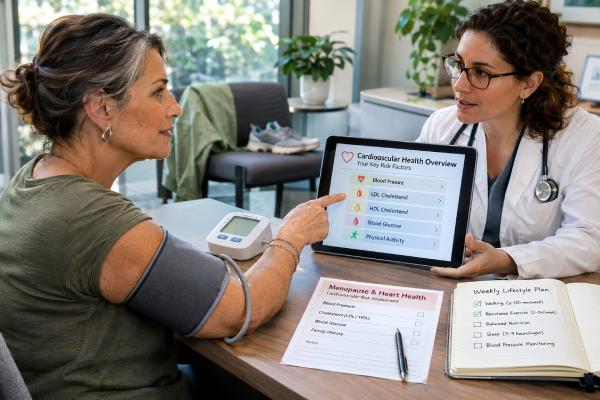
Heart risk tends to rise during and after the menopause transition, but menopause is only one part of the story. Aging, changes in estrogen exposure, body composition, blood pressure, cholesterol, blood sugar, sleep, and physical activity can all shift during midlife. LDL cholesterol often rises, fat may move toward the abdomen, and some women develop higher blood pressure or worsening insulin resistance. These changes can increase long-term cardiovascular risk even when there are no obvious symptoms. The good news is that midlife is also a useful time to identify risk factors early and act on them. Blood pressure, cholesterol, diabetes screening, smoking status, exercise, diet, sleep, and body weight all matter. Menopausal hormone therapy can be appropriate for bothersome symptoms in selected women, but it is not prescribed simply to prevent heart disease. The most useful approach is individualized: understand your baseline risk, treat major risk factors, and discuss hormone therapy separately based on symptoms, age, timing, and medical history.
Table of Contents
- Why heart risk changes around menopause
- What happens to cholesterol, blood pressure, and body fat
- The role of menopausal hormone therapy
- The heart-health checks that matter most
- What to eat and how to exercise
- Sleep, stress, smoking, and other overlooked risks
- When symptoms need medical attention
Why heart risk changes around menopause
Menopause is defined after 12 consecutive months without a menstrual period when there is no other cause. The years leading up to it are called the menopause transition or perimenopause. Hormone levels fluctuate during this period, and the ovaries eventually produce much less estrogen.
Cardiovascular risk rises with age in everyone, so it is difficult to separate aging completely from menopause. Still, research shows that the menopause transition is associated with unfavorable changes in several cardiovascular risk factors. The effect is not the same for every woman, and menopause itself should not be treated as a disease. It is better understood as a risk-transition period when screening and prevention become especially valuable.
Estrogen has effects on blood vessels, lipid metabolism, and other systems that influence cardiovascular health. When estrogen levels decline, LDL cholesterol may rise and blood-vessel function can change. At the same time, many women gain fat around the abdomen even if total body weight changes only modestly. Sleep disruption, hot flashes, mood changes, and reduced activity can add another layer.
The timing of menopause matters too. Early menopause, especially before age 45, and premature menopause before age 40 are associated with higher long-term cardiovascular risk. Surgical removal of both ovaries at a young age can also change risk because estrogen exposure falls abruptly.
Pregnancy history can provide additional clues. Prior preeclampsia, gestational hypertension, gestational diabetes, preterm birth, or other adverse pregnancy outcomes are associated with higher later cardiovascular risk. A midlife heart-risk review should include this history rather than focusing only on current cholesterol and blood pressure.
What happens to cholesterol, blood pressure, and body fat
The most visible symptom of menopause may be a hot flash, but the most important cardiovascular changes are often silent.
Cholesterol often shifts in the wrong direction
LDL cholesterol commonly rises during the menopause transition. ApoB, a marker of the number of atherogenic lipoprotein particles, may also rise. HDL cholesterol can remain high or even increase, but a high HDL value does not automatically cancel out elevated LDL or ApoB.
That is why a standard lipid panel still matters. If cholesterol has changed substantially since your 40s, do not assume the change is harmless because it happened during menopause. Review your overall risk and treatment options. A guide to cholesterol levels and target ranges can help you understand the basic numbers before discussing them with your clinician.
Blood pressure becomes more important with age
Blood pressure tends to rise with age, and the increase often becomes more noticeable after midlife. Stiffer arteries, weight changes, sleep apnea, kidney function, sodium intake, medications, and reduced activity can all contribute.
Because high blood pressure often causes no symptoms, regular measurement is essential. A single normal clinic reading is useful but not enough if you have repeated high home readings or major risk factors.
Abdominal fat can increase even without major weight gain
Many women notice that body shape changes around menopause. Fat may shift toward the abdomen and away from the hips and thighs. Visceral fat—the deeper fat around abdominal organs—is metabolically active and is linked with insulin resistance, higher triglycerides, inflammation, and cardiovascular risk.
The scale can miss this change. Waist circumference can add useful information, although it should not be interpreted in isolation or used to shame body size. The goal is to identify risk that can be improved through activity, nutrition, sleep, and medical treatment when needed.
Blood sugar can worsen
Insulin sensitivity may decline with age and changes in body composition. If you have a history of gestational diabetes, polycystic ovary syndrome, excess abdominal fat, or a family history of type 2 diabetes, regular glucose or A1C screening is particularly important.
The role of menopausal hormone therapy
Menopausal hormone therapy, often called MHT or hormone replacement therapy, is the most effective treatment for bothersome hot flashes and night sweats. It can also help prevent bone loss in appropriate candidates. It should not be started solely to prevent cardiovascular disease.
The cardiovascular effects of hormone therapy depend on the person, the type and route of hormones, dose, age, time since menopause, and baseline risk. This is why broad statements such as “hormones are bad for the heart” or “estrogen protects the heart” are both too simple.
Current position statements generally find that for healthy women younger than 60 or within about 10 years of menopause onset, the benefit-risk balance of hormone therapy for bothersome menopausal symptoms is often favorable when there are no contraindications. Starting therapy later—particularly after age 60 or more than 10 years after menopause—tends to carry higher absolute risks of coronary disease, stroke, venous thromboembolism, and other complications.
Oral and transdermal estrogen are not identical
Oral estrogen passes through the liver first and has stronger effects on clotting proteins and triglycerides. Transdermal estrogen, delivered through a patch, gel, or spray, generally has less effect on liver clotting pathways and may be preferred for some women with higher clot or metabolic risk. Individual evidence and risk factors still matter.
If a woman has a uterus and uses systemic estrogen, a progestogen is usually needed to protect the uterine lining from endometrial cancer. The type of progestogen can affect tolerability and possibly cardiovascular or clotting risk.
Hormone therapy may be inappropriate or require specialist input in women with a history of certain cancers, unexplained vaginal bleeding, prior blood clots, stroke, heart attack, significant liver disease, or other high-risk conditions. Local low-dose vaginal estrogen for genitourinary symptoms has much lower systemic exposure and is considered separately from systemic treatment.
The key is to separate two questions: “Do I need treatment for menopausal symptoms?” and “How should I reduce my cardiovascular risk?” Sometimes hormone therapy is part of the first answer, but statins, blood-pressure medicines, diabetes treatment, smoking cessation, and lifestyle measures may be part of the second.
The heart-health checks that matter most
A practical midlife cardiovascular review should focus on measurable risk factors rather than waiting for symptoms.
Blood pressure
Know your usual blood pressure, not just one annual reading. Home monitoring is helpful if office readings are borderline, variable, or unexpectedly normal compared with other risk factors. Repeated readings of 130/80 mm Hg or higher deserve discussion in many current treatment frameworks, though exact diagnostic thresholds and targets vary.
Cholesterol and ApoB when appropriate
A standard lipid panel includes total cholesterol, LDL, HDL, and triglycerides. Some people benefit from ApoB testing, especially when triglycerides are elevated, diabetes is present, or LDL may not reflect particle number accurately.
Lipoprotein(a), or Lp(a), is largely inherited and usually needs to be measured only once in adulthood unless a clinician has a reason to repeat it. A strong family history of premature heart disease is one reason to discuss it.
Diabetes screening
Fasting glucose and A1C can identify prediabetes or diabetes before symptoms appear. Earlier treatment matters because diabetes substantially increases cardiovascular risk.
Weight, waist, and lifestyle history
Weight is only one measure. Review waist circumference, physical activity, diet quality, sleep, smoking or nicotine use, and alcohol intake. Ask about snoring or daytime sleepiness if sleep apnea is possible.
Risk-enhancing history
Tell your clinician about early menopause, premature ovarian insufficiency, adverse pregnancy outcomes, autoimmune disease, chronic kidney disease, and a family history of early cardiovascular events. These factors may influence how aggressively other risk factors are treated.
For some adults whose statin decision remains uncertain, a coronary artery calcium scan can help refine risk. It is not a routine menopause test, but it may be useful in selected people after a clinician reviews age, symptoms, and baseline risk.
What to eat and how to exercise
There is no special “menopause heart diet” that outperforms established cardiovascular eating patterns. The best evidence supports a pattern rich in vegetables, fruit, legumes, whole grains, nuts, seeds, fish, and unsaturated fats, while limiting highly processed foods, processed meat, excess sodium, and large amounts of saturated fat.
A Mediterranean-style diet is a practical option. It can help improve overall diet quality without requiring severe carbohydrate or fat restriction. If blood pressure is a major issue, a DASH-style approach with a clear sodium target may be useful.
Protein becomes important during midlife because preserving muscle supports metabolic health, strength, and function. Spread protein across meals rather than putting nearly all of it at dinner. Beans, lentils, fish, yogurt, eggs, poultry, tofu, and other minimally processed protein foods can all fit.
Exercise should include both cardio and strength work
For most adults, a reasonable target is at least 150 minutes of moderate-intensity aerobic activity per week, plus muscle-strengthening activity on at least two days. Brisk walking is a simple place to start, and a walking plan for heart health can help if you are currently inactive.
Strength training matters because muscle mass tends to decline with age. Resistance exercise can improve strength, insulin sensitivity, bone health, and physical function. If you are new to it, begin with manageable loads and focus on technique. A strength-training plan for cardiovascular health can help you build a safe routine.
You do not need intense workouts every day. Consistency matters more. Ten-minute walks after meals, regular stair use, cycling, swimming, dancing, or gardening can all contribute to weekly activity.
Sleep, stress, smoking, and other overlooked risks
Menopause can disrupt sleep through hot flashes, night sweats, insomnia, mood symptoms, restless legs, and sleep apnea. Poor sleep can then make blood pressure, appetite, glucose control, and physical activity harder to manage.
Treating sleep as part of cardiovascular prevention is worthwhile. Keep a consistent sleep schedule, limit late caffeine and alcohol, make the bedroom cool and dark, and seek medical help for persistent insomnia or symptoms of sleep apnea. Practical sleep habits that support heart health can complement treatment for menopausal symptoms.
Smoking remains one of the most powerful modifiable cardiovascular risks. If you smoke, quitting has a larger impact on heart risk than most supplements or wellness trends. Nicotine from vaping or other products can also raise heart rate and blood pressure and is not a harmless cardiovascular substitute.
Stress matters, but it should not be used as a vague explanation for every symptom. Chronic stress can affect sleep, activity, eating, alcohol use, and blood pressure. Useful strategies include regular movement, social support, structured relaxation, counseling when needed, and treating anxiety or depression rather than simply trying to “push through.”
Alcohol deserves special attention because some women become more sensitive to it during midlife, and it can worsen sleep, hot flashes, triglycerides, blood pressure, atrial fibrillation risk, and breast cancer risk. Drinking wine is not necessary for a Mediterranean diet or for heart protection.
Build a prevention timeline instead of waiting for a problem
A useful menopause heart-health plan is not a one-time battery of tests. It is a schedule for checking the factors that can change. Blood pressure can be reviewed at routine visits and at home when readings are borderline. Lipids and glucose can be repeated at intervals based on your baseline results, medication use, and overall risk. Weight and waist changes can be watched over months rather than day to day.
If a result crosses into a higher-risk range, act on that specific problem. Rising LDL may call for a closer look at diet, family history, ApoB, Lp(a), or statin eligibility. Rising blood pressure may call for home monitoring, lower sodium intake, more activity, evaluation for sleep apnea, or medication. Increasing A1C may call for weight-management support, dietary changes, or diabetes prevention treatment. Menopause does not require one special therapy; it is a useful moment to tighten the whole prevention plan.
Do not let symptoms distract from silent risk factors
Hot flashes and night sweats are noticeable, so they naturally receive attention. High LDL and high blood pressure usually are not. It is possible to treat menopausal symptoms successfully while cardiovascular risk factors quietly worsen, or to have few menopausal symptoms while risk factors rise substantially. Treat symptom relief and cardiovascular prevention as related but separate goals.
The same principle applies to supplements marketed for menopause. Products promoted for energy, sleep, or hot flashes should not replace proven risk-factor treatment, and some herbal products can interact with anticoagulants, blood-pressure medicines, or other prescriptions. Bring a complete supplement list to medical visits so the plan accounts for everything you take.
When symptoms need medical attention
Hot flashes can cause warmth, sweating, flushing, and a temporary racing heartbeat. Anxiety can also cause chest tightness or palpitations. But new cardiovascular symptoms should not automatically be blamed on menopause.
Women can have heart-attack symptoms that include chest pressure or discomfort, shortness of breath, nausea, unusual fatigue, sweating, pain in the jaw, back, shoulder, or arm, or a sense that something is seriously wrong. Some women have classic crushing chest pain; others do not. Review heart-attack warning signs in women and seek emergency care for symptoms that could represent a heart attack.
Persistent palpitations also deserve evaluation if they are new, frequent, prolonged, or accompanied by fainting, chest pain, or shortness of breath. Atrial fibrillation and other arrhythmias become more common with age, so do not assume every racing heartbeat is a hot flash.
Call emergency services for sudden weakness or numbness on one side, trouble speaking, facial droop, severe unexplained shortness of breath, fainting, or chest pressure that could indicate stroke or a heart emergency.
Keep menopause care and heart care connected
If you see different clinicians for gynecology and primary or cardiovascular care, make sure each knows your current hormone therapy, blood-pressure medicines, cholesterol treatment, and relevant family history. A change made for hot flashes can affect the context in which other risks are interpreted. Coordinated medication lists and shared test results help prevent duplicated treatment, overlooked interactions, and assumptions that another clinician is managing a risk factor.
For nonurgent prevention, schedule a cardiovascular risk review if you have entered menopause and have not had blood pressure, cholesterol, and diabetes screening recently—especially if menopause occurred early or you have a strong family history. Midlife is not a deadline after which risk is fixed. It is a useful point to identify silent changes and treat them before they become disease.
References
- Menopause transition and cardiovascular disease risk 2024 (Review)
- The 2022 hormone therapy position statement of The North American Menopause Society 2022 (Position Statement)
- Cardiovascular Risk Associated with Menopause and Menopause Hormone Therapy: A Review and Contemporary Approach to Risk Assessment 2025 (Review)
- The benefits and risks of menopause hormone therapy for the cardiovascular system in postmenopausal women: a systematic review and meta-analysis 2024 (Systematic Review)
- The menopausal transition period and cardiovascular risk. 2023 (Review)
- Cardiovascular Disease in Women: Does Menopause Matter? 2023 (Review)
Disclaimer
This article is for general education and does not replace personalized medical care. Menopausal hormone therapy has important benefits, risks, and contraindications that depend on age, time since menopause, symptoms, route, dose, and medical history. Seek urgent care for symptoms that could indicate a heart attack, stroke, blood clot, or other cardiovascular emergency.