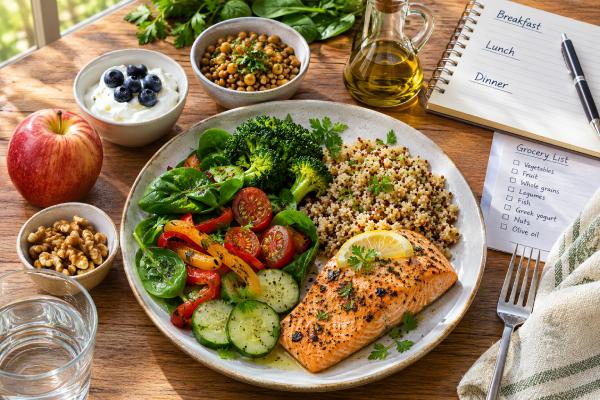
A good metabolic syndrome meal plan does more than chase one lab result. It should help reduce excess waist size, lower blood pressure, improve triglycerides and HDL cholesterol, support healthier blood sugar, and make gradual weight loss easier if you need it. The most useful approach is not a rigid “metabolic syndrome diet,” but a repeatable eating pattern built around vegetables, fruit, beans, whole grains, nuts, seeds, fish, lean proteins, and unsaturated fats while keeping sodium, added sugar, refined starches, and highly processed foods in check. Mediterranean- and DASH-style eating patterns fit these goals well because they improve several cardiometabolic risk factors at the same time. You do not need perfect meals or special products. You need a structure you can use at breakfast, lunch, dinner, and snacks—and a way to adjust portions so the plan matches your appetite, medications, kidney health, and weight goals.
Table of Contents
- What a Metabolic Syndrome Meal Plan Needs to Do
- Build a Plate That Targets All Five Risk Factors
- Foods to Eat More Often
- Foods to Limit and Better Swaps
- 7-Day Metabolic Syndrome Meal Plan
- Portions, Meal Timing, and Weight Loss
- How to Track Progress and Adjust
What a Metabolic Syndrome Meal Plan Needs to Do
Metabolic syndrome is usually diagnosed when at least three closely related problems occur together: a large waist, elevated blood pressure, high triglycerides, low HDL cholesterol, and elevated fasting glucose. The practical goal of eating differently is therefore to improve several of these markers at once rather than focusing only on calories or cholesterol.
The strongest foundation is a minimally processed, plant-forward pattern with enough protein and fiber to keep meals satisfying. If you want the broader clinical picture, the companion guide to metabolic syndrome symptoms, causes, and reversal explains why abdominal fat, insulin resistance, blood pressure, and blood lipids often move together.
A useful meal plan should do five things:
- Create a modest calorie deficit when weight loss is needed. Losing even a modest percentage of body weight can improve glucose control, blood pressure, and triglycerides.
- Provide enough fiber. Vegetables, beans, intact whole grains, fruit, nuts, and seeds slow digestion and improve fullness. Soluble fiber is especially useful for LDL cholesterol.
- Replace saturated fats with unsaturated fats. Olive oil, nuts, seeds, avocado, and fish are better default fat sources than butter, fatty processed meats, and large amounts of cheese.
- Keep sodium controlled while emphasizing potassium-rich foods. That combination supports healthier blood pressure in people without a reason to restrict potassium.
- Reduce rapidly absorbed carbohydrate. Sugary drinks, sweets, refined bread, and large portions of white rice or refined pasta can worsen glucose and triglycerides, particularly when total calories are high.
Do not judge a plan by whether it bans a single food. Judge it by whether you can follow it consistently enough for your waist measurement, home blood pressure, fasting glucose or A1C, and lipid panel to improve over months.
Build a Plate That Targets All Five Risk Factors
The easiest way to make the plan practical is to use a plate formula instead of counting every gram.
For most main meals, start with:
- Half the plate: non-starchy vegetables such as leafy greens, broccoli, peppers, tomatoes, cauliflower, green beans, mushrooms, zucchini, or cabbage.
- One-quarter: protein such as fish, skinless poultry, eggs, tofu, tempeh, Greek yogurt, cottage cheese, or beans and lentils.
- One-quarter: a high-fiber carbohydrate such as oats, barley, quinoa, brown rice, farro, beans, lentils, or a small baked potato.
- A small amount of unsaturated fat: olive oil, nuts, seeds, tahini, or avocado.
- Water, unsweetened tea, or coffee rather than a sugary drink.
This resembles both Mediterranean and DASH eating. A Mediterranean versus DASH comparison can help if you are deciding which framework feels easier to follow, but there is no need to choose one perfectly. The overlap is more important than the label.
For blood pressure, sodium deserves special attention. Many people get most sodium not from the salt shaker but from breads, deli meats, restaurant meals, packaged sauces, soups, cheese, and snacks. A practical target is to move toward less than 2,000 mg of sodium per day if that is appropriate for you, while recognizing that individual guidance may differ. Reading labels and comparing brands can cut hundreds of milligrams without making meals bland.
For triglycerides and glucose, the most useful carbohydrate question is not “carbs or no carbs?” It is “which carbohydrate, how much, and what comes with it?” A cup of lentils or steel-cut oats behaves very differently from a large sweetened coffee and pastry because fiber, protein, and food structure slow absorption.
Foods to Eat More Often
You do not need exotic “metabolism-boosting” foods. A short list of ordinary staples covers most of the evidence-based priorities.
Vegetables and fruit
Aim for vegetables at lunch and dinner, and add them to breakfast when convenient. Fruit is a good choice for most people, especially whole fruit rather than juice. Berries, apples, citrus, pears, peaches, and kiwi give fiber with relatively modest calorie density. If glucose runs high, pair fruit with yogurt, nuts, or another source of protein or fat rather than drinking fruit juice alone.
Beans, lentils, and whole grains
Beans and lentils provide protein, viscous fiber, resistant starch, potassium, and magnesium. They can replace some meat while helping with fullness. Oats and barley are especially useful because their beta-glucan fiber can help lower LDL. If LDL is one of your problem numbers, the guide to soluble fiber for cholesterol explains practical daily sources and amounts.
Choose intact or minimally processed grains when possible: oatmeal, barley, quinoa, bulgur, farro, brown rice, and whole-grain breads with several grams of fiber per serving. Portion still matters. A giant bowl of brown rice can raise glucose more than a smaller portion paired with vegetables and protein.
Fish and other proteins
Try to include fish, especially oily fish such as salmon, sardines, trout, or mackerel, about twice a week if you eat seafood. Other useful proteins include poultry, eggs, tofu, tempeh, unsweetened yogurt, and legumes. Red meat can fit, but smaller portions and leaner cuts make it easier to keep saturated fat down. Processed meats are best kept occasional because they often combine sodium, saturated fat, and high calorie density.
Nuts, seeds, and olive oil
A small handful of unsalted nuts or seeds makes a useful snack and can replace chips, cookies, or processed snack bars. Extra-virgin olive oil works well for dressings and cooking. These foods are calorie-dense, so “heart healthy” does not mean unlimited. Measure oil at first if portions tend to creep upward.
Potassium-rich foods
Potassium can support blood pressure control, but supplements are not the default. Get it from foods such as beans, lentils, potatoes, yogurt, leafy greens, tomatoes, oranges, avocado, and bananas. People with kidney disease or those taking medicines that can raise potassium need individualized advice before deliberately increasing intake. For a food-first approach, see potassium-rich foods for blood pressure.
A grocery list that makes the plan easier
A useful weekly shopping cart is more important than a perfect recipe collection. Stock foods that can become several different meals so you are not forced into takeout when plans change. In the produce section, choose at least four non-starchy vegetables, two or three fruits, and one leafy green. Add frozen vegetables and berries if fresh produce often spoils before you use it. Frozen produce without sugary sauces or salty seasoning is nutritionally useful and can reduce waste.
For protein, buy two or three options that require little preparation: canned no-salt-added beans, lentils, eggs, plain Greek yogurt, tofu, canned tuna or salmon, and one fresh fish or poultry option. If canned beans are not low-sodium, draining and rinsing them can reduce some sodium. For whole grains, keep oats plus one grain you can batch-cook, such as barley, quinoa, or brown rice. Whole-grain bread or tortillas can cover faster meals.
Then add flavor without depending on bottled sauces: olive oil, vinegar, lemon, garlic, herbs, paprika, cumin, pepper, and unsalted spice blends. Mustard, salsa, and jarred sauces can fit, but compare labels because sodium varies widely between brands.
A simple “emergency meal” prevents many off-plan choices. Examples include microwaved frozen vegetables plus canned beans and brown rice; an egg-and-vegetable scramble with whole-grain toast; or plain yogurt, oats, berries, and nuts. Keeping two or three combinations like these available makes consistency far easier than relying on willpower.
When comparing packaged foods, look beyond front-label claims such as “multigrain,” “natural,” or “heart healthy.” Check serving size, sodium, added sugar, saturated fat, and fiber. A food does not need to score perfectly in every category, but repeated staples should support your main goals. For example, a higher-sodium canned soup may still fit if the rest of the meal is low in sodium and rich in vegetables, while a “low-fat” snack that is mostly refined flour and added sugar may do little for metabolic health.
Foods to Limit and Better Swaps
Metabolic syndrome often improves fastest when a few high-impact foods become less frequent. You do not need a forbidden-food list; you need better defaults.
| Limit more often | Why it can be a problem | Better default |
|---|---|---|
| Soda, sweet tea, energy drinks, sugary coffee drinks | Rapid sugar load; little fullness; can raise triglycerides | Water, sparkling water, unsweetened tea or coffee |
| White bread, pastries, refined cereal | Low fiber and easy to overeat | Oats, whole-grain bread, fruit plus protein |
| Processed meats | Often high in sodium and saturated fat | Fish, poultry, beans, tofu, eggs |
| Chips, crackers, instant noodles | High sodium and calorie density | Unsalted nuts, air-popped popcorn, vegetables with hummus |
| Butter, coconut oil, heavy cream | High saturated fat | Olive oil, nuts, seeds, avocado |
| Large restaurant portions | Easy excess of sodium, refined starch, and calories | Split an entrée, box half early, add vegetables |
Added sugar deserves special attention when triglycerides are high. Sweet drinks are the first target because they are easy to remove without reducing meal volume. Desserts can be planned rather than eaten automatically: for example, one small portion after a balanced meal instead of grazing on sweets throughout the evening. More targeted ideas are available in diet changes that lower triglycerides.
Alcohol can also raise triglycerides and blood pressure in some people, and it adds calories quickly. If your triglycerides are very high, your clinician may advise avoiding alcohol completely. Do not assume red wine is needed for heart health.
7-Day Metabolic Syndrome Meal Plan
This example is meant as a template, not a prescription. Adjust portions to your energy needs, and modify carbohydrate, potassium, or protein intake if your clinician has given you specific targets.
| Day | Breakfast | Lunch | Dinner | Snack idea |
|---|---|---|---|---|
| 1 | Oatmeal with berries, chia seeds, and plain Greek yogurt | Lentil-vegetable soup with a large salad and olive-oil dressing | Salmon, roasted broccoli, and barley | Apple with a small handful of walnuts |
| 2 | Vegetable omelet with one slice whole-grain toast | Chickpea, cucumber, tomato, and feta bowl | Chicken breast, sautéed greens, and a small baked potato | Plain yogurt with cinnamon |
| 3 | Plain yogurt, oats, berries, and ground flaxseed | Whole-grain wrap with hummus, vegetables, and leftover chicken | Bean chili with avocado and cabbage slaw | Carrots and hummus |
| 4 | Overnight oats with pear and pumpkin seeds | Tuna-and-white-bean salad over mixed greens | Tofu stir-fry with mixed vegetables and a modest portion of brown rice | Orange and almonds |
| 5 | Whole-grain toast with avocado, tomato, and egg | Leftover tofu and vegetables over greens | Whole-wheat pasta with tomato sauce, mushrooms, spinach, and lentils | Air-popped popcorn |
| 6 | Oatmeal with apple, cinnamon, and walnuts | Black-bean bowl with cabbage, salsa, corn, and avocado | Trout, green beans, and quinoa | Berries with cottage cheese |
| 7 | Greek yogurt with fruit, oats, and sunflower seeds | Minestrone with beans plus a side salad | Roasted chicken or tempeh, Brussels sprouts, and sweet potato | Pear with peanut butter |
For batch cooking, prepare two grains, one pot of beans or lentils, several trays of vegetables, and one or two proteins. Keep washed fruit, plain yogurt, hummus, and unsalted nuts ready. That makes the heart-healthy choice the convenient choice rather than something you must cook from scratch every time.
Portions, Meal Timing, and Weight Loss
If your waist circumference is high, portion size matters even when food quality is excellent. Olive oil, nuts, avocado, whole grains, and cheese can all fit, but they still provide substantial calories. A simple first step is to keep vegetables generous, protein moderate, and energy-dense starches and fats measured rather than poured freely.
A weight loss of roughly 5% to 10% of starting body weight can produce meaningful metabolic improvements for many people with excess weight. You do not have to reach a “perfect” body mass index before blood pressure, triglycerides, glucose, or liver fat begin to improve. The article on what improves first with weight loss explains why cardiometabolic benefits can appear before major visual changes.
Meal timing can help some people, but it is secondary to food quality, total intake, and adherence. A 2024 randomized trial in adults with metabolic syndrome found that an 8- to 10-hour time-restricted eating window produced a modest improvement in A1C when added to standard nutritional counseling. That does not mean everyone needs fasting. If a defined eating window prevents late-night grazing and fits your medications and lifestyle, it may be useful. If it causes overeating, dizziness, or poor medication timing, it is not a good trade.
Three practical timing rules work for many people:
- Eat at reasonably consistent times so extreme hunger does not drive large portions.
- Put most of your calories into meals rather than constant snacking.
- If glucose tends to spike after eating, a brief walk after meals can help; walking after meals is one of the simplest habits to pair with the plan.
People taking insulin, sulfonylureas, or other glucose-lowering drugs should discuss major changes in meal timing or carbohydrate intake with their clinician because medication doses may need adjustment.
How to Track Progress and Adjust
Give the plan enough time to produce measurable change. Some numbers can move within weeks, while waist size and A1C generally need longer. Track a small set of markers instead of relying on how “healthy” the diet feels.
Useful measures include:
- Waist circumference: measure in the same place and under similar conditions every few weeks, not every day.
- Body weight: one to several times weekly can show the trend better than isolated daily changes.
- Home blood pressure: use a validated upper-arm cuff, sit quietly first, and record repeated readings rather than reacting to one number.
- Fasting glucose or continuous glucose data: if your clinician has asked you to monitor it.
- A1C and lipid panel: repeat on the schedule your clinician recommends, often after enough time has passed for the intervention or medication change to show an effect.
A single diet does not replace treatment for hypertension, diabetes, or significant dyslipidemia. If blood pressure remains high, LDL or triglycerides are markedly elevated, or glucose meets diabetes thresholds, medication may be necessary in addition to lifestyle changes. Use diet to reduce risk, not to delay indicated care.
Also ask for professional guidance if you have chronic kidney disease, heart failure, a history of an eating disorder, pregnancy, significant gastrointestinal disease, or medicines that interact with potassium or require consistent vitamin K intake. A registered dietitian can keep the same overall pattern while adjusting sodium, potassium, carbohydrate, protein, or calories safely.
The best metabolic syndrome meal plan is the one that makes healthier choices routine: plants at most meals, enough protein, high-fiber carbohydrates in sensible portions, unsaturated fats, very little liquid sugar, and a sodium level that supports blood pressure. Repeating that pattern consistently is more powerful than short bursts of dietary perfection.
References
- Comparison of the Mediterranean Diet and Other Therapeutic Strategies in Metabolic Syndrome: A Systematic Review and Meta-Analysis 2025 (Systematic Review and Meta-Analysis)
- Effect of Different Dietary Patterns on Cardiometabolic Risk Factors: An Umbrella Review of Systematic Reviews and Meta-Analyses 2024 (Umbrella Review)
- 2024 ESC Guidelines for the management of elevated blood pressure and hypertension 2024 (Guideline)
- Time-Restricted Eating in Adults With Metabolic Syndrome : A Randomized Controlled Trial 2024 (RCT)
- Metabolic syndrome 2024 (Review)
Disclaimer
This article provides general nutrition information and is not a substitute for individualized medical care. If you have diabetes, kidney disease, heart failure, very high triglycerides, or take medicines that affect blood sugar, blood pressure, potassium, or clotting, discuss major diet changes with your clinician or registered dietitian. Do not stop prescribed medication because your numbers improve without medical guidance.