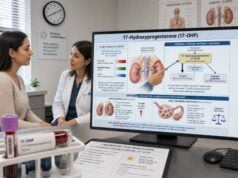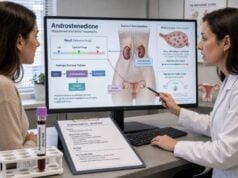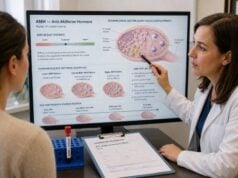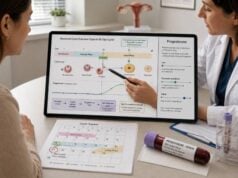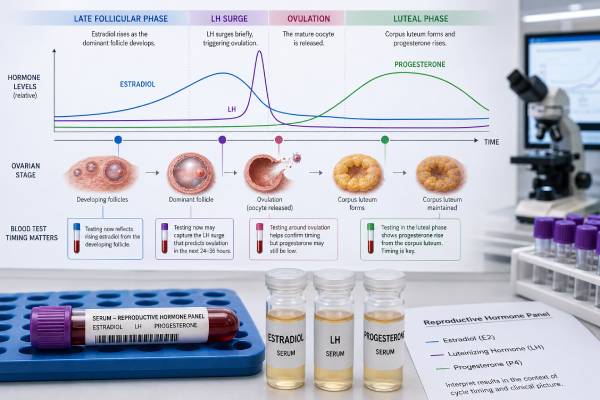
An ovulation blood test panel uses luteinizing hormone (LH), progesterone, and estradiol to determine whether an egg is developing, whether an LH surge is occurring, and whether ovulation probably happened. Timing is essential because these hormones change rapidly across the menstrual cycle. Estradiol rises as a dominant follicle matures, LH surges shortly before ovulation, and progesterone increases after the follicle releases an egg and becomes the corpus luteum. A single random panel can therefore be misleading unless the cycle day and expected ovulation date are known. For most people, serum progesterone measured about seven days before the next expected period is the simplest blood test for confirming recent ovulation. An LH result is better for identifying the pre-ovulatory surge, while estradiol is most useful when monitoring follicle development during fertility treatment. No single hormone value proves egg quality, fallopian tube openness, or the chance of pregnancy, and laboratory ranges vary by assay and cycle phase.
- LH rises before ovulation; progesterone rises after ovulation.
- Estradiol tracks follicle growth but does not confirm egg release by itself.
- Mid-luteal progesterone should be timed about seven days after ovulation, not automatically on cycle day 21.
- A progesterone value above 3 ng/mL generally supports recent ovulation.
- One progesterone result cannot reliably grade luteal-phase quality because secretion is pulsatile.
- Blood testing may be combined with urine LH kits, ultrasound, and cycle tracking.
Table of Contents
- How Hormones Change Around Ovulation
- Who May Need an Ovulation Blood Panel
- Best Timing for LH, Progesterone, and Estradiol
- How to Read Each Hormone Result
- Common Result Patterns and Causes
- Normal Ranges and Test Limitations
- Follow-Up Testing and Next Steps
How Hormones Change Around Ovulation
Ovulation is a sequence rather than a single laboratory event. At the beginning of a menstrual cycle, follicle-stimulating hormone encourages a group of ovarian follicles to grow. One follicle usually becomes dominant and produces increasing estradiol. When estradiol remains high enough, feedback to the brain changes from negative to positive, triggering a sharp release of LH from the pituitary gland.
The LH surge causes final egg maturation and follicle rupture. Ovulation usually follows the start or peak of the surge within roughly one to two days, although timing varies. After the egg is released, the emptied follicle forms the corpus luteum and begins producing progesterone. Progesterone changes the uterine lining into a secretory state that can support implantation and raises basal body temperature slightly.
If pregnancy does not occur, the corpus luteum regresses, progesterone and estradiol fall, and menstruation begins. If pregnancy occurs, human chorionic gonadotropin supports the corpus luteum until the placenta takes over hormone production.
This pattern explains why the same result can be normal or abnormal depending on timing. Low progesterone before ovulation is expected. High LH in the middle of the cycle may represent a normal surge, while persistently elevated LH outside that window may have another explanation. Estradiol may be low in the early follicular phase, high before ovulation, fall briefly, and then rise moderately in the luteal phase.
An ovulation hormone panel is therefore interpreted as a timeline. Clinicians consider the first day of the last period, average cycle length, urine LH results, fertility medication, and the date of the blood draw. Without that information, a laboratory flag can be more confusing than helpful.
Who May Need an Ovulation Blood Panel
Ovulation testing may be ordered when menstrual cycles are irregular, pregnancy has not occurred, or treatment requires precise cycle monitoring. It is not necessary for everyone with predictable cycles, because regular 21- to 35-day cycles usually suggest ovulation, although exceptions occur.
Common reasons include:
- Irregular, long, or infrequent menstrual cycles
- No menstrual periods or unexplained changes in cycle length
- Difficulty becoming pregnant
- Suspected PCOS or another cause of anovulation
- Monitoring ovulation-induction medication, intrauterine insemination, or IVF
- Checking whether a progesterone-timed cycle was ovulatory
- Recurrent symptoms that suggest a short luteal phase, after other causes are considered
- Unclear home urine LH results
- Evaluation after stopping hormonal contraception when cycles do not resume
A progesterone test is often part of a broader female infertility evaluation. It answers a narrow question: did ovulation probably occur in that cycle? It does not assess egg number, egg quality, sperm, the fallopian tubes, or the uterine cavity.
People using fertility medication may have serial blood tests rather than a single panel. Estradiol can help estimate follicle activity, LH can identify an impending spontaneous surge, and progesterone can detect premature luteinization or confirm response after a trigger. Ultrasound remains crucial because hormone levels cannot show the exact number and size of follicles or confirm that a follicle actually ruptured.
Testing is also useful when symptoms and calendars disagree. Some people have bleeding that is not a true ovulatory period, while others ovulate later than day 14. A personalized testing date avoids labeling a normally timed late ovulation as “low progesterone.”
Pregnancy should be considered when a period is late. Progesterone alone cannot diagnose or exclude pregnancy; an hCG test is needed. Severe one-sided pelvic pain, fainting, shoulder pain, or heavy bleeding with a positive pregnancy test requires urgent evaluation for ectopic pregnancy or another emergency.
Best Timing for LH, Progesterone, and Estradiol
The correct date depends on the hormone and clinical question.
| Hormone | Best timing | Question answered |
|---|---|---|
| LH | Late follicular phase or serial testing around the expected fertile window | Is an LH surge beginning or occurring? |
| Estradiol | Serially during follicle development or with early-cycle testing | Are follicles producing estrogen, and how is stimulation progressing? |
| Progesterone | About 6–8 days after ovulation, or roughly 7 days before the next expected period | Did ovulation probably occur? |
The phrase “day 21 progesterone” assumes a 28-day cycle with ovulation around day 14. That timing is wrong for many people. In a 35-day cycle, ovulation may occur around day 21 and the progesterone draw may be more useful around day 28. In a 24-day cycle, testing may be appropriate around day 17. A better rule is to test about seven days after a positive urine LH surge or seven days before the expected next period.
LH is difficult to catch with one blood draw because the surge is brief. Home urine ovulation predictor kits are often more practical for daily testing. A blood LH level can be helpful in monitored treatment cycles, but the laboratory and clinic may define the surge differently. In some cycles, the urine result becomes positive after the blood level has already begun rising.
Estradiol can be measured early in the cycle with FSH or repeatedly during ovarian stimulation. Before ovulation, a rising level generally reflects increasing follicle activity. However, the number cannot identify which follicle is dominant or whether it contains a mature egg. Ultrasound provides that structural information.
Progesterone secretion is pulsatile and can change several-fold within hours. The test should be viewed as evidence of ovulation, not a precise score of corpus luteum quality. A single low value may reflect mistimed testing, delayed ovulation, an anovulatory cycle, or normal fluctuation. Repeat testing or ultrasound may be more informative than assuming a permanent problem.
Fasting is usually unnecessary. Tell the clinician about progesterone supplements, hCG trigger injections, ovulation medication, hormonal contraception, and pregnancy. These can substantially alter results. Progesterone taken by mouth, vagina, or injection makes an endogenous ovulation assessment difficult, and different routes may produce very different blood levels.
How to Read Each Hormone Result
Luteinizing Hormone (LH)
LH is usually low to moderate through most of the follicular phase, rises sharply before ovulation, and falls afterward. A surge-pattern result supports imminent ovulation but does not guarantee follicle rupture. In PCOS, baseline LH may be elevated or fluctuate enough to produce repeated positive urine tests without ovulation. Menopause and primary ovarian insufficiency can also cause persistently high LH because ovarian feedback is reduced.
A low LH value outside the surge can be normal. Persistently low LH with absent periods may point toward hypothalamic or pituitary suppression, especially when FSH and estradiol are also low. The LH blood test is most useful when interpreted with the other reproductive hormones.
Progesterone
Progesterone is the most practical blood marker of recent ovulation. A luteal value above 3 ng/mL, approximately 9.5 nmol/L, is generally considered presumptive evidence that ovulation occurred. Some clinics use higher thresholds in particular treatment protocols, but no single minimum level defines a normal, fertile luteal phase in an unmedicated cycle.
Low progesterone may mean the test was done before ovulation, after the level had already fallen, or during an anovulatory cycle. It can also be affected by a short luteal phase or impaired corpus luteum function, but one measurement cannot establish those diagnoses. A progesterone blood test result must be matched to the expected ovulation date.
Estradiol
Estradiol rises as the dominant follicle grows. A pre-ovulatory peak followed by an LH surge is consistent with normal follicular development. Low estradiol throughout a cycle may occur with hypothalamic amenorrhea, pituitary dysfunction, ovarian insufficiency, or medication suppression. Persistently high or unexpectedly rising estradiol can occur with an ovarian cyst, multiple developing follicles, pregnancy, estrogen medication, or an ovarian-stimulation cycle.
During IVF, clinics interpret estradiol in relation to ultrasound follicle measurements rather than using one universal target. Very high levels can signal a strong response and contribute to assessment of ovarian hyperstimulation risk, but symptoms and the treatment protocol also matter.
Common Result Patterns and Causes
The combination of results often narrows the possibilities.
| Result pattern | Possible meaning | Likely next step |
|---|---|---|
| LH surge, rising estradiol, low progesterone | Pre-ovulatory phase | Repeat or track progesterone about one week later |
| Progesterone above 3 ng/mL after the fertile window | Recent ovulation likely | Interpret timing and fertility context |
| Low progesterone on “day 21” with a long cycle | Test may have been too early | Retest based on actual ovulation timing |
| No LH surge and persistently low progesterone | Possible anovulation | Evaluate PCOS, thyroid, prolactin, weight, stress, and ovarian function |
| Repeated high or positive LH without progesterone rise | Possible PCOS pattern or unsuccessful surge | Use ultrasound or clinician-supervised monitoring |
| Low LH, low estradiol, absent periods | Possible hypothalamic or pituitary suppression | Review nutrition, exercise, stress, illness, and pituitary factors |
| High LH and FSH with low estradiol | Possible ovarian insufficiency or menopause | Repeat testing and clinical evaluation |
| High estradiol with multiple follicles during treatment | Strong ovarian response | Adjust monitoring or medication to reduce complications |
Anovulation has many causes. PCOS is common, but thyroid disorders, high prolactin, substantial weight change, undernutrition, intense exercise, chronic illness, perimenopause, primary ovarian insufficiency, and some medications can also disrupt the hypothalamic-pituitary-ovarian axis. Pregnancy must be excluded first when periods are late.
A short luteal phase or low progesterone may be secondary to another condition rather than a stand-alone disorder. Current evidence does not support diagnosing luteal phase deficiency from one progesterone concentration. Clinicians may instead evaluate cycle length, ovulation timing, uterine bleeding, thyroid function, prolactin, ovarian reserve, and treatment-related factors.
Normal Ranges and Test Limitations
Laboratory reference ranges are divided by menstrual phase and assay. Approximate adult values may look like the following, but the report’s own interval takes priority:
| Hormone | Approximate pattern | Interpretation note |
|---|---|---|
| LH | Often about 2–12 IU/L outside the surge; substantially higher during the surge | Ranges overlap, and a single value may miss the surge |
| Progesterone | Usually below 1 ng/mL before ovulation; above 3 ng/mL supports recent ovulation | No single value proves a “strong” or fertile luteal phase |
| Estradiol | Lower early in the cycle, rising to a pre-ovulatory peak, then moderate in the luteal phase | Values vary widely by assay, follicle number, and medication |
Units matter. Progesterone may be reported in ng/mL or nmol/L; multiply ng/mL by approximately 3.18 to obtain nmol/L. Estradiol may be reported in pg/mL or pmol/L; multiply pg/mL by approximately 3.67 for pmol/L. LH is usually reported in IU/L or mIU/mL, which are numerically equivalent.
Important limitations include:
- A blood panel samples one moment in a rapidly changing cycle.
- LH may surge overnight or be missed between tests.
- Progesterone fluctuates throughout the day.
- Estradiol confirms hormone production, not egg maturity or release.
- Fertility drugs and hormone supplements alter expected ranges.
- PCOS may produce confusing LH patterns and false-positive urine kits.
- No result shows whether the fallopian tubes are open or sperm can fertilize the egg.
- A confirmed ovulation does not guarantee implantation or pregnancy.
At-home hormone monitors may estimate urinary LH, estrogen metabolites, or progesterone metabolites. They can help identify trends, but their thresholds do not directly equal serum values and they should not be used to diagnose endocrine disease without clinical review.
Follow-Up Testing and Next Steps
When the panel supports ovulation and cycles are regular, no further ovulation testing may be needed. If pregnancy has not occurred, evaluation should shift to other factors, including semen analysis, fallopian tube assessment, reproductive age, and uterine conditions.
When results are unclear, common next steps include:
- Repeat progesterone at the correct time based on an LH surge or expected period
- Serial transvaginal ultrasound to follow follicle growth and rupture
- Home urine LH testing across a wider fertile window
- FSH, AMH, and early-cycle estradiol for ovarian reserve questions
- Thyroid-stimulating hormone and prolactin for irregular or absent periods
- Total and free testosterone and related testing when PCOS is suspected
- hCG testing when pregnancy is possible
- Review of medications, calorie intake, exercise, stress, and recent illness
Treatment depends on the cause. It may involve lifestyle and nutrition support for hypothalamic suppression, thyroid or prolactin treatment, ovulation induction for PCOS, or fertility treatment tailored to age and other findings. Progesterone supplementation is appropriate in some assisted-reproduction protocols, but a single low unmedicated-cycle result is not enough to show that supplementation will improve pregnancy outcomes.
Contact a clinician when cycles are repeatedly shorter than 21 days or longer than 35 days, periods stop for three months, home LH kits never become positive, or pregnancy has not occurred after 12 months under age 35 or six months at age 35 or older. Earlier evaluation is reasonable with known reproductive risk factors.
The most useful question is not whether each hormone is “normal” in isolation. It is whether the sequence—follicle development, LH surge, and progesterone rise—fits the person’s actual cycle and the clinical goal of the test.
Cycle tracking can improve the usefulness of the panel. Record the first day of full bleeding, urine LH results, cervical mucus changes, medication doses, and the date and time of each blood draw. For irregular cycles, a clinician may arrange more than one progesterone measurement or begin ultrasound monitoring before the predicted fertile window. A positive urine LH test generally identifies the most fertile interval, but intercourse or insemination timing should follow the treatment plan rather than waiting for a later progesterone result.
A result that appears abnormal should be checked against three questions before treatment is changed: Was the sample collected at the intended stage? Was the person taking a hormone that changes the measurement? Did ultrasound or the next period support the same interpretation? This prevents a mistimed low progesterone value from becoming an unsupported diagnosis. It also helps distinguish a single anovulatory cycle—which can occur during stress or illness—from a persistent ovulation disorder. A laboratory repeat is most meaningful when its purpose and timing are defined in advance.
For people trying to conceive, ovulation is only one part of the monthly probability of pregnancy. Age-related egg quality, sperm concentration and movement, intercourse timing, tubal function, and the uterine environment all contribute. Once ovulation has been reasonably confirmed, repeating the same panel every month may add less value than completing the rest of the fertility evaluation.
When serial monitoring is used, trends are more informative than isolated thresholds. A rising estradiol level followed by an LH surge and later progesterone rise creates a coherent ovulatory pattern. If the sequence is incomplete, the clinician can adjust the next cycle’s sampling dates instead of assuming a permanent disorder.
References
- Guideline for the prevention, diagnosis and treatment of infertility 2025 (Guideline)
- ESHRE evidence-based guideline on Unexplained Infertility 2023 (Guideline)
- Serial progesterone levels more accurately predict the time of ovulation in a menstrual cycle 2023 (Original Research)
- International Evidence-based Guideline for the assessment and management of polycystic ovary syndrome 2023 2023 (Guideline)
- Fertility evaluation of infertile women: a committee opinion 2021 (Committee Opinion)
- Diagnosis and treatment of luteal phase deficiency: a committee opinion 2026 (Committee Opinion)
Disclaimer
This article provides general education and is not a substitute for medical diagnosis or personalized fertility care. Hormone results depend heavily on cycle timing, medications, assay methods, and clinical history; review them with the clinician who ordered the tests.