Reproductive and Fertility Hormones
Home Reproductive and Fertility Hormones
Explore clear, medically reviewed information about reproductive and fertility hormones, their functions, testing methods, and role in female and male reproductive health. This category covers the hormones that regulate puberty, menstrual cycles, ovulation, pregnancy, ovarian reserve, sperm production, sexual development, and menopause.
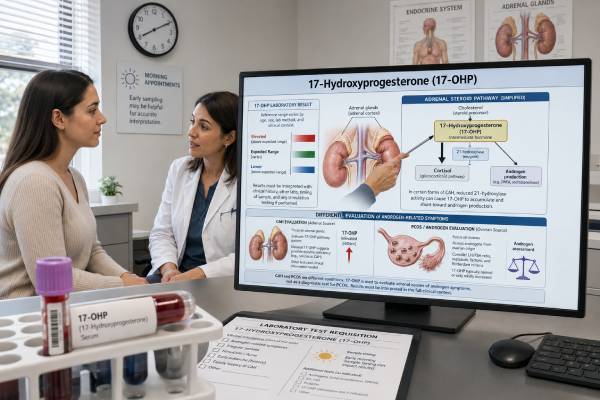
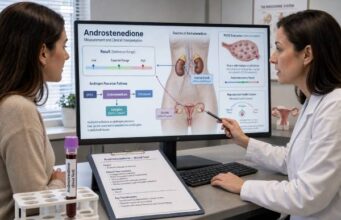
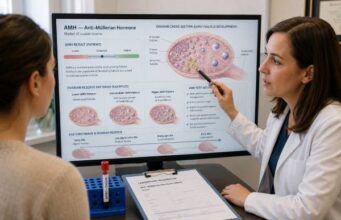
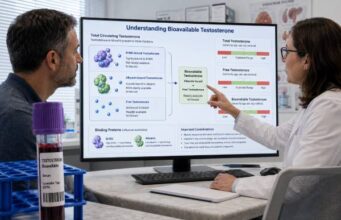
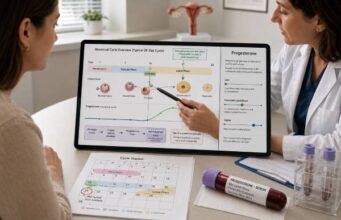
Articles explain important fertility markers and laboratory tests, including follicle-stimulating hormone (FSH), luteinizing hormone (LH), anti-Müllerian hormone (AMH), estradiol, progesterone, testosterone, prolactin, inhibin A and B, sex hormone-binding globulin (SHBG), dehydroepiandrosterone sulfate (DHEA-S), 17-hydroxyprogesterone (17-OHP), and gonadotropin-releasing hormone (GnRH). You will also find guidance on hormone panels, test timing, reference ranges, high and low results, and factors that may affect accuracy.
The collection addresses common reproductive concerns such as infertility, irregular periods, anovulation, polycystic ovary syndrome (PCOS), diminished ovarian reserve, early or delayed puberty, congenital adrenal hyperplasia, pituitary disorders, menopause, and male-factor infertility. Each article helps readers understand how hormone results fit into a broader clinical evaluation and why interpretation may vary by age, sex, menstrual-cycle stage, pregnancy status, medications, and laboratory method.
Use these resources to prepare for testing, understand results, and have more informed discussions with a qualified healthcare professional.