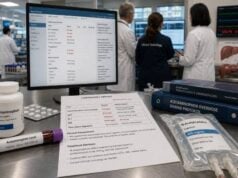
A platinum blood test measures the amount of platinum in a blood sample. It is a specialty toxicology test, not a routine wellness marker, and it is usually ordered when there is a known or suspected exposure source. Platinum can come from industrial work, refining, catalyst handling, some laboratory processes, certain medical devices, or platinum-based chemotherapy drugs such as cisplatin, carboplatin, and oxaliplatin.
A high result does not mean the same thing in every person. Metallic platinum is relatively inert, while soluble platinum salts can irritate the eyes and airways and trigger allergic-type occupational disease. Platinum chemotherapy drugs can cause kidney, hearing, nerve, blood cell, and electrolyte problems even when treatment is medically necessary. For this reason, the result has to be interpreted with exposure history, timing, kidney function, symptoms, and the laboratory’s own reference interval.
- A platinum blood test measures platinum in blood, usually reported in micrograms per liter (mcg/L or µg/L).
- There is no single universal “normal range”; many labs expect platinum to be undetectable or below their reporting limit in people without known exposure.
- High platinum most often reflects occupational exposure, recent chemotherapy, specimen contamination, or less commonly exposure from platinum-containing materials.
- Blood platinum is not usually the main test for managing platinum chemotherapy toxicity; doctors more often monitor CBC, kidney function, electrolytes, symptoms, and hearing.
- Urgent care is needed for breathing trouble, severe allergic symptoms, fainting, confusion, chest pain, severe vomiting, sudden hearing changes, or signs of kidney failure after possible exposure.
Table of Contents
- What a Platinum Blood Test Measures
- When the Test Is Ordered
- Normal Range and High Results
- Causes of High Platinum in Blood
- Toxicity Symptoms and Health Risks
- How to Prepare and Avoid Contamination
- How Results Are Interpreted
- Next Steps After Abnormal Results
What a Platinum Blood Test Measures
A platinum blood test measures the concentration of platinum in the bloodstream. Most specialty laboratories use highly sensitive methods such as inductively coupled plasma mass spectrometry, often shortened to ICP-MS. This method can detect very small amounts of trace metals and is commonly used for environmental, occupational, and toxicology testing.
Platinum is a chemical element and a member of the platinum-group metals. In everyday life, most people think of platinum as jewelry, catalytic converters, laboratory equipment, electrodes, or high-end industrial materials. In medicine, platinum also appears in several important chemotherapy drugs. These uses matter because the health meaning of a platinum result depends on the form of platinum involved.
A blood result may reflect:
- Recent or ongoing absorbed exposure
- Circulating platinum after platinum-based chemotherapy
- Occupational exposure to soluble platinum compounds
- Accidental contamination of the specimen during collection or handling
- A background trace amount in someone without symptoms
The test measures the element platinum. It does not automatically tell which chemical compound caused the result. A person exposed to soluble chloroplatinate salts at work, a person receiving cisplatin, and a person with trace environmental contact may all have “platinum” on a lab report, but their risks and follow-up needs can be very different.
This is different from many common blood tests, where the result directly reflects body function. For example, kidney markers estimate filtration, while a platinum result mainly documents exposure or retained metal. If exposure to several metals is possible, a broader heavy metals blood test panel may be ordered, but platinum is not always included in standard panels and may need to be requested separately.
Blood versus urine testing
Blood and urine do not always answer the same question. Blood testing can be useful after recent exposure or when a clinician wants to know whether platinum is currently present in circulation. Urine testing may be used in some occupational or chemotherapy-related settings because platinum compounds and metabolites can be eliminated through the kidneys.
Neither test should be read in isolation. Timing matters. A blood specimen drawn soon after a workplace incident may show a different pattern than one drawn weeks later. A specimen drawn during chemotherapy may reflect medically administered drug exposure rather than environmental poisoning. A urine result may be affected by kidney function and hydration. When the question is “what is causing symptoms,” the doctor usually needs more than one lab value.
When the Test Is Ordered
A platinum blood test is usually ordered for a specific reason. It is not part of a standard physical, routine metabolic panel, or general blood count.
Doctors may order platinum testing when there is:
- Work in platinum refining, catalyst production, jewelry manufacturing, glass production, chemical laboratories, or recycling of platinum-containing materials
- Possible exposure to soluble platinum salts, especially if asthma-like symptoms, dermatitis, or eye irritation developed after workplace contact
- Recent or current treatment with cisplatin, carboplatin, oxaliplatin, or another platinum-based cancer drug
- Concern about unexpected toxicity after chemotherapy
- Possible contamination or exposure from industrial dust, fumes, powders, or solutions
- A need to document exposure for occupational health review
Testing may also be considered when a person has unexplained symptoms and a credible platinum source. The source matters. A vague concern about “heavy metals” without a realistic platinum exposure is less likely to make this test useful. In those situations, clinicians often start with exposure history and more common toxicology tests, such as a toxicology blood test panel or targeted tests for lead, mercury, arsenic, or cadmium.
Occupational exposure
Occupational platinum exposure is most important when platinum is handled as soluble salts or reactive compounds. Workers in refining, catalyst production, laboratory synthesis, and some metal-processing settings may be exposed through inhalation or skin contact. Fine dusts, aerosols, and solutions can create more risk than solid metallic platinum jewelry.
Soluble platinum salts are well known for causing sensitization. Sensitization means the immune system becomes reactive after exposure. Once sensitized, a person may develop symptoms at lower levels than before. This can look like work-related asthma, rhinitis, conjunctivitis, or dermatitis.
Occupational health evaluation usually includes more than a blood platinum level. It may include air monitoring, review of safety data sheets, skin and respiratory symptom history, spirometry, workplace controls, and sometimes referral to occupational medicine or allergy/immunology.
Cancer treatment monitoring
Platinum-based chemotherapy is a different situation. Cisplatin, carboplatin, and oxaliplatin are prescribed because their platinum-containing structures damage cancer cell DNA. Their side effects are not interpreted the same way as accidental industrial poisoning.
A platinum blood level is not usually the main way doctors dose these drugs. For example, carboplatin dosing often depends on kidney function and a target drug exposure calculation, while cisplatin safety monitoring commonly includes kidney function, magnesium, potassium, blood counts, nausea control, neuropathy symptoms, and hearing changes. If a platinum blood test is ordered during treatment, it is usually for a specialized clinical or research question, not a routine “toxicity number.”
Normal Range and High Results
There is no single universal normal range for platinum in blood. The most accurate reference interval is the one printed on the laboratory report because laboratories differ in specimen type, method, detection limit, units, and reporting format.
In people without known platinum exposure, platinum is usually expected to be very low, often below the lab’s reporting limit. Some reports may show “not detected,” “below detection limit,” or a value below the reference cutoff. Other reports may provide a numerical value in mcg/L. A detectable result is not automatically dangerous, but it should be explained by the person’s exposure history and the test’s analytical limits.
| Result pattern | Possible meaning | Common follow-up |
|---|---|---|
| Not detected or below reporting limit | No measurable platinum in the sample, or a level too low for the method to quantify | No further testing unless exposure risk remains strong |
| Low detectable result | Possible background exposure, recent low-level contact, medical source, or minor contamination | Review exposure history, collection method, and symptoms |
| Above the lab reference interval | Recent or ongoing exposure, chemotherapy-related platinum, occupational uptake, or contamination | Repeat or confirm if unexpected; evaluate source and related labs |
| High result with symptoms | Potential clinically important exposure or treatment-related toxicity | Medical evaluation, kidney tests, CBC, electrolytes, and exposure control |
A “high” result means the value is above that lab’s expected range or reporting threshold. It does not, by itself, diagnose platinum poisoning. It also does not prove that platinum caused every symptom a person has. The result is a clue that needs clinical context.
Units can cause confusion. A lab may report platinum in mcg/L, µg/L, nmol/L, or another unit. Do not compare results from two labs unless the units and specimen type match. Whole blood, serum, plasma, and urine are not interchangeable.
Why a high result may not equal toxicity
Platinum toxicity depends on the chemical form, dose, route, timing, and individual susceptibility. Metallic platinum is much less reactive than soluble platinum salts. Platinum chemotherapy drugs are intentionally biologically active and have predictable organ-specific toxicities. Soluble salts can cause allergic-type respiratory and skin disease even when the total amount of platinum is small.
This is why the same number may mean different things in different people. A cancer patient after cisplatin treatment may have measurable platinum because they received a platinum drug. A refinery worker with new wheezing after soluble salt exposure may need occupational asthma evaluation even if the blood number is not dramatically high. A person with no clear exposure and a borderline value may need a repeat test using careful trace-metal collection before anyone concludes there is a real exposure.
Causes of High Platinum in Blood
High platinum in blood usually comes from a known source. The most important step is to identify that source before assuming the result means poisoning.
Common causes include:
- Platinum-based chemotherapy
- Occupational exposure to soluble platinum salts or platinum-containing dust
- Industrial catalyst handling or recycling
- Laboratory work with platinum compounds
- Refining, smelting, or metal recovery
- Contaminated specimen collection or handling
- Less commonly, exposure from platinum-containing medical or dental materials
A high result should be compared with the person’s work, medications, medical devices, hobbies, and the timing of the blood draw.
Platinum chemotherapy drugs
Cisplatin, carboplatin, and oxaliplatin are among the best-known platinum-containing drugs. They can be highly effective cancer treatments, but they may also cause serious side effects. The most important side effects vary by drug. Cisplatin is strongly associated with kidney injury and hearing damage. Carboplatin is often limited by bone marrow suppression, which can lower blood counts. Oxaliplatin is well known for nerve toxicity, including cold-triggered tingling and longer-lasting peripheral neuropathy.
A platinum blood result after chemotherapy may reflect treatment exposure rather than an environmental hazard. The clinical question is usually not “is platinum present?” but “are the kidneys, hearing, nerves, blood cells, and electrolytes being affected?” That is why monitoring often includes:
- Complete blood count
- Creatinine and estimated kidney filtration
- Magnesium, potassium, calcium, and other electrolytes
- Liver tests when needed
- Hearing tests for cisplatin risk
- Neuropathy symptom checks
- Medication review for other kidney or hearing risks
If kidney function is part of the concern, related markers may be interpreted alongside a kidney function blood test panel. This gives more useful clinical information than a platinum number alone.
Workplace and environmental sources
Workplace exposure can involve platinum metal, platinum dust, or soluble platinum salts. Soluble salts are the greater concern for sensitization. They may occur in refining, catalyst production, and certain chemical processes. Exposure can happen by breathing contaminated air, getting solutions or dust on skin, or touching contaminated surfaces and then touching the face.
Platinum in catalytic converters can be released in tiny amounts into the environment, but typical background exposure is not the same as concentrated workplace exposure. Jewelry contact rarely causes systemic platinum toxicity, although local skin reactions to jewelry metals can occur for many reasons, including other alloy components.
Workplace evaluation should not rely only on personal blood testing. Air sampling, surface contamination checks, ventilation review, respirator fit, glove choice, hygiene practices, and process controls are often more important for preventing future exposure.
Specimen contamination
Trace-metal testing is sensitive enough that contamination can create misleading results. A sample can be contaminated by the wrong collection tube, metal-containing needles or equipment, environmental dust, or handling errors. This is one reason unexpected mild elevations are often repeated.
For trace metals, the laboratory may require a special royal-blue-top tube or another certified trace-element collection container. If the wrong tube is used, the result may be difficult to interpret. A repeat test should follow the lab’s collection instructions exactly.
Toxicity Symptoms and Health Risks
Platinum-related health risks fall into two broad categories: exposure to platinum compounds, especially soluble salts, and treatment-related toxicity from platinum chemotherapy drugs. These categories overlap only partly.
Soluble platinum salts can irritate and sensitize the airways, eyes, nose, and skin. Symptoms may include:
- Wheezing, cough, chest tightness, or shortness of breath
- Runny nose, sneezing, or nasal congestion that worsens at work
- Red, itchy, watery eyes
- Skin rash, itching, or dermatitis
- Throat irritation
- Symptoms that improve on weekends or vacations and return at work
This work-related pattern is important. A platinum blood test may support exposure documentation, but symptoms and workplace timing often drive the evaluation.
Platinum chemotherapy drugs can cause a different set of problems:
- Kidney injury, especially with cisplatin
- Low magnesium, potassium, or calcium
- Nausea and vomiting
- Low white blood cells, red blood cells, or platelets
- Hearing loss or tinnitus
- Numbness, tingling, burning pain, or balance changes
- Fatigue and weakness
- Increased infection or bleeding risk when blood counts are low
Some symptoms need prompt care. Sudden hearing changes during or after cisplatin treatment should be reported quickly. Reduced urination, swelling, severe dehydration, persistent vomiting, confusion, fainting, fever during chemotherapy, or chest pain should not wait for a routine appointment.
Kidney and electrolyte effects
Cisplatin can injure kidney tubules. These are small structures in the kidney that help filter blood and balance electrolytes. Kidney stress can cause rising creatinine, lower estimated filtration, magnesium wasting, potassium changes, and dehydration risk. Hydration protocols and careful dosing reduce risk, but they do not remove it completely.
A platinum blood test does not replace kidney monitoring. A person can have clinically important kidney injury because of cisplatin even if the platinum level is not used to guide care. The kidney panel, urine output, hydration status, medication list, and treatment schedule are usually more useful.
Hearing and nerve effects
Cisplatin can cause ototoxicity, meaning toxicity to the inner ear. This often affects high-frequency hearing first and may come with tinnitus. Children can be especially vulnerable because hearing loss can affect speech, learning, and development. Adults may notice ringing, trouble hearing speech in noise, or difficulty hearing high-pitched sounds.
Oxaliplatin is more strongly linked with neuropathy. Early symptoms may include tingling around the mouth, fingers, or throat sensations triggered by cold drinks or cold air. Longer-lasting neuropathy can cause numbness, burning, pain, or trouble with fine hand movements.
Again, the platinum blood result is only one piece. Hearing tests and symptom tracking often matter more than a single platinum concentration.
How platinum compares with other heavy metals
Platinum is not interpreted like lead, mercury, arsenic, or cadmium. Lead has well-established blood testing thresholds and public health actions. Mercury testing depends strongly on the form of mercury and the specimen used. Cadmium often raises kidney and long-term exposure questions. Platinum has fewer universal clinical decision limits.
For comparison, doctors may use a blood lead test, mercury blood test, or cadmium blood test when those metals better match the exposure history. Platinum testing is most useful when the likely source is actually platinum.
How to Prepare and Avoid Contamination
Most people do not need to fast for a platinum blood test unless the ordering clinician adds other tests that require fasting. The more important preparation is preventing contamination and giving a clear exposure history.
Before the blood draw, tell the clinician and laboratory about:
- Current or recent chemotherapy
- The names and dates of platinum-based cancer drugs
- Workplace tasks involving platinum compounds
- Recent spills, dust exposure, or ventilation failures
- Hobbies involving metalworking, catalysts, electronics, or chemical handling
- Implants, dental materials, or medical devices if relevant
- Kidney disease or reduced urine output
- Supplements, chelation products, or detox regimens
Do not start chelation therapy, “detox” products, or high-dose supplements before the test unless a qualified clinician specifically tells you to. These can confuse interpretation and may cause harm. Some products marketed for heavy metal detox are not evidence-based and can worsen kidney, liver, or electrolyte problems.
Collection details matter
Trace-metal specimens need careful collection. The laboratory may specify:
- A trace-element-certified tube
- Particular tube color and additive
- A minimum sample volume
- Whether whole blood, serum, plasma, or urine is required
- Avoidance of certain collection materials
- Refrigeration or special handling
If the sample was not collected correctly, a mildly abnormal result may be repeated. This is especially true when the result does not fit the person’s symptoms or exposure history.
Timing the test
Timing should match the clinical question. After a workplace incident, testing may be done soon after exposure and sometimes repeated to see whether levels fall. In occupational monitoring, serial results may be more useful than one isolated number. During chemotherapy, testing is usually tied to a specific clinical question and should be interpreted by the oncology team.
If the suspected exposure happened weeks or months ago, blood may not capture the full story. The clinician may consider urine testing, exposure reconstruction, workplace records, or other biomarkers depending on the situation.
How Results Are Interpreted
A platinum result is interpreted by asking four questions: Is the result real? What is the source? Is the person symptomatic? Are there signs of organ injury?
The first question matters because trace-metal results can be affected by contamination. A result that is barely above the reference limit, with no exposure source and no symptoms, may need confirmation before any major conclusions are made.
The second question is the source. A high result after cisplatin has a different meaning from a high result in a refinery worker. A person taking carboplatin should not be told they have environmental poisoning simply because platinum is measurable. A worker with asthma symptoms should not be reassured by a modest blood number if the workplace exposure pattern is strong.
The third question is symptoms. Respiratory symptoms after soluble platinum salt exposure suggest sensitization or irritation. Kidney, hearing, nerve, blood count, and electrolyte problems during chemotherapy suggest drug toxicity. Symptoms should guide urgency.
The fourth question is organ injury. Doctors may order:
- CBC with differential
- Creatinine, eGFR, BUN, and urinalysis
- Magnesium, potassium, calcium, sodium, and bicarbonate
- Liver tests if chemotherapy or systemic illness is involved
- Audiology testing
- Spirometry or occupational asthma evaluation
- Repeat platinum testing using correct collection methods
A platinum number without these details can be misleading. The safest interpretation comes from matching the result to the person’s exposure timeline and clinical findings.
Questions to ask about your result
Useful questions include:
- Was my sample whole blood, plasma, serum, or urine?
- What unit is the result reported in?
- What is this laboratory’s reference interval or reporting limit?
- Could the sample have been contaminated?
- Does my medication or chemotherapy history explain the value?
- Should the test be repeated?
- Do I need kidney, blood count, electrolyte, hearing, or lung testing?
- Should my workplace be evaluated for exposure controls?
These questions help turn a confusing trace-metal result into a practical plan.
Next Steps After Abnormal Results
The next step depends on why the test was ordered and how high the result is. Do not try to treat a high platinum result on your own. The response should match the source and the person’s health status.
If the result is mildly high and unexpected, the clinician may repeat the test with a trace-element-certified collection process. They may also review whether the person had recent chemotherapy, occupational contact, or possible sample contamination.
If the result is high after workplace exposure, the priority is to stop or reduce exposure. This may involve occupational medicine, industrial hygiene review, improved ventilation, closed systems, wet methods, glove changes, respirators, work clothing controls, showering facilities, and surface cleaning. Sensitized workers may need job modification because repeated exposure can trigger symptoms even at low levels.
If the result is high during chemotherapy, the oncology team will focus on treatment safety. This may include hydration, dose adjustment, treatment delay, medication changes, electrolyte replacement, hearing tests, or kidney monitoring. The right decision depends on cancer type, treatment goal, toxicity grade, kidney function, and alternatives.
When to seek urgent medical care
Seek urgent medical care after possible platinum exposure or during platinum chemotherapy if any of these occur:
- Trouble breathing, wheezing, throat tightness, or facial swelling
- Fainting, severe dizziness, or signs of anaphylaxis
- Chest pain or severe shortness of breath
- Fever during chemotherapy
- Very low urine output, swelling, or confusion
- Severe vomiting or dehydration
- Sudden hearing loss, severe tinnitus, or new balance problems
- Severe weakness, numbness, or trouble walking
- Unusual bleeding, black stools, or widespread bruising
These symptoms are more important than waiting for a repeat platinum result.
Reducing future exposure
For workplace exposure, prevention is more reliable than testing after the fact. Workers should use the controls recommended for the specific platinum compound, not just generic dust precautions. Soluble platinum salts require special attention because of their sensitizing potential. Good controls include enclosed processes, local exhaust ventilation, correct gloves, clean changing areas, respirator programs when needed, and strict hand-to-face hygiene.
For chemotherapy, do not skip or change treatment because of fear about platinum without speaking to the oncology team. Platinum drugs can be lifesaving. The goal is careful monitoring and early management of side effects, not automatic avoidance.
For people without a clear platinum source, broad “detox” efforts are usually the wrong response. A careful exposure history, correct repeat testing, and targeted follow-up are safer than chelation or unproven supplement regimens.
References
- The side effects of platinum-based chemotherapy drugs: a review for chemists 2018 (Review)
- Cisplatin-Induced Ototoxicity: A Concise Review of the Burden, Prevention, and Interception Strategies 2023 (Review)
- Sodium thiosulfate for prevention of cisplatin-induced hearing loss: updated survival from ACCL0431 2022 (Clinical Trial Follow-up)
- Gene polymorphism and prediction of toxicity to platinum-based chemotherapy in patients with gynecologic cancer 2023 (Study)
- 1910.1000 TABLE Z-1 – TABLE Z-1 Limits for Air Contaminants 2026 (Occupational Standard)
- Platinum in silicone breast implants 2006 (Review)
Disclaimer
A platinum blood test should be interpreted by a qualified healthcare professional, occupational medicine clinician, toxicologist, or oncology team. A high result does not diagnose poisoning by itself, and a normal result does not rule out every exposure-related or chemotherapy-related problem. Seek urgent medical care for breathing trouble, severe allergic symptoms, sudden hearing changes, reduced urination, fever during chemotherapy, or other severe symptoms.