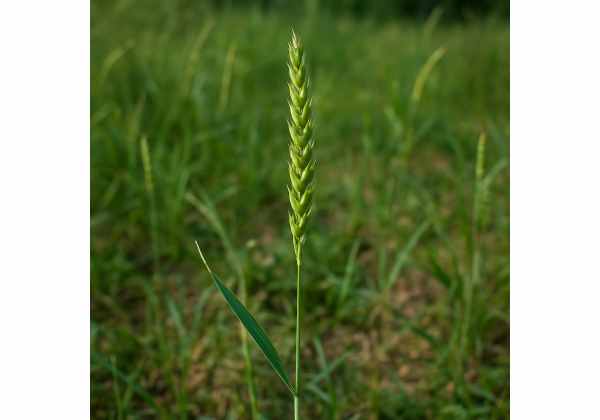
Quackgrass, also called couch grass or twitch grass, is one of those herbs that surprises people. In gardens and fields it is usually dismissed as a stubborn creeping weed, yet in European herbal medicine its underground rhizome has a long history of use for urinary comfort and gentle flushing support. Botanically, the accepted name is Elymus repens, though older herbal literature often lists it as Agropyron repens. The medicinal part is not the leafy grass above ground but the cleaned, dried rhizome below the soil. Traditional use centers on increasing urine flow in minor urinary complaints, easing irritation, and supporting the body’s natural “wash through” response. Modern phytochemical research has identified fructans, sugars, phenolic acids, flavonoids, and other compounds in the rhizome tea, but human clinical evidence remains limited. That makes quackgrass a classic example of an herb with a credible traditional role and promising chemistry, but a narrower evidence base than many modern consumers expect. Used realistically, it can still be a useful herb.
Quick Facts
- Quackgrass rhizome is mainly used as a traditional urinary-flushing herb for minor urinary discomfort.
- It may offer mild soothing and wash-through support rather than a strong direct antimicrobial effect.
- A practical tea range is 3 to 6 g dried rhizome in 250 mL hot water, 2 to 4 times daily.
- People with severe kidney or heart disease requiring fluid restriction, pregnancy, or breastfeeding should avoid unsupervised use.
Table of Contents
- What quackgrass is and why the rhizome matters
- Key ingredients and medicinal properties
- Quackgrass benefits for urinary comfort and flushing support
- How to use quackgrass tea, extracts, and practical preparations
- Dosage, timing, and duration: what the monographs support
- Safety, side effects, interactions, and who should avoid it
What quackgrass is and why the rhizome matters
Quackgrass is a perennial grass that spreads aggressively through long, pale underground rhizomes. That growth habit is exactly why farmers and gardeners know it so well: it is difficult to remove once established, and even small rhizome fragments can regenerate. In herbal medicine, however, that same persistent underground network is the medicinal raw material. The herb used in traditional European practice is the washed and dried rhizome, not the fresh lawn-like blades and not the seed heads. This distinction matters because the rhizome has a different chemical profile and a different history of medicinal use than the rest of the plant.
The herb appears in older pharmacopoeias and European herbal monographs under the name Agropyron repens, while modern botanical databases often prefer Elymus repens. For a reader trying to identify products or studies, both names refer to the same medicinal plant. You may also see “couch grass rhizome,” “graminis rhizoma,” or “Agropyri repentis rhizoma” in traditional references. The medicinal material is usually described as shiny yellowish to yellow-brown rhizome pieces with a bland, slightly sweet taste. That sweetness is not trivial. It hints at the carbohydrate-rich nature of the rhizome and helps explain why the herb is often described as soothing and mild rather than sharp, bitter, or strongly stimulating.
Quackgrass has its clearest place in urinary herbalism. Official European traditional-use guidance frames it as a herb used to increase the amount of urine to achieve flushing of the urinary tract as an adjuvant in minor urinary complaints. That wording is careful and useful. It does not present quackgrass as a cure for infection, kidney disease, or urinary obstruction. It presents it as a supportive herb whose main job is to help the body flush the urinary tract more effectively when symptoms are mild and medical red flags are absent.
This support role helps readers understand what quackgrass is not. It is not a high-drama detox herb. It is not a powerful stimulant diuretic used to drop water weight quickly. It is better seen as a gentle urinary-flushing rhizome that combines fluid intake with a traditional medicinal plant long used in teas, decoctions, and liquid preparations. That makes it closer in spirit to a supportive urinary herb such as corn silk for urinary comfort than to a harsh purgative or aggressive “cleanse” product.
The rhizome also matters because it shapes how the herb is prepared. Harder underground plant parts are often decocted or infused longer than delicate leaves or flowers, and quackgrass follows that old pharmacognosy pattern. When people talk about quackgrass tea, they are usually referring to rhizome-based preparations, not a casual grassy infusion made from fresh blades. Once that basic identity is clear, the rest of the herb’s uses make much more sense: mild urinary support, traditional soothing action, and a role that is grounded more in long-standing use than in large modern clinical trials.
Key ingredients and medicinal properties
Quackgrass does not owe its reputation to one famous active compound. Its medicinal profile comes from a broader mixture of carbohydrates, phenolic substances, flavonoids, and smaller supporting constituents. That is one reason the herb is described as gentle. Plants with one dominant alkaloid or strong essential-oil fraction often produce a more dramatic effect profile. Quackgrass, by contrast, looks more like a supportive rhizome matrix whose actions probably come from several compound families working together.
One of the best-known constituents is triticin, a fructan-type polysaccharide that makes up a notable portion of the dried rhizome. In traditional herbal language, that helps explain why quackgrass is often described as softening, moistening, or soothing rather than irritating. The rhizome also contains significant simple sugars, including fructose and glucose, along with sugar alcohols such as mannitol and inositol reported in older sources. This carbohydrate-rich composition fits the plant’s mildly sweet taste and its traditional place as a bland urinary-support herb rather than a harsh stimulant.
Modern phytochemical work has added a more detailed layer. Analysis of quackgrass rhizome tea has identified caffeoyl and feruloyl quinic esters, caffeic acid, ferulic acid, coumaric acid derivatives, and the flavonoid hesperidin, along with amino acids and organic acids. Older and broader source material also reports tricin, rutin, and hyperoside among the flavonoids, plus small amounts of silica-related compounds. Put simply, quackgrass contains a mix of saccharides and polyphenols that make sense for a herb used in simple water preparations.
From a medicinal-properties standpoint, four ideas matter most.
First, quackgrass is traditionally viewed as a mild diuretic or aquaretic-style support herb. That does not mean it acts like a prescription loop diuretic. It means it is used to encourage somewhat freer urine flow and better flushing when fluid intake is adequate.
Second, it has a soothing urinary reputation. The rhizome’s bland, carbohydrate-rich nature and its long use in urinary teas suggest a role that is partly mechanical and partly tissue-supportive. Readers who know the broader herbal category may think of it as sharing some of the “soothing plant” logic found in marshmallow root support for irritated tissues, though quackgrass is less mucilaginous and more explicitly urinary in use.
Third, laboratory and chemical work suggest possible anti-inflammatory and antiadhesive effects. Some compounds isolated from quackgrass extracts have been linked to reduced bacterial adhesion in urinary-cell models, which is interesting because it fits the plant’s traditional urinary focus. Still, this should be read as supportive evidence, not as proof that quackgrass treats infection on its own.
Fourth, the herb’s chemistry remains only partly mapped in clinically meaningful ways. The European assessment report notes that there is no clearly identified constituent with known therapeutic activity that fully explains the traditional indication. That is not unusual in herbal medicine, but it does mean the herb’s place rests more on long-term traditional use and reasonable pharmacological plausibility than on one crisp mechanism. In practice, that makes quackgrass a good example of an herb whose chemistry supports its traditional role without yet fully defining it.
Quackgrass benefits for urinary comfort and flushing support
Quackgrass has one main lane, and it is wise to stay in it. The most credible benefit is traditional urinary flushing support for minor urinary complaints. That may sound modest, but it is actually very practical. Many people do not need an herb that “does everything.” They need an herb that is appropriate for one common situation: mild urinary irritation, a sense of incomplete wash-through, or urinary discomfort where increasing urine flow may help and serious disease is not suspected.
This is why official herbal guidance uses the phrase “adjuvant in minor urinary complaints.” An adjuvant is supportive, not primary. Quackgrass is meant to assist the body’s own flushing response, especially when paired with appropriate fluid intake. It is not positioned as a direct treatment for complicated urinary tract infection, not a stand-alone solution for kidney stones, and not a replacement for medical evaluation when symptoms are significant.
Still, within its proper scope, the herb’s benefits can be meaningful. A traditional quackgrass tea can fit situations such as:
- mild lower urinary irritation,
- a desire to increase urinary flow gently,
- minor complaints where hydration has been poor,
- short-term supportive care during a clinician-approved urinary-herb routine.
There is also traditional and review-based interest in urinary gravel and stone support. Some clinical and observational literature has looked at quackgrass in combination approaches for urinary stones, and newer review papers on phytotherapy in urolithiasis still mention it. But this is where care is needed. The evidence is more encouraging than definitive, and much of it involves combinations or products where quackgrass is not the only active component. That means the stone-related claim should stay secondary. Quackgrass may have a role in urinary-stone-support formulas, but it is not accurate to market it as a proven stone-dissolving herb.
A second possible benefit is soothing urinary discomfort while flow improves. This is less about killing pathogens directly and more about helping the urinary tract feel less stagnant or irritated. Some laboratory work suggesting antiadhesive effects against uropathogenic bacteria is relevant here because it supports the idea that quackgrass may do more than simply add fluid. Even so, the best practical interpretation remains conservative: the herb may help create a more favorable urinary environment rather than functioning like an antibiotic.
It is helpful to compare quackgrass with other urinary-support herbs to understand its personality. Compared with uva ursi for short-term urinary support, quackgrass is milder, less conditional, and more centered on wash-through support than on strong antiseptic-style reputation. Compared with goldenrod or corn silk, it sits in a similar traditional neighborhood but often feels more rhizome-based, bland, and gentle.
The main limitation is just as important as the main benefit. Quackgrass is not the right herb for fever, visible blood in the urine, severe dysuria, flank pain, or symptoms that suggest obstruction or infection beyond the mild range. In those situations, the sensible response is diagnosis, not more tea. But when the complaint is minor and the goal is supportive urinary flushing, quackgrass still has a clear traditional role that modern herbal practice can understand and use without exaggeration.
How to use quackgrass tea, extracts, and practical preparations
The form of quackgrass matters because the rhizome is a different kind of herbal material than leaves or flowers. The most traditional and practical preparations are tea, decoction, liquid extract, and tincture. For most people, tea remains the most logical starting point because it matches the herb’s historical use, encourages hydration, and keeps expectations in the right range. Quackgrass is not usually the sort of herb people seek out as a flashy capsule. It is better suited to measured, short-course urinary support.
For herbal tea or decoction, the dried cut rhizome is prepared in hot water and taken several times through the day. This is helpful not only because of what the rhizome contributes, but because the tea format naturally increases water intake. That is part of the therapeutic logic. A urinary-flushing herb used in a dehydrated person who barely drinks water is being used against its own purpose. With quackgrass, the preparation and the hydration pattern are part of the same intervention.
Liquid extracts are more convenient when a person wants consistent dosing without multiple cups of tea. In the European assessment material, liquid extract preparations are documented and have a traditional place on the market. These may suit people who travel, dislike the taste of herbal teas, or need clearer measurement. Tinctures also exist, though they are less food-like and more “pharmacy-style” in feel than the classic tea.
How the herb is used in practice should stay simple:
- Choose a product that clearly names the rhizome and the botanical species.
- Use one preparation rather than layering several quackgrass products at once.
- Maintain good fluid intake unless a clinician has advised fluid restriction.
- Stop and seek medical advice if urinary symptoms become sharp, bloody, febrile, or persistent.
The tea is usually the best form for a first trial because it keeps quackgrass in its most defensible lane. A person can see whether it feels comfortable, whether urinary flow changes slightly, and whether the herb seems to fit the situation. This is also where comparison with other urinary herbs becomes useful. Someone who wants a more established urinary-support tea tradition may also look at horsetail for urinary tract support, but quackgrass tends to feel gentler, sweeter, and less mineral-driven in character.
Quackgrass is often used in combination teas too. In broader European practice it has been included with other diuretic or urinary-support herbs, and official sources even mention its use in mixed diuretic herbal tea combinations. That is reasonable, but combination products can create confusion. If several herbs are used together, it becomes hard to tell which one is helping and whether the overall effect is too drying or simply not a good fit.
For most healthy adults with minor complaints, the best use pattern is straightforward: a short course, a single preparation, good hydration, and a willingness to stop if the symptom pattern changes. That is not glamorous advice, but it is exactly what makes quackgrass practical. This herb is not impressive when treated like a miracle. It becomes useful when treated like a traditional urinary-support rhizome with clear limits and sensible preparation methods.
Dosage, timing, and duration: what the monographs support
Quackgrass dosage is one of the more useful parts of the traditional monograph material because it gives the herb a practical structure even though modern controlled trials are limited. The clearest documented range for the herbal tea is 3 to 6 g of comminuted rhizome in 250 mL of boiling water, taken 2 to 4 times daily, corresponding to a daily dose of about 6 to 24 g. Depending on the tradition, the preparation may be described as an infusion or a light decoction. Because the rhizome is a tougher underground material, many herbalists lean toward a more deliberate steep or brief simmer than they would use for delicate leaves.
For liquid extract, documented traditional ranges fall around 3 to 8 mL per dose, 2 to 4 times daily. For tincture, one older monograph-style range is 5 to 15 mL three times daily. These numbers show why “one-size-fits-all” quackgrass advice is unreliable. A tea dose, a liquid extract dose, and a tincture dose are not interchangeable, and they do not represent the same chemical emphasis.
Duration matters just as much as amount. Traditional-use guidance frames quackgrass as a herb used for about 2 to 4 weeks rather than as an indefinite daily tonic. That does not mean it becomes dangerous on day 29. It means the herb is intended for a defined period of supportive use, after which the need for continued symptoms management should be reassessed. If urinary complaints are still lingering after a reasonable trial, the next step should usually be better diagnosis, not simply more rhizome tea.
Timing is best thought of in relation to urinary function. Most people do better taking quackgrass earlier in the day and through the afternoon rather than concentrated late in the evening, since a urinary-flushing herb taken too late may simply interrupt sleep. Tea works especially well when spaced with meals or between meals alongside steady water intake.
A practical dosing approach looks like this:
- Tea: 3 to 6 g in 250 mL, 2 to 4 times daily
- Liquid extract: 3 to 8 mL, 2 to 4 times daily
- Tincture: 5 to 15 mL, 3 times daily
- Duration: usually up to 2 to 4 weeks unless advised otherwise
Age guidance is also important. The newer assessment material suggests that children under 12 should not use the herbal tea medicinally because of insufficient adequate data, and fluid extract and tincture are not established for those under 18. That is a useful distinction: the milder tea still has a narrower age boundary than many people assume, while alcohol-based liquid preparations are treated even more cautiously.
People comparing quackgrass with other mild urinary herbs sometimes turn to goldenrod for urinary tract support or similar blends. That can be reasonable, but it is best not to stack multiple diuretic-leaning herbs simply because they share a category. More is not always better. With quackgrass, thoughtful dosing and clear timing matter more than trying to build the strongest possible herbal combination.
Safety, side effects, interactions, and who should avoid it
Quackgrass appears to be a fairly well-tolerated traditional herb when used within its usual range, but the safety story has an important limitation: systematic toxicology data are sparse. That means the herb’s safety reputation comes more from long use history, market experience, and the absence of major known concerns than from a dense set of modern repeat-dose studies. This is not uncommon for traditional rhizome herbs, but it does mean the right safety attitude is “generally cautious and reasonable,” not casual.
The main formal contraindications are clear. Quackgrass should not be used in people with hypersensitivity to the herb, and the tea should also be avoided in conditions where reduced fluid intake is recommended, such as severe cardiac or renal disease. That is logical. A urinary-flushing herb only makes sense when increased fluid use is acceptable. If a person has been told to restrict fluids, forcing more wash-through is the wrong strategy.
Safety during pregnancy and lactation has not been established, so medicinal use is not recommended in those settings. This is not the same as proving harm, but it is enough to rule out routine unsupervised use. The same practical caution applies to people with significant chronic illness, especially kidney disease, heart failure, or medically complex urinary symptoms.
The reassuring side of the safety picture is that no major undesirable effects are clearly established, no case of overdose has been reported in the traditional monograph material, and interactions are not known. Even so, “not known” does not mean impossible. In day-to-day practice, it is still sensible to be careful when combining quackgrass with prescription diuretics or other medications in people whose fluid balance is medically important. That is a prudence-based caution rather than a documented formal interaction.
There are also symptom-based safety rules. If any of these occur during use, self-treatment should stop and medical advice should be sought:
- fever,
- painful urination that is worsening,
- spasms,
- blood in the urine,
- persistent or recurrent symptoms,
- flank pain or symptoms suggesting stones or infection beyond the minor range.
Those warnings matter because quackgrass is an adjunct herb, not a diagnostic shortcut. A mild wash-through herb can be appropriate for minor complaints, but it is not appropriate when the body is sending stronger warning signs.
As a final practical point, readers sometimes assume that because quackgrass is mild, it can be combined freely with any urinary-support strategy. That is not ideal. It is usually better to keep urinary self-care simple and measured. If someone is already using a better-studied option such as cranberry for urinary tract support, or is following a clinician-guided plan, quackgrass should be added only with a clear reason rather than as another “can’t hurt” extra.
The safest way to use quackgrass is to respect what it actually is: a traditional herb for gentle urinary flushing in minor complaints, with limited but meaningful official guidance, few known adverse effects, and clear reasons to avoid guesswork in pregnancy, fluid-restriction states, and more serious urinary symptom patterns.
References
- Assessment report on Agropyron repens (L.) P. Beauv., rhizoma 2022 (Official Assessment Report)
- Community herbal monograph on Agropyron repens (L.) P. Beauv., rhizoma 2011 (Official Monograph)
- Metabolic Profile of Agropyron repens (L.) P. Beauv. Rhizome Herbal Tea by HPLC-PDA-ESI-MS/MS Analysis – PMC 2022
- New Light on Plants and Their Chemical Compounds Used in Polish Folk Medicine to Treat Urinary Diseases – PMC 2024 (Review)
- Phytotherapy in Urolithiasis: An Updated Overview of Current Knowledge – PMC 2025 (Review)
Disclaimer
This article is for educational purposes only and is not medical advice, diagnosis, or treatment. Quackgrass is traditionally used to support urinary flushing in minor urinary complaints, but it is not a substitute for medical care for fever, severe urinary pain, blood in the urine, flank pain, kidney disease, or persistent urinary symptoms. Herbal products vary in quality and strength, and not all forms have the same evidence or safety profile. If you are pregnant, breastfeeding, have heart or kidney disease, use prescription medicines, or are unsure whether increased fluid intake is appropriate for you, speak with a qualified healthcare professional before using quackgrass medicinally.
If this article was helpful, please share it on Facebook, X, or your preferred platform.