Quamash, more commonly written as camas in much of the botanical and ethnographic literature, is a blue-flowering North American plant whose true value lies underground. Its bulb was one of the most important traditional foods of many Indigenous peoples of the Pacific Northwest and adjacent regions, where it was carefully harvested, managed, pit-roasted, traded, and stored. That history matters because quamash is not best understood as a modern “medicinal herb” in the usual sense. It is first and foremost a culturally important food plant with a long record of human use.
Its health relevance comes mainly from nutrition and preparation. Raw bulbs are rich in inulin-type carbohydrates, but they become far more digestible and sweet only after long, slow cooking, which converts much of that storage carbohydrate into fructose. That gives cooked quamash its energy value and much of its traditional appeal. At the same time, this is a plant that demands caution. It can be confused with poisonous death camas, and casual foraging mistakes can be dangerous. A useful guide to quamash must therefore balance cultural respect, food history, digestive value, and serious safety awareness.
Quick Facts
- Quamash is most credibly valued as a traditional cooked food that provides digestible carbohydrate and potential prebiotic fiber rather than as a proven medicinal herb.
- Thoroughly cooked quamash may support energy intake and bowel regularity, but specific human clinical studies on health outcomes are limited.
- A cautious modern serving is about 50 to 100 g of fully cooked bulb, starting low because undercooked or large portions can cause gas and discomfort.
- Avoid all self-foraged use unless identification is certain, because poisonous death camas bulbs can be mistaken for quamash.
Table of Contents
- What Quamash Is and Why It Mattered So Much
- Key Ingredients in Quamash and Why Cooking Changes Everything
- Quamash Health Benefits and What the Evidence Actually Supports
- Traditional Food Uses, Preparation, and Modern Kitchen Applications
- Quamash Dosage, Serving Size, and Digestive Tolerance
- Common Mistakes When Foraging, Buying, or Cooking Quamash
- Safety, Side Effects, and Who Should Avoid It
What Quamash Is and Why It Mattered So Much
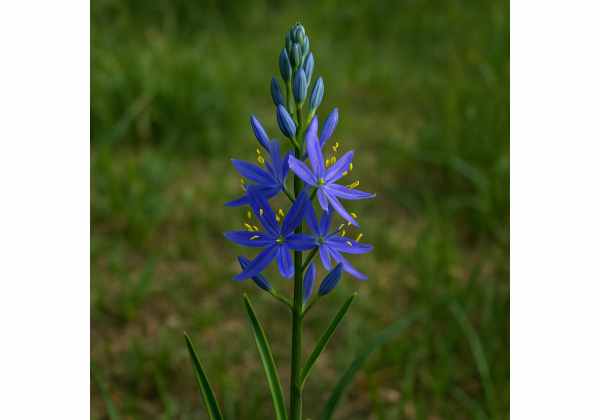
Quamash, or common camas, is a perennial bulb-forming plant native to western North America. Botanically it is usually identified as Camassia quamash, though the broader camas story includes related species as well. In spring, it produces striking blue to violet flowers that can make meadows look almost lake-like from a distance. But the real significance of the plant is its bulb, which sustained communities for generations and was much more than a seasonal curiosity.
For many Indigenous nations of the Pacific Northwest, camas was a major staple food, not a minor famine plant. It was harvested in quantity, traded across regions, and managed with care. Traditional land stewardship often included selective digging, replanting of smaller bulbs, and controlled burning to maintain productive camas prairies. In that sense, quamash sits at the intersection of food, ecology, culture, and land management. Writing about it only as a “health herb” misses most of the story.
That background also changes how its uses should be described today. Quamash is not mainly an herb for teas, tinctures, or capsule supplements. It is a food plant whose value depends on correct identification, proper cooking, and respect for the communities that developed the knowledge around it. Its bulb was traditionally roasted in earth ovens for many hours, then eaten fresh, dried, pressed into cakes, or used in breads and other foods. It also held social and economic value through trade and seasonal gathering practices.
This helps explain why the modern search intent around quamash is unusual. People are often looking for “health benefits,” but the most responsible answer is that its strongest historical role is nutritional rather than medicinal. The bulb offered concentrated carbohydrate, sweetness after long cooking, storage potential, and a dependable food source in managed landscapes. That profile is different from a plant used mainly for fever, pain, or respiratory illness.
Quamash also matters because it teaches an important lesson about plant knowledge. A flower that seems decorative can be a staple crop. A bulb that looks edible can become nutritious only after lengthy preparation. And a culturally important native food can be damaged when it is stripped from context or discussed as just another trendy wild edible. The most useful way to understand quamash is to begin there: as a carefully prepared traditional food with deep Indigenous significance and limited but meaningful health relevance through nourishment, digestibility, and possible prebiotic value.
Key Ingredients in Quamash and Why Cooking Changes Everything
If there is one fact that defines quamash nutritionally, it is this: the bulb’s chemistry changes dramatically with cooking. Raw or lightly cooked camas bulbs are not simply less tasty versions of the finished food. They are meaningfully different in digestibility and function. That is why traditional preparation was long, slow, and deliberate rather than casual.
The key storage carbohydrate in quamash is inulin, a type of fructan. Inulin is not digested in the same way as starch. In many foods, it can behave like a fermentable fiber, which helps explain why raw or undercooked inulin-rich bulbs may be hard on the gut. In camas, extended heat transforms much of this inulin into simpler sugars, especially fructose, making the cooked bulb sweeter and much easier to digest. This conversion is central to the plant’s food value. Without it, the bulb is much less practical as a staple.
That long cooking process helps explain several traditional observations at once:
- why roasted camas becomes sweet,
- why it could be eaten in larger amounts after pit-cooking,
- why it worked as a sweetener or flavoring agent before refined sugar was widely available,
- and why poorly cooked bulbs were much less desirable.
Beyond inulin and fructose, quamash bulbs provide mostly carbohydrate with relatively little fat and modest protein. Their health value therefore resembles that of a traditional root or bulb crop more than that of a concentrated medicinal herb. The main benefits are energy, fiber-related effects, and food versatility after preparation. A useful comparison is the way people think about chicory root and its inulin-rich fiber. Both plants contain inulin-type carbohydrates, but camas differs because traditional cooking intentionally transformed much of that storage carbohydrate into sweeter, more digestible sugars.
This is also why “raw nutrient” thinking can mislead people. A plant can look rich in a functional carbohydrate and still be inappropriate to eat without the right processing. In quamash, cooking is not a finishing touch. It is part of the ingredient itself. Long roasting effectively changes what the bulb is from the standpoint of texture, flavor, tolerance, and likely gut response.
There may also be smaller amounts of minerals and other phytochemicals in the bulb, as there are in many underground plant foods, but current evidence does not support treating quamash as a uniquely mineral-dense or pharmacologically rich medicinal bulb. Its most important chemistry is practical: storage carbohydrate, transformation through heat, and resulting digestibility. That is the nutritional center of gravity for the plant.
So when people ask about quamash “key ingredients,” the honest answer is not a long list of trendy bioactives. It is the relationship between inulin, slow heat, sweetness, and digestibility. That relationship is exactly what made the bulb so important historically and what still makes it interesting now.
Quamash Health Benefits and What the Evidence Actually Supports
Quamash can support health, but not in the same way a classic medicinal herb does. Its strongest case is as a traditional cooked food that may contribute energy, some fiber-related digestive value, and food diversity. The evidence does not support broad claims that it treats disease, boosts immunity, or works like a modern supplement. That distinction is essential to a trustworthy article.
The most realistic health benefits are these:
- Provides a digestible carbohydrate source after long cooking
- May contribute prebiotic or bowel-supportive effects because of its fructan background
- Supports dietary variety and traditional foodways
- May help with satiety and sustained energy as a slow-prepared whole food
- Offers cultural and ecological value that indirectly supports food resilience
The digestive angle is probably the clearest. Because camas bulbs are rich in inulin before cooking, they sit near a family of foods that can affect the gut microbiome and stool patterns. However, the direct human evidence for cooked quamash itself is limited. What we can say with more confidence is that its carbohydrate profile and traditional preparation suggest nutritional value rather than pharmacologic potency. That is why it makes more sense to compare its likely role with other food-based fibers than with capsule herbs. In that respect, it is very different from psyllium as a concentrated digestive fiber, which has much stronger modern clinical evidence for bowel regularity.
Another possible benefit is energy support. Historically, camas was prized because it could be harvested, cooked, stored, and carried. It was substantial food. That may sound ordinary, but ordinary nutrition is often more meaningful than speculative herbal claims. A thoroughly cooked bulb that provides sweet, usable carbohydrate can genuinely matter in a traditional food system.
Where people go wrong is by translating nutritional interest into therapeutic hype. There is no good evidence that quamash is a proven anti-inflammatory medicine, blood sugar treatment, cancer-fighting herb, or metabolic supplement. The plant’s strongest “medicinal” reputation in older sources is scattered and secondary compared with its food value. Even when some ethnobotanical accounts mention cough or other uses, the dominant record is still culinary and cultural.
That does not make the plant unimportant. It makes it easier to describe honestly. Quamash may support health because whole, properly prepared traditional foods often do. It may also have a digestive upside because inulin-type carbohydrates are relevant to gut physiology. But the article should stop well short of suggesting modern therapeutic proof.
A strong takeaway is that quamash’s health value lies in nourishment plus preparation. It is a food whose benefits depend on cooking, portion, and context. Readers looking for a medicinal herb may be disappointed, but readers looking for a historically significant, potentially gut-relevant, carbohydrate-rich traditional plant food will find something far more interesting and more believable.
Traditional Food Uses, Preparation, and Modern Kitchen Applications
Quamash has been used above all as food, and its traditional preparation methods are essential to understanding how it should be approached today. Historically, the bulbs were often dug after flowering, sorted carefully, and slow-cooked in earth ovens for a day or more. This was not just about tenderness. It was the process that made the bulbs sweet, digestible, and worth eating in quantity.
After pit-roasting, camas could be eaten directly, dried for storage, rehydrated later, or formed into cakes and breads. In some traditions it was also combined with other foods during cooking. That flexibility helps explain why it became so important in regional food systems. It was not only edible. It was storable, tradable, portable, and culturally embedded.
For a modern reader, the most useful lesson is that quamash should still be treated as a carefully cooked food, not as a raw wild ingredient or casual snack. A practical modern approach would emphasize:
- correct botanical identification,
- full cooking rather than light steaming,
- modest first servings,
- and respect for local laws, conservation needs, and Indigenous harvest traditions.
In the kitchen, thoroughly cooked camas bulbs are often described as sweet, dark, and rich, with a flavor sometimes compared to sweet potato, roasted pear, or a mildly caramelized root vegetable. That makes them more similar to a specialty carbohydrate food than to a strong medicinal root. In texture and culinary role, they can function more like a traditional prepared starch than like a pungent herb. That is one reason a comparison with arrowroot as a gentle starch-based food ingredient can be helpful, even though the plants are very different botanically.
What modern cooks should not do is assume every old food can be “updated” by shortening preparation time. With quamash, the old method exists for a reason. Long heat is part of what makes the bulb useful. That same principle also makes small-scale home experiments tricky. Without experience, it is easy to end up with bulbs that are technically cooked but still not pleasant or well tolerated.
Another important modern issue is ethics. Because camas meadows are ecologically and culturally significant, foraging should not be treated as a trend activity detached from place and stewardship. Many sites have been reduced by agriculture, drainage, and land conversion. Digging bulbs where the plant is scarce, protected, or culturally sensitive is not respectful use.
So when discussing quamash uses today, the most responsible emphasis is on food history, careful preparation, and cultural respect. Its modern applications are culinary and educational first. The plant can absolutely belong in a health discussion, but only if that discussion stays anchored in what quamash really is: a traditional cooked bulb food whose value emerges through knowledge, time, and place.
Quamash Dosage, Serving Size, and Digestive Tolerance
Quamash does not have a validated medicinal dose in the way a tincture herb or standardized extract might. That is because it is primarily a traditional food. Still, readers asking about “dosage” usually want a practical answer: how much is sensible, how much is too much for a beginner, and how should it be introduced. For quamash, the best answer is to think in terms of cooked food portions, not medicinal dosing.
A cautious modern starting range is:
- about 50 to 100 g of fully cooked bulb
- or roughly 1 to 2 small cooked bulbs, depending on size
- taken as a food, not as a daily supplement
- with the understanding that fully cooked is more important than the exact gram amount
This is not a clinical dose. It is a conservative starting serving for a food that can be rich in fermentable carbohydrate and is unfamiliar to most modern digestive systems. People who tolerate inulin-rich foods well may handle more. People prone to bloating, gas, or FODMAP sensitivity may want even less.
Timing matters too. Quamash makes the most sense:
- as part of a meal,
- in modest portions at first,
- and only after thorough cooking.
Eating a large amount on an empty stomach is not a wise way to test tolerance. Because the plant’s digestive profile depends on fructans and their conversion products, overdoing it may cause abdominal discomfort, gas, or loose stool, especially if the bulbs are undercooked. In that respect, its behavior can differ markedly from a sharper digestive herb like ginger, which acts more through warming and motility support than through fermentable carbohydrate.
One useful distinction is between serving size and frequency. Quamash is not something most people use daily in a modern diet, and there is no strong reason to force daily intake. A moderate occasional serving of well-cooked bulb is more faithful to its food identity than treating it like a daily supplement powder.
There is also no good reason to escalate aggressively. If someone likes the taste and tolerates the food well, portion size can be adjusted gradually, just as with any other high-fiber or unfamiliar traditional food. But if bloating or marked digestive discomfort appears, the answer is not automatically “eat more to adapt.” Sometimes the bulb was undercooked, the serving was too large, or the person simply does not tolerate fructan-heavy foods well.
A practical rule is simple: begin small, judge tolerance honestly, and never treat raw or lightly cooked bulbs as interchangeable with fully prepared camas. For quamash, “dosage” is really a question of preparation plus portion. That is a more modest answer than supplement culture usually wants, but it is the right one.
Common Mistakes When Foraging, Buying, or Cooking Quamash
The most common mistakes with quamash are not subtle. They are the kinds of errors that happen when a traditional food is stripped from its context and treated like an adventurous ingredient. Because the plant has real safety implications and very specific preparation needs, these mistakes are more important than they may sound.
The biggest mistake is misidentification. Edible camas can be confused with poisonous death camas, especially at the bulb stage or when a person has only seen photos online. This is not a trivial risk. Death camas poisoning can cause serious illness, and modern case reports show that wild bulb misidentification still sends families to emergency care. Anyone who is not expert in identification should treat self-foraged bulbs as off limits.
A second mistake is underestimating the role of long cooking. Many people read that camas was roasted or steamed and assume a short modern version will do. But traditional preparations often lasted many hours, sometimes well over a day. That was not culinary excess. It was a chemical transformation process. Short cooking can leave the bulbs tough, less digestible, and far less appealing.
A third mistake is assuming all digestive reactions are proof of “detox” or adaptation. If a person eats quamash and becomes painfully bloated or uncomfortable, that is not necessarily a healing sign. It may simply mean the bulbs were undercooked, the serving was too large, or the person does not tolerate fructan-heavy foods well. That is one reason it helps to understand how foods like true onions and other fructan-rich vegetables can affect sensitive digestion.
Other common problems include:
- harvesting in ecologically stressed or protected places,
- ignoring Indigenous stewardship and food sovereignty issues,
- storing fresh bulbs poorly,
- and treating old ethnobotanical descriptions as simple recipes rather than knowledge systems.
Another subtle mistake is calling quamash a medicinal herb in the same breath as plants used for cough, pain, or sleep. That framing invites the wrong expectations. Quamash can support health, but mostly through food value and possible fiber-related effects. When readers expect a strong “medicinal punch,” they are more likely to misuse it.
There is also the issue of scale. Traditional camas use was often collective and highly skilled. People knew the meadows, the season, the harvesting cues, the replanting norms, and the cooking methods. Modern one-person foraging culture can create a false sense of simplicity. The plant seems easy because the flower is beautiful. The actual knowledge behind its safe use is much deeper.
So the most useful troubleshooting advice is not complicated. If identification is uncertain, stop. If cooking time was short, assume the preparation is incomplete. If digestive tolerance is poor, reduce the portion or avoid repeat experiments. And if the interest is mainly medicinal rather than culinary, quamash may not be the right plant to focus on in the first place.
Safety, Side Effects, and Who Should Avoid It
Quamash safety begins with a blunt truth: the plant’s greatest risk is not an obscure interaction or a rare allergy. It is mistaking poisonous death camas for edible camas. That single error outweighs nearly every other safety concern and is the main reason people should be extremely cautious about wild harvesting.
Death camas, now commonly placed in the genus Toxicoscordion, contains toxic alkaloids and can cause severe gastrointestinal and cardiovascular symptoms. Modern poisoning reports describe nausea, vomiting, abdominal pain, bradycardia, and hypotension after mistaken ingestion. Because bulbs can be confused when not in flower, identification should never be casual. If someone cannot distinguish camas confidently through the whole plant and habitat context, they should not eat self-foraged bulbs.
Beyond mistaken identity, the main side effects of true quamash are digestive:
- gas,
- bloating,
- abdominal discomfort,
- and sometimes loose stools, especially if the bulbs are undercooked or eaten in large amounts.
These effects are understandable given the bulb’s fructan and inulin background. They are much closer to the side effects of fermentable carbohydrate foods than to those of potent medicinal alkaloids. This is why fully cooked preparation and moderate serving size matter so much.
People who should avoid than or be especially cautious with quamash include:
- anyone relying on self-foraged bulbs without expert identification
- people with severe fructan or high-FODMAP sensitivity
- those with active bowel disorders who react poorly to fermentable fibers
- young children, unless the plant has been correctly identified and carefully prepared by experienced adults
- anyone who is pregnant or medically fragile and cannot easily assess a foraged food reaction
There are no well-established drug interactions for cooked quamash as a food, which makes sense because it is not a common medicinal extract. The relevant safety concerns are food-botanical rather than pharmaceutical. In other words, the issue is not usually what medicine it interacts with. The issue is whether the bulb is truly camas, whether it was cooked long enough, and whether the person eating it tolerates fructan-rich foods.
A final caution is cultural as well as medical. Quamash should not be turned into a trendy wild-superfood narrative that encourages reckless harvesting. Respect for Indigenous food traditions, habitat protection, and accurate plant knowledge is part of safe use.
The bottom line is simple. True quamash is mainly a traditional food plant, and when it is correctly identified and thoroughly cooked, the most likely problems are digestive rather than toxic. But death camas confusion changes the entire safety profile. That is why the safest general recommendation is conservative: enjoy quamash only when source, species, and preparation are all trustworthy.
References
- Harvesting strategies as evidence for 4000 years of camas (Camassia quamash) management in the North American Columbia Plateau – PMC 2021 (Open Research Article)
- Effects of traditional harvest and burning on common camas (Camassia quamash) abundance in Northern Idaho: The potential for traditional resource management in a protected area wetland – PMC 2021 (Open Research Article)
- Common Camas (Camassia quamash ssp. breviflora) Plant Guide 2017 (Government Plant Guide)
- Acute death Camas (Toxicoscordion venenosum) plant poisoning in seven family members following foraging for wild onions – PubMed 2025 (Case Series)
- Zigadenus venenosus 2003 (Government Safety Reference)
Disclaimer
This article is for educational purposes only and is not medical or foraging advice. Quamash is best understood as a traditional food plant, not a validated medicinal treatment, and the plant can be dangerous when confused with poisonous death camas. Do not eat self-foraged bulbs unless identification is certain and preparation is appropriate. If you develop vomiting, severe abdominal pain, dizziness, weakness, or a slow pulse after eating a wild bulb, seek urgent medical care immediately.
If you found this article useful, please consider sharing it on Facebook, X, or another platform you prefer so more readers can find careful, practical information about quamash.