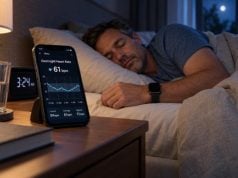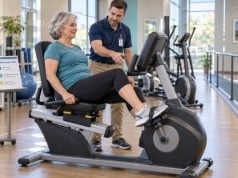
Resting heart rate is a useful fitness clue, but it is not a fitness score by itself. For most adults, a resting pulse of 60 to 100 beats per minute is considered normal, while well-trained people may sit in the 40s or 50s without symptoms. Regular aerobic training often lowers resting heart rate because the heart pumps more blood with each beat and the nervous system becomes more efficient at rest. In population studies, lower resting heart rates also tend to track with better cardiorespiratory fitness and lower long-term health risk. But your number is shaped by much more than exercise: sleep, stress, heat, dehydration, illness, medications, caffeine, hormones, and genetics can all move it. The most useful approach is to compare your heart rate with your own stable baseline under similar conditions. A gradual decline alongside improving exercise capacity can be a positive training sign. A sudden or persistent change—especially with fainting, chest pain, unusual shortness of breath, or weakness—deserves medical attention.
Table of Contents
- What Resting Heart Rate Means
- How Fitness Changes Resting Heart Rate
- What Number Is Good for Fitness?
- How to Measure and Track It
- Why Your Number Can Rise or Fall
- How to Lower Resting Heart Rate Safely
- When a Heart Rate Change Needs Medical Attention
What Resting Heart Rate Means
Resting heart rate is the number of times your heart beats per minute when you are awake, calm, and not physically active. It reflects how much work the heart needs to do to maintain circulation at rest.
A lower resting heart rate often appears in people with better aerobic conditioning. That is partly because endurance training can increase stroke volume—the amount of blood pumped with each heartbeat. If each beat moves more blood, the heart can often maintain the same resting output with fewer beats.
The autonomic nervous system matters too. Aerobic training tends to increase parasympathetic, or “rest-and-digest,” influence and reduce excessive sympathetic, or “fight-or-flight,” drive at rest. This can slow the sinus node, the heart’s natural pacemaker.
That does not mean lower is always better. Resting heart rate is one piece of physiology, not a competition. A healthy, active person may naturally rest at 68 beats per minute, while another equally healthy person rests at 52. Medications, age, genetics, body size, thyroid function, temperature, sleep, and many other factors affect the result.
For most adults, 60 to 100 beats per minute is the conventional normal range. Athletes and highly active people can have resting rates in the 40s. A rate below 60 is called bradycardia, but that term describes the number rather than automatically diagnosing disease. A trained runner with a pulse of 48 who feels well is a very different situation from a sedentary person with a pulse of 48 plus fainting or severe fatigue.
Similarly, a resting rate over 100 is called tachycardia. A temporary value above 100 during fever, dehydration, anxiety, pain, or illness may reflect the body’s response to stress rather than a primary rhythm disorder. Persistent tachycardia at true rest needs evaluation.
How Fitness Changes Resting Heart Rate
Cardiorespiratory fitness and resting heart rate are related, but they measure different things. Cardiorespiratory fitness reflects how well your heart, lungs, blood vessels, and muscles deliver and use oxygen during sustained activity. Resting heart rate reflects the heart’s rate when demand is low.
The strongest measure of aerobic fitness is usually peak oxygen uptake, or VO2 peak/VO2 max, measured during a graded exercise test. Large research reviews show that higher cardiorespiratory fitness is strongly associated with lower risk of cardiovascular disease and premature death. Resting heart rate can correlate with that fitness, but it cannot replace an exercise test.
A 2024 community study using smartwatch data illustrates the relationship. Participants with lower nonactive heart rates and more daily steps tended to have higher peak oxygen uptake on cardiopulmonary exercise testing. In that study, a 2.4-beat-per-minute lower nonactive heart rate corresponded to about 1.3 mL/kg/min higher peak VO2 after adjustment for other factors. That is an association, not a formula you can use to calculate your own VO2 max from pulse alone.
Training can lower resting heart rate over time, especially aerobic training. Walking briskly, jogging, cycling, swimming, rowing, and other endurance activities repeatedly challenge the heart to pump more blood. Over weeks and months, the cardiovascular system adapts.
The size of the change varies. Someone starting at 82 beats per minute might see a noticeable drop with regular training, while a person already resting at 55 may have little room for further decline. Fitness can improve substantially even when resting heart rate changes only a few beats.
This is why resting heart rate should be paired with other signs of progress, such as:
- Walking or running the same route at a faster pace
- Doing the same workout at a lower perceived effort
- Climbing stairs with less breathlessness
- Recovering your breathing and heart rate faster after exercise
- Improving measured VO2 max or estimated cardio fitness
- Increasing weekly exercise volume without excessive fatigue
If you want a fuller picture of aerobic conditioning, VO2 max and cardiorespiratory fitness provide more direct information than resting pulse alone.
What Number Is Good for Fitness?
There is no single “ideal” resting heart rate that proves you are fit. The useful question is whether your number is appropriate for you and whether it fits with your symptoms, activity level, medications, and trend.
A practical adult framework looks like this:
| Resting heart rate | How to interpret it |
|---|---|
| 40–59 bpm | Can be normal in well-trained or naturally low-rate adults, but symptoms or certain medications change the meaning. |
| 60–100 bpm | Conventional normal resting range for most adults. |
| Over 100 bpm | Tachycardia at true rest; repeated or persistent readings warrant attention to causes and possible evaluation. |
These bands are not performance grades. A resting rate of 58 does not automatically mean better health than 62, and 75 is not inherently “bad.” Population studies show that higher resting rates are associated with higher cardiovascular and all-cause mortality risk, but those studies describe groups, not destiny for one individual.
Resting heart rate also changes with age, conditioning, and medication. Beta blockers and some other heart medicines deliberately slow the pulse. Thyroid hormone excess can increase it. Stimulants can raise it. An endurance athlete may have a low pulse because of training adaptations, while a person with conduction disease can have a similarly low number for a completely different reason.
For fitness tracking, your trend is more useful than chasing a target. Suppose your morning resting heart rate averages 76 for several weeks. You begin consistent aerobic training, improve sleep, and after three months the average settles near 68 while your exercise tolerance improves. That pattern can support the idea that conditioning is improving. By contrast, a sudden drop from 68 to 42 with dizziness is not a “fitness win.”
Heart rate recovery after exercise adds another useful dimension because it reflects how quickly your pulse falls when exertion stops. You can learn more about heart rate recovery and fitness rather than relying on resting rate alone.
How to Measure and Track It
Consistency matters more than perfect precision. The best comparison comes from measuring under similar conditions repeatedly.
A simple manual method is to check your radial pulse at the wrist. Sit or lie quietly for several minutes. Place your index and middle fingers on the thumb side of the opposite wrist, find the pulse, and count beats for 60 seconds. Counting a full minute is especially useful if the rhythm feels irregular.
Morning measurements can be convenient because fewer factors have accumulated. Check before caffeine, exercise, or a stressful commute. You do not have to measure the instant you wake; the goal is a calm, repeatable condition.
Wearables can make trend tracking easier. Smartwatches and fitness trackers typically sample pulse throughout the day and may estimate a daily resting heart rate using proprietary algorithms. Because brands calculate the metric differently, avoid comparing one device’s “resting heart rate” directly with another device’s number without understanding the method.
For useful tracking:
- Measure at roughly the same time and body position.
- Use the same device or method when possible.
- Look at a 7- to 14-day average rather than one reading.
- Note illness, poor sleep, alcohol, hard training, and medication changes.
- Pair the number with symptoms and exercise performance.
A single unusual reading is often noise. A trend that persists for several days is more informative.
If your watch gives a surprising value, confirm it manually. Wrist optical sensors can be affected by motion, loose fit, tattoos, cold skin, or poor contact. If the pulse feels irregular or the device repeatedly flags an abnormal rhythm, a medical-grade ECG may be needed to identify what is actually happening.
Do not measure obsessively. Heart rate naturally moves from moment to moment. Frequent checking can make normal variation look alarming.
Why Your Number Can Rise or Fall
Fitness is only one influence on resting heart rate. A change of several beats can come from normal daily physiology.
Common reasons resting heart rate rises include:
- Fever or infection
- Dehydration
- Poor sleep
- Psychological stress or anxiety
- Alcohol, especially after heavier intake
- Caffeine or stimulant use in sensitive people
- Heat exposure
- Pain
- Anemia
- Overactive thyroid
- Certain medications or decongestants
- Heavy training without enough recovery
A temporary rise after a hard workout can be a useful recovery signal. If your normal morning rate is 58 and it jumps to 68 after a very demanding training day, the change may reflect fatigue, dehydration, or poor sleep. That does not diagnose “overtraining,” but it can support taking an easier day when it matches how you feel.
A lower number can result from improved aerobic conditioning, better sleep, medication effects, or normal individual variation. It can also occur with electrical conduction problems or metabolic conditions, which is why symptoms matter.
Hydration deserves special attention. Reduced circulating volume can make the heart beat faster to maintain output. If a higher pulse appears alongside thirst, heat exposure, vomiting, diarrhea, or prolonged exercise, fluid loss may be contributing. Guidance on dehydration, heart rate, and palpitations can help put that pattern in context.
Sleep also changes the picture. Heart rate normally falls during sleep, and poor sleep can keep sympathetic activity higher. If you are comparing wearable trends, distinguish the device’s sleeping heart rate from its daytime resting metric.
How to Lower Resting Heart Rate Safely
The goal is not to force your pulse down. The goal is to improve cardiovascular conditioning and address factors that keep the heart rate unnecessarily elevated.
For most adults, the most reliable method is regular aerobic exercise. Public-health guidance generally recommends at least 150 minutes per week of moderate-intensity aerobic activity or 75 minutes of vigorous activity, plus muscle-strengthening work on at least two days. Beginners can start with smaller amounts and build gradually.
A practical progression is:
- Begin with 20 to 30 minutes of brisk walking three or four days per week.
- Add 5 to 10 minutes to sessions as tolerance improves.
- Include one or two longer easy sessions.
- After several weeks, add short intervals of faster walking, cycling, or another preferred activity if appropriate.
- Keep at least some exercise easy enough that you can speak in short sentences.
You do not need high-intensity intervals to improve fitness. Consistent moderate work can produce substantial cardiovascular adaptation. If you prefer structured intensity, heart-rate training zones can provide a starting framework, though medications and individual physiology can make age-based formulas less accurate.
Other useful steps include sleeping enough, staying hydrated, limiting excessive alcohol, reducing nicotine exposure, managing stress, and treating medical causes such as anemia or thyroid disease. If a medication is raising your pulse, do not stop it on your own; ask the prescriber whether an alternative exists.
Strength training also supports cardiovascular health, even if it does not lower resting pulse as predictably as endurance exercise. The best long-term plan usually combines aerobic and resistance training rather than pursuing one heart-rate metric.
When a Heart Rate Change Needs Medical Attention
A resting heart rate deserves more attention when it is persistent, clearly different from your baseline, or accompanied by symptoms.
Seek urgent medical care for a heart-rate abnormality with chest pain or pressure, fainting, severe shortness of breath, new confusion, signs of stroke, or other severe symptoms. Those situations should not be managed by watching a wearable trend.
Arrange a nonemergency medical evaluation if your resting pulse is repeatedly above 100 without an obvious temporary reason, unusually low for you with fatigue or dizziness, newly irregular, or changing for days to weeks without explanation.
A clinician may review your medication list, check blood pressure and oxygen level, perform an ECG, and order tests for anemia, thyroid disease, electrolyte problems, infection, or other causes depending on the situation.
A low heart rate in a trained person who feels well is often benign. A low rate with fainting or exercise intolerance is different. Likewise, a heart rate of 95 can be normal during anxiety or recovery from illness, while a sustained 95 that is new for someone who normally rests near 60 may deserve investigation.
Use resting heart rate as a signal, not a verdict. It can reflect fitness, recovery, illness, or medication effects. The most meaningful interpretation combines the number with your personal trend, symptoms, exercise capacity, and overall cardiovascular risk.
One useful way to prevent overinterpretation is to keep a simple training log beside your heart-rate trend. Record your morning average, the previous day’s workout, sleep quality, and any obvious stressor or illness. Over a month, patterns become easier to see. A lower pulse that arrives with better pace, easier breathing, and normal energy is more convincing evidence of improved conditioning than a lower pulse alone. Conversely, a rising pulse paired with worsening performance, persistent fatigue, poor sleep, or illness is a reason to reduce training load and look for a cause. This kind of context is especially helpful with wearables because they generate many numbers that can look important even when normal day-to-day variation explains them.
References
- Cardiorespiratory fitness is a strong and consistent predictor of morbidity and mortality among adults: an overview of meta-analyses representing over 20.9 million observations from 199 unique cohort studies 2024 (Review)
- Comparison of objectively measured and estimated cardiorespiratory fitness to predict all-cause and cardiovascular disease mortality in adults: A systematic review and meta-analysis of 42 studies representing 35 cohorts and 3.8 million observations 2024 (Systematic Review)
- Association of Smartwatch-Based Heart Rate and Physical Activity With Cardiorespiratory Fitness Measures in the Community: Cohort Study 2024
- Update to the 2016 American Heart Association cardiorespiratory fitness statement 2024 (Review)
- The Effect of Sedentary Behaviour on Cardiorespiratory Fitness: A Systematic Review and Meta-Analysis 2024 (Systematic Review)
- Target Heart Rates Chart 2024
Disclaimer
Resting heart rate varies with fitness, medications, illness, sleep, hydration, and many other factors. This article cannot diagnose an arrhythmia or determine whether a low or high pulse is safe for you. Seek urgent care for chest pain, fainting, severe shortness of breath, or other serious symptoms with an abnormal heart rate.