Running can help with weight loss, but it works best when you treat it as a skill and a habit, not a punishment. A beginner plan should help you burn calories, improve fitness, and keep going long enough to see results without getting sidelined by shin pain, sore knees, or burnout.
The best approach is usually simple: start with run-walk intervals, keep most sessions easy, progress slowly, and support your running with strength work, sleep, and a realistic calorie deficit. This guide explains how running fits into fat loss, who should start with walking first, how to follow a beginner-friendly 8-week plan, and what to do to reduce injury risk from the start.
Table of Contents
- Why Running Can Support Fat Loss
- Is Running the Right Place to Start
- An 8-Week Beginner Running Plan
- How to Pace and Progress Safely
- Injury Prevention That Matters Most
- Recovery and Nutrition for New Runners
- How to Stay Consistent and Keep Losing Fat
Why Running Can Support Fat Loss
Running can be effective for weight loss because it raises total energy expenditure, improves cardiorespiratory fitness, and gives many people a clear, structured form of exercise they can measure over time. It also tends to scale well. As your fitness improves, you can gradually run longer, recover better, and do more total work in a week than you could when you started.
Still, running does not cause fat loss by magic. You lose fat when your overall routine creates a calorie deficit often enough over time. Running can help create that deficit, but it cannot fully compensate for loose eating habits, large weekend splurges, or the belief that one hard run “earned” a high-calorie meal. That is why a running plan works best when it fits into a broader framework like a sustainable calorie deficit rather than acting as your only strategy.
Running also has limits. It is high impact compared with walking, cycling, and elliptical work. That does not make it bad. It just means beginners need to be more deliberate with pacing, recovery, and progression. A lot of people fail with running for weight loss not because running is ineffective, but because they start too hard, get overly sore, and quit before their body adapts.
There is also the issue of appetite. Some people feel less hungry after an easy run. Others feel much hungrier after hard sessions. That is one reason the best fat-loss running plan is not always the hardest one. For beginners, repeated moderate suffering often backfires. A plan you can recover from usually beats one that leaves you exhausted and snacking by evening.
A realistic way to think about running for fat loss is this:
- It can help you burn more calories.
- It can improve fitness and make other activity feel easier.
- It can support long-term weight maintenance because it is efficient and measurable.
- It works best when paired with realistic food habits, enough protein, and adequate sleep.
- It is not the only good option, and it is not mandatory for losing weight.
For most beginners, running should sit inside a weekly activity pattern, not replace everything else. Walking, steps, strength training, and easier cardio still matter. If you want a wider view of how much aerobic work fits a fat-loss plan overall, how much cardio per week for weight loss is a useful reference point.
The most helpful mindset is to treat running as a tool. It is a strong tool, but only when you use it in a way that your joints, schedule, and appetite can handle for months rather than days.
Is Running the Right Place to Start
Running is not automatically the best starting point for every beginner. It can be, but the answer depends on your current fitness, body weight, injury history, joint tolerance, and how much impact you can handle right now.
Running is usually a reasonable starting option if:
- you can already walk briskly for 30 to 45 minutes without pain
- you do not have significant knee, foot, hip, or back pain at baseline
- you are comfortable starting slowly with walk-run intervals
- you are willing to keep most runs easy for the first several weeks
Running may not be your best first move if:
- walking itself causes pain
- you have recent lower-leg, knee, or foot injuries
- you have a long history of failed “all-in” running attempts
- you feel pressured to run continuously from day one
- your current conditioning is very low and even fast walking is challenging
That does not mean you should avoid running forever. It may simply mean you need a better bridge. Many people do better starting with brisk walking, incline treadmill walking, cycling, or another lower-impact option while they build work capacity and lose some initial weight. If that sounds more realistic, walking for weight loss can be a smarter first phase than forcing yourself into painful runs too early.
This matters because beginners often confuse discomfort with progress. Breathing hard for a short interval is normal. Sharp knee pain, worsening shin pain, limping, or pain that changes your stride is not. Starting with the wrong mode can turn motivation into an injury problem in two weeks.
A few practical questions can help you decide:
Can you recover between sessions?
If one short jog leaves you painfully sore for four days, your body is telling you that your current entry point is too aggressive.
Do you enjoy the idea of running at least a little?
You do not have to love it immediately, but if you hate every second of it, consistency will be hard. A different form of cardio may fit better.
Are your joints more of a concern than your fitness?
If knees, ankles, or feet are the main issue, lower-impact work is often the better starting choice. A guide on low-impact cardio for bad knees can help you compare your options.
Another overlooked point: you do not have to “be a runner” to benefit from beginner running. You can use running as one part of a mixed fat-loss plan. Two short run-walk sessions per week plus walking, strength training, and steps can be plenty for a beginner.
The best starting point is not the mode that burns the most calories on paper. It is the one you can do regularly, recover from, and build on without getting hurt.
An 8-Week Beginner Running Plan
This plan is designed for beginners whose main goal is fat loss, better fitness, and staying healthy enough to keep going. It uses three running sessions per week, because that is enough to create progress without overwhelming most new runners. On the days between runs, walking and light movement still count.
A few rules before you start:
- Keep every run at conversational effort unless the plan says otherwise.
- If a week feels too hard, repeat it before moving on.
- Do not try to “make up” missed runs by doubling sessions.
- Warm up with 5 minutes of brisk walking before every session.
- Finish with 3 to 5 minutes of easy walking.
| Week | Run Days Per Week | Main Session Format | Total Session Time |
|---|---|---|---|
| 1 | 3 | 1 minute run, 2 minutes walk repeated 8 times | 29 minutes |
| 2 | 3 | 1 minute run, 90 seconds walk repeated 10 times | 30 minutes |
| 3 | 3 | 2 minutes run, 2 minutes walk repeated 7 times | 33 minutes |
| 4 | 3 | 3 minutes run, 2 minutes walk repeated 6 times | 35 minutes |
| 5 | 3 | 4 minutes run, 90 seconds walk repeated 6 times | 36 minutes |
| 6 | 3 | 6 minutes run, 90 seconds walk repeated 4 times | 34 minutes |
| 7 | 3 | 8 minutes run, 1 minute walk repeated 4 times | 41 minutes |
| 8 | 3 | 20 to 25 minutes continuous easy run or 10 minutes run, 1 minute walk repeated 3 times | 30 to 40 minutes |
A simple weekly layout could look like this:
- Monday: Run-walk session
- Tuesday: Easy walking
- Wednesday: Run-walk session
- Thursday: Rest or light walking
- Friday: Run-walk session
- Saturday: Longer walk or light cross-training
- Sunday: Rest
This is intentionally moderate. Beginners often think a fat-loss plan needs 5 or 6 running days per week, but that is often where shin splints, calf tightness, and motivation crashes begin. Three quality sessions can be more effective than six sloppy ones.
If you already have a higher activity base, you can add one non-running cardio day such as cycling or incline walking, but it should stay easy. The goal is to build consistency, not to prove toughness.
If your breathing feels very hard in the early weeks, slow down the running segments even more. A “run” at this stage may be little more than a soft shuffle. That is fine. Fitness grows from repeatable effort, not from forcing a pace your body cannot yet support.
By the end of this plan, many beginners can run continuously for 20 to 30 minutes at an easy pace. That is a strong base for weight loss and future progression. If you want a more general structure after this phase, how many days a week to work out for weight loss can help you decide how running should fit with strength training and other cardio.
How to Pace and Progress Safely
The two biggest beginner running mistakes are going too fast and progressing too soon. They sound simple, but they are the main reason many people get hurt or conclude that running “is not for them.”
For weight loss, you do not need every session to feel like a race. In fact, most beginner runs should feel controlled enough that you could speak in short sentences. If you finish every run gasping, your pace is probably too hard. That makes recovery worse, raises injury risk, and often increases hunger later in the day.
A useful rule is to progress only one variable at a time:
- total session time
- amount of running within the session
- weekly frequency
- hills or incline
- pace
Changing several at once makes it hard to recover and impossible to tell what caused a problem. For example, adding speed, more weekly runs, and longer sessions all in the same week is not “motivation.” It is a setup for pain.
Beginners also tend to misunderstand easy running. Easy does not mean pointless. It means the intensity is low enough to build aerobic fitness, practice form, and accumulate more training time without unnecessary strain. That matters for fat loss because consistent volume usually beats heroic single workouts.
This is one reason structured easy work often beats jumping straight into intervals. Hard sessions can be useful later, but beginners generally need more aerobic base than intensity. If you are tempted to replace all your easy runs with faster efforts, compare that idea with HIIT versus steady-state cardio for fat loss. For most beginners, the answer is not “never do hard work,” but “earn it after you build tolerance.”
A few progression rules help a lot:
- Repeat a week if you are unusually sore or your stride feels off.
- Keep hills out of the first few weeks unless walking uphill feels very comfortable.
- Avoid back-to-back running days at first.
- If you are tired, shorten the session rather than trying to hit the planned pace.
- Add speed only after easy running feels truly easy.
If you want a heart-rate approach, think in broad terms rather than chasing exact numbers. Most beginner fat-loss runs should feel like relaxed aerobic work, not threshold training. A guide on Zone 2 cardio can help if you like using effort zones without turning every run into a data project.
The best pace is the one that lets you come back again in two days. In beginner running, the run you recover from is more valuable than the one that impresses you once.
Injury Prevention That Matters Most
Injury prevention for beginner runners is less about fancy gear and more about reducing obvious stress spikes. Most new runners do not get hurt because they chose the wrong playlist or the wrong smartwatch. They get hurt because they progress faster than their tissues adapt.
Here are the basics that matter most.
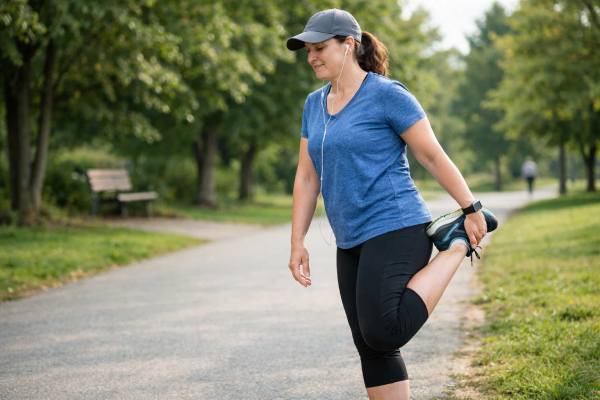
Start every run with a real warm-up
A proper warm-up can be simple:
- 5 minutes brisk walking
- 10 to 15 leg swings per side
- a few controlled calf raises
- a few marching steps or easy skips if comfortable
You do not need a long ritual. You just need to avoid starting your first running interval cold. If you want a broader framework for warm-ups and recovery days, warm-up, mobility and recovery covers the essentials well.
Choose comfort over “perfect” shoes
Most beginners do not need a complicated shoe fitting system. They usually need running shoes that feel comfortable, fit well in the toe box, and do not aggravate pain. Replace them when they feel flat, unsupportive, or unusually harsh, not because marketing told you to.
Use strength training to protect your running
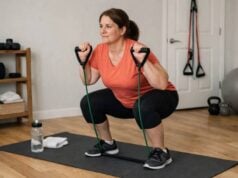
Hip, glute, calf, hamstring, and core strength help beginners tolerate impact and control fatigue better. That does not mean you need bodybuilder workouts. Two short weekly sessions can make a big difference.
Useful exercises include:
- split squats or reverse lunges
- calf raises
- glute bridges or hip thrusts
- step-ups
- side planks
- dead bug variations
If you want a straightforward structure, a simple 3-day strength plan can help you organize strength work around running rather than treating it as extra punishment.
Learn the difference between soreness and pain
| Normal after a beginner run | More concerning sign |
|---|---|
| Mild muscle soreness in calves, quads, or glutes | Sharp pain in one spot |
| Stiffness that improves as you warm up | Pain that worsens as you keep running |
| General fatigue in both legs | Altered stride or limping |
| Light soreness for 24 to 48 hours | Pain lasting several days or returning every run |
Common beginner trouble spots include the shins, calves, knees, Achilles area, and feet. If pain is one-sided, changes your mechanics, or grows week to week, do not try to run through it to prove discipline. Back off, reduce impact, and reassess.
The best injury-prevention strategy is boring in the best way: progress gradually, keep your easy days easy, warm up, and get stronger.
Recovery and Nutrition for New Runners
Recovery is where a beginner running plan either becomes sustainable or falls apart. Many people focus so heavily on the workout that they ignore the factors that let the body adapt: sleep, food quality, hydration, and timing.
Sleep is the first one. If you are regularly sleeping too little, beginner running will feel much harder. Your legs will feel heavy, your motivation will drop, and appetite may become harder to manage. Poor sleep also makes it easier to mistake fatigue for laziness, which pushes people into unnecessary “make-up” workouts.
Food matters because beginner runners often swing between two bad extremes. They either under-eat to force faster fat loss or overeat because the run made them feel deserving of more food than they burned. Neither approach works well. Under-eating can reduce recovery, raise injury risk, and make adherence worse. Overeating can erase the deficit you were trying to create.
A more useful approach is:
- eat enough protein to support recovery and muscle retention
- keep meals consistent on run days and rest days
- use carbs strategically rather than fearing them
- avoid turning every run into a reward event
For shorter beginner runs, you usually do not need a large pre-run meal. Many people do well with a light snack 30 to 90 minutes before running, especially if they are training after a long gap without food. A banana, toast, yogurt, or another easy-to-digest option is often enough. If you need ideas, pre-workout meals for weight loss can help you keep it simple.
After a run, think less about “recovery drinks” and more about a normal meal that includes protein, produce, and a reasonable carb source. That helps you refill energy without turning the workout into an excuse for uncontrolled eating. Practical options are covered well in post-workout meals for weight loss.
Hydration matters too, but this does not need to be dramatic. Most beginner runners just need to begin runs reasonably hydrated and drink according to thirst for normal sessions. Overcomplicating sports drinks for short easy runs usually adds calories without much benefit.
The other side of recovery is rest days. They are not wasted days. They are the days when your body adapts to the work you did. Walking, mobility work, or easy cycling can fit, but not every day should feel like another test.
Good recovery is not separate from fat loss. It is part of what makes consistent fat loss possible.
How to Stay Consistent and Keep Losing Fat
The hardest part of running for weight loss is not the first week. It is staying consistent after the novelty wears off. That is where most beginners either find a rhythm or start skipping runs, getting frustrated with the scale, and giving up too early.
A few habits make a big difference.
Keep your expectations realistic
Running can support fat loss, but it rarely produces dramatic week-to-week changes by itself. Early progress may come from better consistency, water shifts, and improved routine as much as from the runs themselves. Judge the plan over several weeks, not a couple of days.
Track more than body weight
Useful markers include:
- weekly run consistency
- total weekly minutes run or walked
- how easy the same pace feels
- waist measurements
- energy during the day
- resting soreness and recovery
That broader view matters because fitness often improves before visible body changes become obvious.
Do not let harder workouts reduce the rest of your movement
Some people start running and then move less the rest of the day because they are tired. That can quietly reduce the net benefit of the program. Keep general movement high with walks, errands on foot, standing breaks, and step goals. Running should add to your activity pattern, not replace it.
Use running as part of a mixed plan
You do not need to run every day to lose weight well. Many people get better results with 2 to 4 runs per week plus steps and strength training. That keeps impact manageable and usually improves adherence. If you eventually feel stuck, workout plateaus in fat loss can help you decide whether the issue is training, recovery, or food-side drift.
Know when to hold steady
If your body is adapting well, stay with the plan. Many beginners sabotage themselves by changing everything too quickly. If three weekly run-walk sessions are working, there is no prize for jumping to six. If your current setup already fits your life, protect it.
Consistency also means flexibility. Travel, bad sleep, heavy work weeks, and stress happen. When that happens, shrink the session instead of abandoning the routine completely. A 20-minute easy run or a brisk walk keeps the habit alive better than an all-or-nothing mindset.
In the long run, the best fat-loss running plan is the one you can still follow after motivation cools down. That usually means moderate progression, sensible recovery, and a routine that makes you feel more capable, not constantly beaten up.
References
- Aerobic Exercise and Weight Loss in Adults: A Systematic Review and Dose-Response Meta-Analysis 2024 (Systematic Review and Meta-Analysis)
- Physical activity and exercise for weight loss and maintenance in people living with obesity 2023 (Review)
- Risk factors for running-related injuries: An umbrella systematic review 2024 (Umbrella Review)
- Hip and core exercise programme prevents running-related overuse injuries in adult novice recreational runners: a three-arm randomised controlled trial (Run RCT) 2024 (RCT)
- A systematic review of running-related musculoskeletal injuries in runners 2021 (Systematic Review)
Disclaimer
This article is for general educational purposes only and is not a substitute for medical advice, diagnosis, or treatment. If you have significant joint pain, a recent injury, heart or lung symptoms with exercise, or a medical condition that affects safe activity, speak with a qualified healthcare professional before starting a running plan.
If this article helped you, please share it on Facebook, X, or your preferred platform so more people can start running for weight loss with a safer, smarter plan.