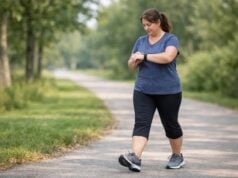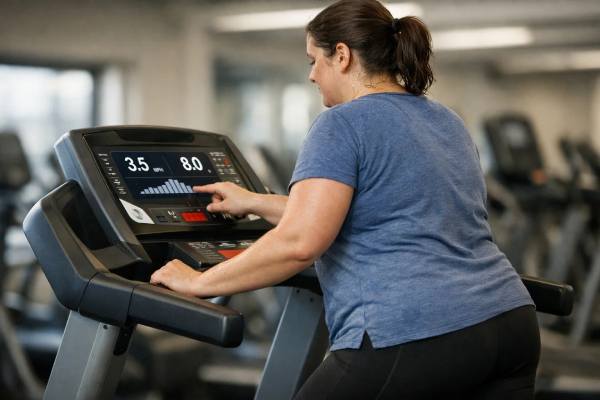
Treadmill walking can absolutely help with weight loss, but the best results usually come from using it with purpose rather than just logging random miles. Incline changes the workload without forcing you to run, intervals make moderate sessions more efficient, and a simple weekly structure makes it much easier to stay consistent long enough to see changes in body weight, fitness, and waist size.
This guide explains how treadmill walking supports fat loss, when to use incline, how to set up intervals, what pace actually counts as productive, and how to build a realistic plan whether you are a beginner, returning after time off, or trying to protect your joints.
Table of Contents
- Does treadmill walking help weight loss?
- Incline walking vs flat walking
- Best intervals for fat loss
- How to build your weekly plan
- Speed, incline and heart rate targets
- Mistakes that slow results
- Safety, form and joint-friendly modifications
Does treadmill walking help weight loss?
Yes, treadmill walking can help you lose weight, but it works best when you understand what it is actually doing. Walking increases daily energy expenditure, improves fitness, helps preserve routine, and gives many people a form of cardio they can repeat often enough to matter. It is not a shortcut, but it is one of the most sustainable tools for creating the activity side of a calorie deficit.
That matters because the biggest predictor of success is not whether a workout looks intense. It is whether you can keep doing it for weeks and months. Treadmill walking is easier to recover from than hard running, easier to scale than many classes, and easier to perform consistently when the weather, safety, time, or schedule make outdoor exercise unreliable. That consistency is what turns “just walking” into real progress.
A few points are worth keeping in mind:
- Walking alone does not guarantee fat loss if food intake rises enough to erase the calorie deficit.
- Treadmill sessions still count even if they feel less dramatic than HIIT.
- Heavier individuals generally burn more calories at the same pace and incline than lighter individuals.
- Weight loss often shows up first as better stamina, looser clothes, and a smaller waist before the scale moves clearly.
For many people, treadmill walking is especially useful because it lowers the barrier to starting. If running feels too harsh, gym circuits feel intimidating, or longer workouts seem overwhelming, walking can be the entry point that gets momentum going. It also pairs well with a nutrition strategy focused on an achievable calorie target. If you need help setting that side up, see a realistic calorie target for weight loss and a broader guide to walking for weight loss.
The other advantage is control. On a treadmill, you can adjust pace and incline in small steps, repeat the same session next week, and track progress more precisely than you often can outside. That makes it easier to spot improvement. The same pace may feel hard in week one, manageable in week three, and easy in week six. When that happens, your body is adapting, and that is the point where you can gradually progress the plan rather than guessing.
Treadmill walking is most effective for weight loss when you use one of three approaches: longer steady walks, moderate incline walks, or structured intervals that alternate easier and harder segments. The best program usually combines all three across the week rather than relying on only one style forever.
Incline walking vs flat walking
Incline is one of the simplest ways to make treadmill walking more effective without turning it into a run. Raising the grade increases the demand on your heart, lungs, glutes, calves, and hamstrings. In practical terms, that means you can get a harder training effect at a slower speed, which many people find more comfortable than trying to walk extremely fast on a flat treadmill.
Flat walking still has value. It is easier to recover from, easier for beginners, and often better for longer sessions, warm-ups, cool-downs, and high-step days. But incline walking usually gives you more training stimulus per minute. That makes it especially useful when your goal is weight loss and you want more from a 25- to 40-minute session.
The best choice depends on what you need most:
- Flat walking is best for beginners, recovery days, longer steady sessions, and people managing calf or Achilles tightness.
- Moderate incline walking is best for increasing intensity without jogging.
- Steeper incline walking can be effective, but it is not automatically better if it shortens the workout too much or makes your form sloppy.
A common mistake is treating incline like a badge of effort rather than a tool. Very high grades can force you to lean too far forward, grip the rails, shorten your stride, and stop after only a few minutes. In that case, the session may look harder but work worse. For fat loss, a sustainable moderate incline that lets you keep good posture and finish the workout usually beats an aggressive incline that turns the session into a survival test.
A useful starting range for most people is:
- 0% to 2% incline for easy walking
- 3% to 6% for moderate incline work
- 6% to 10% for shorter intervals or experienced walkers with good tolerance
That is why the popular 12-3-30 style gets attention: it uses incline to raise effort while keeping the movement simple. But it is only one option, not the only effective one. If you want to compare approaches, see the 12-3-30 treadmill workout and a deeper look at incline walking versus running for fat loss.
One more practical point: incline walking often feels harder than the speed number suggests. A walk at 3.0 mph on an 8% incline can be more challenging than a much faster flat walk. That is why chasing pace alone is misleading. For weight loss, the better question is whether the workload is high enough to be productive and low enough to repeat three to five times per week.
Best intervals for fat loss
Intervals work well on a treadmill because they let you spend part of the session at a higher effort without needing to hold that pace the whole time. For walking, intervals usually mean alternating brisk and easier periods by changing speed, incline, or both. This can increase total training quality while keeping the workout joint-friendlier than running intervals.
For weight loss, the biggest advantage of walking intervals is not that they “hack” fat burning. It is that they make moderate-length workouts more engaging and often easier to progress. Instead of walking at one pace for 30 minutes and zoning out, you break the session into chunks with clear targets.
Three interval styles that work
- Speed intervals
- Easy: 2 to 3 minutes at a comfortable pace
- Harder: 1 to 2 minutes at a brisk pace
- Best for people who dislike steeper inclines
- Incline intervals
- Keep speed similar
- Raise incline for the work segments
- Best for people who want intensity without fast leg turnover
- Mixed intervals
- Slight increase in speed and incline during work intervals
- Best for intermediate walkers who want variety
Beginner interval templates
- 20-minute simple intervals:
5-minute warm-up, then 5 rounds of 1 minute brisk and 2 minutes easy, then 5-minute cool-down - 25-minute incline intervals:
5-minute warm-up, then 6 rounds of 1 minute at 4% to 6% incline and 2 minutes flat or low incline, then cool-down - 30-minute rolling intervals:
5-minute warm-up, 10 minutes steady moderate, 5 rounds of 30 seconds harder and 90 seconds easier, 5-minute cool-down
The best “hard” interval is usually around an effort where talking becomes broken but not impossible. On a 1 to 10 effort scale, that is often a 7 or 8. The easy intervals should bring you back down to around a 3 or 4, not leave you gasping the entire session.
You do not need interval walking every day. Two interval sessions per week is enough for many people. On the other days, steady incline or flat walking often works better. If you have been obsessing over the so-called fat-burning zone, read the fat-burning heart rate zone explained. Many effective walking workouts burn meaningful energy without staying in one perfect heart rate band the entire time.
How to build your weekly plan
The best treadmill plan is the one you can repeat while recovering well enough to stay active the rest of the week. For most people trying to lose weight, that means combining treadmill walking with normal daily movement, not treating the workout as a pass to sit the rest of the day.
A strong starting framework is three to five treadmill sessions per week:
- 2 steady sessions
- 1 to 2 interval or incline-focused sessions
- 1 optional easy recovery or extra-step session
That gives you enough structure to progress without turning every workout into a hard day. Here is a practical four-week progression:
| Week | Sessions | Main focus | Example |
|---|---|---|---|
| 1 | 3 | Build the habit | Two 25-minute steady walks and one 20-minute interval walk |
| 2 | 3 to 4 | Add time | Two 30-minute steady walks, one 25-minute incline session, one optional easy walk |
| 3 | 4 | Add workload | One 35-minute steady walk, one 30-minute incline walk, one 25-minute interval walk, one easy walk |
| 4 | 4 | Consolidate and repeat | Keep total time similar, but make one session slightly brisker or slightly hillier |
Once that feels manageable, you can progress in one of four ways:
- Add 5 to 10 minutes to one session.
- Add one more session per week.
- Raise incline slightly on one workout.
- Increase the number of intervals.
Do not change all four at once. The easiest way to get hurt or burnt out is to raise speed, incline, frequency, and duration together.
If you are starting from a low fitness base, a broader beginner cardio workout plan can help you fit treadmill work into the week. If you want more structure beyond walking, a weekly workout schedule for weight loss can help balance cardio, strength work, and recovery.
A good rule is this: aim to finish most workouts feeling like you could have done a little more. That leaves room to come back tomorrow. Weight loss rarely comes from one heroic session. It comes from repeated good-enough sessions that stack over time.
Speed, incline and heart rate targets
Many people want exact numbers, but treadmill walking works better when you use ranges. The right speed for fat loss depends on leg length, coordination, fitness, body weight, and whether you are using incline. A brisk pace for one person may be an easy stroll for another.
A practical way to set intensity is to combine speed, incline, and effort:
- Easy effort: full conversation, light breathing
- Moderate effort: you can talk in sentences, but breathing is noticeably heavier
- Brisk effort: you can speak in short phrases, but not comfortably chat
- Hard walking interval: conversation is difficult, but you still control posture and foot strike
For many adults, approximate treadmill ranges look like this:
- Easy: 2.2 to 3.0 mph at 0% to 2%
- Moderate steady: 2.8 to 3.8 mph at 1% to 5%
- Brisk interval: 3.2 to 4.3 mph at 3% to 8%
Those are only starting points. The best target is the one that puts you in the intended effort zone while keeping your form stable.
Heart rate can help, but it should not control every decision. For steady fat-loss-oriented walking, many people will land in a moderate zone where breathing is elevated but manageable. For intervals, heart rate often rises more slowly than the treadmill changes, so effort and breathing are just as useful as the number on your watch.
A few practical guidelines make sessions more accurate:
- Warm up for 5 minutes before judging pace.
- Use the rails for balance if needed, but avoid hanging on for the whole workout.
- Do not copy someone else’s “best” speed if your stride is shorter or your fitness is different.
- Reassess every 2 to 3 weeks rather than every session.
Food and hydration matter more than many walkers expect. Going in dehydrated, under-fueled, or over-caffeinated can make a normal session feel oddly hard. For support around that side of the plan, see pre-workout meals for weight loss and hydration strategies with water, coffee, and tea.
The treadmill console can also mislead you. Calories burned are estimates, not exact measurements. They are useful for comparing one session to another on the same machine, but not for deciding you “earned” a large extra meal.
Mistakes that slow results
Treadmill walking is simple, but a few common mistakes can make it much less effective for weight loss.
Doing every workout at the same effort
If every session is a comfortable 20-minute walk at the same speed and grade, your body adapts quickly. You do not need endless intensity, but you do need progression. That might mean longer sessions, a little more incline, or a dedicated interval day.
Using incline so high that form breaks down
Very steep incline can look impressive while reducing the quality of the session. If you are leaning over, pulling on the rails, or taking tiny awkward steps, the setting is probably too aggressive.
Trusting calorie readouts too much
This is a major trap. Treadmills and wearables often overestimate exercise calories, especially when body data is inaccurate or when handrail use changes the true workload. That is one reason some people feel they are working hard but not seeing the expected fat loss. For more on that problem, see overestimating exercise calories.
Compensating after the workout
A productive walk can still fail to move fat loss forward if it leads to more sitting later, larger portions, or “I earned this” eating. Exercise can increase hunger in some people, especially when sessions become harder or longer. If that sounds familiar, this guide on why exercise can increase hunger is worth reading.
Ignoring total daily movement
A 30-minute treadmill walk is helpful, but it does not erase ten sedentary hours. Daily steps, standing breaks, and routine movement still matter. A person who walks on the treadmill and stays generally active often gets better results than someone who does one session and is mostly sedentary otherwise.
Being too impatient
Walking-based fat loss is effective partly because it is repeatable, and repeatable methods often look boring at first. The first signs of progress may be:
- lower resting heart rate
- easier breathing on hills
- better mood and energy
- looser waistband
- more weekly activity with less soreness
Those changes often arrive before dramatic scale losses. That does not mean the plan is failing.
Safety, form and joint-friendly modifications
One reason treadmill walking is so useful for weight loss is that it can be adjusted for a wide range of bodies, ages, and fitness levels. But the details matter. The goal is to make the workout challenging enough to count and safe enough to repeat.
Basic walking form
Use these cues:
- Stand tall with a slight forward lean from the ankles, not a bend at the waist.
- Keep your eyes forward, not down at the console.
- Let your arms swing naturally.
- Land under your body rather than reaching far out with each step.
- Keep shoulders relaxed.
Avoid gripping the rails unless you truly need them for balance. Light fingertip support is very different from leaning your weight into the machine. The more you unload your body onto the rails, the less accurate the workout becomes.
When to reduce intensity
Back off if you notice:
- sharp knee, hip, ankle, or foot pain
- calf or Achilles tightness that worsens as the walk continues
- dizziness or chest symptoms
- stride changes caused by discomfort
- next-day soreness that makes normal walking worse
If you have bad knees, higher body weight, or you are returning after inactivity, start with lower speeds and mild inclines. You do not have to prove anything in week one. A flatter 15- to 25-minute walk done consistently beats an ambitious incline routine you quit after four sessions. If you need alternatives, low-impact cardio for bad knees and a workout plan for obese beginners can help.
Smart modifications
- Shorten the session before forcing higher intensity.
- Keep incline modest if your calves get overloaded.
- Use intervals based on incline rather than speed if fast walking feels unstable.
- Split one long walk into two shorter walks on busy or low-energy days.
- Use supportive shoes with enough cushioning and room in the toe box.
Finally, remember that treadmill walking is not an all-or-nothing tool. It can be your main cardio method or just one piece of a broader plan that includes strength training, outdoor walks, and more daily movement. For weight loss, the winning setup is the one that keeps you active, recovering, and consistent enough to stay with it.
References
- World Health Organization 2020 guidelines on physical activity and sedentary behaviour 2020 (Guideline)
- Toward Exercise Guidelines for Optimizing Fat Oxidation During Exercise in Obesity: A Systematic Review and Meta-Regression 2023 (Systematic Review)
- Health benefits of interval walking training 2024 (Review)
- Physical Activity and Excess Body Weight and Adiposity for Adults. American College of Sports Medicine Consensus Statement 2024 (Position Statement)
- Aerobic Exercise and Weight Loss in Adults: A Systematic Review and Dose-Response Meta-Analysis 2024 (Systematic Review)
Disclaimer
This article is for general educational purposes only and is not a substitute for personal medical advice, diagnosis, or treatment. If you have heart disease, joint injuries, balance problems, severe obesity, or symptoms such as chest pain, dizziness, or unusual shortness of breath during exercise, speak with a qualified clinician before starting or progressing a treadmill program.
If this guide helped, please share it on Facebook, X, or any platform where it might help someone build a more realistic weight-loss routine.