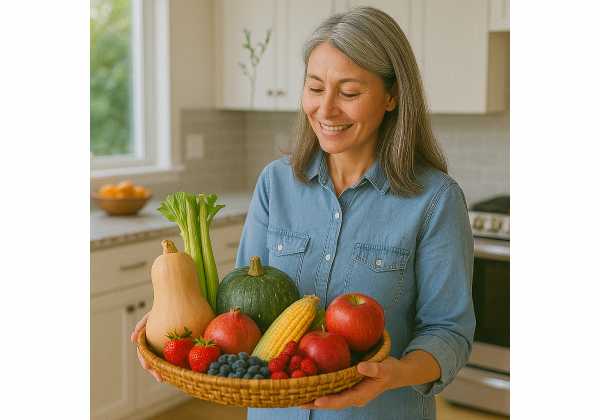
Seasonal eating gives healthy aging a practical rhythm. It encourages variety without asking you to overhaul your entire diet every month. Spring brings tender greens and herbs, summer brings hydrating fruits and colorful vegetables, fall brings fiber-rich roots and squash, and winter brings sturdy produce, soups, stews, legumes, fish, eggs, dairy, and pantry staples. Across the year, the strongest pattern stays the same: enough protein to protect muscle, enough plants to support the gut and blood vessels, enough healthy fat to absorb nutrients, and enough flexibility to keep meals realistic.
Seasonal food also solves a common nutrition problem in midlife and later life: eating the same safe foods too often. Rotating produce, herbs, grains, beans, and cooking methods widens the range of fiber, minerals, and protective plant compounds on the plate while keeping meals interesting.
Table of Contents
- Why Seasonal Eating Supports Healthy Aging
- The Year-Round Longevity Plate
- Spring Eating
- Summer Eating
- Fall Eating
- Winter Eating
- Shopping, Storage, and Prep
- Personalizing Seasonal Eating
Why Seasonal Eating Supports Healthy Aging
Seasonal eating supports healthy aging because it naturally increases variety. A longer life with better function depends less on single “superfoods” and more on repeated exposure to nutrient-dense meals: vegetables, fruits, legumes, whole grains, fish, eggs, dairy or fortified alternatives, nuts, seeds, olive oil, herbs, and enough total protein.
Eating with the seasons helps because different months push different foods forward. A person who buys asparagus, spinach, strawberries, tomatoes, peppers, apples, squash, cabbage, citrus, beans, and frozen berries over a year gets a wider nutrient spread than someone who buys the same salad kit and banana every week.
Seasonal variety also supports the gut. Gut microbes respond to the fibers and plant compounds that arrive regularly. Beans, oats, barley, onions, garlic, apples, berries, greens, potatoes, lentils, and cooled grains all feed microbial communities in different ways. This matters with age because digestive regularity, immune balance, appetite, and blood sugar handling often become more sensitive to routine.
Seasonal eating also protects enjoyment. Appetite often shifts in midlife and later life because of medications, dental changes, reduced smell, lower activity, grief, stress, or cooking fatigue. Fresh herbs in spring, chilled fruit in summer, roasted vegetables in fall, and warm soups in winter add sensory variety without relying on excess salt, sugar, or heavy sauces.
The strongest version of seasonal eating has three rules:
- Choose produce that is abundant, flavorful, and affordable where you live.
- Keep frozen, canned, dried, and fermented foods in rotation when fresh options are limited.
- Build each meal around protein, plants, healthy fat, and a slow-digesting carbohydrate when it fits your activity and blood sugar needs.
Seasonal eating does not require strict local-only shopping. A winter orange, frozen spinach, canned tomatoes, dried lentils, or jarred roasted peppers still fit a longevity-focused plate. The point is to use the season as a guide, not a rulebook.
The Year-Round Longevity Plate
A strong seasonal plate has the same structure in every season: protein first, plants generously, healthy fat intentionally, and carbohydrates matched to activity, appetite, and metabolic health.
For many adults in midlife and later life, protein deserves special attention. Aging muscle becomes less responsive to small protein doses, a pattern often called anabolic resistance. A practical target for healthy older adults is often about 1.0–1.2 g of protein per kg of body weight per day, with higher needs during illness, injury recovery, heavy training, or frailty under professional guidance. A simple meal pattern is 25–40 g of protein at each main meal. For a deeper guide to daily and per-meal amounts, see protein targets for longevity.
Plants come next. Aim for at least two plant foods at most meals: one vegetable or fruit plus one legume, whole grain, nut, seed, herb, or spice. This widens fiber and polyphenol exposure. Polyphenols are protective compounds found in colorful plant foods such as berries, cocoa, coffee, tea, herbs, citrus, onions, apples, olives, and leafy greens. They work best as part of a regular food pattern rather than as isolated powders. More examples are covered in polyphenol-rich foods.
Healthy fats make seasonal meals more satisfying and help absorb fat-soluble nutrients. Olive oil, avocado, nuts, seeds, tahini, oily fish, and yogurt-based sauces fit well. A tomato salad with no fat tastes sharp and leaves many people hungry. Add olive oil, sardines, feta, chickpeas, or walnuts, and it becomes a meal.
Carbohydrates should earn their place. Beans, lentils, oats, barley, potatoes, sweet potatoes, fruit, intact whole grains, and cooled rice or potatoes give more fiber and nutrients than refined starches. Active people often feel and perform better with more whole-food carbohydrate. Less active people or those with insulin resistance often do better with smaller portions, more legumes, and a post-meal walk. For practical choices, smart carbs for longevity offers a useful framework.
| Plate Part | Best Everyday Choices | Why It Helps With Aging |
|---|---|---|
| Protein | Fish, eggs, Greek yogurt, cottage cheese, poultry, tofu, tempeh, beans, lentils | Supports muscle, bones, immune function, repair, and appetite control |
| Plants | Seasonal vegetables, fruit, herbs, legumes, mushrooms, sea vegetables where used | Provides fiber, potassium, magnesium, vitamin C, carotenoids, and polyphenols |
| Healthy fat | Olive oil, nuts, seeds, avocado, tahini, oily fish | Improves meal satisfaction and supports absorption of fat-soluble nutrients |
| Slow carbohydrate | Oats, barley, beans, lentils, potatoes, sweet potatoes, whole grains, fruit | Supports energy, training, gut health, and steadier blood sugar when portions fit the person |
Spring Eating
Spring meals should feel lighter while still delivering enough protein and minerals. Tender greens, asparagus, peas, radishes, herbs, strawberries, rhubarb, spring onions, mushrooms, and young lettuces bring freshness after heavier winter cooking.
Spring is an excellent time to rebuild the habit of eating vegetables earlier in the day. Add spinach to eggs, herbs to yogurt sauce, peas to soup, asparagus to a grain bowl, or strawberries to kefir. These small moves help people who struggle to reach enough produce by dinner.
Spring foods to emphasize
Spring produce often includes asparagus, spinach, lettuce, peas, radishes, cabbage, carrots, mushrooms, herbs, strawberries, rhubarb, and citrus that is still available from winter. Local availability shifts by climate, so the best guide is freshness, price, and quality.
Good spring meal combinations include:
- Omelet with spinach, herbs, mushrooms, and feta
- Greek yogurt with strawberries, walnuts, and ground flax
- Lentil soup with carrots, cabbage, parsley, and olive oil
- Salmon with asparagus, potatoes, and lemon-herb yogurt
- Chickpea salad with radishes, cucumber, herbs, greens, and tahini
- Tofu stir-fry with peas, mushrooms, scallions, and brown rice
Spring greens are useful, but they are not enough by themselves. A large salad with little protein often leaves people hungry within two hours. Add eggs, fish, chicken, tofu, tempeh, beans, lentils, cheese, or yogurt-based dressing. Add olive oil, nuts, seeds, or avocado for staying power.
Spring nutrition priorities
Spring is a good season to increase folate-rich greens, vitamin C-rich fruit, and prebiotic fibers from onions, garlic, leeks, asparagus, oats, and legumes. Prebiotic fibers feed beneficial gut bacteria and help produce short-chain fatty acids, compounds involved in gut barrier function and metabolic signaling. A broader guide to fiber types and food sources is available in fiber for longevity.
People who feel sluggish after winter often try aggressive cleanses or very low-calorie diets. A better spring reset is simple: protein at breakfast, a vegetable at lunch, a legume or whole grain most days, and a 10-minute walk after the largest meal. This approach supports blood sugar, digestion, and energy without draining muscle.
Summer Eating
Summer eating should protect hydration, blood pressure, and blood sugar while taking advantage of high-flavor produce. Tomatoes, cucumbers, peppers, zucchini, eggplant, berries, cherries, peaches, plums, melons, corn, herbs, green beans, and summer squash make meals colorful and easy.
Heat changes appetite. Many people want smaller meals, colder foods, and less cooking. That works well when meals still include protein and electrolytes. A bowl of watermelon alone refreshes but does not sustain. Watermelon with Greek yogurt, mint, pistachios, and a boiled egg on the side works better. Tomato-cucumber salad becomes dinner when paired with sardines, beans, grilled chicken, tofu, or mozzarella.
Hydration without overdoing plain water
Older adults have a higher risk of dehydration because thirst signals often weaken with age, and some medications increase fluid loss. Summer heat, sweating, alcohol, high altitude, diarrhea, and fever raise fluid needs further. Hydration does not mean forcing huge amounts of water. It means steady fluid intake plus enough sodium and potassium from foods.
Helpful summer choices include:
- Water, sparkling water, unsweetened iced tea, kefir, soups served chilled, and diluted yogurt drinks
- Water-rich foods such as cucumber, tomatoes, melon, oranges, berries, lettuce, and zucchini
- Potassium-rich foods such as potatoes, beans, lentils, yogurt, leafy greens, bananas, and melon
- Salted meals when sweating heavily, unless a clinician has advised strict sodium restriction
For people with heart failure, kidney disease, advanced liver disease, or medically restricted fluids, hydration advice needs personal guidance. For most healthy adults, pale yellow urine, stable energy, normal urination, and fewer heat-related headaches are practical signs of adequate intake. For more detail, see hydration and electrolytes for healthy aging.
Summer blood sugar control
Summer fruit is valuable, but large fruit-only meals raise glucose in some people. Pair fruit with protein, fat, or fiber. Peaches with cottage cheese, berries with yogurt, melon with feta, or cherries after a protein-rich meal usually works better than eating a large bowl of fruit alone.
Corn, potatoes, rice salads, and bread also fit summer meals when portions match activity. Use the “activity sandwich” method: eat higher-carbohydrate meals near walking, gardening, cycling, swimming, strength training, or other movement. A 10- to 20-minute walk after dinner often improves post-meal glucose handling.
Summer is also the easiest season to eat a Mediterranean-style pattern: tomatoes, cucumbers, peppers, eggplant, beans, fish, olive oil, herbs, fruit, yogurt, and nuts. A practical starter guide to that pattern is here: Mediterranean eating for longevity.
Fall Eating
Fall eating should build fiber, mineral reserves, and meal-prep momentum. Apples, pears, grapes, cranberries, pomegranates, beets, carrots, parsnips, potatoes, sweet potatoes, pumpkin, winter squash, cabbage, Brussels sprouts, cauliflower, broccoli, kale, mushrooms, and onions all support hearty meals without relying on ultra-processed comfort foods.
Fall is also a natural time to cook in batches. Soups, stews, roasted trays, bean dishes, and grain bowls keep well and reduce weeknight decision fatigue. This matters for healthy aging because consistency beats intensity. A freezer with lentil soup, turkey chili, bean stew, cooked barley, and roasted vegetables prevents skipped meals and low-protein snacking.
Fall foods to emphasize
Fall produce is rich in carotenoids, fiber, potassium, and sulfur-containing compounds. Orange vegetables such as pumpkin, carrots, and sweet potatoes provide carotenoids, including beta-carotene. Cruciferous vegetables such as Brussels sprouts, cabbage, kale, cauliflower, and broccoli provide fiber and glucosinolates, compounds that form biologically active breakdown products during chopping and chewing.
Useful fall meals include:
- Turkey, bean, or lentil chili with peppers and tomatoes
- Roasted salmon with Brussels sprouts and sweet potato
- Tofu or chicken sheet-pan dinner with squash, onions, and mushrooms
- Barley bowl with roasted carrots, chickpeas, greens, and tahini
- Cottage cheese or yogurt with apples, cinnamon, walnuts, and oats
- White bean soup with kale, garlic, rosemary, and olive oil
Fall is also a good season for strengthening bones and muscles through food. Protein, calcium, vitamin D, magnesium, potassium, and vitamin K all matter. Dairy, fortified soy milk, yogurt, kefir, canned salmon with bones, tofu set with calcium, greens, beans, and nuts help fill common gaps.
Using starch wisely
Fall comfort foods often become starch-heavy: bread, pasta, mashed potatoes, pie, pastries, and sweet drinks. A better pattern is to keep the seasonal starch but anchor it. Sweet potato with salmon and greens works better than sweet potato casserole as the main event. Pumpkin soup with lentils and Greek yogurt works better than pumpkin bread alone. Apple slices with peanut butter, yogurt, or cheese work better than apple desserts every night.
Cooled potatoes, cooled rice, oats, barley, and legumes contain more resistant starch than many refined grains. Resistant starch behaves partly like fiber and supports gut bacteria. It is not magic, but it is a useful tool for people who enjoy carbohydrates and want steadier digestion and glucose.
Winter Eating
Winter eating should protect protein intake, vitamin and mineral density, warmth, and routine. Cold months often reduce fresh-produce variety, outdoor activity, and sunlight exposure. The answer is not a perfect winter diet. It is a dependable winter kitchen.
Winter produce often includes cabbage, carrots, beets, potatoes, sweet potatoes, onions, leeks, citrus, apples, pears, pomegranates, winter squash, kale, collards, Brussels sprouts, turnips, rutabagas, mushrooms, and herbs. Frozen berries, frozen spinach, frozen peas, canned tomatoes, canned beans, lentils, oats, sardines, tuna, salmon, eggs, yogurt, kefir, and fermented vegetables fill the gaps.
Warm meals that still support longevity
Winter soups and stews are excellent vehicles for protein and plants. Start with onions, garlic, carrots, celery, cabbage, tomatoes, or mushrooms. Add lentils, beans, chicken, turkey, fish, tofu, or tempeh. Finish with olive oil, herbs, lemon, yogurt, or a small amount of aged cheese.
Strong winter meals include:
- Lentil soup with carrots, onions, greens, and olive oil
- Sardines or salmon with potatoes, cabbage slaw, and yogurt sauce
- Turkey and white bean stew with kale
- Tofu miso soup with mushrooms, greens, and buckwheat noodles
- Greek yogurt with frozen berries, chia, and walnuts
- Egg scramble with frozen spinach and roasted sweet potato
Winter is also the season when breakfast quality matters. A protein-poor breakfast followed by low light and low movement often leads to grazing. Better options include eggs with greens, Greek yogurt with berries and nuts, cottage cheese with fruit, tofu scramble, or oatmeal fortified with milk, soy milk, protein-rich yogurt, nuts, and seeds.
Vitamin D, B12, and omega-3 awareness
Winter sunlight is weaker in many regions, and vitamin D from food alone is difficult to maintain for some people. Fatty fish, eggs, fortified dairy, fortified plant milks, and UV-exposed mushrooms contribute, but testing is the cleanest way to know status. Adults with osteoporosis, limited sun exposure, darker skin, malabsorption, obesity, kidney disease, or certain medications should discuss testing and dosing with a clinician.
Vitamin B12 also deserves attention in later life. Absorption can decline with age, and acid-reducing medications or metformin increase risk for low B12 in some people. Animal foods provide B12; fortified foods or supplements are needed for fully plant-based eating.
Omega-3 fats from salmon, sardines, trout, herring, mussels, and algae-based options support a heart- and brain-conscious pattern. Winter is a good time to schedule fish twice weekly or keep canned fish available for fast meals.
Shopping, Storage, and Prep
Seasonal eating works best when shopping and storage are simple. Buy enough fresh produce for three to five days, then rely on frozen, canned, dried, and fermented foods to carry the rest of the week. This lowers waste and keeps meals reliable.
A strong seasonal kitchen has three layers:
| Storage Type | Examples | Best Use |
|---|---|---|
| Fresh | Leafy greens, herbs, berries, tomatoes, cucumbers, asparagus, peaches | Use early in the week when flavor and texture matter most |
| Sturdy | Cabbage, carrots, beets, squash, potatoes, onions, apples, citrus | Hold for later meals, soups, roasting, slaws, and snacks |
| Backup | Frozen berries, spinach, peas, canned tomatoes, beans, lentils, fish, oats | Prevent skipped meals and keep nutrition steady in busy weeks |
Store greens dry with a towel in a container. Keep herbs like flowers in a jar of water or wrap them in a damp towel. Roast vegetables before they soften. Freeze extra herbs in olive oil or blend them into sauces. Wash berries close to eating unless they are very fresh and dry well after rinsing.
Use a weekly “seasonal base” to make meals fast. In spring, that base might be washed greens, boiled eggs, cooked lentils, and herb sauce. In summer, chopped cucumber, tomatoes, beans, grilled protein, and yogurt dressing. In fall, roasted squash, cooked barley, turkey or tofu, and cabbage slaw. In winter, soup, frozen greens, canned fish, citrus, and oats.
Food safety matters more with age because immune response often weakens. Keep cold foods cold, reheat leftovers thoroughly, refrigerate cooked foods within two hours, and use leftovers within three to four days. People with weakened immunity should avoid high-risk foods such as unpasteurized dairy, raw sprouts, undercooked eggs, raw seafood, and deli meats unless reheated until steaming.
Budget also matters. Seasonal food is not always cheaper, but it often is when produce is abundant. Compare fresh against frozen and canned. Frozen berries, spinach, peas, edamame, and fish often beat out-of-season fresh versions in cost and convenience. Canned beans, tomatoes, pumpkin, sardines, salmon, and lentils are longevity staples, not compromises.
Personalizing Seasonal Eating
Seasonal eating should fit the person’s health status, culture, kitchen, appetite, and climate. The same seasonal pattern will look different for someone in Bulgaria, Florida, Canada, Japan, or Australia. The structure matters more than the exact produce list.
People with high blood pressure should emphasize potassium-rich plants, beans, lentils, yogurt, potatoes, greens, citrus, and lower-sodium cooking while following clinician advice on sodium. People with diabetes or insulin resistance should pair fruit and starch with protein, fiber, and fat, and use post-meal walking. People with kidney disease need individualized potassium, phosphorus, protein, and fluid guidance. People with reflux often do better with smaller evening meals and lower-fat cooking. People with chewing problems need softer proteins, soups, stewed fruit, cooked vegetables, yogurt, eggs, fish, tofu, and smooth bean dips.
Seasonal eating also has to respect appetite. If appetite is low, increase nutrient density rather than plate size. Add olive oil to soup, Greek yogurt to sauces, powdered milk or soy milk to oatmeal, eggs to rice bowls, nut butter to toast, and beans to stews. If appetite is high, increase vegetables, legumes, broth-based soups, potatoes, oats, and lean protein before snack foods.
Use this simple seasonal check-in once a month:
- Pick three seasonal vegetables or fruits to use often.
- Choose two protein anchors for the week.
- Cook one bean, lentil, or whole-grain dish.
- Add one fermented food, such as yogurt, kefir, kimchi, sauerkraut, miso, or tempeh.
- Keep one frozen or canned backup meal ready.
- Notice energy, digestion, sleep, training, and hunger.
The pattern should feel steady, not restrictive. A healthy aging diet leaves room for holidays, family foods, restaurant meals, and pleasure. The best seasonal plate is one you repeat because it tastes good, fits your life, and keeps your body capable.
References
- Seasonal Produce Guide 2026 (Official Page)
- Dietary Guidelines for Americans 2026 (Guideline)
- Optimal dietary patterns for healthy aging 2025 (Cohort Study)
- Mediterranean Dietary Pattern for Healthy and Active Aging: A Narrative Review of an Integrative and Sustainable Approach 2024 (Review)
- Protein and Aging: Practicalities and Practice 2025 (Review)
- Hydration Strategies in Older Adults 2025 (Review)
Disclaimer
This article is educational and does not replace care from a qualified clinician or registered dietitian. People with kidney disease, heart failure, diabetes requiring medication, swallowing problems, food allergies, digestive disease, or medically restricted fluids should personalize seasonal eating with professional guidance.