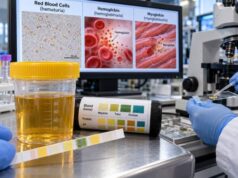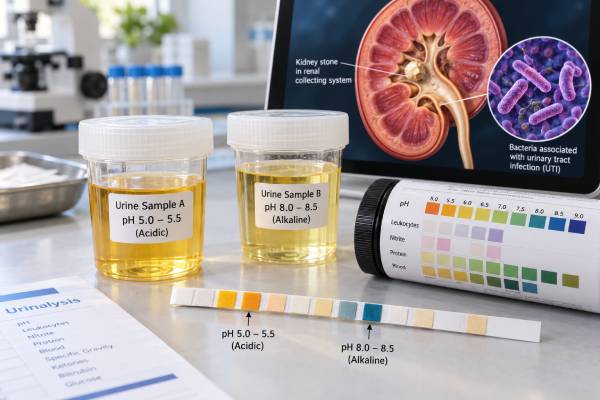
A urine pH test shows how acidic or alkaline urine is. Most routine urinalysis results fall somewhere between about pH 4.5 and 8.0, with many samples around 5.5 to 6.5. A single value can shift with meals, hydration, medicines, supplements, and the time of day, so an acidic or alkaline result is not automatically a problem. Urine pH becomes more useful when it is interpreted with symptoms and other tests. Persistently acidic urine can increase the risk of uric acid and cystine stones, while persistently alkaline urine can favor calcium phosphate stones. Very alkaline urine can also occur with urease-producing urinary bacteria and may support concern for infection stones such as struvite. Urine pH can also help evaluate renal tubular acidosis when blood tests show metabolic acidosis. Because a stored sample can become artificially alkaline as bacteria multiply, collection and prompt testing matter as much as the number itself.
- Typical urine pH spans about 4.5–8.0; a single result inside or outside that range must be interpreted in context.
- Acidic urine, especially below about pH 5.5–6.0 over time, is important in uric acid stone risk and may also worsen cystine crystallization.
- Alkaline urine favors calcium phosphate stones; infection stones are strongly associated with urease-producing bacteria and often urine pH above 7.0.
- A high urine pH does not by itself diagnose a UTI, and a normal pH does not rule one out.
- Fresh testing is important because urine left standing can become more alkaline and produce a misleading result.
Table of Contents
- What a Urine pH Test Measures
- Normal Urine pH Range and Daily Variation
- What Acidic Urine Means
- What Alkaline Urine Means
- Urine pH and Kidney Stones
- Urine pH and Urinary Tract Infection
- Testing, Preparation, and Follow-Up
What a Urine pH Test Measures
Urine pH measures the concentration of hydrogen ions and expresses it on the pH scale. A pH below 7 is acidic, 7 is neutral, and above 7 is alkaline, also called basic. The kidney changes urinary acid excretion throughout the day to help keep blood pH tightly controlled.
That distinction is important: urine pH is not the same as blood pH. The body can have a normal blood pH while urine is acidic, because excreting acid is one of the ways the kidneys help maintain that normal blood environment. Conversely, urine can become alkaline after a meal or with certain medications while blood pH remains normal.
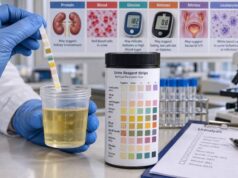
Routine dipsticks usually estimate urine pH in steps, often 0.5 pH units apart. A laboratory pH meter can provide a more precise measurement when acidification disorders are being investigated. For kidney stone evaluation, repeated pH measurements or a 24-hour urine study are often more informative than one office dipstick.
Urine pH is influenced by the balance of acid production, kidney hydrogen-ion secretion, ammonium excretion, bicarbonate handling, diet, and bacterial metabolism. It is therefore best viewed as a physiologic clue rather than a diagnosis.
The kidney handles acid in more than one form. Some hydrogen ions are buffered by phosphate and other urinary buffers, while much of the daily acid load is excreted as ammonium. Two people can therefore have the same urine pH but very different total acid excretion. This is one reason pH alone cannot measure how much acid the kidneys are removing or fully diagnose an acid-base disorder. In suspected RTA, clinicians may estimate ammonium excretion with the urine anion gap or urine osmolal gap rather than relying on pH alone.
Dipstick pH also has limited precision. A strip reported as pH 6.0 may represent a true value somewhat above or below that number, and strongly pigmented urine can make visual comparison harder. When a precise acidification threshold matters, as in formal evaluation of distal RTA, laboratories may use an electrode-based method on a fresh sample instead of a routine reagent strip.
The test is commonly used with other urinalysis markers and can also be part of a 24-hour urine stone risk profile when recurrent stones are being evaluated.
Normal Urine pH Range and Daily Variation
A commonly cited urine pH range is about 4.5 to 8.0, and many fresh samples are mildly acidic, often around 5.5 to 6.5. Healthy kidneys can move urine across a wide pH range depending on what the body needs to excrete.
Normal variation can come from:
- Meals: urine may become temporarily more alkaline after eating, sometimes called the alkaline tide.
- Diet pattern: diets higher in animal protein tend to increase acid load, while diets rich in fruits and vegetables often produce a higher urine pH.
- Hydration: fluid intake changes urine concentration and can indirectly affect dipstick interpretation, though it does not control pH by itself.
- Time of day: first-morning urine may differ from later samples because overnight fasting and hormonal patterns change acid excretion.
- Medicines and supplements: citrate, bicarbonate, carbonic anhydrase inhibitors, methenamine, and other agents can intentionally or unintentionally alter urine pH.
A one-time result of 5.0 or 7.5 can therefore occur in a healthy person. The direction of change is often more informative than the isolated value, especially when the same collection method and timing are used on repeat testing. Persistent patterns matter more, especially when there is a specific clinical question such as recurrent stones, metabolic acidosis, or suspected infection with a urease-producing organism.
Sample age is another major source of variation. Bacteria can multiply in urine left at room temperature and break down urea, producing ammonia and raising pH. A fresh result is much more reliable than a value from a specimen that sat for hours before testing. If transport is delayed, the laboratory’s storage instructions should be followed so bacterial growth and chemical drift do not distort the pH.
What Acidic Urine Means
Acidic urine means the pH is below 7. In most people, mildly acidic urine is normal. The clinical question is whether the urine is appropriately acidic and whether the pattern is persistent.
Common reasons for lower urine pH include:
- high intake of animal protein or other acid-producing foods;
- fasting or ketosis;
- systemic acid load, including some forms of metabolic acidosis;
- chronic diarrhea, which can cause bicarbonate loss and lead the kidneys to excrete more acid when kidney acidification is intact;
- medicines designed to acidify urine, such as methenamine-related treatment strategies;
- metabolic syndrome and insulin resistance, which are associated with impaired ammonium handling and persistently low urine pH in many uric acid stone formers.
Low urine pH is especially relevant to uric acid. Uric acid becomes less soluble as urine gets more acidic. Values below about pH 5.5 are strongly associated with uric acid crystallization, particularly when urine volume is low or uric acid excretion is high.
Cystine also becomes less soluble in acidic urine. People with cystinuria often require deliberate urine alkalinization as part of stone prevention, with targets set by their specialist rather than by a generic home-dipstick range.
Acidic urine does not mean the blood is “too acidic.” To diagnose systemic metabolic acidosis, clinicians use serum bicarbonate, electrolytes, blood gases in selected cases, kidney function, and the clinical history. Urine pH then helps determine whether the kidneys are responding appropriately.
What Alkaline Urine Means
Alkaline urine means the pH is above 7. A transient alkaline result can be normal after meals or with a plant-rich diet. Persistent alkalinity can also result from medications, infection, or an acidification disorder.
Possible causes include:
- potassium citrate or sodium bicarbonate therapy;
- carbonic anhydrase inhibitors such as acetazolamide or topiramate;
- a diet with a high alkali load;
- a stale or contaminated urine specimen;
- UTI with urease-producing bacteria;
- distal renal tubular acidosis in the appropriate blood-acid-base setting.
Distal renal tubular acidosis
Distal renal tubular acidosis, or distal RTA, is a disorder in which the distal nephron cannot acidify urine normally. In a person with metabolic acidosis, the kidney should lower urine pH substantially. A urine pH that remains inappropriately high—often above about 5.3 to 5.5—can support distal RTA once UTI and other confounders are excluded.
A high pH alone is not enough to diagnose RTA. Clinicians also evaluate serum bicarbonate, chloride, potassium, kidney function, urine ammonium surrogates such as the urine anion or osmolal gap, and sometimes formal acidification testing. Distal RTA can increase calcium phosphate stone and nephrocalcinosis risk because alkaline urine often occurs together with low urinary citrate and altered calcium handling.
Very alkaline urine should also raise the question of specimen quality. If a sample was not tested promptly, repeating a fresh specimen can prevent a false conclusion about infection or tubular acidification.
Urine pH and Kidney Stones
Urine pH changes the solubility of several stone-forming substances, so it is one of the most actionable measurements in kidney stone prevention. However, pH is only one part of stone risk. Urine volume, calcium, oxalate, citrate, uric acid, sodium, and stone composition all matter.
| Stone type | pH pattern that favors it | Key point |
|---|---|---|
| Uric acid | Acidic, often below 5.5–6.0 | Raising urine pH is a major treatment strategy |
| Cystine | Acidic urine reduces solubility | Higher therapeutic pH targets are often used under specialist guidance |
| Calcium phosphate | Higher pH | Over-alkalinization can increase calcium phosphate supersaturation |
| Struvite | Strongly alkaline | Requires urease-producing infection; struvite tends to precipitate above about pH 7.2 |
| Calcium oxalate | Can form across a broad pH range | Volume, calcium, oxalate, and citrate are usually more important than pH alone |
For recurrent stone formers, the urine pH pattern for kidney stones is best interpreted alongside the actual stone analysis and 24-hour chemistry.
Urine pH can also vary enough within a single day to change supersaturation. A person whose 24-hour average is 6.0 may still spend several hours below 5.5 after an overnight fast or above 7.0 after an alkali dose. For patients actively dissolving uric acid stones or managing cystinuria, clinicians may therefore use several spot readings rather than one daily value. For routine prevention, the 24-hour collection provides a more integrated picture and avoids overreacting to short-lived meal-related changes.
Calcium oxalate deserves a special note because it is the most common stone type but is not tied to one narrow pH range. Very low or high pH can influence associated crystal chemistry, yet calcium, oxalate, citrate, urine volume, and sodium often drive risk more strongly. A person with calcium oxalate stones should not assume that making the urine alkaline will solve the problem unless a clinician has identified a specific reason, such as low citrate.
Why treatment targets are not one-size-fits-all
Urine alkalinization can dissolve or prevent uric acid stones, but pushing pH too high can increase calcium phosphate risk. For uric acid stones, many clinical protocols aim for a urine pH roughly around 6.0–6.5 for prevention and somewhat higher for dissolution, while avoiding prolonged pH above 7.0. Exact targets should be individualized.
Potassium citrate is commonly used when alkalinization is needed and can also increase urinary citrate. A separate urine citrate measurement helps show whether hypocitraturia contributes to stone risk.
People with recurrent stones should not chase a single pH number without knowing their stone type. A treatment that helps uric acid stones can be counterproductive in someone prone to calcium phosphate stones if urine becomes excessively alkaline.
Urine pH and Urinary Tract Infection
Urinary infection can affect pH, but urine pH is not a stand-alone UTI test. Most uncomplicated UTIs do not require alkaline urine, and many infected samples have a pH within the usual range.
The strongest link is with urease-producing bacteria. Urease splits urea into ammonia, which raises urine pH. Proteus mirabilis is a classic example. Some Klebsiella, Morganella, Providencia, and other organisms can also produce urease.
Markedly alkaline urine together with UTI symptoms, positive leukocyte esterase or nitrite, crystals, or a history of infection stones raises concern for a urease-producing organism. A urine culture is the correct test for identifying the organism.
Urease activity matters because alkaline urine promotes magnesium ammonium phosphate, or struvite, crystallization. These infection stones can grow rapidly and may form branching staghorn calculi. Management requires treatment of infection and, in many cases, removal of infected stone material rather than simply lowering urine pH.
A high pH without UTI symptoms may come from diet, medication, distal RTA, or an old sample. Conversely, a pH of 5.5 does not exclude a bacterial UTI. Leukocyte esterase, nitrites, white blood cells, symptoms, and culture are more directly relevant infection markers.
The age of the specimen is especially important when pH is used to support an infection-stone diagnosis. As urine stands, carbon dioxide can escape and environmental or contaminating organisms may metabolize urea, both of which can shift the result upward. A repeat fresh sample may fall back into the usual range. Clinicians are therefore cautious about labeling someone as having “alkaline urine” from one delayed specimen, particularly if the rest of the urinalysis does not support infection.
Testing, Preparation, and Follow-Up
Routine urine pH testing usually requires no fasting or special preparation. A fresh clean-catch midstream sample provides the most useful result, especially when infection is part of the question.
Tell the clinician about medicines and supplements that can change pH, including citrate, bicarbonate, acetazolamide, topiramate, and methenamine. Do not stop prescribed therapy just to change a urine pH result unless you are specifically instructed to do so.
If the result is unexpectedly high or low, the next step depends on why the test was ordered:
- Possible UTI: interpret pH with leukocyte esterase, nitrites, symptoms, microscopy, and culture when indicated.
- Kidney stones: review stone composition and 24-hour urine volume, calcium, oxalate, citrate, uric acid, sodium, and pH.
- Possible RTA: check serum bicarbonate, chloride, potassium, kidney function, and appropriate urine acidification studies.
- Monitoring alkali therapy: use the target set for the specific stone type or disorder, often with repeated home or laboratory pH readings.
Repeated measurements are often more valuable than a one-time dipstick. For stone prevention, pH varies across the day, so clinicians may ask for measurements at consistent times or use a 24-hour collection. Home pH paper can help monitor established treatment, but it should not be used to self-diagnose kidney stones or infection.
Seek medical care promptly for severe flank pain, fever, chills, vomiting, inability to urinate, or symptoms of kidney infection. Recurrent stones, persistently very alkaline urine, or unexpectedly high urine pH together with low blood bicarbonate also deserve formal evaluation.
The most useful interpretation is not simply “acidic” or “alkaline.” It is whether the urine pH makes sense for the person’s diet, medications, blood acid-base status, infection markers, and stone chemistry—and whether a persistent pattern points to a treatable cause.
References
- Office-Based Urinalysis: A Comprehensive Review 2022 (Review)
- Kidney Stone Pathophysiology, Evaluation and Management: Core Curriculum 2023 2023 (Review)
- Urinary pH and antibiotics, choose carefully. A systematic review 2023 (Systematic Review)
- Primary Distal Renal Tubular Acidosis: Toward an Optimal Correction of Metabolic Acidosis 2024 (Review)
- Metabolic Evaluation and Recurrence Prevention – EAU Guidelines on Urolithiasis – Uroweb 2026 (Guideline)
- Approach to Renal Tubular Acidosis – A Review 2026 (Review)
Disclaimer
This article is for general educational purposes and does not diagnose a UTI, kidney stone type, or acid-base disorder. Urine pH should be interpreted with symptoms, blood tests, urine culture, stone analysis, and other urine chemistry when appropriate. Seek prompt care for fever with flank pain, severe vomiting, inability to urinate, or other signs of serious urinary illness.