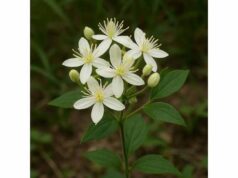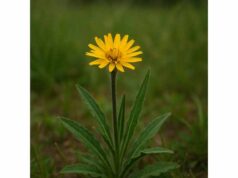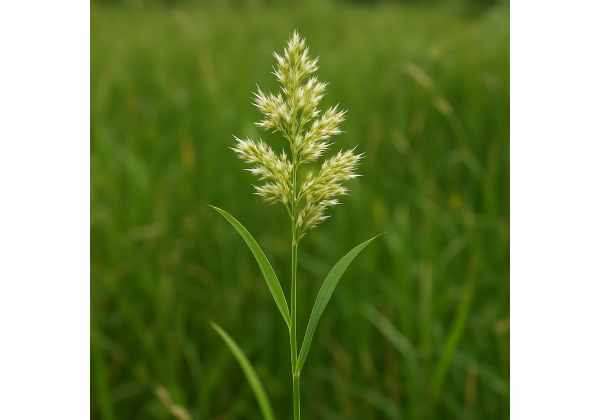
Vanilla grass, better known in many traditions as sweetgrass, is a fragrant northern herb valued as much for its aroma as for its practical uses. Its long leaves release a soft vanilla-like scent because they contain coumarin and other aromatic compounds. That scent helps explain why the plant has been braided, burned, infused, tucked into clothing, and used in ritual and household settings for generations. People also associate vanilla grass with calm, fresh air, and gentle support for minor discomforts, especially when used as a tea, rinse, or aromatic herb.
At the same time, this is not a herb with strong modern clinical evidence behind every traditional claim. The best-studied points involve its chemistry, antioxidant activity in laboratory work, and insect-deterrent properties. That makes vanilla grass interesting, but it also means it should be used thoughtfully. In practical terms, its biggest strengths are aromatic use, cultural significance, and modest traditional self-care roles. Because coumarin intake can become a safety issue at higher exposure levels, dosage and duration matter just as much as the potential benefits.
Essential Insights
- Vanilla grass is best known for its fragrant, calming aroma and its traditional use as a natural insect deterrent.
- Its most plausible benefits are gentle sensory relaxation, air and clothing freshening, and mild traditional digestive and throat support.
- A cautious oral range is a weak infusion of 120 to 240 mL once daily, used only occasionally unless a qualified clinician advises otherwise.
- People who are pregnant, have liver disease, or take anticoagulants should avoid self-medicating with vanilla grass.
Table of Contents
- What Vanilla Grass Is and Why It Smells Sweet
- Key Ingredients and Medicinal Properties
- Potential Health Benefits and What the Evidence Shows
- Traditional and Modern Uses of Vanilla Grass
- How to Prepare and Use It
- Dosage, Timing, and Practical Limits
- Safety, Side Effects, and Who Should Avoid It
What Vanilla Grass Is and Why It Smells Sweet
Vanilla grass is a perennial aromatic grass in the Poaceae family. In many herbal, ethnobotanical, and ceremonial contexts, the name usually refers to Hierochloe odorata, commonly called sweetgrass. The plant grows in cool northern regions and is known for long, flexible leaves that are often dried and braided. Once dried, the leaves keep their fragrance surprisingly well, which is one reason the herb has remained so valued outside of strictly medicinal use.
Part of the challenge with vanilla grass is naming. Common names can overlap, and other sweet-smelling grasses may be called vanilla grass in casual conversation. For practical health reading, that means product labels matter. A person shopping for dried braids, loose leaf, or tincture should look for the Latin name Hierochloe odorata so they know which plant they are actually getting. That step matters because the chemistry, strength, and traditional uses can differ among similar-smelling grasses.
The plant’s signature scent comes mainly from coumarin, an aromatic benzopyrone compound. When the leaves are fresh, the odor may seem subtle. As the plant dries, the fragrance becomes richer and warmer, which is why braids, bundles, and dried leaves are often preferred for ritual or aromatic use. The smell is sometimes described as a blend of vanilla, hay, almond, and fresh earth. That pleasant scent is not just cosmetic. It helps explain why the herb has been used to freshen rooms, perfume clothing, and support calm, sensory grounding.
Vanilla grass is often approached in three overlapping ways:
- as a cultural and ceremonial plant
- as an aromatic household herb
- as a traditional medicinal plant with modest everyday uses
Those roles should not be blurred too quickly. A sacred or traditional herb is not automatically a proven therapeutic agent in the modern clinical sense. Vanilla grass is a good example. Its long history tells us it matters deeply to many communities and that people found it useful in real life. Modern research adds some support for specific chemical actions, especially antioxidant and insect-deterrent effects. But it does not prove that every traditional internal use has been confirmed in humans.
From a practical viewpoint, vanilla grass sits somewhere between a folk remedy and an aromatic functional herb. It is not usually the first herb chosen when someone wants strong, predictable symptom relief. Instead, it is more often used for atmosphere, ritual, gentle support, and sensory benefit. That makes it appealing for people who value herbs that do more than one thing at once: smell pleasant, carry tradition, and offer mild supportive actions without acting like a harsh stimulant or sedative.
Key Ingredients and Medicinal Properties
Vanilla grass owes most of its identity to a small group of aromatic and phenolic compounds rather than one single “magic” ingredient. The best-known is coumarin, which gives the herb its sweet hay-like vanilla scent. Coumarin is the compound that makes people notice vanilla grass immediately, and it is central to both its appeal and its safety profile. In low sensory amounts, it creates fragrance and flavor. In larger cumulative intake, it becomes the reason caution is necessary.
Another compound often discussed in vanilla grass research is phytol. This naturally occurring diterpene alcohol appears in many plants, but in vanilla grass it helps explain part of the herb’s insect-deterrent reputation. Research on the plant’s volatile fractions suggests that coumarin and phytol together contribute meaningfully to mosquito biting deterrence. That does not mean the herb works like a standardized commercial repellent in all settings, but it does give a plausible chemical explanation for a longstanding traditional use.
Laboratory work has also identified antioxidant-active constituents, including coumarin-related compounds such as 5,8-dihydroxybenzopyranone derivatives. These substances help explain why extracts of the plant show free-radical-scavenging activity in experimental systems. That matters because it gives vanilla grass a biochemical identity beyond “pleasant-smelling grass.” It contains compounds that interact with oxidation pathways, at least in test systems.
How these ingredients translate into medicinal properties
When people describe the medicinal properties of vanilla grass, they are usually referring to effects that are likely to be:
- aromatic
- mildly antioxidant
- gently soothing
- insect-deterrent
- modestly irritant-modulating in traditional topical or rinse use
That profile makes sense for a fragrant herb, but it also sets expectations. Vanilla grass is not a powerhouse adaptogen, not a stimulant, and not a high-evidence digestive bitter. Its actions are gentler and more contextual.
A useful way to think about the herb is to separate its properties into two groups.
First are the sensory properties:
- sweet fragrance
- air and fabric freshening
- emotional grounding through smell and ritual
- smoke or vapor use in traditional purification contexts
Second are the phytochemical properties:
- antioxidant activity in lab models
- coumarin-associated aroma and biological activity
- insect-deterrent potential linked to volatile compounds
These two layers often reinforce each other. A fragrant herb may feel calming because it smells comforting, because the ritual slows the body down, and because the act of preparation encourages rest. That does not make the benefit imaginary. It simply means the effect is not always reducible to one biochemical pathway.
This is also why vanilla grass differs from more standardized soothing herbs such as lavender’s active compounds. Lavender has a broader modern aromatherapy literature, while vanilla grass remains more rooted in ethnobotany and emerging phytochemical research. Vanilla grass may still be useful, but it should be understood as a less standardized plant with wider variation in composition.
One more practical point is important: natural variation matters. The coumarin content of fragrant grasses can vary with species, growing conditions, harvest timing, and preparation. That means two bundles that smell similar may not be equally strong from a chemical standpoint. For that reason, medicinal use should stay conservative, especially when the herb is taken internally. Fragrance alone does not tell you the full dose.
Potential Health Benefits and What the Evidence Shows
The potential benefits of vanilla grass are real enough to deserve attention, but they are also easy to overstate. The strongest way to describe the herb is this: it has meaningful traditional value, plausible active compounds, and some promising laboratory evidence, but only limited human clinical confirmation. That balance matters.
1. Aromatic calming and sensory grounding
This is probably the most immediate and reliable benefit for everyday use. The sweet, warm scent can make a room feel softer and less stale, and the ritual of braiding, warming, or lightly burning the herb can encourage a slower pace. For some people, that creates a real shift in mood or tension. It is not accurate to call vanilla grass a proven anti-anxiety treatment, but it is fair to say it may support relaxation through aroma, setting, and habit.
2. Natural insect deterrence
This is one of the better-supported modern uses. Research on Hierochloe odorata has identified compounds that help explain its traditional use for discouraging mosquito biting. Historically, people carried braided material in clothing, used it as a sachet, or burned it so the fragrance spread through air and fabrics. That is a practical benefit, not just a symbolic one.
3. Antioxidant potential
Extracts of vanilla grass have shown radical-scavenging activity in laboratory work. That suggests the plant contains compounds capable of interacting with oxidative stress pathways. Still, this is where readers should slow down. Lab antioxidant activity does not automatically translate into a clear human health outcome. It is better interpreted as supportive biochemical evidence, not as proof that drinking the herb will deliver broad “anti-aging” or disease-fighting effects.
4. Mild traditional digestive and throat support
Traditional use includes infusions for sore throat, cough, and minor digestive discomfort. These uses fit the general pattern of aromatic herbs, which often serve as gentle household remedies. Yet this is one of the least clinically confirmed parts of the plant’s profile. A person with persistent throat pain, chronic cough, fever, or ongoing stomach symptoms should not rely on vanilla grass alone.
5. Gentle topical or rinse applications
Traditional washing, rinsing, and external use suggest a role in skin comfort, personal scent, and mild irritation support. Again, the herb seems best suited to supportive use, not primary treatment.
For readers who mainly want a digestively soothing herb, a better-studied option may be peppermint for digestive comfort. Vanilla grass is more niche, more aromatic, and less standardized.
The most honest bottom line is that vanilla grass shines most in these settings:
- when the goal is a calming, fragrant ritual
- when a traditional insect-deterrent herb is desired
- when mild, low-intensity support is enough
- when respect for cultural and ceremonial context remains central
It is less convincing when framed as a broad-spectrum medicinal herb for daily therapeutic use. The evidence simply is not strong enough for that.
Traditional and Modern Uses of Vanilla Grass
Vanilla grass has always been more than a “tea herb.” Its uses span ceremony, household care, fragrance, craft, and folk medicine. That broad usefulness is part of what makes the plant distinctive. Many herbs are either culinary or medicinal. Vanilla grass is cultural, practical, and aromatic all at once.
One of the most recognized traditional uses is braiding the dried leaves. Braids make the herb easier to handle, preserve, store, and burn slowly. In many communities, braided vanilla grass is used ceremonially for purification, prayer, or intentional space-setting. That use is not simply about smoke. It is about relationship, meaning, and continuity. Anyone writing about the herb should acknowledge that ceremonial use is not the same thing as casual wellness branding.
Beyond ceremony, vanilla grass has long been used in ordinary household life. People have stored it with clothing, tucked it into drawers, hung it indoors, or carried it in small bundles. The goals were simple and practical:
- add a pleasant scent to fabric and storage spaces
- freshen the air
- help discourage insects
- bring a sense of comfort to the home
Historically, it has also appeared in body and hair rinses, light infusions, and folk remedies for sore throat, cough, chapping, and other minor complaints. These traditional uses tell us something important: vanilla grass was valued because it could fit daily life. It did not need to be exotic to be useful.
Modern uses usually fall into five categories.
Aromatic use.
This includes dried braids, sachets, warming the plant gently, or very light burning in appropriate settings.
Herbal infusion.
Some people prepare a weak tea from the dried leaves. Because the plant contains coumarin, this should remain conservative.
Topical wash or rinse.
A cooled infusion may be used externally for a gentle rinse, especially when fragrance and mild soothing are the main goals.
Craft and decorative use.
Braids, baskets, and ornamental bundles remain important in many traditions.
Natural insect-deterrent support.
This is one of the few uses with direct modern chemical support.
There is also a modern ethical layer. As interest in ritual plants grows, vanilla grass can be overharvested, poorly labeled, or stripped of context. That means the “right” use is not just about personal benefit. It is also about respectful sourcing, learning, and restraint. Buying cultivated material when possible is wiser than treating the herb as a trend item.
That is one reason vanilla grass should not be approached as interchangeable with every other fragrant bundle herb on the market. It has its own history, chemistry, and cultural weight. Even when someone uses it only as a home fragrance, the best approach is intentional rather than casual.
This broader picture also helps explain why people keep reaching for the plant. Vanilla grass is not merely about symptom control. It is about atmosphere, memory, place, and sensory ritual. That alone can make it meaningful. A herb does not need to be pharmacologically dramatic to be genuinely useful.
How to Prepare and Use It
The safest and most practical way to use vanilla grass depends on your goal. Because the herb is aromatic first and medicinal second, preparation should match that reality. Stronger is not necessarily better.
For fragrance and atmosphere
This is the easiest and lowest-risk approach.
- Keep a dried braid or small bundle in a drawer, entryway, or closet.
- Crush a small piece gently between the fingers to release scent.
- Place a little dried material near, not on, a heat source to warm the aroma.
- If used ceremonially as smoke, use only a small amount in a well-ventilated space.
This method keeps coumarin exposure relatively low compared with repeated internal use while still delivering the plant’s most distinctive benefit.
For a weak infusion
A cautious traditional-style preparation is better than a strong decoction. Vanilla grass does not need prolonged boiling.
- Use a small pinch of dried cut leaf or a short piece of clean dried braid.
- Pour hot, not aggressively boiling, water over it.
- Cover and steep for about 5 to 10 minutes.
- Strain and sip slowly.
The goal is a light aromatic infusion, not a dark, concentrated medicinal tea. If the flavor is intensely sweet-hay bitter or perfumey, it is probably too strong for routine self-use.
For a rinse or external wash
Make a light infusion, cool it fully, and use it the same day.
- hair rinse after washing
- cloth compress for intact skin
- room or fabric freshening in small amounts
Patch-testing is wise before broader skin use, especially for sensitive people.
For blended preparations
Some people prefer to combine vanilla grass with gentler familiar herbs. In that setting, it works best as a small aromatic accent rather than the dominant ingredient. A person building a mild evening or digestive blend may get a more balanced result by using it sparingly alongside herbs with more established everyday preparation patterns, such as lemongrass preparations.
What to avoid:
- long simmering that concentrates the preparation
- large daily oral amounts
- essential-oil style internal use
- unknown commercial extracts without clear labeling
- smoke use in enclosed spaces or around people with asthma
Preparation also starts before the cup or braid. Source matters. Choose clean, correctly identified material, preferably cultivated or ethically sourced. Avoid roadside harvests, contaminated wetland areas, or unknown bundles sold without botanical names. Vanilla grass is often praised for its purity in ritual language, but the actual plant can still collect pollutants from the environment.
The simplest rule is this: prepare vanilla grass gently. Most of its value lies in aroma, light infusion, and context. When people push it toward concentrated medicinal use, they move away from the form in which the plant is usually most comfortable and safest.
Dosage, Timing, and Practical Limits
Vanilla grass does not have a well-established modern clinical dose the way some standardized herbs do. That means dosage has to be approached conservatively. The limiting factor is not only “what might help,” but also “how much coumarin exposure is sensible.”
For most people, the best general advice is to think of vanilla grass as an occasional-use aromatic herb, not a daily therapeutic drink.
Practical dosing by form
Aromatic use
- one small braid or bundle kept in the environment
- brief warming or short ceremonial use as needed
- avoid heavy repeated smoke exposure
Weak infusion
- about 120 to 240 mL per serving
- once daily at most for short periods
- use a light preparation, not a concentrated brew
External rinse
- use a fresh light infusion
- once daily or as needed for brief periods
- discontinue if irritation develops
Because coumarin content can vary, a “small amount” matters more than an exact folk recipe copied from an unverified source. If you do choose oral use, less is the safer starting point.
Best timing
Timing depends on purpose:
- evening if used for sensory relaxation
- after exposure to insects or outdoors if used aromatically for deterrent support
- after washing if used as a hair or body rinse
- short-term only if taken as a tea during a brief period of minor throat or digestive discomfort
A reasonable self-care window is a few days to, at most, a couple of weeks of occasional use. Long-term daily self-dosing is not a good fit for this herb.
When to stop
Stop use if you notice:
- nausea or stomach upset
- headache after strong aroma exposure
- rash or skin irritation
- unusual fatigue or abdominal discomfort
- any sign of sensitivity to smoke
People sometimes assume that because vanilla grass is traditional, the dose is automatically forgiving. That is not always true. Traditional use often depended on context, seasonal access, preparation skill, and lower frequency than modern wellness routines encourage.
It is also important not to stack exposures thoughtlessly. A person may already get coumarin from foods, spices, or supplements. Adding concentrated vanilla grass preparations on top of that can make total exposure harder to judge.
For readers who want a simple rule, here it is:
- use fragrance freely but sensibly
- use tea lightly and only occasionally
- avoid concentrated extracts unless directed by a qualified clinician
- do not treat it like an everyday tonic
That dosing philosophy may seem modest, but it fits the evidence. Vanilla grass is most compelling when used gently, intentionally, and with respect for both its chemistry and its tradition.
Safety, Side Effects, and Who Should Avoid It
Safety is where vanilla grass deserves the most honesty. The main concern is coumarin. While coumarin is responsible for the plant’s lovely scent, it is also the reason excessive internal use is a poor idea. In sensitive people or at higher exposure, coumarin can stress the liver. That risk is not the same for everyone, but it is real enough to justify caution.
The most important safety groups are:
- people with liver disease or a history of liver injury
- people who are pregnant
- people taking anticoagulants or antiplatelet drugs
- people using medicines that can affect the liver
- people with asthma or smoke sensitivity
- children, unless use is guided by a qualified clinician
Pregnancy deserves special care. Traditional records include gynecologic and reproductive uses, which is exactly why self-medication during pregnancy should be avoided. A herb with historical reproductive use is not one to experiment with casually.
Potential side effects may include:
- digestive discomfort
- headache from heavy aroma or smoke exposure
- skin irritation with topical use
- sensitivity reactions to concentrated preparations
- liver-related concerns with excessive internal intake
Smoke use also needs perspective. Some people find the aroma deeply centering. Others find any smoke irritating. Even a culturally respected plant can aggravate breathing problems in a poorly ventilated room. If someone has asthma, migraines triggered by scent, or a baby in the room, a sachet or unburned braid is usually a better choice than combustion.
Interactions are another reason to stay conservative. Because coumarin is central to the plant, people using blood thinners should be especially careful. That does not mean every exposure is dangerous, but it does mean unsupervised internal use is a poor gamble. Similar caution applies to anyone using multiple herbs or supplements with calming, liver-active, or poorly defined effects. Even gentle herbs such as chamomile safety and dosing can raise interaction questions in the wrong context, and vanilla grass is less standardized than chamomile.
A few practical safety rules go a long way:
- Prefer aroma and external use over regular oral use.
- Keep tea weak and occasional.
- Avoid unknown extracts, oils, or capsules with no coumarin information.
- Stop immediately if symptoms feel unusual.
- Ask a clinician before using it alongside medications.
The most balanced conclusion is that vanilla grass is not “unsafe,” but it is also not a free-use herb. It belongs in the category of plants best handled with respect, modest dosing, and clear boundaries. Its strongest gifts are aromatic and traditional. When people expect it to behave like a high-evidence daily medicinal herb, they usually ask more of it than the plant can safely or reliably give.
References
- Identification of radical scavengers in sweet grass (Hierochloe odorata) – PubMed 2002.
- Isolation and Identification of Mosquito (Aedes aegypti) Biting-Deterrent Compounds from the Native American Ethnobotanical Remedy Plant Hierochloë odorata (Sweetgrass) – PubMed 2016.
- Coumarin-Induced Hepatotoxicity: A Narrative Review – PMC 2022. (Narrative Review)
- Combined Risk Assessment of Food-derived Coumarin with in Silico Approaches – PMC 2022.
- ANSES OPINION on the “assessment of the risk of hepatotoxicity associated with the coumarin content of certain plants that can be consumed in food supplements or in other foodstuffs” 2021. (Guideline and Safety Opinion)
Disclaimer
This article is for educational purposes only and is not a substitute for medical advice, diagnosis, or treatment. Vanilla grass has important traditional uses, but modern clinical evidence for many internal health claims remains limited. Because the plant contains coumarin, concentrated or prolonged oral use may not be appropriate for everyone, especially people with liver disease, those who are pregnant, and anyone taking medications that affect blood clotting or liver function. Always check with a qualified healthcare professional before using vanilla grass medicinally.
If this article was helpful, please share it on Facebook, X, or your preferred platform so others can find it.