Wahoo, also called eastern wahoo or American wahoo, is a North American shrub or small tree whose bark and root bark were once used in traditional and Eclectic herbal medicine. Older practitioners described it as a bitter tonic in tiny amounts and a strong cathartic in larger ones, especially for sluggish digestion, constipation, “torpid liver,” and fluid retention. That historical reputation explains why the herb still attracts attention today.
At the same time, wahoo is not a gentle wellness herb. Its medicinal story is tightly linked to safety concerns, because the plant contains cardioactive compounds that can irritate the gut and affect the heart when misused. That is why modern self-treatment with wahoo is uncommon and often discouraged.
A useful article on wahoo has to do two things at once: explain why it was valued in older herbal systems and make clear why modern use demands caution. The sections below cover the plant’s key ingredients, traditional properties, likely actions, preparations, historical dosage ranges, side effects, interactions, and the situations in which it is better avoided altogether.
Quick Facts
- Wahoo was traditionally used as a bitter digestive stimulant and as a strong laxative for constipation linked to sluggish digestion.
- Its best-known active compounds help explain both its historical medicinal use and its real toxicity risk.
- Historical extract doses were very small, often about 60 to 200 mg per dose, but there is no evidence-based modern self-dosing standard.
- It should be avoided by children, pregnant or breastfeeding people, and anyone with heart disease, electrolyte problems, or dehydration risk.
Table of Contents
- What Wahoo Is and Why It Was Used
- Key Ingredients and Medicinal Properties
- Traditional Benefits and What Modern Evidence Shows
- How Wahoo Has Been Prepared and Used
- Dosage Timing and Duration
- Wahoo Safety Side Effects and Interactions
- When to Avoid It and What to Consider Instead
What Wahoo Is and Why It Was Used
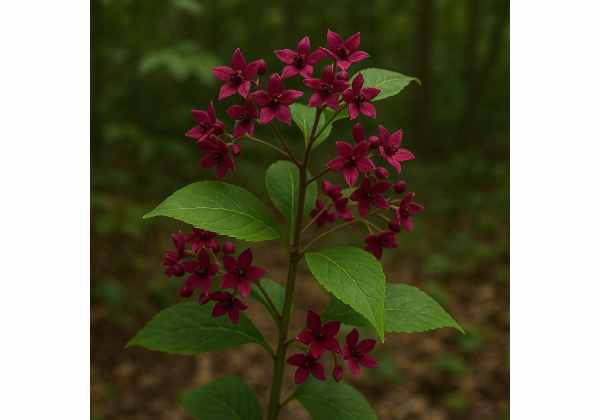
Wahoo is the common name for Euonymus atropurpureus, a deciduous shrub or small tree in the bittersweet family. It is native to parts of eastern and central North America and is known for its purplish flowers and bright pink to rose-colored seed capsules that open to reveal orange-red arils. Although many people now know it as an ornamental or native landscape plant, its older medical identity centered on the bark, especially the root bark.
Historically, Native communities and later American herbal practitioners used parts of the plant for practical purposes beyond medicine. The straight stems helped explain the “arrow wood” association behind one of its common names. In medical writing from the nineteenth century, however, wahoo became especially notable as a botanical drug for digestive and biliary complaints. It was described as useful when appetite was poor, the bowels were sluggish, and the liver was thought to be inactive.
That older language needs translation for modern readers. When historic texts say “torpid liver,” they usually mean symptoms such as fullness after meals, bitter taste, constipation, nausea, low appetite, and a general sense of digestive stagnation. Wahoo was used because it was believed to stimulate digestive secretions, encourage bile flow, and provoke bowel evacuation. In tiny amounts it was framed as a tonic; in larger amounts it was clearly purgative.
This is important, because wahoo was never a casual kitchen herb. Even in older practice, the difference between a stimulating dose and an unpleasantly drastic one could be narrow. That is one reason it fell out of favor as medicine. As herbal practice became more safety-conscious and drug standardization improved, practitioners moved toward plants with gentler action or clearer dosing.
So when people search for wahoo’s health benefits today, the honest answer begins with context. The herb was respected historically because it acted strongly. But that same strength is also the reason modern use is limited. Wahoo is best understood as a traditional medicinal plant with a narrow comfort margin, not as a broadly suitable daily tonic or supplement.
Key Ingredients and Medicinal Properties
The chemistry of wahoo helps explain both its old reputation and its safety concerns. The best-known constituents associated with Euonymus atropurpureus are cardioactive glycosides, sometimes described in older literature as digitalis-like compounds. Earlier pharmacognosy work isolated cardiac glycosides from the plant, and these compounds are the most important reason wahoo is treated with caution today. They can influence heart function, especially if the dose is too high or if the user is vulnerable because of illness, dehydration, or medication interactions.
Older herbal writers also referred to a bitter resinous principle called euonymin. In historical practice, this was linked to the herb’s action as a stomachic, cathartic, and cholagogue. In plain terms, it was thought to stimulate appetite and digestive secretions at low doses, while larger amounts irritated the intestine and pushed the bowels strongly. The old name does not correspond neatly to the kind of modern, fully standardized ingredient label people expect today, but it remains part of the plant’s medicinal history.
At the broader genus level, Euonymus plants have been reported to contain diverse secondary metabolites such as terpenoids, steroids, flavonoids, and phenolic compounds. That helps researchers understand why the genus continues to attract pharmacological interest. Still, it is important not to overextend those findings. A modern chemistry review of Euonymus as a genus does not automatically prove that American wahoo bark is a safe or evidence-based remedy for human self-care.
From a medicinal-property standpoint, wahoo has traditionally been described in several ways:
- Bitter digestive stimulant
- Cholagogue or bile-moving herb
- Cathartic or strong laxative
- Mild diuretic in older herbal language
- Hepatic or “liver” remedy in historical systems
The key point is that many of these properties were inferred from experience and older therapeutic doctrine, not from modern clinical trials. Also, the presence of cardioactive glycosides means wahoo should not be treated like a mild digestive tea. In a practical sense, its chemistry places it closer to the “powerful and potentially hazardous” end of herbal medicine than to the everyday wellness category. That is why comparisons with plants known for cardioactive constituents, such as foxglove compounds, are useful mainly as a warning and not as an invitation to experiment.
For modern readers, the most balanced interpretation is this: wahoo contains pharmacologically active substances, and those substances may help explain historical digestive and cathartic use. But the same chemistry also creates a meaningful risk profile, especially outside professional supervision.
Traditional Benefits and What Modern Evidence Shows
Wahoo’s traditional benefits are easy to summarize, but its modern evidence base is not. Historic North American herbal sources most often linked the plant to sluggish digestion, constipation, poor appetite, biliary complaints, fluid retention, and certain skin problems thought to arise from impaired elimination. Some writers also mentioned its use in fevers, general debility, and conditions described in older language as “malarial” or “bilious.”
The strongest traditional claims usually fall into four buckets:
- Appetite and digestive stimulation in very small amounts
- Strong laxative or cathartic action in larger amounts
- Support for bile flow and liver-related digestive complaints
- Mild support for water retention in older herbal practice
Those claims are part of wahoo’s historical identity, but they should not be confused with modern proof. Contemporary human trials on Euonymus atropurpureus are extremely limited, and there is no solid body of clinical evidence showing that wahoo is an effective or appropriate self-care treatment for constipation, indigestion, edema, or liver support today.
This gap matters. A plant can have a long traditional record and still lack modern evidence for safety, efficacy, or dose standardization. Wahoo is one of those herbs. Some newer scientific interest in the broader Euonymus genus points to antioxidant, anti-inflammatory, hepatoprotective, or metabolic effects in laboratory and animal models, but these findings are not enough to justify extrapolating strong health claims for American wahoo bark in everyday human use.
So what can reasonably be said about benefits?
The most defensible position is that wahoo probably did what older practitioners said it did in one narrow sense: it acted strongly on digestion and bowel function. That is different from saying it is a good modern remedy. A harsh purgative effect can certainly empty the bowels, but that does not make it the best choice for constipation. Likewise, a bitter herb can stimulate appetite or gastric secretions, but if it carries real toxicity risk, the benefit-to-risk balance changes.
That is why modern readers should think in terms of “historical use with limited modern validation,” not “proven herbal benefit.” People looking for gentle digestive or bile-supporting herbs are usually better served by safer options such as dandelion, which has a more practical place in modern herbal routines.
In short, wahoo’s traditional benefits are real as part of herbal history, but the modern evidence does not support routine self-treatment. The herb’s reputation came from strength, not from gentleness, and that distinction is crucial when deciding whether a plant belongs in modern home use.
How Wahoo Has Been Prepared and Used
Traditional use focused mainly on the bark, especially the root bark. Older practitioners often considered the root bark stronger and more desirable than material taken from other parts of the plant. Wahoo was prepared in several forms, each reflecting the medical style of its time rather than the supplement culture people know today.
Common historical preparations included:
- Powdered bark
- Decoctions made from bark
- Fluid extracts
- Tinctures
- Solid extracts or resinoid-style preparations
In small measured amounts, these preparations were used as bitters before meals or as part of formulas aimed at low appetite and sluggish digestion. In larger amounts, the same plant was used to produce a laxative or purgative effect. That two-sided use is central to understanding wahoo. It was not prepared one way for one purpose only. The form, strength, and dose all changed the expected effect.
Older herbal systems also paired wahoo with other botanicals. A practitioner might combine it with milder bitters, cholagogues, or laxatives to shape the effect and reduce the harshness of a stand-alone dose. In many cases, that kind of combining was an attempt to make a strong herb more manageable. It is one more reminder that the plant was recognized as potent, not casual.
Modern consumers face a very different problem: lack of standardization. Historical fluid extracts and solid extracts were made under systems that no longer match current supplement labeling. A bottle labeled “wahoo” today may not tell you the glycoside content, the extraction ratio, or the amount of active material in a way that truly predicts effect. That uncertainty makes traditional forms harder, not easier, to use safely.
Wahoo is also a poor candidate for homemade experimentation. Bark teas, home tinctures, and improvised powders can vary widely in strength. Unlike a mild culinary herb, the difference between a disappointing result and an unpleasant or dangerous reaction may come down to extraction method, plant part, and dose size.
For people interested in the historical comparison, wahoo occupied a therapeutic space that overlaps partly with strong laxative herbs. But even there, a better-characterized botanical such as senna is easier to dose and better understood, even though it also requires respect. Wahoo’s traditional preparations are medically interesting, but they are not a strong argument for modern home use.
Dosage Timing and Duration
The most important modern dosage point is simple: there is no well-established evidence-based oral dose for wahoo that can be recommended for routine self-use today. That is the safest starting position.
What we do have are historical dosage references from older pharmacopeial and herbal sources. Those texts describe much smaller doses for tonic or digestive purposes and larger ones for purgative action. One U.S.P.-era source lists extract doses in the range of about 1 to 3 grains, which converts to roughly 60 to 200 mg of extract per dose. That figure is useful as historical context, but it should not be treated as a modern self-care recommendation.
Why not? Because the old number leaves out several crucial things:
- The exact extraction method
- The true concentration of active constituents
- The plant part used
- The user’s age, health, and hydration status
- Modern medication interactions
In practice, that means a historical dose range may tell us how small practitioners once tried to keep the medicine, but it does not create a safe modern equivalent for bark powder, homemade tincture, capsules, or teas.
Timing also depended on the goal. Very small doses were historically taken around mealtimes when the intention was to stimulate appetite or digestive function. Larger doses were used when the goal was bowel evacuation. That does not mean either use is a good idea now. It simply shows that old practitioners expected very different outcomes depending on how much was taken.
As for duration, wahoo was never a good fit for casual long-term daily use. A strong cathartic herb can cause cramping, fluid loss, and repeated irritation when overused. If cardioactive compounds are present, repeated exposure is even more concerning.
A practical modern summary looks like this:
- There is no reliable modern home dose for safe unsupervised use.
- Historical extract ranges were small and not directly transferable to current products.
- Homemade preparations are especially difficult to standardize.
- Daily or prolonged use is a poor idea.
- Any sign of nausea, cramping, diarrhea, dizziness, or palpitations should be treated as a reason to stop immediately.
For routine constipation or sluggish bowels, a bulk-forming option such as psyllium husk makes far more sense as a first step. Wahoo belongs in the category of historically dosed herbs that require restraint, context, and a strong bias toward avoidance in modern self-care.
Wahoo Safety Side Effects and Interactions
Safety is the defining modern issue with wahoo. The plant has a long medicinal history, but it also has a long record of being described as poisonous when ingested improperly. That warning applies not just to one part of the plant. Bark, seeds, and other vegetative parts have all been treated with caution in botanical and toxicological sources.
The most likely adverse effects begin in the digestive tract. These may include:
- Nausea
- Vomiting
- Abdominal pain
- Cramping
- Severe diarrhea
If the dose is high enough or the user is especially vulnerable, the risk extends beyond the gut. Because wahoo contains cardioactive constituents, more serious effects may include weakness, dizziness, confusion, dehydration, and abnormal heart rhythm. A person does not need to intend overdose to run into trouble; poor product standardization, interaction with medicines, and preexisting illness can all shift the risk upward.
The people who should avoid wahoo include:
- Children
- Pregnant people
- Breastfeeding people
- Older adults with frailty
- Anyone with heart disease or rhythm problems
- Anyone with kidney disease or major electrolyte imbalance
- People with inflammatory bowel conditions or frequent diarrhea
- Anyone recovering from vomiting, dehydration, or illness
Drug interactions are especially important. Wahoo should be assumed to pose heightened risk with:
- Digoxin or other cardiac glycosides
- Antiarrhythmic drugs
- Diuretics that can lower potassium or magnesium
- Strong stimulant laxatives
- Drugs whose safety depends on stable electrolytes and heart rhythm
Low potassium is a major concern in this general toxicology space, because it can increase sensitivity to cardioactive compounds. So a person using diuretics, laxatives, or medicines that affect cardiac conduction has even more reason to avoid wahoo.
Another practical point is misclassification of the reason for use. Someone may take wahoo for constipation, “detox,” or fluid retention and assume that worsening cramps or diarrhea means the herb is working. In reality, those symptoms may be the start of a bad reaction. For gentler urinary support, a plant such as corn silk is far more appropriate to consider than a harsh historical cathartic.
If wahoo is ingested and significant symptoms develop, especially repeated vomiting, severe diarrhea, faintness, or palpitations, it should be treated as a poison exposure rather than a routine herbal side effect. That is the mindset modern readers need: with wahoo, the line between “medicine” and “poison” can be too thin for casual use.
When to Avoid It and What to Consider Instead
For most people, the smartest modern decision is to avoid wahoo altogether. That may sound blunt, but it fits the evidence. The herb has historical interest and real pharmacologic activity, yet it offers too little modern reassurance on dosing and too much room for adverse effects to make it a sensible first-line choice.
A useful way to decide is to start with the goal.
If the goal is occasional constipation, wahoo is rarely justified. Safer choices usually begin with hydration, fiber, movement, and better-characterized options such as bulk-forming agents or short-term stimulant laxatives used appropriately.
If the goal is better appetite or digestive stimulation, a classic bitter such as gentian is much more in line with modern herbal logic. It still deserves careful use, but it does not carry the same reputation for harsh purgation and cardiotoxic concern that shadows wahoo.
If the goal is “liver support,” the first question should be what problem is actually being treated. Vague fatigue, bloating, or constipation are not the same as liver disease. Wahoo’s old reputation as a cholagogue does not make it a wise modern liver remedy. In fact, serious or persistent digestive symptoms deserve proper evaluation rather than a strong traditional purge.
If the goal is fluid retention, caution is even more important. Swelling and unexplained water retention can signal kidney, heart, liver, vascular, or medication-related problems. That is not a good setting for self-medicating with a toxic historical herb.
So where does wahoo still have a place? Mostly in historical herbal study, botanical medicine education, and careful discussion of how older materia medica balanced potency against risk. It can teach an important lesson: some herbs were valued not because they were gentle, but because they were forceful. Modern practice, thankfully, asks a better question. Not just “Does it act?” but “Is it the safest reasonable option for the person in front of me?”
In wahoo’s case, the answer is usually no. Its history is worth understanding, but for most modern readers, understanding it should lead to caution rather than use.
References
- Euonymus atropurpurea var. atropurpurea Rare Plant Profile 2025. (Government botanical profile) ([NJSL Digital Collections][1])
- Research progress on chemical constituents and biological activities of medicinal plants from Euonymus genus 2026. (Review) ([PubMed][2])
- A 20-Year Retrospective Analysis of Plant Poisoning Cases at the Naval Hospital, Varna, Bulgaria 2025. (Retrospective toxicology study) ([PMC][3])
- Cardiac glycosides of Euonymus atropurpurea Jacq. I. Detection, separation, and isolation 1957. (Seminal phytochemistry paper) ([PubMed][4])
- The Era key to the U.S.P. : 1893. (Historical dosage reference) ([Digital Collections][5])
Disclaimer
This article is for educational purposes only and is not a substitute for medical advice, diagnosis, or treatment. Wahoo is a potentially toxic plant, and self-treatment with it may be unsafe. Speak with a qualified healthcare professional before using any strong herbal medicine, especially if you are pregnant, breastfeeding, have heart, kidney, or digestive disease, or take prescription medicines.
If this article helped you, please share it on Facebook, X, or your preferred platform so more readers can approach traditional herbs with better safety awareness.