Wall germander is a small evergreen subshrub in the mint family that has been valued for centuries as a bitter, aromatic herb. Traditionally, the flowering tops and leaves were used to stimulate appetite, ease sluggish digestion, and support complaints such as gout, mild inflammation, and general “heaviness” after meals. It is an attractive garden plant, but its medicinal story is more complicated than many herb profiles suggest.
What makes wall germander interesting is also what makes it risky. Its aerial parts contain a mix of flavonoids, phenylethanoid glycosides, volatile compounds, and bitter diterpenes that may help explain its digestive and antioxidant activity. At the same time, some of those diterpenes, especially teucrin A, are strongly linked to liver injury. That is why modern discussion of this herb has to balance traditional benefits against well-documented safety concerns.
In practical terms, wall germander is best understood as a historically important herb with narrow modern usefulness. It has real phytochemical interest and some promising lab findings, but it is not a casual self-care herb, and oral use deserves serious caution.
Key Insights
- Wall germander was traditionally used as a bitter herb to stimulate appetite and support sluggish digestion.
- Its extracts show antioxidant, antimicrobial, and anti-inflammatory potential in laboratory research.
- Historical tea preparations often used about 1 to 2 g dried aerial parts per 150 to 250 mL, but routine oral self-use is not advised today.
- People with liver disease, heavy alcohol use, pregnancy, breastfeeding, or regular use of liver-stressing medicines should avoid it.
Table of Contents
- What Is Wall Germander
- Key Compounds in Wall Germander
- Potential Health Benefits and Medicinal Properties
- Traditional Uses and Modern Practical Applications
- What the Evidence Actually Shows
- Dosage, Timing, and Duration
- Safety, Side Effects, and Who Should Avoid It
What Is Wall Germander
Wall germander, botanically known as Teucrium chamaedrys, is a low-growing woody perennial native to the Mediterranean region and parts of Europe. It belongs to the Lamiaceae family, the same broad family that includes mint, sage, rosemary, and thyme. Unlike those better-known kitchen herbs, wall germander is not prized for flavor first. Its traditional role is mainly medicinal, especially as a bitter herb.
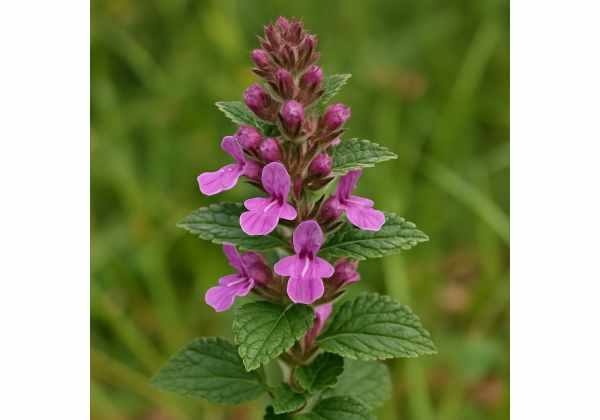
The plant is easy to recognize once you know what to look for. It forms neat mounds, bears small glossy leaves with a slightly oak-like look, and produces pink to purplish flowers. Gardeners have long appreciated it as an edging plant, but herbalists historically focused on the aerial parts, especially the leaves and flowering tops.
Traditional use centered on a few recurring themes:
- poor appetite
- sluggish digestion
- post-meal heaviness
- mild inflammatory complaints
- gout and fever in older herb traditions
That old reputation matters, but it should not be confused with proof of broad effectiveness. Many herbs survive in tradition because they are bitter, aromatic, and memorable, not because they have been rigorously tested in modern human trials.
Another useful point is that “germander” is not always one single thing in commerce or folk use. The genus Teucrium contains many species, and they do not all behave the same way. Wall germander is the best-known medicinal species in older European use, but other Teucrium plants have also been consumed as teas and remedies. That makes proper identification important, especially because several members of the genus have also been linked to liver injury.
In modern herbal decision-making, wall germander occupies an unusual place. It is historically respected, chemically interesting, and still discussed for digestive support. Yet it also carries enough safety baggage that it is no longer a sensible first-choice bitter herb for most people. It is better thought of as a plant with herbal history and pharmacologic interest than as an everyday wellness tonic. That distinction keeps expectations realistic and helps readers separate folklore, modern research, and practical safety.
Key Compounds in Wall Germander
Wall germander’s medicinal profile comes from several overlapping groups of plant compounds. Some appear to contribute to its traditional benefits, while others explain why the herb can become dangerous when taken orally.
The most important group is the neo-clerodane diterpenes. This is where the safety story begins. Teucrin A is the best-known example, and it is strongly associated with the liver toxicity seen in wall germander case reports and toxicology work. These compounds are not minor side notes. They are central to why the herb cannot be treated like an ordinary digestive tea.
Other major constituents include:
- phenylethanoid glycosides, including teucrioside
- flavonoids
- iridoids and related terpenoid compounds
- volatile oils
- tannin-like polyphenolic material
Each group helps explain a different part of the plant’s profile.
Phenylethanoid glycosides and flavonoids are the most attractive from a modern phytochemistry perspective. They are the compounds most often linked with antioxidant activity and some of the anti-inflammatory or protective effects seen in lab work. In simpler terms, these are the molecules that make researchers wonder whether wall germander contains useful substances worth isolating or reformulating.
The volatile fraction adds aroma and may contribute modest antimicrobial effects, though it is not usually the main reason people study or use the plant. The bitter taste, meanwhile, is what made wall germander a classic digestive herb. Bitter plants can stimulate salivation and digestive secretions, which is one reason they were historically taken before meals.
What makes this herb difficult is that its “good” and “bad” chemistry live side by side. You are not looking at a plant that is purely harmful or purely helpful. You are looking at a plant with compounds that may support antioxidant or topical applications, alongside diterpenes that can injure the liver when the plant is used in ordinary oral preparations.
That is why more recent research has sometimes focused on fractionation rather than simple whole-herb use. The goal is to separate potentially useful phenolic material from the hepatotoxic diterpenes. This is a very different idea from traditional herbal tea use. It suggests that wall germander may have future value more as a source of isolated compounds than as a straightforward home remedy.
For readers comparing bitter herbs, this difference is decisive. A classic digestive bitter such as gentian is usually discussed mainly in terms of bitterness and digestive action. Wall germander has that traditional bitter role too, but its chemical complexity means the safety conversation can never be secondary.
Potential Health Benefits and Medicinal Properties
Wall germander does have plausible health benefits, but they need to be described carefully. Traditional use and laboratory research suggest several areas of activity, yet strong human evidence remains limited. The most responsible way to read this herb is as “potentially beneficial, but not well established and not low-risk.”
Its most traditional medicinal property is digestive bitterness. Bitter herbs are often used before meals to encourage appetite and prepare the digestive tract for food. In that narrow sense, wall germander may help with:
- temporary loss of appetite
- sluggish digestion
- mild post-meal fullness
- the sense that food sits heavily
This kind of effect is practical rather than dramatic. It does not mean the herb treats ulcers, reflux disease, chronic bowel disorders, or gallbladder disease. It means the bitterness may nudge digestion in people whose main problem is functional sluggishness.
Wall germander has also been used historically for inflammatory complaints, especially gout and general aches. Modern lab work gives some support to anti-inflammatory and antioxidant potential, largely because of its phenolic compounds and glycosides. That does not prove a clear clinical role, but it helps explain why older traditions associated the plant with relief in inflammatory states.
Antioxidant activity is another recurring theme. Extracts and isolated compounds from Teucrium chamaedrys have shown free-radical-scavenging effects in preclinical research. This is scientifically interesting, though antioxidant lab findings alone should never be mistaken for proof of major real-world health outcomes.
Topical or cosmetic potential may be one of the more promising modern directions. Recent experimental work has explored antioxidant and anti-melanogenesis effects, which suggests some future interest in skin-protective or cosmetic applications. That is very different from saying wall germander is a proven skin treatment today. It simply means researchers see value in some of its non-diterpene compounds.
Older herb traditions also linked wall germander with mild antimicrobial, cleansing, and astringent actions. Those claims fit the chemistry to a degree, but modern readers should treat them as supporting context rather than established therapeutic promises.
A balanced summary of the plant’s possible benefits looks like this:
- It may act as a classic bitter digestive stimulant.
- It may offer antioxidant activity in extracts.
- It may show mild anti-inflammatory and antimicrobial effects in lab settings.
- It may have topical or cosmeceutical potential if hepatotoxic compounds are minimized.
That list is meaningful, but it comes with an important boundary. Wall germander is not a first-choice self-care herb today. People looking for digestive symptom relief often do better with an herb chosen for a clearer purpose, such as peppermint for spasmodic or cooling digestive support, rather than a herb whose strongest modern clinical reputation is liver risk.
Traditional Uses and Modern Practical Applications
Historically, wall germander was used in several familiar herbal forms: infusion, decoction, tincture, powdered herb, and compound formulas. It was usually taken orally, especially before meals, because the bitter taste was considered part of the remedy. In older European practice, it was also folded into broader “stomachic” or “cleansing” formulas.
The main traditional applications were fairly consistent:
- as a bitter tonic before meals
- for mild digestive sluggishness
- for appetite support after illness or fatigue
- for inflammatory complaints such as gout
- as a general old-style folk remedy for heaviness and stagnation
From a modern practical standpoint, though, oral use is much harder to justify. The herb’s history is real, but the safety profile changes how that history should be used. A plant can be traditional and still be a poor choice for self-treatment.
Topical use is sometimes discussed as a lower-risk alternative. Historically, herbs in this family were used externally in washes, poultices, or compresses for minor skin concerns. With wall germander, that idea is more defensible than unsupervised oral use, but it is still not especially well established. Anyone considering topical use should treat it as experimental, keep it away from broken skin and mucous membranes, and discontinue it if irritation occurs.
One practical lesson is that wall germander should not be treated as a general “detox” herb. That is a common mistake with older bitter plants. Because the herb was once used for sluggish digestion and marketed for weight loss or lipid issues, some readers assume it belongs in liver-support or cleansing routines. In reality, it is a poor fit for that purpose. If someone wants a gentler bitter herb with a more conventional safety discussion, dandelion root is far easier to justify in routine digestive herbal practice.
Another practical point is that whole-herb preparation method may change the chemical profile. That matters because wall germander’s risk is not just theoretical. Different harvesting areas, plant chemistry, and preparation choices may influence how much problematic diterpene content ends up in the final product. For an herb with a liver toxicity record, that variability is a serious concern, not a minor technical detail.
So the modern applications are narrower than tradition might suggest. Wall germander still has educational value as a bitter herb and research value as a phytochemical source. But in ordinary real-world herbalism, its practical role is limited. For most readers, the safest lesson is not how to use wall germander more often, but how to understand where it no longer makes sense.
What the Evidence Actually Shows
The evidence around wall germander is uneven. There is enough research to take the plant seriously, but not enough high-quality human data to recommend it confidently for routine oral use. The strongest modern evidence is actually about harm, not benefit.
What looks reasonably supported:
- a long ethnobotanical history of digestive use
- meaningful phytochemical complexity
- antioxidant and anti-inflammatory potential in lab studies
- possible topical or cosmeceutical promise from selected compounds
What does not look well established:
- strong clinical proof for digestion in humans
- reliable evidence for weight loss
- solid human evidence for arthritis, gout, cholesterol, or blood sugar use
- a safe, standardized oral self-care role
This gap matters. Herbal articles often blur together traditional use, animal findings, cell studies, and real clinical benefit. With wall germander, that shortcut is especially misleading. A plant extract can look active in a laboratory and still be a poor or unsafe choice in ordinary human use.
There is also a cautionary irony in the literature. Some wall germander fractions appear antioxidant or otherwise promising after chemical processing, while whole-herb oral use remains problematic because of the diterpenes linked to hepatotoxicity. In other words, modern science is not really rescuing the traditional whole-herb practice. It is moving in the direction of selective extraction and compound handling.
The evidence on liver injury is much firmer. Case reports, toxicology studies, and authoritative reviews consistently describe germander as a recognized cause of clinically apparent liver injury. The pattern has been seen with capsules and teas, and recurrence after re-exposure has been documented. That kind of rechallenge signal is one of the stronger warning signs in herb safety.
A fair evidence-based conclusion would be this:
- Wall germander’s traditional digestive role is plausible.
- Some constituents deserve scientific interest.
- Human therapeutic evidence is thin.
- Oral safety concerns are strong enough to outweigh routine self-care use.
That conclusion is less exciting than many herb marketing claims, but it is more useful. Readers deserve to know not only where a plant may help, but also where the evidence fails to carry the weight of tradition. With wall germander, the balance clearly tilts toward caution. It remains a noteworthy medicinal plant in the history of herbalism, but not a modern herbal staple.
Dosage, Timing, and Duration
Dosage is where wall germander becomes especially tricky. Many herb articles simply list tea, tincture, or capsule amounts and move on. That is not good enough here. Because the herb has a meaningful hepatotoxicity record, the more honest answer is that there is no established evidence-based modern oral dosage that can be confidently recommended for routine self-treatment.
What can be said is mostly historical.
Traditional preparations commonly used the dried aerial parts as a bitter tea taken before meals. Historical sources and commercial folk-use instructions often fall in the range of about 1 to 2 g of dried herb per cup, or small tincture doses before eating. Those amounts explain how the herb was used, but they should not be read as a modern endorsement.
A practical way to think about dosage is this:
- historical dose does not equal safe dose
- tea strength may vary by harvest and preparation
- whole-herb products are chemically inconsistent
- longer use raises more concern than occasional exposure
Timing also matters. Wall germander, when used traditionally, was usually taken before meals because its bitter taste was meant to stimulate appetite and digestive readiness. It was not mainly used as an after-meal rescue remedy. That timing logic is common to many bitter herbs.
Duration is even more important than timing. The best-documented liver injury cases tended to appear after repeated oral use over weeks or months, though the exact timing varied. That means repeated self-experimentation is a poor idea, especially when the benefit is uncertain.
For readers who still want the clearest practical guidance, it is this:
- Do not treat wall germander like a daily wellness tea.
- Do not assume a low traditional dose makes it safe.
- Do not use it for weeks at a time without qualified medical supervision.
- Do not combine it casually with alcohol or other liver-stressing substances.
This is also the point where alternatives deserve mention. If the real goal is mild digestive bitterness, appetite priming, or post-meal heaviness, safer and better-characterized herbs usually make more sense. If the goal is liver-focused support, wall germander is the wrong direction entirely; readers seeking that kind of herb usually look first to milk thistle, not to a plant with a hepatotoxic reputation.
So yes, historical dosing exists. But in modern use, the safer message is restraint: traditional amounts belong to context, not to blanket recommendation.
Safety, Side Effects, and Who Should Avoid It
Safety is the defining issue with wall germander. Any responsible article on this herb has to put this section near the center of decision-making, not at the margins.
The main concern is liver toxicity. Wall germander has been linked to clinically apparent hepatitis and other forms of liver injury, including severe cases. This is not merely a theoretical warning from animal work. It has been described in people using capsules and decoctions, and the risk appears tied largely to furan-containing neo-clerodane diterpenes such as teucrin A.
Possible warning signs of liver injury include:
- unusual fatigue
- nausea or persistent poor appetite
- dark urine
- yellowing of the eyes or skin
- right upper abdominal discomfort
- itching or unexplained jaundice
If symptoms like these appear after using the herb, the safest course is to stop it and seek medical care promptly.
Common or possible side effects may also include:
- stomach upset
- nausea
- reduced appetite
- general digestive discomfort
- allergic or irritant reactions with topical exposure
People who should avoid wall germander altogether include:
- anyone with current or past liver disease
- people who drink heavily or regularly
- pregnant or breastfeeding people
- children and adolescents
- people using medicines or supplements known to stress the liver
- anyone with unexplained abnormal liver tests
Interaction thinking should also be conservative. Because the herb’s main risk centers on liver metabolism and reactive metabolites, combining it with alcohol, high-dose acetaminophen, anabolic agents, or other potentially hepatotoxic products is especially unwise. Even when a specific interaction has not been perfectly studied, the logic of risk stacking is strong enough to matter.
Another concern is false reassurance. Some people assume that because wall germander is “natural,” comes from a mint-family plant, or has a history of folk use, it must be gentle. In reality, this herb is a good example of why traditional does not automatically mean safe.
The best bottom-line safety judgment is simple: wall germander is not a good candidate for casual oral self-use. Its benefits are plausible but uncertain, while its liver risk is well enough documented to change the benefit-risk balance. That does not erase its historical value or research interest, but it does mean that caution should lead the conversation.
References
- A review of the phytochemistry, ethnopharmacology and biological activities of Teucrium genus (Germander) 2022 (Review)
- Chemical Fractionation Joint to In-Mixture NMR Analysis for Avoiding the Hepatotoxicity of Teucrium chamaedrys L. subsp. chamaedrys 2021 (Preclinical Study)
- Antioxidant and Anti-Melanogenesis Effects of Teucrium chamaedrys L. Cell Suspension Extract and Its Main Phenylethanoid Glycoside in B16-F10 Cells 2024 (Preclinical Study)
- Germander – LiverTox – NCBI Bookshelf 2018 (Authoritative Monograph)
- Hepatotoxicity of Teucrium chamaedrys L. decoction: role of difference in the harvesting area and preparation method 2014 (Case Reports)
Disclaimer
This article is for educational purposes only and is not medical advice. Wall germander has a documented risk of liver injury, so it should not be used as a substitute for diagnosis, treatment, or monitoring by a qualified healthcare professional. Anyone who is pregnant, breastfeeding, has liver disease, takes prescription medicines, or develops symptoms such as jaundice, dark urine, severe fatigue, or persistent nausea should avoid self-treatment and seek medical guidance promptly.
If you found this article helpful, please share it on Facebook, X, or another platform you prefer.