Wasabi is one of the most recognizable herbs in Japanese cuisine, yet its medicinal side is often discussed less clearly than its sharp green paste. The plant, commonly called Japanese horseradish, belongs to the mustard family and is valued for pungent sulfur compounds that form when its rhizome is grated or crushed. Those compounds do far more than create heat. They help explain why wasabi has drawn interest for antioxidant activity, inflammatory balance, antimicrobial effects, and even early research on memory and mental fatigue.
What makes wasabi especially interesting is the gap between tradition and evidence. It has a long culinary history and a strong reputation for freshness, digestion, and food pairing, but modern science suggests its most meaningful potential may lie in specific isothiocyanates such as 6-MSITC rather than in the condiment as a whole. At the same time, true wasabi is not the same as the imitation paste served in many restaurants.
This guide looks at what wasabi is, what it contains, what benefits seem most credible, how it is used, what doses appear in research, and where safety deserves real caution.
Quick Facts
- Wasabi’s best-studied compounds may help support antioxidant defenses and inflammatory balance.
- Early human research suggests standardized wasabi extracts may help memory and mental fatigue in selected groups.
- A practical studied supplemental range is 0.8 to 1.6 mg of 6-MSITC daily.
- People with reflux, stomach ulcers, bleeding concerns, or planned surgery should avoid high-dose wasabi extracts.
Table of Contents
- What wasabi is and why it stands apart
- Key ingredients and medicinal properties
- Health benefits with the best support
- Traditional and modern uses of wasabi
- How much to take: dosage, timing, and duration
- Side effects, interactions, and who should avoid it
- How to choose, prepare, and store it well
What wasabi is and why it stands apart
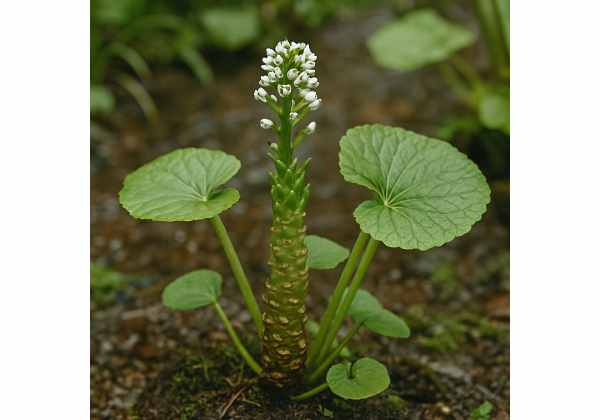
Wasabi is a perennial plant in the Brassicaceae family, the same broad family that includes mustard, cabbage, broccoli, and horseradish. The article title uses Wasabia japonica, a familiar traditional botanical name, though modern taxonomy often places the plant under Eutrema japonicum. In practice, both names point readers to the same herb: the cool-growing Japanese plant whose rhizome is grated into a pungent paste.
A useful first distinction is between true wasabi and imitation wasabi. Authentic wasabi comes from the plant itself, especially the rhizome, and has a fresher, greener, more complex heat. Many commercial “wasabi” pastes, powders, and peas are made mostly from horseradish, mustard, starch, and coloring. They can be tasty, but they are not chemically or sensorially identical to the real plant. That matters because the health discussion around wasabi is strongest when it refers to true wasabi or defined wasabi extracts.
Its pungency also differs from chili heat. Chili peppers create a lingering burn on the tongue through capsaicinoids. Wasabi creates a sharper, more volatile sensation that rises into the nose and fades more quickly. This happens because crushing or grating the plant activates enzymes that generate isothiocyanates, the sulfur-containing compounds responsible for aroma, heat, and much of the herb’s medicinal interest.
Traditionally, wasabi has been used with sushi, sashimi, soba, and other foods not only for flavor but also for freshness and balance. In common use, it is seen as stimulating, clearing, warming, and appetite-awakening. Some people also reach for it when a meal feels heavy, oily, or bland, because wasabi can cut through richness in a way few condiments can.
Its family resemblance to radish family members with pungent sulfur compounds helps make sense of its behavior. Like them, wasabi is not mainly valued for large amounts of vitamins or calories. Its importance lies more in small, reactive phytochemicals that act almost like a plant defense system and, in human use, create both sensory impact and biological activity.
One more practical point matters: wasabi is not a cure-all herb. It is better understood as a culinary medicinal plant with concentrated chemistry, modest but interesting human data, and a much stronger traditional and sensory identity than a strong clinical evidence base. That balance is important. Wasabi is worth taking seriously, but it should be judged on what it actually does well rather than on exaggerated claims attached to exotic foods.
Key ingredients and medicinal properties
Wasabi’s active profile centers on glucosinolates and their breakdown products, especially isothiocyanates. When the rhizome is cut, grated, or chewed, plant enzymes such as myrosinase help transform those precursor compounds into the sharp, volatile chemicals that give wasabi its signature punch. This means a whole, intact rhizome is chemically quieter than freshly grated wasabi. The medicinal discussion begins the moment the plant tissue is disrupted.
The best-known compounds in true wasabi include:
- 6-methylsulfinylhexyl isothiocyanate (6-MSITC): the most discussed compound in recent research, especially for antioxidant, anti-inflammatory, cognitive, and metabolic interest
- 6-methylthiohexyl isothiocyanate (6-MITC): another sulfur compound that may contribute to antimicrobial and cellular effects
- Allyl isothiocyanate: a pungent compound also found in mustard and horseradish, linked to antimicrobial activity and nasal-clearing heat
- Related glucosinolates and sulfur volatiles: these help shape both flavor complexity and bioactivity
Among these, 6-MSITC has become the star of modern wasabi research. It appears to influence pathways related to oxidative stress, inflammatory signaling, and cellular defense. Researchers are particularly interested in its ability to activate Nrf2-linked protective responses and to modulate inflammatory pathways such as NF-κB and STAT-related signaling. In plain terms, this means it may help the body switch on internal protective enzymes rather than acting only as a direct antioxidant.
That distinction matters. Many people hear “antioxidant” and picture a compound simply mopping up free radicals. Wasabi’s more interesting action may be upstream. Its compounds seem able to nudge the body toward a broader defensive state, which is one reason its effects are being explored in areas as different as vascular health, oral inflammation, metabolic stress, and brain aging.
Wasabi also has a meaningful antimicrobial profile. Some of this comes from allyl isothiocyanate and related compounds that can interfere with bacterial growth. That does not mean a dab of paste makes risky food safe, but it helps explain why wasabi earned a historical reputation for pairing well with raw fish and other perishable foods.
A good comparison is black mustard’s pungent seed chemistry. Both belong to the same broad mustard-family world, where enzymatic breakdown creates sharp isothiocyanates with sensory and biological effects. Wasabi, though, has its own signature compounds, particularly the longer-chain sulfur molecules that distinguish true wasabi from common horseradish substitutes.
Medicinally, the plant is best described as:
- pungent and stimulating
- antimicrobial in laboratory settings
- potentially anti-inflammatory
- supportive of antioxidant defense pathways
- promising, but not yet conclusive, for cognitive and metabolic applications
The key takeaway is that wasabi’s “medicinal properties” do not come from one magical nutrient. They come from a reactive sulfur chemistry that is strongest when the plant is fresh, properly prepared, and genuinely derived from true wasabi rather than imitation paste. That is why product quality and preparation method matter so much when people try to move from culinary use to therapeutic interest.
Health benefits with the best support
Wasabi is often credited with everything from heart protection to cancer prevention. A more responsible reading of the evidence is narrower and more useful. Its strongest support comes from mechanistic studies, laboratory findings, and a small number of human studies using standardized extracts rich in 6-MSITC. That means several benefits are promising, but only a few have early direct human support.
1. Antioxidant and inflammatory balance
This is the most consistent theme. Wasabi compounds, especially 6-MSITC, appear to influence inflammatory signaling and oxidative stress pathways. Rather than simply acting as a dietary antioxidant in the loose popular sense, wasabi seems to affect the body’s own defense systems. This makes its anti-inflammatory reputation plausible and is one reason it continues to attract research attention.
2. Cognitive support and memory
One of the more interesting human findings involves standardized wasabi extract in older adults. In a placebo-controlled trial, a low daily dose of 6-MSITC was associated with improvements in working memory and episodic memory after several weeks. That does not prove that ordinary restaurant wasabi sharpens memory, but it does suggest that specific wasabi compounds may have neuroprotective or cognition-supporting potential when given in standardized form.
3. Mental fatigue and sleep-related support
A small clinical study found encouraging changes in perceived fatigue, sleep, and mood with wasabi extract, although the design was not the strongest possible for proving cause and effect. It is fair to say the signal is interesting but preliminary. Readers should treat this as an emerging use, not as established therapy for chronic fatigue or insomnia.
4. Antimicrobial activity
Laboratory evidence shows that wasabi and some of its isothiocyanates can inhibit certain bacteria. This supports its reputation as a sharp, freshness-associated condiment and gives it a credible place in food science discussions. Even so, it should never be treated as a substitute for refrigeration, proper cooking, or food hygiene. Its role is supportive, not protective enough to offset unsafe handling.
5. Oral and tissue-level anti-inflammatory potential
Cell studies suggest wasabi-derived compounds may reduce inflammatory signaling in oral epithelial tissues. That does not yet translate into a proven gum disease treatment, but it supports the broader picture of local anti-inflammatory activity.
6. Metabolic and cardiovascular interest
Animal and mechanistic studies suggest possible roles in obesity-related inflammation, lipid metabolism, and vascular protection. This area remains promising but incomplete. It is too early to recommend wasabi as a reliable treatment for cholesterol, blood pressure, or diabetes.
Compared with garlic’s better-known antimicrobial and cardiometabolic evidence, wasabi has a much smaller human evidence base. That comparison is useful because it keeps expectations realistic. Wasabi is not empty hype, but it is also not yet one of the most clinically established kitchen herbs.
A balanced benefit summary looks like this:
- Most credible: antioxidant and anti-inflammatory activity at the compound level
- Most intriguing human data: memory support and mental fatigue research with standardized extracts
- Credible but limited: antimicrobial and oral anti-inflammatory applications
- Still preliminary: anti-cancer, anti-obesity, anti-diabetic, and cardiovascular claims
That last category matters because many eye-catching claims around wasabi come from cell culture or animal work. Those findings are valuable for research, but they are not the same as proven clinical outcomes in humans.
Traditional and modern uses of wasabi
Wasabi lives comfortably in two worlds: the kitchen and the supplement shelf. Understanding both helps readers use it more wisely.
In traditional food use, wasabi is primarily a condiment. Freshly grated rhizome is served with sushi, sashimi, noodles, grilled fish, rice dishes, and vegetable plates. It cuts richness, brightens bland food, and produces a quick, aromatic heat that many people find cleaner than chili. The leaves and stems are also edible and may be pickled, chopped, or used in side dishes.
This culinary role matters because food use is still the safest and most natural way to include wasabi in daily life. In ordinary servings, it is not usually taken as a “dose” in the supplement sense. It is used for appetite, flavor contrast, nasal-clearing pungency, and meal balance. Some people also find that a small amount before or with heavy food makes digestion feel lighter, though this is more traditional and experiential than clinically proven.
Modern uses have expanded beyond the table. Standardized wasabi extracts are now marketed for:
- memory and focus support
- antioxidant support
- healthy aging
- fatigue and mental clarity
- general anti-inflammatory support
These products usually focus on 6-MSITC rather than on the whole herb as a condiment. That distinction is important. A supplement containing a measured amount of wasabi extract is not equivalent to a spoonful of prepared paste from a sushi counter.
There is also a gap between authentic and imitation products. Many commercial products labeled “wasabi” contain little or no true wasabi. This matters in culinary settings, but it matters even more in medicinal use. If a person is interested in research-based effects, the product should clearly identify true wasabi or a standardized extract rather than vague “wasabi flavor” or condiment-style powder blends.
Another practical use is sensory clearing. Wasabi’s volatile heat can briefly open the nose and create a strong feeling of freshness. People sometimes interpret that as respiratory support. In reality, it is more accurate to call it a transient clearing effect than a treatment for sinus or lung disease.
In day-to-day self-care, wasabi can be used in several reasonable ways:
- Fresh or freshly prepared paste with meals
- A small amount alongside raw fish or rich foods for flavor balance
- Pickled leaves or stems as part of traditional cuisine
- Standardized extract capsules when a person wants reproducible dosing
People who already use ginger’s more familiar digestive and warming actions may find wasabi easier to understand when seen as a sharper, more volatile cousin in culinary self-care. Ginger is broader and gentler; wasabi is narrower, more pungent, and more stimulating.
The most sensible modern approach is to match the form to the goal. Use food-form wasabi for flavor, freshness, and everyday enjoyment. Use standardized extracts only when the label is clear, the goal is specific, and the user understands that research-based doses are tied to defined compounds rather than to generic green paste.
How much to take: dosage, timing, and duration
Wasabi does not have a universally accepted medicinal dose in the way some vitamins or standardized herbal extracts do. That is the first and most important point. The right amount depends heavily on whether a person is eating true fresh wasabi as food or using a researched extract standardized for 6-MSITC.
For culinary use, the practical amount is small. Many people tolerate about 1/4 to 1/2 teaspoon of fresh paste per serving, or roughly 1 to 3 g of freshly grated rhizome, taken with food. This is not a therapeutic dose in a clinical sense. It is simply a realistic culinary range that gives flavor and exposure without overwhelming irritation.
For standardized extracts, human studies have used much more precise measures tied to 6-MSITC content. The most practical studied range is:
- 0.8 to 1.6 mg of 6-MSITC daily
- often delivered in 100 to 200 mg of wasabi extract powder
- usually taken once daily
- commonly studied for 8 to 12 weeks
Other exploratory studies have used 4.8 mg per day for several weeks, and short-term overdose safety research has examined 8 to 16 mg per day for four weeks. That does not mean everyone should aim high. It means higher short-term doses have been studied under controlled conditions.
A practical user hierarchy looks like this:
- Food-first use: start with authentic wasabi in meals
- Low-dose supplement approach: choose products providing about 0.8 to 1.6 mg 6-MSITC daily
- Avoid improvising megadoses: more is not necessarily better, especially with pungent sulfur compounds
Timing matters too. Because wasabi can irritate an empty stomach, most people do better taking it with food or shortly after a meal. Some study protocols used it between meals, but that does not make between-meal use the best everyday choice for sensitive users. If the goal is culinary enjoyment, use it with meals. If the goal is a supplement trial, follow the label and start conservatively.
Duration should also be realistic. Wasabi is not a herb where instant dramatic effects should be expected beyond its sensory punch. For supplement-based goals such as cognitive support, research has generally used several weeks to three months, not a few days. A sensible personal trial might last 6 to 12 weeks, provided no adverse effects occur.
Product interpretation is where many people get lost. Some labels list extract weight, others list active compound weight, and some do not clarify either. That is why it helps to think the way one would with sulforaphane products that depend on defined isothiocyanate content. The meaningful number is often the active compound, not just the total powder weight.
The safest dosing principle is simple: use small food amounts freely if tolerated, and use supplements only when the label clearly states what is being standardized and how much of the active constituent is delivered.
Side effects, interactions, and who should avoid it
Wasabi may be a food herb, but it is not inert. Its pungent sulfur compounds can be irritating, and that matters more as the dose rises or the product becomes more concentrated.
The most common side effects are straightforward:
- burning in the nose or throat
- stomach irritation
- heartburn or reflux flare
- nausea if taken in excess
- mouth or sinus discomfort
- watery eyes and temporary coughing
For many people, these effects are mild and short-lived when wasabi is used with food. Trouble usually begins when the amount is large, the product is concentrated, or the person already has a sensitive digestive tract.
People who should be especially cautious include:
- those with acid reflux
- those with gastritis or peptic ulcer disease
- people with irritable upper digestive symptoms
- those with known sensitivity to mustard-family foods
- people with bleeding disorders
- anyone with planned surgery in the next one to two weeks
The surgery warning is a prudent one. Wasabi compounds, like other pungent mustard-family constituents, may have effects relevant to platelet behavior and mucosal irritation. Even though strong clinical interaction data are limited, it is sensible to stop high-dose extracts before surgery unless a clinician advises otherwise.
Medication interactions are not as clearly mapped as they are for more heavily studied herbs, but caution is still reasonable with:
- anticoagulants and antiplatelet drugs
- anti-inflammatory medicines that already irritate the stomach
- diabetes medications, if using concentrated extracts with metabolic claims
- multiple supplements with overlapping pungent or irritant actions
Pregnancy and breastfeeding deserve a conservative approach. Small food amounts are generally far more acceptable than supplement-level doses. There is not enough strong evidence to recommend high-dose wasabi extracts during pregnancy or lactation without professional guidance.
Children should also stick to ordinary food exposure, not concentrated extracts. Their smaller body size and more sensitive mucous membranes make strong preparations less predictable.
There is also a quality issue. A person may think they are reacting badly to wasabi when the real problem is a low-quality product full of horseradish, coloring, stabilizers, or other ingredients. That is one more reason product clarity matters.
If readers know cayenne’s warming and sometimes irritating profile, they will understand the general principle here: pungent herbs can be useful, but they are rarely a good fit for an already inflamed digestive tract.
The clearest “who should avoid it” summary is this: avoid concentrated wasabi extracts if you have active reflux, ulcers, significant stomach irritation, bleeding concerns, or upcoming surgery. And if ordinary food amounts already feel harsh, there is no reason to force medicinal use.
How to choose, prepare, and store it well
The value of wasabi depends heavily on authenticity, preparation, and freshness. This is one of those herbs where the difference between the real thing and the imitation product is not minor. It changes the sensory experience and likely changes the chemistry that matters most for health interest.
Choosing wasabi
If buying fresh rhizome, look for firm texture, good weight, intact skin, and no soft spots or mold. If buying paste or powder, read the label carefully. True wasabi products should identify the plant itself, not just “wasabi flavor.” Many cheaper products rely mainly on horseradish and mustard. That is not necessarily bad for taste, but it is not the same material discussed in most wasabi-specific research.
Preparing it
Fresh grating is the gold standard. Wasabi’s volatile compounds are created when the tissue is broken, and the aroma is best soon after grating. Traditionally, the rhizome is grated very finely, often with a sharkskin-style grater or a very fine ceramic grater, to produce a smooth paste and maximize compound release. Letting it sit briefly can help the flavor develop, but leaving it exposed too long weakens its freshness.
Using it well
A small amount is usually enough. Wasabi works best as an accent rather than as a bulk ingredient. Good uses include:
- beside sushi or sashimi
- mixed lightly into dipping sauces
- added to dressings or marinades in small amounts
- blended into mashed roots, spreads, or savory creams
- stirred into noodle dishes or rice bowls for brightness
Storing it
Fresh rhizome should be kept cool and slightly humid but not wet. Prepared paste loses aroma and complexity quickly, so it is best used soon after making it. Powders and extracts should be kept sealed, dry, and away from heat and light. Supplements should come from companies that disclose active standardization, storage instructions, and lot information.
Choosing supplements
Look for:
- clear identification of true wasabi source
- standardized 6-MSITC content when possible
- full ingredient disclosure
- realistic dosing instructions
- no exaggerated cure-all claims
Avoid products that hide behind vague proprietary blends or lean entirely on bright packaging and “detox” language. With wasabi, chemistry matters. A product that does not explain its active content is harder to judge.
The final practical truth is simple: the best wasabi use is usually the least theatrical one. Choose authentic material, use modest amounts, match the form to the goal, and do not assume that imitation paste or snack foods provide the same effect as fresh rhizome or standardized extract. Used that way, wasabi becomes a thoughtful culinary medicinal plant rather than a novelty.
References
- Methylsulfinyl Hexyl Isothiocyanate (6-MSITC) from Wasabi Is a Promising Candidate for the Treatment of Cancer, Alzheimer’s Disease, and Obesity 2024 (Review)
- Benefits of Wasabi Supplements with 6-MSITC (6-Methylsulfinyl Hexyl Isothiocyanate) on Memory Functioning in Healthy Adults Aged 60 Years and Older: Evidence from a Double-Blinded Randomized Controlled Trial 2023 (RCT)
- Oral administration of 6-methylsulfinylhexyl isothiocyanate extracted from wasabi is safe and improves the fatigue and sleep of healthy volunteers 2023 (Clinical Study)
- 6-(Methylsulfinyl) Hexyl Isothiocyanate Inhibits IL-6 and CXCL10 Production in TNF-α-Stimulated Human Oral Epithelial Cells 2022 (Mechanistic Study)
- Antibacterial Activities of Wasabi against Escherichia coli O157:H7 and Staphylococcus aureus 2016 (Laboratory Study)
Disclaimer
This article is for educational purposes only and is not a diagnosis or treatment plan. Wasabi and wasabi extracts can affect the stomach, mucous membranes, and possibly medication tolerance in some people. Benefits discussed here are not a substitute for medical care, especially for memory loss, chronic fatigue, ulcers, bleeding disorders, diabetes, or cardiovascular disease. Food use and supplement use are not the same, and concentrated products should be used cautiously.
If you found this article useful, please consider sharing it on Facebook, X, or your preferred platform.