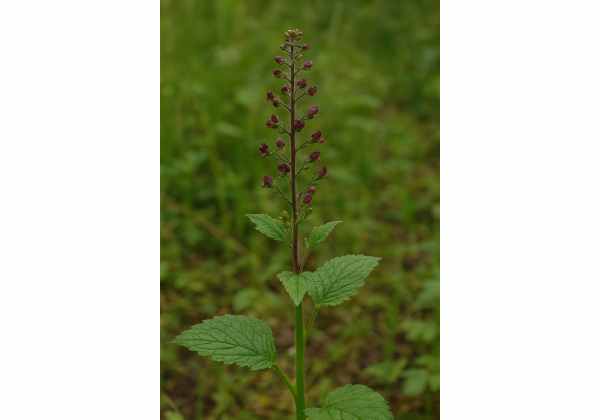
Water Betony, usually discussed under the botanical name Scrophularia umbrosa, is a traditional figwort-family herb valued more for its old medicinal reputation than for modern clinical proof. Herbal interest in this plant centers on its bitter, iridoid-rich chemistry and its long association with irritated skin, swollen tissues, itching, and other stagnant inflammatory complaints. Modern study of S. umbrosa points most clearly toward antioxidant activity and a broader inflammation-modulating potential, while research on related medicinal Scrophularia species suggests that iridoids, phenylpropanoid glycosides, flavonoids, and phenolic acids may help explain why the genus has remained important in traditional practice. At the same time, this is not a well-standardized herb with strong human trial data. That means the most responsible way to approach Water Betony is with curiosity and caution: understand what it may help, what it probably cannot prove yet, how people actually use it, and where safety limits matter most.
Key Insights
- Water Betony’s most credible modern promise is as an antioxidant and inflammation-modulating herb, not as a proven treatment for any disease.
- Traditional figwort use centers on chronic skin irritation, itching, swollen tissues, and related cooling or draining support.
- Because no validated human dose exists for Scrophularia umbrosa, any oral use should be conservative; related figwort monographs list 0.2 to 8 g dried herb per day for adults, but that is an extrapolation, not a species-specific standard.
- Pregnant or breastfeeding people and anyone with heart disease should avoid self-prescribing it.
Table of Contents
- What is Water Betony and what does it contain?
- Potential health benefits of Water Betony
- Traditional uses and practical fit
- How to use Water Betony
- Water Betony dosage and timing
- Safety, side effects, and who should avoid it
- What the research actually shows
What is Water Betony and what does it contain?
Water Betony belongs to the Scrophularia genus, a group of herbs long used in traditional systems for complaints involving heat, swelling, irritation, and stubborn skin problems. In practical herbal terms, that history matters because it tells you what kind of plant this is: not a culinary herb, not a pleasant daily tonic for everyone, and not a well-studied supplement with standardized consumer dosing. It is better understood as a bitter medicinal herb whose reputation comes from traditional use and phytochemistry first, and modern human evidence second.
The chemistry that makes Water Betony interesting is similar to the chemistry that makes other medicinal figworts interesting. Reviews of Scrophularia species repeatedly highlight several compound groups:
- iridoids and iridoid glycosides
- phenylpropanoid and phenolic glycosides
- flavonoids
- phenolic acids
- terpenoids and related secondary metabolites
In species-specific S. umbrosa studies, researchers examined different extracts and reported measurable phenol and flavonoid content, along with constituents such as aucubin and luteolin-related compounds in plant material. That matters because these are the kinds of molecules often discussed when herbalists talk about cooling, tissue-soothing, or antioxidant herbs. In plain language, Water Betony seems to be a plant whose activity comes from a cluster of compounds working together rather than one standout ingredient.
This also explains why preparation matters so much. A water infusion will not pull exactly the same chemistry as an alcohol tincture, and neither will mirror what researchers see in solvent extracts used in the lab. That gap is one reason people can have very different impressions of the same herb. A weak tea may feel mild and unimpressive, while a concentrated extract may act very differently. If you are comparing Water Betony with gentler, more familiar anti-inflammatory botanicals, chamomile’s active compounds and common uses are supported by a broader everyday tradition.
So the best way to think about Water Betony’s key ingredients is not as a sales list, but as a practical chemical profile: iridoid-rich, bitter, polyphenol-containing, and biologically plausible for soothing irritated tissues. The catch is that biologically plausible is not the same thing as clinically proven. That distinction should guide every later decision about benefits, dosing, and safety.
Potential health benefits of Water Betony
When people search for Water Betony health benefits, they usually want a clear answer: what is it actually good for? The most honest answer is that the herb appears promising in a few areas, but the strongest modern support is still preclinical. That means it makes more sense to talk about likely uses and reasonable expectations than to present it as a validated remedy.
The first and most defensible benefit is antioxidant support. Research on S. umbrosa has found free-radical scavenging activity and linked that activity to phenolic and flavonoid content. Antioxidant findings do not automatically translate into disease treatment, but they do help explain why the plant has been placed in formulas for irritated tissues and recovery support. Herbs with this profile are often most useful when the goal is not to cure something dramatic, but to support a calmer local tissue environment.
The second likely benefit is inflammation modulation. Reviews of medicinal Scrophularia species describe anti-inflammatory activity as one of the core biological themes of the genus, largely tied to iridoids, phenylpropanoids, and related compounds. This does not prove that drinking Water Betony tea will reduce human inflammatory disease, but it does make traditional uses for hot, itchy, swollen, or congested conditions more understandable. If your interest is specifically skin-focused support, many people end up comparing it with burdock’s skin-support profile, which tends to be easier to use in modern routines.
A third possible benefit is topical skin comfort. Official figwort monographs for related species still recognize traditional use for chronic cutaneous complaints, eczema, psoriasis, and pruritus. That does not mean S. umbrosa itself has been proven in dermatology trials. It means Water Betony fits an older figwort pattern: herbs used where skin is irritated, itchy, stubborn, or slow to settle. For that reason, its most sensible role may be in topical washes, compresses, or short-term adjunctive formulas rather than aggressive internal self-treatment.
There are also weaker or more specialized signals. Some studies have explored in-vitro antimalarial activity, but these findings do not justify real-world antimalarial use. Broader Scrophularia research also includes antitumor, neuroprotective, cardioprotective, and immune-related findings, but these mostly come from cell and animal work or from different species within the genus. That is scientifically interesting, but it is not a reason to treat Water Betony as a substitute for established care.
So, in everyday language, the herb’s realistic benefit profile looks like this: possibly useful as a traditional anti-irritation and skin-support herb, potentially helpful where bitterness and draining support fit the case, and chemically plausible for antioxidant and inflammation-related support. Anything stronger than that would go beyond the evidence.
Traditional uses and practical fit
Traditional use often tells you more about how an herb was intended to be used than any isolated lab assay. In the case of Water Betony and related figworts, the traditional pattern is fairly consistent: skin complaints, itching, swollen glands or tissues, sore or inflamed throats, and a general sense of internal heat or stagnation. Official figwort monographs for related species still preserve many of those themes, especially for chronic cutaneous disease, eczema, psoriasis, pruritus, mild laxative use, and diuretic use.
That traditional pattern matters because it helps modern readers avoid a common mistake: using the herb for the wrong kind of problem. Water Betony is not a quick comfort herb in the way peppermint can be for gas or ginger can be for nausea. It fits better when someone is dealing with a slower, more stubborn picture such as itchy recurring skin irritation, a sense of puffiness, or inflammatory discomfort that seems chronic rather than acute. If the issue is intensely painful, rapidly worsening, infected, or medically unclear, a traditional figwort is not the right first move.
In practical herbal use, Water Betony seems best matched to three situations.
First, topical support for irritated skin. This is probably the easiest place to understand the herb. A cooled infusion or simple wash is a low-commitment way to explore whether the plant feels settling. People who want a more established, gentler skin herb often prefer calendula’s topical skin-healing profile, but Water Betony historically sits in the same broad neighborhood of use.
Second, draining or moving formulas. Traditional systems often grouped figworts with herbs used for sluggish, swollen, congested, or glandular states. Modern readers do not need to adopt the old terminology literally to appreciate the pattern: the herb was often chosen for tissues that seemed enlarged, irritated, or slow to resolve.
Third, short-term internal use in adults when a bitter, cooling, somewhat laxative or diuretic herbal approach made sense. But this is where modern caution should kick in. Traditional fit is not the same as modern proof, and the more internal and concentrated the use becomes, the more the evidence gap matters. That is why many contemporary readers will find Water Betony most practical as a topical or clinician-guided herb rather than a self-prescribed daily tonic.
A good rule is this: Water Betony fits chronic irritation better than crisis care, supportive use better than heroic dosing, and careful experimentation better than casual long-term use. That framing keeps the herb useful without making promises it cannot securely keep.
How to use Water Betony
How you use Water Betony matters as much as whether you use it. Official monographs for related figwort species recognize dried herb, powder, dry extracts, tincture, fluid extract, decoction, and infusion. In real life, though, most people considering Scrophularia umbrosa will be choosing among four practical forms: tea-style infusion, stronger decoction, tincture, or topical preparation.
A simple infusion is the gentlest entry point. This is the format most appropriate for people who want to test tolerance first or use the herb as a wash or compress after cooling. Infusions make sense when the goal is mild support and low complexity. They are also the easiest form to keep weak if you are unsure how your body or skin will react. If your main interest is soothing heat or surface irritation, this is usually the smartest starting place. For a cooler, more hydrating style of topical support, some people prefer aloe vera for skin and burn care.
A decoction is more assertive. Because Water Betony is a bitter medicinal herb rather than a pleasant food-like tea, decoctions can feel heavy or overly strong for casual users. They are better thought of as traditional medicinal preparations than wellness beverages. If you are not working with a practitioner, there is rarely a good reason to jump straight to this style.
A tincture or extract offers convenience and consistency, but it also concentrates uncertainty. Laboratory studies used research extracts, not consumer tinctures, so a tincture bottle on the shelf does not automatically map onto the research. This is where product quality matters: part used, extraction ratio, solvent, and manufacturer transparency all affect what you are actually taking.
Topical use is the most practical option for many readers. A cooled infusion can be used as:
- a compress for a localized irritated area
- a rinse for itchy but unbroken skin
- a short-term wash in a skin-support routine
This route keeps exposure modest and aligns well with the herb’s most traditional and plausible use case. It also reduces the risk of overdoing internal use when the herb’s human data are thin.
The most responsible modern strategy is simple: start external, start mild, and only consider internal use if you have a clear reason, good sourcing, and confidence that your health history does not put you in a higher-risk group. Water Betony is a classic example of an herb that becomes more sensible as you make it less ambitious.
Water Betony dosage and timing
The most important dosing fact is also the least exciting one: there is no validated human dosing standard for Scrophularia umbrosa itself. No modern clinical body has established a species-specific, evidence-based oral dose for Water Betony. That means any dosage advice has to be framed honestly, as traditional practice or cautious extrapolation rather than proven guidance.
The clearest official dosing range available in the figwort category comes from a monograph on Scrophularia nodosa, a related species. That monograph lists 0.2 to 8 g of dried herb top per day for adults, across forms such as dry herb, tincture, fluid extract, decoction, and infusion. This is useful as a reference point, but it should not be treated as a validated dose for S. umbrosa. Water Betony may be used similarly in traditional practice, yet species differences and extract differences still matter.
For that reason, the safest practical approach is to stay conservative:
- For first-time internal use, start at the low end, not the high end.
- A weak infusion made from about 1 to 2 g dried herb in 200 to 250 mL hot water is a cautious place to begin.
- Once-daily use is more sensible than frequent repeat dosing when tolerance is unknown.
- Short-term use is more defensible than turning the herb into a daily routine.
Timing depends on purpose. If someone is using the herb internally for traditional bitter or draining support, earlier in the day usually makes more sense, especially because related figwort monographs also recognize diuretic and mild laxative uses. That means evening use may be inconvenient. If the use is topical, timing is much simpler: once or twice daily as a wash or compress, reassessing within several days.
Concentrated products complicate the picture. A tincture label may look precise, but without species-specific standardization, precision can be misleading. This is one reason some readers do better with herbs that have clearer traditional dosage patterns, such as dandelion for digestion and fluid balance. Water Betony is more of a specialist herb: potentially useful, but not ideal for casual improvisation.
A sensible bottom line is this: do not chase high doses, do not assume genus-level tradition equals species-level certainty, and do not keep escalating just because a weak first preparation feels subtle. With Water Betony, restraint is usually part of good dosing.
Safety, side effects, and who should avoid it
Safety is where Water Betony needs the most honesty. The genus has an impressive pharmacological story, but modern reviews are also clear that more toxicological work and more clinical research are still needed. In other words, this is not a herb with a mature human safety profile. That does not mean it is automatically dangerous. It does mean that traditional should not be confused with thoroughly tested.
The clearest practical caution comes from official figwort monographs for related species: consult a healthcare professional before use if you are pregnant, breastfeeding, or have heart disease. Because Water Betony does not have a stronger, species-specific safety dossier, the same conservative warnings are reasonable here. Those groups should avoid self-prescribing it.
Other people who should be cautious include:
- children and teenagers, because adult figwort dosing is what has official monograph support
- people taking many medicines, especially where even mild diuretic or laxative effects could matter
- anyone with a medically unexplained rash, ulcer, swelling, or throat problem
- people with serious liver, kidney, or cardiovascular disease unless a qualified clinician approves use
Possible side effects are not well characterized for S. umbrosa, which is itself a warning sign. Based on related figwort use and the herb’s bitter medicinal profile, unwanted effects could reasonably include digestive upset, loose stools, or poor tolerance to concentrated preparations, but the strongest concern is less about a known dramatic side effect and more about uncertainty. If symptoms worsen, if a skin problem becomes weepy or infected, or if throat swelling or shortness of breath is involved, stop experimenting and get evaluated.
Topical use is not automatically risk-free either. Any herb can irritate sensitive skin, especially when applied to damaged areas or when prepared too strongly. Patch-testing on a small area first is sensible. If your skin tends to react to strong botanicals, you may prefer plantain’s gentler medicinal uses or another better-known topical herb.
The safest way to summarize Water Betony is this: appropriate for cautious, informed, limited use; inappropriate for pregnancy, breastfeeding, heart disease, or vague serious symptoms; and best treated as a lower-confidence herb that deserves more respect than hype.
What the research actually shows
If you strip away folklore and marketing, the research picture is fairly straightforward. For Scrophularia umbrosa itself, the strongest direct evidence comes from phytochemical analysis and in-vitro bioactivity work. Those studies show that the plant contains biologically interesting compounds and that extracts can display antioxidant and other laboratory activities. That is valuable, but it is still an early stage of evidence.
The broader confidence around the genus comes from reviews of related medicinal Scrophularia species such as S. ningpoensis and the traditional material known as Scrophulariae Radix. Those reviews support the idea that figwort-family herbs are rich in iridoids, phenylpropanoids, flavonoids, and other compounds with anti-inflammatory, antioxidant, immune-related, and tissue-protective potential. They also repeatedly note an important limitation: the gap between laboratory promise and real human clinical data remains wide.
That means Water Betony is best treated as a plausible traditional herb, not a settled evidence-based therapy. A careful reader should come away with balanced expectations:
- The chemistry is real.
- The traditional use history is real.
- The human proof is still limited.
- The safest applications are the mildest ones.
For many people, that conclusion is enough. Not every herb needs to be dismissed simply because it is under-studied, but under-studied herbs should be used in a way that matches their evidence level. With Water Betony, that usually means modest goals, modest doses, short duration, and a preference for topical or practitioner-guided use over bold internal self-treatment.
References
- Phytochemical Analysis and In-vitro Bioactivity of Scrophularia umbrosa Rhizome (Scrophulariaceae) 2018
- Scrophularia ningpoensis Hemsl: a review of its phytochemistry, pharmacology, quality control and pharmacokinetics 2021
- Scrophulariae Radix: An Overview of Its Biological Activities and Nutraceutical and Pharmaceutical Applications 2021
- [Chemical constituents, pharmacological activities, processing and clinical application of traditional Chinese medicine Scrophulariae Radix: a review] 2023
- FIGWORT – SCROPHULARIA NODOSA 2018
Disclaimer
This article is for educational purposes only and is not medical advice. Water Betony is a traditionally used herb with limited direct human research, so it should not replace diagnosis, prescribed treatment, or urgent care. Speak with a qualified healthcare professional before using this herb if you are pregnant, breastfeeding, have heart disease, take regular medicines, or plan to use concentrated extracts.
If this article helped you, please share it on Facebook, X, or any platform where thoughtful herbal information is useful.