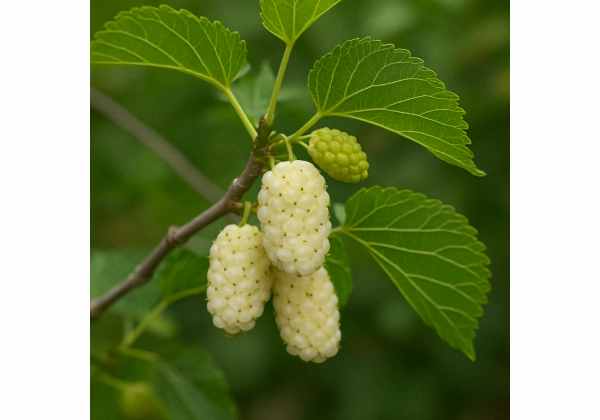
White Mulberry, or Morus alba, is one of those herbs that looks simple at first and becomes more interesting the closer you look. It is a traditional tree medicine, a food plant, and a modern supplement source all at once. Its leaves, fruits, twigs, and root bark have each been used in different ways, but today the leaf receives the most attention because it contains 1-deoxynojirimycin, or DNJ, along with flavonoids, phenolic acids, and other compounds tied to blood sugar and metabolic support. That is where the strongest modern evidence sits. White mulberry may help blunt the rise in blood glucose after a carbohydrate-heavy meal, and it also shows promise for antioxidant balance, lipid support, and broader cardiometabolic health. At the same time, it is not a miracle remedy, and its benefits depend heavily on the part used, the extract quality, and the dose. For most people, the smartest way to understand White Mulberry is as a targeted herb whose best-supported role is post-meal glucose support, with a broader but more mixed story around cholesterol, inflammation, and traditional uses.
Core Points
- White mulberry leaf is best supported for reducing post-meal glucose spikes rather than acting as a stand-alone diabetes treatment.
- Its key active compounds include DNJ, flavonoids, phenolic acids, rutin, quercetin, and chlorogenic acid.
- A practical supplemental range is often 6 to 12 mg DNJ with carbohydrate-containing meals, though products vary widely.
- People who use diabetes medicines, are pregnant or breastfeeding, or are prone to low blood sugar should avoid self-prescribing it.
Table of Contents
- What White Mulberry is and which parts matter most
- White Mulberry benefits and where the evidence is strongest
- Traditional uses and practical modern fit
- How to use White Mulberry wisely
- Dosage, timing, and what product labels often miss
- Safety, side effects, and who should avoid it
- What the research actually says
What White Mulberry is and which parts matter most
White Mulberry is a deciduous tree in the Moraceae family, originally associated with China and sericulture, but now grown widely across Asia, Europe, and North America. In traditional medicine, it is unusual because different parts of the same plant developed different reputations. The leaf, often called Mori folium, has been used for cooling, clearing, and metabolic support. The fruit has more of a nourishing and food-like identity. The root bark and twigs appear in older systems for other targeted purposes. For modern readers, though, the most important practical fact is simpler: most supplement evidence today focuses on the leaf, not the berry.
That matters because people often search “White Mulberry benefits” and assume all parts act the same. They do not. The leaf is the part most often standardized and studied for glucose-related effects, especially after meals. The fruit has nutritional value and antioxidant interest, but it is not the main driver of the modern blood-sugar story. The root bark is important historically, but it is less relevant for everyday consumer use.
The chemistry of White Mulberry helps explain why the leaf has gained such attention. Modern reviews describe a broad array of compounds across the plant, including:
- alkaloids
- flavonoids
- phenolic acids
- polysaccharides
- amino acids
- organic acids
- vitamins and trace minerals
Among these, the most talked-about leaf compound is 1-deoxynojirimycin, or DNJ. DNJ is important because it inhibits alpha-glucosidase, the enzyme that helps break down certain carbohydrates into absorbable sugars. That is the mechanism most often used to explain why white mulberry leaf products can reduce postprandial, or after-meal, glucose rises. But DNJ is not the whole story. White mulberry leaves also contain compounds such as chlorogenic acid, rutin, quercetin, isoquercitrin, astragalin, and related polyphenols. These likely contribute to antioxidant, inflammation-related, and metabolic effects beyond simple enzyme inhibition.
This is one reason White Mulberry cannot be reduced to a single “blood sugar molecule.” It behaves more like a plant matrix than a one-note compound. A product standardized only for DNJ may still differ significantly from a tea or a full-spectrum extract. In practice, that means the leaf powder in one supplement and the tea bag in another are not interchangeable just because both say “white mulberry.”
If you compare White Mulberry with a better-known polyphenol-rich plant, green tea’s antioxidant and metabolic profile offers a useful contrast. Green tea works mainly through catechins and habitual beverage use, while white mulberry leaf is usually used more strategically, especially around meals. That difference is part of what makes White Mulberry compelling: it is less of a daily ritual herb and more of a targeted metabolic herb.
So the first essential insight is this: when people talk about White Mulberry for health, they are usually talking about the leaf. That is where the strongest evidence, most practical use, and most meaningful dosage questions really begin.
White Mulberry benefits and where the evidence is strongest
White Mulberry has a long list of claimed benefits, but the quality of evidence varies sharply by outcome. The strongest and most clinically relevant area is blood sugar support, especially the reduction of post-meal glucose spikes. This is the part of the white mulberry story that deserves the most confidence, though even here the herb works best as an adjunct rather than a replacement for diet, exercise, or medication.
The clearest benefit is postprandial glucose control. In both randomized trials and systematic review data, white mulberry leaf extract has shown a capacity to reduce post-meal glucose and insulin responses, especially when taken with sucrose or carbohydrate-containing meals. That makes sense mechanistically because DNJ slows carbohydrate digestion. For people with prediabetes, mild dysglycemia, or a tendency toward sharp glucose swings after meals, this may be the most useful and realistic application.
The second possible benefit is modest fasting glucose and long-term glycemic support, but the evidence here is less consistent. Some studies show small improvements in fasting glucose or HbA1c, while others find the main benefit remains limited to after-meal control. That distinction matters. White Mulberry may be more effective as a meal-timing herb than as a broad glucose-lowering tonic.
The third area is lipids and cardiometabolic support. This part of the evidence is promising but mixed. Some human studies report modest improvements in HDL cholesterol, oxidative stress markers, or insulin-related measures. Broader reviews also suggest potential benefits for metabolic syndrome and cardiovascular risk patterns. Still, the results are not strong enough to present White Mulberry as a reliable cholesterol remedy. It is better understood as a plant that may support an overall metabolic strategy rather than dominate one.
The fourth area is antioxidant and inflammation-related activity. This is strongly supported at the preclinical level. White mulberry contains flavonoids, phenolic acids, and other compounds that show antioxidant behavior and may influence inflammation-related pathways. That helps explain why the plant has been studied so widely, but it also highlights a familiar herbal issue: antioxidant potential in a paper is not the same thing as a guaranteed clinical outcome in a person.
There are also traditional and exploratory areas, including liver support, vascular protection, and general metabolic resilience. These are plausible enough to mention, but they should not outrank the better-supported glucose evidence.
A useful way to organize the benefits is by confidence level:
- Best supported: post-meal glucose control
- Moderately supported: selected insulin and metabolic markers
- Plausible but mixed: lipid support and broader cardiometabolic benefits
- Mostly preclinical: antioxidant, anti-inflammatory, and tissue-protective effects
This ranking keeps expectations realistic. White Mulberry is often marketed as though it can do everything that cinnamon, bitter melon, berberine, and fiber can do all at once. That is too broad. A more careful comparison is that it may complement cinnamon in blood sugar support, especially around carbohydrate-rich meals, but it is not a free pass to eat without restraint and expect the herb to cancel the cost.
In short, White Mulberry’s benefits are real, but they are best when used strategically. The plant’s greatest strength is not dramatic whole-body transformation. It is the targeted blunting of post-meal glucose rise, supported by a broader but less certain metabolic halo.
Traditional uses and practical modern fit
Traditional medicine often gives a plant its first identity, but modern practice decides whether that identity still fits. White Mulberry is a good example of both continuity and change. In traditional East Asian medicine, different parts of the plant were assigned distinct roles. The leaf was often associated with clearing heat, moistening dryness, calming irritation, and supporting the lungs and eyes. The fruit had a more nourishing, fluid-restoring reputation. The root bark was used differently again. These older uses help explain why White Mulberry was never just a blood sugar herb.
That said, the modern practical fit of White Mulberry is narrower than its traditional profile. Today, most consumers do not use the root bark or twigs. They do not normally seek it for eye discomfort, cough, or general cooling. They buy the leaf, usually in tea, capsule, or standardized extract form, because they want help with glucose management, carbohydrate tolerance, or general metabolic support.
This narrowing is not a problem. In fact, it can make the herb easier to use well. Instead of trying to make White Mulberry do ten traditional jobs at once, modern users can ask a more focused question: does this herb fit my main goal?
It fits best in a few situations.
First, it fits for people who notice strong after-meal fatigue, heaviness, or glucose swings after carbohydrate-heavy meals. That does not diagnose anything by itself, but it points toward the herb’s most practical niche.
Second, it fits for people building a broader metabolic routine that already includes diet change, movement, sleep, and meal planning. White Mulberry works better in that context than as a rescue herb attached to an otherwise unchanged pattern.
Third, it fits for people who want a plant-based strategy that is more targeted than a general antioxidant and less aggressive than some stronger glucose-directed supplements. It is often gentler in feel than more pharmacologically forceful ingredients, though not necessarily weaker in every setting.
Where does it fit less well? It is not ideal for people who want a simple fruit-based superfood. Although white mulberry fruit can be a pleasant food, the supplement evidence does not justify treating the berry as equivalent to the leaf. It is also not a broad adaptogen or mood herb. And it is not a substitute for medication in established diabetes.
This practical fit becomes clearer when you compare it with herbs that occupy neighboring roles. For people who need bulk-forming support to slow glucose absorption and improve satiety, psyllium’s soluble-fiber approach may be easier to integrate and easier to understand. White Mulberry, by contrast, is more of a carbohydrate-enzyme and polyphenol herb. That difference matters when choosing the right tool.
A good modern summary would be this: White Mulberry has wider traditional roots than most people realize, but its best present-day fit is targeted metabolic support, especially when the leaf is used with intention. The further you move from that core role, the more the evidence fades and the more tradition takes over.
How to use White Mulberry wisely
How White Mulberry is used makes a major difference in what it can realistically do. The herb appears in several forms, but they are not equally suited to the same goals. That is one of the most important practical points for readers, because a leaf tea, a capsule, a DNJ-standardized product, and a dried berry are all “white mulberry” in a loose sense while behaving quite differently in actual use.
The gentlest form is mulberry leaf tea. This is useful for people who want a mild entry point and a more traditional, food-like relationship with the herb. Tea may suit someone who wants general support, likes herbal routines, and is not depending on the plant for precise post-meal glucose control. The limit is that tea can be less standardized and less potent than concentrated products, especially when DNJ content is not declared.
The next form is leaf powder or capsule. This often provides more practical consistency and is easier to use around meals. Depending on the product, it may still be a whole-leaf style supplement rather than a highly standardized extract. For many people, this is the most balanced consumer format because it offers convenience without automatically pushing concentration too far.
Then there are standardized extracts, especially those labeled by DNJ content. These are the most strategic form if the goal is postprandial glucose control. They are also the form where label reading becomes essential. A bottle may advertise “500 mg white mulberry,” but that number tells you very little if the DNJ content is not disclosed. Another product may contain less total leaf extract but more active DNJ. For this herb, standardization can matter more than headline milligrams.
White mulberry fruit is different. It belongs more to the food side of the plant story and is not where the best metabolic supplement evidence sits. It can certainly be part of a diet, but it should not be assumed to duplicate the leaf’s meal-timing effects.
A practical way to choose among forms looks like this:
- choose tea for gentle traditional use and low-intensity experimentation
- choose leaf capsules for convenience and steady routine use
- choose DNJ-standardized extract for targeted post-meal glucose support
- do not assume berries and leaves are interchangeable
Timing matters as much as form. White Mulberry is usually most useful when taken with or just before carbohydrate-containing meals. That is because its main best-supported mechanism is slowing carbohydrate digestion. Taking it randomly between meals may still expose you to polyphenols, but it may miss the herb’s most strategic moment.
It also helps to think in pairings rather than heroics. White Mulberry works best beside meal planning, movement, and realistic carbohydrate choices. It is not a stand-alone antidote to chronic overconsumption. In that sense, it behaves more like ginger in a supportive daily routine than like a drug meant to carry the whole burden alone.
The wisest way to use White Mulberry is therefore targeted, timed, and form-aware. People often get the best results not by taking more of it, but by using the right form at the right moment for the right reason.
Dosage, timing, and what product labels often miss
White Mulberry dosage is one of the most misunderstood parts of the topic because products are labeled in several different ways. Some list total leaf powder, some list extract weight, and some list DNJ content. These are not equivalent. If you only look at the front of the bottle, you can easily think two products are comparable when they are not.
The most useful clinically grounded number comes from DNJ. In a dose-finding study, 12 mg DNJ was identified as the minimum effective dose for attenuating postprandial hyperglycemia when taken with sucrose, and the longer study phase used 12 mg DNJ three times daily. That makes DNJ-based dosing more informative than generic milligram claims for total extract. It does not mean everyone needs exactly that amount, but it gives a practical benchmark.
A reasonable consumer-oriented range is often 6 to 12 mg DNJ with a carbohydrate-containing meal, starting at the lower end. Some products may recommend more, but higher amounts are not automatically better, especially when digestive tolerance becomes an issue. For non-standardized tea or whole-leaf powders, exact equivalence is harder to calculate. In those cases, consistency of use matters more than pretending the dose is precisely known.
A careful dosing strategy looks like this:
- start low, especially if you are sensitive to glucose-lowering effects
- take it with or just before a carb-containing meal
- use the lowest effective amount rather than chasing stronger effects
- avoid stacking it immediately with multiple other glucose-lowering supplements during a first trial
For tea, one or two cups of mulberry leaf infusion around meals is a gentle traditional approach, but it is much less precise than DNJ-standardized products. For capsules or powders without DNJ disclosure, it is wise to follow the manufacturer’s serving size cautiously and judge response mainly by tolerance and meal-related effect, not by the assumption that “more herb” means more benefit.
This is also where label literacy matters. A product may say:
- whole leaf powder
- leaf extract
- standardized extract
- DNJ-enriched extract
- fruit plus leaf blend
Each of these may behave differently. A fruit-forward product is not the same as a leaf-focused metabolic formula. A blend may dilute the main ingredient. A standardized extract may be more reliable for post-meal use than a generic capsule with no active-compound information.
Timing is not complicated, but it is important. White Mulberry is usually best used:
- just before or with a carbohydrate-containing meal
- during the day rather than at bedtime
- consistently enough to judge tolerance and effect, but not so casually that you forget what it is doing
Some people combine it with other meal-directed tools. That can work, but the smarter comparison is often with food structure rather than supplement stacking. Something like psyllium with meals for slower absorption changes the meal in one way, while White Mulberry changes the enzymatic response in another. Combining approaches may be useful, but it also raises the need for more careful monitoring.
The main thing product labels often miss is context. White Mulberry dosage is not just a number. It is a timing decision, a standardization question, and a metabolic fit issue. When those are ignored, even a good product can be used badly.
Safety, side effects, and who should avoid it
White Mulberry has a generally favorable short-term safety profile in human studies, but that statement needs context. “Generally favorable” does not mean risk-free. It means that in studies lasting up to about 12 weeks, serious harmful effects have not been a dominant finding, especially for leaf preparations. It also means the most common problems tend to be mild and gastrointestinal. Even so, the herb deserves real caution in the people most likely to use it: those trying to manage blood sugar.
The most common side effects are digestive. These include bloating, gas, flatulence, loose stools, constipation, and general stomach discomfort. That makes sense given the herb’s effect on carbohydrate digestion. If you slow sugar breakdown in the gut, the digestive tract may respond in noticeable ways, especially at higher doses or with poorly timed use.
The biggest practical safety issue is low blood sugar risk when White Mulberry is combined with diabetes medicines or multiple glucose-lowering supplements. On its own, White Mulberry is not usually dramatic. In combination, it can become less predictable. That means anyone taking insulin, sulfonylureas, or other glucose-lowering agents should not add the herb casually.
Pregnancy and breastfeeding deserve a separate warning. There is not enough reliable information to consider White Mulberry leaf clearly safe during these periods. That uncertainty is enough reason to avoid self-prescribing it. The same conservative approach applies to children and teenagers unless a clinician specifically recommends otherwise.
Another important safety distinction is between parts of the plant. White mulberry leaf has more direct study behind it than the berries. Current public guidance is more cautious about berry safety simply because there is less reliable information. That does not automatically make the berries dangerous, but it does make broad supplement claims about “all parts of white mulberry” sound more confident than they should.
People who should be especially cautious include:
- anyone on diabetes medication
- people with a history of hypoglycemia
- pregnant or breastfeeding people
- children and teenagers
- people using several metabolic supplements at once
- anyone with chronic digestive sensitivity
There is also a quality issue. White Mulberry products vary in standardization, source material, and manufacturing rigor. A lower-quality extract may not only underperform but also create more digestive irritation or inconsistent effects. With a targeted herb like this, product quality matters more than branding.
For people whose main concern is metabolic support but who want a gentler, food-first framework, dandelion as a more traditional daily herb may feel easier to integrate, though it serves a different role. White Mulberry is more pointed, and pointed herbs always deserve more attention to interactions.
The safest summary is straightforward: White Mulberry leaf appears reasonably well tolerated in short-term use, but it is not casual if you use blood-sugar medicines, are vulnerable to hypoglycemia, or want to take it beyond a short-to-medium window. Good safety with the average user does not cancel the need for targeted caution in the people most likely to reach for it.
What the research actually says
White Mulberry has a stronger research base than many herbs marketed for metabolism, but it still helps to separate the better-supported conclusions from the overconfident ones. The literature supports interest, not exaggeration.
The most reliable finding is that white mulberry leaf can reduce postprandial glucose and insulin responses, especially when used with sucrose or carbohydrate-rich meals. This has been shown in randomized trials and supported by systematic review work. That does not mean the herb will normalize every glucose marker in every person, but it does give the leaf a credible role as a meal-timed intervention.
The second research-backed insight is that standardization matters. Studies that identify DNJ content, such as 6 mg, 12 mg, or 18 mg dosing comparisons, are much easier to interpret than generic commercial claims. This is one reason why evidence for White Mulberry often looks better in the lab or in tightly designed trials than in ordinary consumer use. The studied product is usually more defined than the product on the shelf.
The third conclusion is that wider metabolic benefits remain plausible but inconsistent. Some studies show improvement in insulin, oxidative stress markers, or selected lipid measures. Some reviews point toward overall cardiometabolic support. But the evidence is not consistent enough to say White Mulberry reliably lowers cholesterol, reverses insulin resistance, or broadly treats metabolic syndrome on its own.
The fourth conclusion is that the chemistry is rich and biologically active. Modern reviews describe nearly two hundred identified constituents across the plant, including flavonoids, alkaloids, phenols, amino acids, and more. That chemical richness makes the plant scientifically interesting. It also explains why White Mulberry continues to attract research attention beyond blood sugar alone.
Still, the gaps matter.
What the research supports fairly well:
- post-meal glucose support
- a plausible role for DNJ-rich leaf extracts
- short-term tolerability in many adults
- broader antioxidant and metabolic interest
What the research does not justify yet:
- presenting White Mulberry as a stand-alone diabetes treatment
- assuming berries, leaves, and root bark are equivalent
- promising consistent major lipid improvement
- treating short-term safety as proof of long-term safety for everyone
The smartest reading of the evidence is that White Mulberry is a useful adjunct, not a substitute. It works best when the question is narrow and practical: can this help blunt the glucose rise from meals? It works less well when the question is vague and ambitious: can this fix my metabolism?
That distinction is why the herb continues to matter. White Mulberry is not hype with no substance behind it. It is a real medicinal plant with one especially credible use case and several secondary areas that remain promising but unsettled. For readers who approach herbs best when evidence and tradition overlap, White Mulberry is one of the better examples of that overlap. It simply needs to be used with the same discipline that made the research readable in the first place: clear goal, defined product, measured dose, and realistic expectations.
References
- Comprehensive overview of different medicinal parts from Morus alba L.: chemical compositions and pharmacological activities – PMC 2024 (Review)
- Morus alba L. for Blood Sugar Management: A Systematic Review and Meta-Analysis – PubMed 2022 (Systematic Review and Meta-Analysis)
- A randomized controlled study of dose-finding, efficacy, and safety of mulberry leaves on glycemic profiles in obese persons with borderline diabetes – PubMed 2020 (RCT)
- Mulberry leaf extract improves glycaemic response and insulaemic response to sucrose in healthy subjects: results of a randomized, double blind, placebo-controlled study – PMC 2021 (RCT)
- White Mulberry Leaf: Usefulness and Safety | NCCIH 2023 (Government health information)
Disclaimer
This article is for educational purposes only and is not medical advice. White Mulberry may affect blood sugar, digestion, and how some people respond to carbohydrate-containing meals, so it should not replace diagnosis, prescribed treatment, or urgent care. Speak with a qualified healthcare professional before using it if you have diabetes, take glucose-lowering medication, are pregnant or breastfeeding, or have a history of low blood sugar.
If this article was useful, please share it on Facebook, X, or another platform where careful, evidence-aware herbal information can help more readers.