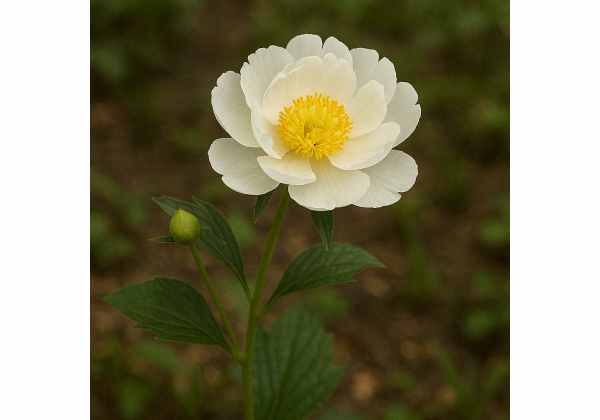
White peony root is the processed root used in traditional East Asian herbal medicine from a plant now more commonly listed under the accepted botanical name Paeonia lactiflora. The older name Paeonia albiflora still appears in herbal trade, classic texts, and some product labels, which is one reason the herb can feel confusing at first. Its reputation, however, is remarkably consistent. White peony root is valued as a gentle but active medicinal herb associated with menstrual comfort, cramp relief, inflammatory balance, and support in traditional formulas for autoimmune and skin conditions. Modern research has added another layer by identifying compounds such as paeoniflorin and albiflorin, which may help explain its anti-inflammatory, antispasmodic, antioxidant, and immunomodulatory effects. At the same time, much of the stronger evidence involves extracts or multi-herb formulas rather than the root used alone. That means white peony root is best understood as a traditional herb with real pharmacological interest, promising but uneven clinical evidence, and a need for more careful dosing and safety discussions than many supplement summaries provide.
Quick Overview
- White peony root is most strongly associated with menstrual comfort, muscle cramp relief, and broader inflammatory support.
- Its best-studied compounds, especially paeoniflorin and albiflorin, help explain its antispasmodic and immunomodulatory profile.
- Traditional decoction amounts commonly range from 6 to 15 g/day of crude root under practitioner guidance.
- Pregnant or breastfeeding people and anyone taking prescription medicines should avoid self-directed medicinal use.
Table of Contents
- What white peony root is and why the name matters
- Key ingredients and medicinal properties
- White peony root health benefits and where the evidence is strongest
- Traditional uses, formulas, and practical modern applications
- White peony root dosage, forms, and timing
- Side effects, interactions, and common mistakes
- Who should avoid it and the bottom line
What white peony root is and why the name matters
White peony root is not simply “peony root.” In traditional materia medica, it refers to a specific processed form of peony root known as white peony root or Radix Paeoniae Alba. The current accepted plant name is Paeonia lactiflora, while Paeonia albiflora is treated as an older synonym. That naming issue matters because many articles, labels, and older books shift between the two without explanation. Readers may think they are dealing with different herbs when they are usually looking at the same species under different names.
A second important distinction is between white peony root and red peony root. Both come from closely related peony material, but they are not the same medicinal substance. White peony root is typically peeled, boiled, and dried, while red peony root has a different processing history and a somewhat different traditional profile. The processing changes more than appearance. It also changes the chemical emphasis, the pharmacological reputation, and the traditional indications. That is one reason older claims about “peony root” can become muddled when they do not specify which form is meant.
In practice, white peony root has been used for centuries in traditional Chinese medicine for patterns involving menstrual irregularity, abdominal pain, sweating, dizziness, muscle spasm, and states described as blood deficiency or liver imbalance. Those phrases come from traditional frameworks, but they translate reasonably well into modern interest around cramps, inflammatory discomfort, smooth-muscle tension, and formula-based support in chronic inflammatory conditions. The herb is rarely treated as a single-issue quick fix. It is usually seen as a balancing root that works best in context.
That context includes how the herb is prepared. White peony root is a processed medicinal material, not merely a fresh garden root dried in the sun. Pharmacopoeial descriptions emphasize the peeled and processed root, along with standards such as minimum paeoniflorin content. This matters because the difference between a properly identified medicinal root and a generic peony product is not trivial.
So before talking about benefits, it helps to get the identity clear. White peony root is a traditional medicinal preparation derived from Paeonia lactiflora, still often listed as Paeonia albiflora, and distinct from both red peony root and ornamental peony products. Once that foundation is clear, the rest of the herb’s story becomes much easier to understand.
Key ingredients and medicinal properties
White peony root has attracted modern interest because its chemistry is far richer than its mild name suggests. The best-known compounds are monoterpene glycosides, especially paeoniflorin, along with albiflorin, oxypaeoniflorin, and related constituents. These compounds are often treated as the chemical signature of medicinal peony roots and are central to both quality control and pharmacological discussion.
Paeoniflorin is the star compound, but it is not the whole story. In most discussions of white peony root, paeoniflorin gets the most attention because it is abundant, measurable, and linked in research with anti-inflammatory, antispasmodic, analgesic, antioxidant, and immunomodulatory effects. Albiflorin is also important, especially because it may influence mood-related pathways and smooth-muscle regulation differently from paeoniflorin. This is one reason peony cannot be reduced to a single active ingredient. The herb behaves like a chemically coordinated root, not a one-molecule product.
Beyond monoterpene glycosides, white peony root contains tannins, benzoic acid–related compounds, triterpenoids, carbohydrates, and other phenolic constituents. These help explain why the herb has been described as astringent, nourishing, calming, and slightly protective to tissues in traditional systems. In broad pharmacological language, the root appears to combine anti-inflammatory signaling, spasm regulation, oxidative-stress control, and immune moderation.
That combination is what gives the herb its distinctive medicinal profile. White peony root is not usually promoted as a dramatic stimulant, a strong sedative, or a harsh bitter. Instead, it tends to be described as moderating and harmonizing. Its medicinal properties are often summarized in a few overlapping themes:
- antispasmodic effects that may matter in cramping or tension
- anti-inflammatory and immunomodulatory actions that matter in chronic inflammatory states
- antioxidant properties that support tissue resilience
- possible vascular and platelet-related effects that help explain both benefits and safety cautions
This last point deserves attention. White peony root may influence blood flow and platelet behavior, which partly explains why it appears in discussions of circulation, inflammatory pain, and autoimmune disease. It also explains why medication interactions cannot be dismissed. A plant with biologically active glycosides is not a neutral tea.
Compared with a simpler herb, white peony root sits in a middle category. It is more pharmacologically interesting than a mild culinary herb, but less straightforward than a single-compound botanical extract. Readers looking for a root that works only as a bitter tonic or only as a cramp remedy will miss the bigger picture. White peony root is better understood as a multifunctional medicinal root whose most important chemistry centers on paeoniflorin-type compounds. For people interested in compounds that directly target pain and inflammation, boswellia for inflammatory support offers a useful contrast because its active resin acids and dosing logic are more defined than white peony root’s whole-herb profile.
White peony root health benefits and where the evidence is strongest
White peony root is one of those herbs where the benefits look strongest when tradition and modern research are read together rather than separately. Traditional use provides the themes. Modern studies provide some mechanistic support. But the clinical evidence is uneven, and much of the more promising data comes from extracts such as total glucosides of paeony or from formulas that include white peony root rather than the root used alone.
The best-supported benefit areas are these.
First, white peony root appears relevant for cramping and pain linked to smooth-muscle tension. Traditional sources describe it for abdominal pain, dysmenorrhea, calf spasm, chest discomfort, and pain conditions that fit a spastic or tense pattern. That makes sense chemically because paeoniflorin and related compounds have shown antispasmodic and analgesic potential in experimental work. This is probably the most intuitive modern translation of the herb’s traditional use.
Second, white peony root has meaningful anti-inflammatory and immunomodulatory interest. A 2023 systematic review and meta-analysis on total glucosides of paeony in five types of inflammatory arthritis found improvements in inflammatory markers and symptoms across conditions such as rheumatoid arthritis, ankylosing spondylitis, osteoarthritis, psoriatic arthritis, and juvenile idiopathic arthritis. That is important, but it needs careful interpretation. The study was about total glucosides of paeony, not necessarily plain household white peony root decoction, and the authors still noted that the overall trial quality was limited. So the herb looks promising, but not definitive.
Third, there is a plausible role in dermatologic and autoimmune support. Reviews of total glucosides of paeony discuss anti-inflammatory, antioxidant, and immunoregulatory effects that may help explain why the herb appears in formulas for psoriasis, urticaria, and immune-mediated skin conditions. Again, the real caution is that many of these data come from formulations, animal models, or extract-based research rather than simple white peony root tea.
Fourth, white peony root may modestly support liver and vascular balance in preclinical settings. Experimental studies suggest antioxidant and hepatoprotective effects, but readers should not turn that into a claim that it “treats liver disease.” The evidence is not strong enough for that.
So where is the evidence strongest? Not in single-herb miracle claims. It is strongest in three areas:
- traditional and preclinical support for cramps and spasm
- adjunctive research on inflammatory and autoimmune conditions
- pharmacological plausibility for antioxidant and immunomodulatory effects
For readers whose main goal is menstrual cramp relief, it can help to compare white peony root with cramp bark for antispasmodic support. Cramp bark is framed much more narrowly around spasm, while white peony root often sits inside broader hormonal, inflammatory, and formula-based traditions. That difference helps explain why white peony root can be useful, but also why it is harder to dose casually and harder to evaluate outside a larger treatment context.
Traditional uses, formulas, and practical modern applications
White peony root has a long traditional use profile, but it is not traditionally used in just one way. In East Asian herbal practice, it is often described as nourishing blood, preserving yin, easing pain, softening tension, and helping regulate sweating and menstrual function. Those descriptions come from traditional theory, yet they map surprisingly well onto the modern themes of cramp relief, inflammatory moderation, and general formula balancing.
Traditional indications commonly include menstrual irregularity, dysmenorrhea, abdominal pain, headache, dizziness, spontaneous sweating, night sweating, hypochondriac pain, and certain deficiency-pattern complaints. The herb is often selected not because the person has one isolated symptom, but because several symptoms appear together. For example, pain plus fatigue, cramping plus irritability, or dryness plus irregular bleeding. This is one reason white peony root rarely behaves like an isolated over-the-counter product in traditional practice.
Its use in formulas is especially important. White peony root is frequently paired with other herbs to change its emphasis. With blood-moving herbs, it may support menstrual comfort. With harmonizing herbs, it may help reduce spasms or tension. With immune-modulating herbs, it may help temper inflammatory patterns. One of its classic pairings is with licorice, a combination traditionally associated with muscle spasm and abdominal cramping. Another familiar comparison is dong quai for menstrual and formula-based support, which often appears in overlapping women’s-health traditions but has a warmer, more circulation-focused reputation.
In practical modern terms, white peony root is most realistically used in a few ways:
- as a practitioner-guided decoction in traditional herbal medicine
- as part of standardized total glucosides of paeony products used in research settings
- as a component of multi-herb formulas for inflammatory, menstrual, or autoimmune support
- less commonly, as a standalone powdered root or extract
What it is not best suited for is random self-experimentation based on isolated claims such as “balances hormones” or “fixes inflammation.” White peony root does not fit that style of use very well. Its strongest traditional role is relational. It works as part of a pattern, a formula, or a broader therapeutic plan.
That also affects modern expectations. Someone looking for a fast-acting rescue herb for pain may not find white peony root as direct or obvious as more narrowly targeted herbs. But someone working with recurring crampy pain, menstrual discomfort, inflammatory flares, or tension-pattern symptoms may find it more interesting, especially when it is part of a thoughtful formula rather than used alone.
White peony root dosage, forms, and timing
Dosage is one of the trickiest parts of writing about white peony root because the herb is used in at least three different ways: as a traditional crude root in decoction, as a processed herbal substance inside multi-herb formulas, and as a modern extract such as total glucosides of paeony. These forms are not interchangeable, so a dosage that makes sense in one context should not automatically be applied to another.
The clearest traditional range comes from pharmacopoeial and monograph material that describes white peony root as a crude plant material used at about 6 to 15 g per day, usually as powder or decoction. That range is useful, but it should be read as a traditional practitioner-guided range, not as a universal home-supplement instruction. The root is often decocted, and traditional texts assume the person using it understands the herb’s pattern, preparation method, and formula context.
That distinction matters because many people now encounter white peony root in capsules, extracts, or “equivalent dried root” labels. A standardized extract can concentrate some compounds and reduce others. A total glucosides of paeony capsule used in clinical research is not the same thing as sliced root simmered in water. This is why dosage discussions in articles often become misleading. They collapse traditional crude-root dosing and modern extract dosing into one number.
Timing is more flexible than it is with some herbs. White peony root is often taken with food or after meals in modern practice if someone is prone to nausea. In formula-based use, timing may depend on whether the goal is cramp relief, inflammatory support, or longer-term constitutional balancing. It is not usually treated like a stimulant that must be taken in the morning or a sedative reserved only for bedtime.
A sensible practical framework looks like this:
- use traditional crude-root ranges only in a qualified herbal context
- treat extract products as separate dosing systems
- do not convert a formula dose into a single-herb dose without guidance
- avoid prolonged self-use without review, especially if you are taking medicines
There is also a comparison worth making. White peony root is sometimes used in classical formulas alongside licorice root in traditional herbal combinations, where the two herbs are intended to shape each other’s effect. That is very different from simply taking either herb at random. Formula logic matters.
So while a traditional range of 6 to 15 g/day of crude root is real and useful, it does not mean white peony root has a simple one-size-fits-all modern dose. The safest modern advice is to treat dosage as form-specific, goal-specific, and best guided by product quality and professional oversight rather than by internet averages.
Side effects, interactions, and common mistakes
White peony root is often described as gentle, but “gentle” is not the same as risk-free. The herb has an active chemical profile, and both official assessment documents and modern pharmacology suggest that safety depends heavily on context, form, and co-administered medicines.
The most commonly discussed side effects are gastrointestinal. These can include nausea, loose stools, stomach discomfort, and sometimes diarrhea. Dizziness and general intolerance can also occur, especially with strong preparations or formulas that do not suit the user. Traditional-use safety literature has also recorded more troubling reactions such as mouth or throat irritation, vomiting, and other acute intolerance effects, though these appear much less common than mild digestive upset.
Medication interactions deserve special respect. Official monograph-style sources advise consulting a health professional before use if you take prescription medicines, and that is reasonable advice. White peony root has enough biologically active constituents to make casual stacking unwise. Its platelet-related and circulation-related activity is one reason many cautious clinicians advise extra care when the herb is combined with anticoagulants, antiplatelet drugs, or complex autoimmune medication regimens. Even if a direct harmful interaction is not guaranteed, the uncertainty alone is enough to justify restraint.
Several common mistakes make problems more likely:
- Confusing white peony root with red peony root
The two are related but not interchangeable in tradition or chemistry. - Assuming formula evidence proves single-herb effects
Much of the better evidence comes from total glucosides of paeony or multi-herb formulas. - Treating traditional grams of crude root as equivalent to modern extracts
This is one of the easiest ways to overdo a product. - Using it to self-treat abnormal bleeding, severe pain, or autoimmune disease without supervision
These are situations that deserve clinical evaluation. - Ignoring product quality
Poorly labeled supplements make dosage and safety harder to judge.
For people whose real goal is mild calming digestive support or a lighter tea-based herb, chamomile for gentle digestive and tension support is often easier to use safely than white peony root. That does not make white peony root unsafe by default. It simply means it belongs in the category of herbs that deserve a bit more structure, especially once extracts and chronic conditions enter the picture.
Who should avoid it and the bottom line
White peony root may be appropriate in skilled herbal practice, but it is not the right herb for casual experimentation in every group. The clearest people to avoid self-directed use are pregnant or breastfeeding individuals. Official sources are especially firm on this point, and older assessment reports also raise concern about possible uterine-stimulating or abortifacient signals. That alone is enough to keep the herb off the self-care list in pregnancy.
Children and adolescents should also avoid unsupervised medicinal use because high-quality pediatric safety data are limited. The same applies to people with major chronic illness, complicated autoimmune disease, or multiple prescriptions. White peony root may appear in traditional formulas for such conditions, but that is very different from self-prescribing capsules or tea.
People who should be especially cautious include:
- anyone taking prescription medicines
- anyone using anticoagulants or antiplatelet medicines
- people with recurrent diarrhea or a very sensitive digestive system
- those trying to self-manage irregular bleeding or severe menstrual pain
- users of concentrated extracts without clear standardization
There is also a practical question that helps readers make better decisions: what are you actually trying to achieve? If the goal is general joint comfort, a more established anti-inflammatory herb may be simpler. If the goal is menstrual comfort, white peony root may be relevant, but often works better in formula-based or practitioner-guided use than as a random standalone supplement. If the goal is broad wellness, there are easier herbs to begin with.
The bottom line is that white peony root is a serious traditional medicinal root with real pharmacological interest. Its key compounds, especially paeoniflorin and albiflorin, help explain why it has remained important for cramps, inflammatory balance, and formula-based care. The evidence is strongest when the herb is used in standardized extracts or classical-style combinations, and weaker when claims are made for the plain root alone. Traditional crude-root dosing exists, but modern extract dosing is not simple, and self-directed use has real limits.
Used wisely, white peony root can be an impressive example of how traditional knowledge and modern phytochemistry meet. Used casually, it is easy to misunderstand. Respect for its benefits should go together with respect for its complexity.
References
- Paeonia albiflora Pall. | Plants of the World Online | Kew Science 2026
- Assessment report on Paeonia lactiflora Pallas, radix (Paeoniae radix alba) 2017 (Assessment Report)
- Efficacy, Chemical Constituents, and Pharmacological Actions of Radix Paeoniae Rubra and Radix Paeoniae Alba 2020 (Review)
- Efficacy and safety of total glucosides of paeony in the treatment of 5 types of inflammatory arthritis: A systematic review and meta-analysis 2023 (Systematic Review and Meta-Analysis)
- Therapeutic potential and pharmacological insights of total glucosides of paeony in dermatologic diseases: a comprehensive review 2025 (Review)
Disclaimer
This article is for educational purposes only and is not medical advice, diagnosis, or treatment. White peony root is a traditional medicinal herb with active pharmacological compounds, and it may not be appropriate for self-treatment in pregnancy, breastfeeding, chronic illness, or when prescription medicines are involved. Do not use it to self-manage severe pain, abnormal bleeding, autoimmune disease, or inflammatory skin disease without qualified guidance. Always check the exact species, preparation type, and dose before use.
If this article was helpful, please share it on Facebook, X, or your preferred platform.