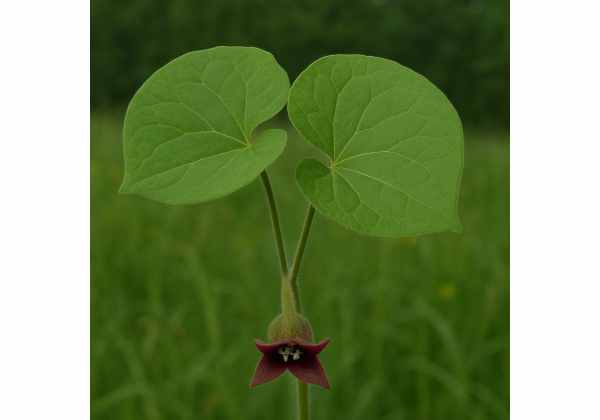
Wild ginger is one of those woodland herbs that attracts interest because it seems both familiar and mysterious. Its heart-shaped leaves carpet shady forests, and its rhizome carries a warm, spicy scent that led generations of people to use it as a substitute for true ginger. Botanically, however, Asarum canadense is not culinary ginger, and medicinally it deserves much more caution. Traditional use linked wild ginger with digestive support, warming stimulation, and occasional respiratory or topical applications. Its aromatic profile and historical reputation explain why it still appears in herbal discussions.
The difficulty is that modern safety concerns now shape the conversation more strongly than old folk uses do. Wild ginger contains bioactive compounds that may help explain its traditional role, but species in the Asarum group are also tied to aristolochic acid risk, kidney injury concerns, and possible carcinogenicity. That changes the advice completely. Today, wild ginger is best understood as a historically important North American herb with interesting chemistry, limited modern therapeutic evidence, and serious reasons not to self-prescribe it casually.
Core Points
- Wild ginger has a long history as a warming aromatic herb used for digestive and topical folk purposes.
- Its volatile compounds and flavonoids help explain traditional interest in stimulation, flavor, and mild antimicrobial activity.
- No validated safe medicinal oral dose range in g, mg, or mL has been established for modern self-treatment.
- Pregnant people, children, and anyone with kidney disease or a history of urinary tract cancer should avoid medicinal use.
Table of Contents
- What wild ginger is and why it is not true ginger
- Key ingredients and why safety dominates
- Potential health benefits and medicinal properties
- Traditional uses and how people used wild ginger
- Dosage and why modern self-dosing is not recommended
- Safety side effects and who should avoid it
- What the evidence actually supports
What wild ginger is and why it is not true ginger
Wild ginger, Asarum canadense, is a low-growing woodland perennial native to eastern North America. It thrives in moist, shaded forests and spreads slowly by rhizomes, often forming soft ground-level colonies under deciduous trees. Many gardeners value it for its handsome leaves, but herbal interest centers on the root-like rhizome, which releases a spicy, earthy aroma when broken. That scent is the reason it became known as wild ginger in the first place.
The name, however, creates confusion. Wild ginger is not related to culinary ginger, Zingiber officinale. They share a warming fragrance and some overlap in old herbal language, but they belong to very different plant families and should not be treated as interchangeable. Culinary ginger has a much stronger modern safety record and a much broader evidence base. Wild ginger does not.
Historically, Asarum canadense was used in small amounts as a flavoring and as a folk remedy. Older North American traditions described it as aromatic, warming, stimulating, and useful in certain digestive complaints. Some Indigenous and regional traditions also used it in poultices or in other practical ways. Those uses are part of the plant’s cultural history, but they do not automatically translate into safe modern herbal practice.
What makes wild ginger especially important to understand today is that it sits in a family with a known toxicology problem. Plants in the broader Aristolochiaceae family are linked with aristolochic acids, compounds associated with kidney damage and urothelial cancer risk. That does not erase the plant’s historical uses, but it completely changes how those uses should be interpreted. The modern question is no longer simply, “What was wild ginger used for?” It is also, “Is this a plant that should still be used medicinally at all?”
That is why wild ginger belongs in a very different category from everyday kitchen spices or gentle household herbs. It is better approached as a historically important woodland medicinal with a strong caution label. The scent may seem inviting, and the old nickname may make it sound familiar, but its modern profile is much closer to “use extreme restraint” than to “natural ginger alternative.” For readers who want a warming botanical with a clearer current safety profile, a better choice is usually a more established digestive herb such as chamomile for gentle digestive support rather than a traditional plant whose risk profile has become impossible to ignore.
Key ingredients and why safety dominates
Wild ginger has several classes of compounds that explain both its older herbal reputation and its modern safety concerns. On the appealing side, the rhizome contains aromatic volatile compounds that give it its warm, spicy, almost perfume-like scent. It also contains flavonoid glycosides and other plant constituents that suggest mild antioxidant or protective roles in the plant itself. These compounds help explain why people once regarded it as an aromatic stimulant rather than a neutral woodland root.
The most important point, though, is that wild ginger cannot be discussed only as an aromatic herb. The safety conversation dominates because Asarum canadense has been reported to contain aristolochic acid I. That one fact changes everything. Aristolochic acids are not minor irritants or vague “herbal concerns.” They are compounds tied to aristolochic acid nephropathy, progressive kidney injury, and increased risk of cancers affecting the urinary tract.
This is why wild ginger is such a difficult herb to summarize responsibly. Its chemistry is genuinely interesting. Older phytochemical work identified flavonoid compounds in the leaves, and essential-oil work described a volatile fraction rich in molecules such as methyleugenol, linalool, linalyl acetate, and related aromatic constituents. In other words, the plant is not inert. It contains real, active chemistry that helps explain flavor, scent, and traditional stimulating effects.
But those appealing components do not cancel out the risk signals. A plant can have pleasant volatile oils and still be unfit for routine medicinal use. In wild ginger, the crucial modern lesson is that attractive aromatic chemistry lives beside a serious toxicological question. Once aristolochic acid enters the picture, the herb no longer belongs in the same risk category as common tea herbs or culinary roots.
A practical way to understand the plant is to divide its constituents into three groups:
- Volatile aromatic compounds, which help explain the scent, taste, and traditional stimulating reputation.
- Flavonoids and related phenolics, which may contribute mild antioxidant or protective activity.
- Aristolochic-acid-related risk, which overrides casual medicinal use because of kidney and cancer concerns.
That third group is why the article’s tone has to stay disciplined. Many herbs can be described by leading with their benefits and ending with cautions. Wild ginger works the other way around. Its chemistry can be interesting, but any honest summary has to begin by asking whether the plant should be used at all in a modern herbal setting.
This is also why substitution matters. A plant that smells like ginger is not automatically a safe stand-in for culinary ginger or for other warming botanicals. Readers looking for a sharper, more stimulating aromatic herb are usually better served by a better-known option than by trying to repurpose a woodland species whose most discussed modern chemistry includes a nephrotoxic and carcinogenic warning.
Potential health benefits and medicinal properties
Any discussion of wild ginger benefits has to be cautious and limited. This is not an herb with strong modern clinical trials showing clear outcomes in humans. Instead, its “benefits” come mainly from traditional use patterns, aromatic chemistry, and the general logic of warming, pungent botanicals. That can still be useful, but only if the limits are kept clear.
The most plausible traditional benefit is digestive stimulation. Wild ginger was historically regarded as a warming aromatic herb, which means it was used to enliven appetite, stimulate saliva, and reduce the flat, sluggish feeling sometimes associated with weak digestion. Herbs with a warm, spicy profile often have this reputation because pungency itself can promote digestive secretions and make food feel easier to tolerate. In that sense, wild ginger was treated more like a strong carminative than a soothing demulcent.
A second traditional property is warming stimulation of the body surface and circulation. Older herbal systems often used aromatic roots to encourage warmth, sweating, and a sense of outward movement in the body. That does not mean wild ginger is proven for fever care or circulation problems in a modern clinical sense. It means that, in traditional logic, the herb belonged to the class of plants used when people felt chilled, stagnant, or congested.
A third area is mild respiratory folk use. Some historical uses extended to chest complaints or catarrhal states, again because pungent aromatic herbs were often used to thin secretions or create a feeling of openness. But this is one of those areas where a modern reader should be especially careful. Historical use is not the same as evidence, and self-treating respiratory symptoms with a riskier herb makes little sense when safer options exist.
Laboratory interest in wild ginger’s constituents also gives it some theoretical antioxidant and antimicrobial relevance. Flavonoids and aromatic volatiles can show these kinds of effects in test systems. But that still does not create a practical recommendation for internal use, because the toxicology problem remains stronger than the therapeutic case.
The most accurate benefit summary is modest:
- It was historically used as a warming digestive aromatic.
- It had traditional roles in stimulation, external applications, and folk respiratory support.
- Its chemistry suggests some antimicrobial and antioxidant activity.
- None of those points outweigh the need for strong safety restraint.
This matters because readers often assume that an herb with a long history must have a usable modern dose and a place in home remedies. Wild ginger is a good example of why that assumption fails. Traditional interest does not disappear, but it becomes secondary. Today, if someone wants a warming digestive herb with clearer practical value, a safer choice such as peppermint for digestive and respiratory comfort or another well-characterized aromatic herb is usually more sensible than trying to reclaim wild ginger as a daily remedy.
Traditional uses and how people used wild ginger
Wild ginger’s traditional history is one reason the plant remains so interesting. In North America, it was known as more than just a shade-garden groundcover. The rhizome’s scent and taste made it useful in regional herbal practice, and records from older sources describe it in several ways: as a warming root, a digestive aid, a folk vermifuge, a flavor substitute for true ginger, and in some communities as part of topical or household remedies.
Some traditions used the root or rhizome internally in very small amounts. In those settings, wild ginger was often treated as a stimulating aromatic rather than a bulk herb. That is an important distinction. This was not typically a plant taken in large tea mug quantities like a gentle kitchen infusion. It was regarded as strong, warming, and active even in modest preparations.
Other uses were external. Leaves or root preparations could be applied in poultice-like forms in traditional contexts, especially when a stimulating or drawing effect was desired. Historical household medicine often grouped herbs by felt effect rather than by modern mechanism, so a plant that felt warming, penetrating, or sharp could be used for a wide range of complaints. That does not mean all those uses were safe or effective by modern standards. It simply explains how people thought about the herb.
It also appears in the history of flavoring. Before global spice trade made true ginger common and inexpensive in all regions, native aromatic plants often stood in as local substitutes. Wild ginger’s name reflects that practical role. The rhizome smelled gingery enough to earn a place in flavor lore, even though botanically and chemically it is something else.
What is most useful for a modern reader is not copying those practices literally, but understanding what kind of herb wild ginger used to be. It was viewed as:
- warming rather than cooling,
- stimulating rather than soothing,
- aromatic rather than bland,
- and strong enough to be used carefully.
That last point is easy to miss. Traditional herbalists and household users often respected herbs precisely because they were forceful. Modern readers sometimes romanticize older uses as proof of safety, when in reality many old remedies worked partly because they were intense, irritating, or simply the best options available at the time.
This is why historical use should be read as context, not instruction. Wild ginger’s traditional role tells us that people noticed real effects from the plant. It does not tell us that those effects are appropriate to reproduce now. In fact, once modern toxicology is added to the picture, the smarter lesson is often the opposite: a historically valued aromatic herb may no longer be a good modern self-care herb. For people who want a spice-like botanical with clearer current guidance, a better path is usually a more dose-able digestive herb such as fennel seed for milder aromatic digestive use rather than a woodland rhizome with unresolved safety liabilities.
Dosage and why modern self-dosing is not recommended
Dosage is where wild ginger becomes most difficult to present in a modern, responsible way. The simple answer is that there is no validated modern safe medicinal oral dose for self-treatment. That is the most useful sentence in this section, because it protects readers from trying to turn scattered historical usage into a modern herbal routine.
Older herbal literature did describe powders, infusions, tinctures, and very small internal amounts. But those records were created before modern understanding of aristolochic-acid-associated risk became central to safety assessment. A historic dose in an old text is not the same thing as a currently endorsed dose. The two should not be treated as equivalent.
That leaves three practical conclusions.
First, routine oral medicinal use is not recommended. Making a tea, tincture, syrup, or capsule from wild ginger rhizome for modern self-care is hard to justify when the plant has a known toxicological concern and no accepted safe range.
Second, historical flavoring use is not the same as medicinal use. Some people still point to the plant’s past use as a spice substitute, but that fact should not be stretched into a wellness argument. Occasional historical flavoring is not evidence of safe regular intake.
Third, topical experimentation is not automatically safer. People sometimes assume that avoiding swallowing an herb removes the problem. With wild ginger, that is too simple. External exposure may avoid some internal risks, but it does not create a clear, evidence-based use case, and concentrated aromatic plant material can still irritate skin or mucous membranes.
A practical guide for modern readers looks like this:
- Do not create home tinctures, teas, or powders for repeated internal use.
- Do not rely on premodern formulas as a present-day dose guide.
- Do not assume “natural” equals low-risk simply because the plant was used historically.
- Use the absence of a validated modern dose as a reason to stop, not as a challenge to experiment.
This section matters because many herb articles push readers toward a range in grams, drops, or capsules even when the evidence is weak. Wild ginger is the opposite case. The most responsible “dosage advice” is restraint. For digestive discomfort, nausea, or heaviness after meals, there are safer herbs with clearer traditional and modern guidance. Wild ginger’s lack of a usable evidence-based dose is not a frustrating gap to fill with guesswork. It is part of the safety message itself.
That is also why the takeaways section above did not offer a numeric medicinal range. With some herbs, a missing dose is a small problem. With wild ginger, it is a warning sign. A plant tied to aristolochic acid concerns should not be treated like a routine homemade tea herb just because older records exist.
Safety side effects and who should avoid it
Safety is the central issue with wild ginger. The most serious concern is the association of Asarum species with aristolochic acids, compounds linked to irreversible kidney injury and increased risk of cancers of the urinary tract. For Asarum canadense specifically, aristolochic acid I has been detected in surveyed plant material. That means the safety question is not theoretical. It is concrete enough that medicinal use should not be approached casually.
Potential side effects from wild ginger use are broader than that major toxicology issue. Even before discussing long-term risk, an aromatic, pungent rhizome can cause more immediate problems:
- nausea,
- vomiting,
- mouth or stomach irritation,
- dizziness or headache in sensitive users,
- and local irritation if concentrated material touches skin or mucous membranes.
The long-term concern is more serious. Aristolochic-acid exposure is linked with aristolochic acid nephropathy, a severe form of progressive kidney damage, and with urothelial malignancies involving the renal pelvis, ureter, or bladder. That is the reason modern official and research discussions treat aristolochic-acid-containing plants with such caution.
Certain groups should clearly avoid medicinal use:
- Pregnant or breastfeeding people
- Children
- Anyone with kidney disease or reduced kidney function
- Anyone with a history of bladder, ureter, or kidney cancers
- People taking potentially nephrotoxic medications
- Anyone with unexplained urinary symptoms
- People inclined to self-formulate tinctures, powders, or concentrated extracts
Pregnancy deserves special mention because many historically warming or stimulating herbs were once used around reproductive complaints. That history does not make them safe. In modern practice, the lack of a safe dose plus the toxicology signal is enough to rule wild ginger out.
Another safety issue is misplaced substitution. Some people assume a wild ginger rhizome can stand in for culinary ginger in homemade recipes or herbal formulas. That is not a wise substitution. A safer warming option for occasional use is a plant with a far better studied risk profile, not a species carrying aristolochic-acid concern. Even for respiratory or throat complaints, gentler herbs such as mullein in traditional respiratory support make more sense than a stimulating woodland rhizome with major safety limitations.
The short version is that wild ginger’s problem is not merely “possible sensitivity.” It is that the downside is serious enough to outweigh the weak modern therapeutic case. In herbal safety terms, that moves the plant out of routine self-care territory and into the category of “historically interesting, but best avoided medicinally.”
What the evidence actually supports
The evidence on wild ginger supports a narrower and more honest conclusion than many broad herb lists suggest. Asarum canadense is a real medicinal plant in the historical sense: people used it, noticed effects, and passed on practical knowledge about it. Its volatile chemistry and flavonoid content make that historical interest plausible. So the plant should not be dismissed as pure folklore.
At the same time, the evidence does not support treating wild ginger as a modern everyday herbal remedy. There are no strong contemporary human clinical trials establishing a clear indication, a standardized preparation, a therapeutic dose, and a safety margin that would justify routine use. That is a decisive limitation.
What the evidence most strongly supports is this:
- Wild ginger has documented traditional uses.
- It contains aromatic and phenolic compounds that help explain those uses.
- It also has a documented association with aristolochic-acid-related risk.
- That risk is serious enough to dominate modern decision-making.
This is important because modern herbal writing sometimes confuses “interesting chemistry” with “usable herb.” Wild ginger is a good example of why that is a mistake. A plant can smell appealing, show antioxidant or antimicrobial signals in laboratory settings, and still be a poor candidate for self-treatment if its toxicology is strong enough.
The best evidence-based role for wild ginger today is educational rather than prescriptive. It is valuable in discussions of Indigenous and regional North American herbalism, ethnobotany, phytochemistry, and evolving herbal safety standards. It also serves as a reminder that not every traditional herb survives modern toxicological review as a practical recommendation.
For most readers, that conclusion is more useful than a long list of conditional benefits. If you are looking for a safe household digestive herb, there are better choices. If you are looking for a fascinating native woodland medicinal with a cautionary modern lesson, wild ginger is exactly that. It shows how historical use, plant chemistry, and toxicology can all be true at the same time.
That is why the strongest final takeaway is not about dosage or recipe. It is about judgment. Wild ginger deserves respect as part of botanical history, but not confidence as a self-prescribed modern remedy. For everyday wellness, herbs with stronger clinical traditions and lower toxicological concern are more practical, more transparent, and more in line with what most readers are actually seeking when they search for “health benefits and safety.”
References
- Determination of aristolochic acid I and II in North American species of Asarum and Aristolochia 2002 (Seminal Study)
- Overview of aristolochic acid nephropathy: an update 2023 (Review)
- Detection and Removal of Aristolochic Acid in Natural Plants, Pharmaceuticals, and Environmental and Biological Samples: A Review 2023 (Review)
- Aristolochic Acids 2022 (Government Resource)
- The Phytochemistry of Cherokee Aromatic Medicinal Plants 2018 (Review)
Disclaimer
This article is for educational purposes only and is not medical advice. Wild ginger is not a routine self-care herb, and it should not be used to diagnose, treat, or delay care for digestive symptoms, respiratory complaints, pain, urinary symptoms, or chronic illness. Because Asarum canadense has documented toxicological concerns, do not self-prescribe it during pregnancy, breastfeeding, childhood, kidney disease, or cancer risk states. Seek qualified medical guidance before using any herb with a known nephrotoxic or carcinogenic safety signal.
If this article was useful, please share it on Facebook, X, or another platform you prefer.