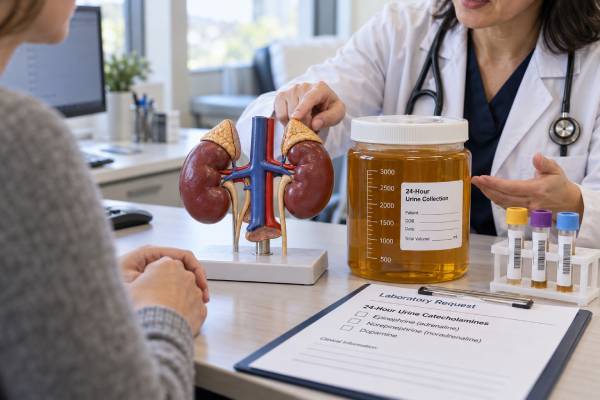
A 24-hour urine catecholamines test measures the daily excretion of epinephrine, norepinephrine, dopamine, and sometimes related compounds. These chemicals act as hormones and neurotransmitters and are released by the adrenal glands and sympathetic nervous system. The test can help evaluate conditions that produce excess catecholamines, including pheochromocytoma and paraganglioma, but it is no longer the preferred first biochemical test in many modern guidelines. Plasma free metanephrines or 24-hour urine fractionated metanephrines are generally more sensitive because tumors continuously convert catecholamines into metanephrines even when catecholamine release is intermittent. A urine catecholamine result still has value in selected situations when interpreted with symptoms, medications, collection quality, and complementary testing. Stress, vigorous exercise, caffeine, nicotine, acute illness, and several medicines can raise catecholamines, so borderline abnormalities often need careful review rather than immediate imaging.
Because PPGL is uncommon, the reason for testing matters. Testing people with a strong clinical indication produces more meaningful positive results than testing broadly for nonspecific symptoms. This principle helps reduce false alarms and focuses imaging on patients whose biochemical and clinical findings point in the same direction.
- The test usually measures epinephrine, norepinephrine, and dopamine over 24 hours: Results are compared with laboratory-specific reference ranges.
- Metanephrines are usually preferred for pheochromocytoma screening: Plasma free or urine fractionated metanephrines are more sensitive for many catecholamine-producing tumors.
- Borderline elevations have many non-tumor causes: Stress, pain, exercise, nicotine, caffeine, sleep apnea, acute illness, and medications can increase catecholamine output.
- A large persistent elevation is more concerning than a slight rise: The degree of abnormality and the clinical setting guide whether repeat testing or imaging is appropriate.
- Collection errors matter: Missing urine can lower the daily total, while an overlong collection can make excretion appear higher than it truly is.
Table of Contents
- What catecholamines are and what the test measures
- Why the test is ordered
- Catecholamines versus metanephrines
- How to prepare and collect a 24-hour sample
- What high catecholamine results can mean
- False positives, medications, and test limitations
- Next steps after abnormal results
What catecholamines are and what the test measures
Catecholamines are signaling chemicals derived from the amino acid tyrosine. The main ones measured in clinical testing are epinephrine, norepinephrine, and dopamine. Epinephrine is produced mainly by the adrenal medulla, while norepinephrine is released both by the adrenal glands and sympathetic nerves. Dopamine has several roles in the brain and peripheral tissues and also serves as a precursor in catecholamine synthesis.
These chemicals help the body respond to stress. They increase heart rate, affect blood-vessel tone, redirect blood flow, and influence glucose and energy use. Because secretion can rise sharply during pain, fear, exertion, or illness, a catecholamine result is sensitive to what was happening during the collection day.
A 24-hour urine test adds together catecholamine excretion across a full day rather than measuring one moment in blood. The laboratory may report each analyte separately in micrograms per 24 hours or another unit. Reference intervals vary substantially by method, age, and laboratory, so there is no single universal “normal catecholamine” number.
The kidneys excrete both catecholamines and their metabolites. Tumors such as pheochromocytomas and paragangliomas can produce catecholamines, but much of the biochemical signal from these tumors is captured more reliably by metanephrines. That difference is clinically important because a tumor may metabolize catecholamines continuously even if it releases the parent hormones only in bursts.
A catecholamine panel is also different from a 24-hour urine 5-HIAA test, which evaluates serotonin metabolism in suspected carcinoid syndrome. Symptoms can overlap, especially flushing and palpitations, but the biochemical pathways and diseases are different.
Why the test is ordered
The classic reason to measure urine catecholamines is concern for pheochromocytoma or paraganglioma, often abbreviated PPGL. Pheochromocytomas arise from adrenal chromaffin cells, while paragangliomas arise from related tissue outside the adrenal glands. Some produce catecholamines and cause episodic or sustained symptoms.
Possible clues include spells of pounding headache, palpitations, sweating, tremor, pallor, anxiety-like sensations, and high blood pressure. Blood pressure may be persistently high, fluctuate widely, or rise only during attacks. However, these symptoms are common in many other conditions, so biochemical testing should be targeted rather than used as broad screening.
Testing may also be appropriate when an adrenal mass has imaging features that raise concern for pheochromocytoma, when a person has a hereditary syndrome associated with PPGL, or when a close relative has an inherited susceptibility. Certain syndromes and genes are strongly linked to these tumors, and genetic counseling may become part of the workup after biochemical or imaging evidence is found.
A 24-hour urine catecholamine test may be ordered with or after metanephrines, particularly if the clinician wants additional biochemical characterization. Dopamine or its metabolites can be relevant in certain tumor subtypes, but the exact panel depends on the suspected disease and available laboratory methods.
Urine catecholamines are not a stand-alone tumor diagnosis. A positive biochemical result must be interpreted before imaging is pursued because false positives are common when the pretest probability is low. Conversely, a normal catecholamine result does not reliably exclude every PPGL, especially a small or intermittently secreting tumor.
Prior imaging findings also matter. An adrenal mass with features suspicious for pheochromocytoma creates a different testing context from an incidental tiny benign-appearing adenoma. Clinicians combine imaging phenotype with biochemical data rather than allowing either one to stand alone.
Catecholamines versus metanephrines
For most patients being evaluated for pheochromocytoma or paraganglioma, modern practice favors plasma free metanephrines or 24-hour urine fractionated metanephrines as first-line biochemical tests. The reason is physiology.
Tumor cells continuously convert catecholamines to metanephrine, normetanephrine, and related metabolites inside the tumor. As a result, metanephrine production can remain elevated even between symptomatic episodes. Parent catecholamines may spike only intermittently, which creates a greater chance of missing disease if sampling occurs during a quiet period.
A 24-hour urine metanephrines test therefore generally provides better sensitivity for PPGL screening. Plasma free metanephrines can also be highly sensitive when collected under controlled conditions, often after the patient has rested supine.
That does not make urine catecholamines useless. A clearly elevated catecholamine pattern can support the diagnosis, help characterize tumor secretion, or provide additional information when metanephrine results are discordant. Some regional guidelines and laboratories still incorporate urine catecholamines into their diagnostic algorithms.
The tests also have different vulnerabilities. Plasma metanephrines can be affected by posture, stress, and sampling conditions. Urine metanephrines and catecholamines depend on a complete 24-hour collection. Both are affected by some medications and physiologic stressors. The best test is therefore not simply the one with the longest panel; it is the method that fits the clinical question and can be collected correctly.
Age and clinical setting can also change the expected pattern. An older adult with resistant hypertension and an adrenal mass is evaluated differently from a young person tested during an emergency visit for palpitations. Acute-care sampling is especially vulnerable to stress-related elevations. When the situation is stable, repeating the preferred biochemical test under controlled outpatient conditions can prevent an incidental stress response from being mistaken for a tumor signal.
How to prepare and collect a 24-hour sample
Preparation should follow the laboratory’s specific instructions because analytic methods and interference lists differ. In general, clinicians try to reduce avoidable sympathetic stimulation during the collection period.
Patients may be asked to limit caffeine, nicotine, alcohol, vigorous exercise, and certain foods before and during collection. Some laboratories have specific dietary restrictions. Acute pain, fever, severe anxiety, withdrawal states, and sleep deprivation can also increase catecholamine secretion, so testing during an unstable illness may be harder to interpret.
Medicines deserve particular attention. Antidepressants, stimulants, decongestants, sympathomimetics, levodopa, some blood-pressure drugs, and withdrawal from certain medications can affect catecholamine or metanephrine results. Do not stop prescription medication simply to prepare for testing. The clinician should weigh the risk of stopping a drug against the value of a cleaner biochemical result.
A typical 24-hour collection is performed this way:
- At the chosen start time, urinate into the toilet and record the time.
- Collect all urine after that for the next 24 hours, including overnight voids.
- Keep the collection container refrigerated or stored as directed.
- At exactly the same time the next day, collect one final void and add it to the container.
- Return the specimen promptly with the requested medication and collection information.
Some catecholamine containers contain acid preservative. If so, the laboratory’s safety directions are essential because the preservative can irritate or burn skin. Urine may need to be collected first into a clean transfer cup rather than directly into a container containing acid.
Missing urine lowers the measured total. Extending the collection beyond 24 hours raises it. If a void is lost, the laboratory may recommend restarting. The same accuracy principles apply to other timed urine collections.
What high catecholamine results can mean
A high catecholamine result means more of one or more catecholamines were excreted than expected. The clinical meaning depends on the degree, pattern, and circumstances of the elevation.
Pheochromocytoma and paraganglioma are important causes because missing these tumors can have serious consequences. A tumor may predominantly produce norepinephrine, epinephrine, dopamine, or a mixture. The secretion pattern can provide clues about tumor biology and location, but it does not replace imaging or pathology.
A result several times above the laboratory upper limit is generally more concerning than a borderline rise, especially if the pattern is reproduced and the person has compatible symptoms or a high-risk genetic background. There is no universal rule that a specific multiple proves a tumor because assays and clinical contexts differ.
Physiologic sympathetic activation is a common non-tumor cause. Severe pain, intense exercise, panic, hypoglycemia, acute illness, heart failure, and major sleep disruption can increase norepinephrine or epinephrine output. Untreated obstructive sleep apnea may also contribute to elevated sympathetic activity.
Nicotine and stimulants can increase catecholamine release. Caffeine may have a smaller but still relevant effect in some people. Recreational stimulants such as amphetamines or cocaine can cause large increases and can also produce symptoms that resemble a catecholamine-secreting tumor.
Dopamine deserves separate caution. A high urine dopamine result does not automatically mean a dopamine-secreting tumor. Dietary precursors, medications such as levodopa, renal handling, and other physiologic factors can affect dopamine excretion. A specialist may use more specific metabolites, such as 3-methoxytyramine, when a dopamine-producing PPGL is a serious concern.
False positives, medications, and test limitations
False-positive results are one of the main challenges in catecholamine testing. Borderline elevations should be reviewed for collection conditions before they trigger expensive imaging or invasive procedures.
Medication effects can occur through several pathways. Some drugs increase sympathetic tone, inhibit norepinephrine reuptake, act like catecholamines, or interfere with the assay itself. Tricyclic antidepressants and serotonin-norepinephrine reuptake inhibitors can be particularly relevant to norepinephrine-related measurements. Decongestants and stimulant medications may also matter.
Withdrawal can be just as important as the medication. Abrupt withdrawal from clonidine, alcohol, benzodiazepines, or other substances can increase sympathetic activity. This is another reason patients should not stop medicines without a supervised plan.
Collection completeness is another limitation. Urine creatinine is sometimes measured in the same 24-hour container as a plausibility check. A 24-hour urine creatinine result that is very low may suggest undercollection, but muscle mass, age, diet, and body size also affect creatinine excretion.
Kidney function can influence urinary excretion and the choice of test. Severe kidney impairment may make urinary measurements less reliable or less practical, and clinicians may prefer carefully collected plasma testing in some cases.
Finally, a normal catecholamine panel cannot exclude all PPGLs. Small tumors may produce low amounts, and some tumors primarily generate metabolites rather than large measurable catecholamine spikes. Metanephrine testing is preferred precisely because it reduces this limitation.
The symptom pattern also affects how much weight to give a borderline result. A single episode of palpitations after caffeine is very different from repeated spontaneous spells of pounding headache, drenching sweating, pallor, and marked blood-pressure surges. Even classic symptoms are not diagnostic, but a coherent pattern raises the pretest probability and changes how aggressively an equivocal laboratory result is investigated.
Reference intervals should always come from the laboratory report. Age, assay technology, collection preservative, and reporting units can differ. Comparing a value from one laboratory with the printed range from another can create a false impression that the result has changed. When serial testing is needed, using the same laboratory and similar preparation conditions improves comparability.
Urinary catecholamine testing also appears in pediatric oncology, but the purpose and preferred markers may differ. Neuroblastoma and related tumors often produce catecholamine metabolites such as vanillylmandelic acid and homovanillic acid. An adult-style pheochromocytoma workup should not be substituted for the pediatric tumor protocol, and a high dopamine value by itself should not be treated as a neuroblastoma diagnosis.
Another limitation is that a 24-hour total hides timing. A person could have several large bursts of secretion followed by long quiet periods and still produce a daily number that looks only moderately high. Conversely, continuous physiologic stress can keep norepinephrine mildly elevated throughout the day. Metanephrine measurements, clinical history, and repeat testing help separate these patterns better than one catecholamine total alone.
Next steps after abnormal results
The next step after an abnormal result depends on the size of the elevation and the person’s risk. A mild rise in someone who exercised intensely, used nicotine, or took an interfering medication may lead to repeat testing under better-controlled conditions rather than immediate imaging.
When biochemical evidence is convincing, clinicians usually proceed to imaging to locate a tumor. CT or MRI of the abdomen and pelvis may be used first because many pheochromocytomas arise in the adrenal glands. Functional imaging can be added when disease is metastatic, extra-adrenal, recurrent, genetically high risk, or not clearly localized.
Genetic evaluation has become an important part of PPGL care because a substantial fraction of these tumors are associated with inherited susceptibility genes. Testing decisions depend on tumor type, age, family history, biochemical phenotype, and current guideline recommendations.
If a catecholamine-secreting tumor is confirmed, treatment planning requires specialist care. Surgery is often central for localized disease, but preoperative management is critical because manipulating the tumor can provoke massive catecholamine release. Alpha-adrenergic blockade, fluid and salt management, and other measures may be used before surgery under expert supervision.
Urgent medical care is appropriate for severe chest pain, neurologic symptoms, fainting, extreme blood-pressure elevation with symptoms, or a sustained rapid heart rate with severe illness. These findings have many possible causes, but a catecholamine crisis can be life-threatening.
For most people with a borderline outpatient result, the practical message is simpler: verify the collection, review medicines and stimulants, consider whether acute stress affected the test, and use the preferred metanephrine-based testing strategy when PPGL remains a concern. A 24-hour urine catecholamine panel is most useful as one part of a structured endocrine evaluation rather than as an isolated tumor screen.
References
- A Laboratory Medicine Perspective on the Investigation of Phaeochromocytoma and Paraganglioma 2023 (Review)
- Catecholamines and Metanephrines: Quantification in the Diagnosis of Pheochromocytoma and Paraganglioma, Considerations and Critical Issues 2026 (Review)
- Japan Endocrine Society Clinical Practice Guideline for the Diagnosis and Management of Pheochromocytoma and Paraganglioma 2025 2025 (Guideline)
- Pheochromocytoma: a changing perspective and current concepts 2023 (Review)
- The Pheochromocytoma/Paraganglioma syndrome: an overview on mechanisms, diagnosis and management 2023 (Review)
- New biology of pheochromocytoma and paraganglioma 2022 (Review)
Disclaimer
This article is for general education and does not diagnose pheochromocytoma, paraganglioma, or another adrenal disorder. Catecholamine results should be interpreted with laboratory-specific ranges, metanephrine testing, medicines, kidney function, symptoms, and collection quality. Do not stop prescription medicines for testing unless the treating clinician specifically instructs you to do so.