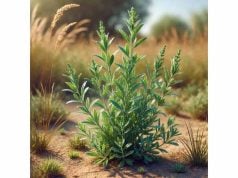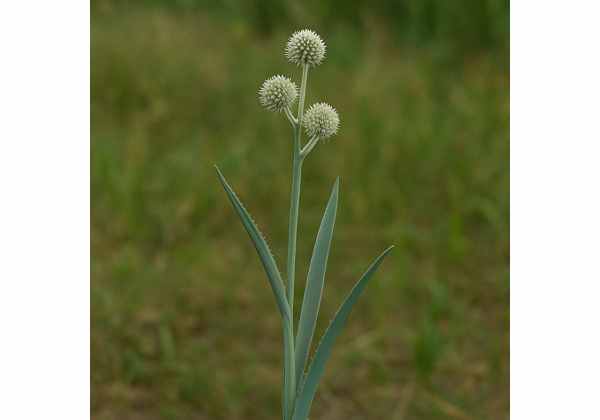
Rattlesnake master is a striking prairie herb native to North America, recognizable by its sword-like leaves and globe-shaped flower heads. Behind that bold appearance sits a long record of traditional use and a smaller but growing body of modern phytochemical research. Historically, the root was used in folk and ethnobotanical medicine for snakebite, coughs, urinary complaints, toothache, skin sores, and other difficult symptoms. Modern science has not confirmed most of those uses in people, yet it has uncovered compounds that help explain why the plant attracted medical interest in the first place.
Today, rattlesnake master is best understood as a historically important and chemically interesting herb rather than a proven modern remedy. Its root appears to contain unusual triterpenoid saponins, phenolic compounds, and other tissue-active constituents, while laboratory studies suggest protease-inhibiting, antioxidant, and antimicrobial potential. That makes it worth understanding carefully. The real value lies in separating tradition from evidence, appreciating what the herb may offer, and using strong caution where dosage, safety, and clinical effectiveness remain uncertain.
Quick Overview
- Rattlesnake master has a long traditional history for coughs, urinary complaints, and external skin use, but modern clinical evidence is limited.
- Laboratory research suggests venom-protease inhibition and a saponin-rich phytochemical profile with possible antioxidant and antimicrobial activity.
- A historical decoction dose was about 60 mL up to 4 times daily, but this is not a modern evidence-based recommendation.
- Pregnant or breastfeeding people, children, and anyone considering it for snakebite, infection, or severe symptoms should avoid unsupervised use.
Table of Contents
- What rattlesnake master is and why it matters
- Key compounds and medicinal properties of rattlesnake master
- Potential health benefits and what the evidence really shows
- Traditional uses and practical modern applications
- How to prepare and use rattlesnake master
- Dosage timing and common mistakes
- Safety side effects and who should avoid it
What rattlesnake master is and why it matters
Rattlesnake master, Eryngium yuccifolium, is a perennial herb in the parsley family, Apiaceae. It grows naturally in prairies, open woodlands, and dry to mesic grasslands across parts of eastern and central North America. At first glance it barely looks like a parsley relative. The plant has long, stiff, yucca-like leaves with fibrous edges and rounded flower heads that appear more architectural than delicate. That unusual form is one reason it has remained memorable in both ecological and medicinal traditions.
The medicinal part most often discussed is the root or rhizomatous rootstock. Historical herbal texts describe it as aromatic, slightly bitter, and stimulating. Ethnobotanical records document the plant’s use among several Indigenous communities for purposes including snakebite, coughs, urinary trouble, toothache, sores, and pain. Later American herbal practice also treated it as an expectorant, diuretic, and, in larger amounts, an emetic. Those records help explain the herb’s reputation, but they do not make every claim equally reliable.
One important challenge with rattlesnake master is historical confusion. Older herbal literature sometimes blurred distinctions among North American Eryngium species, especially Eryngium yuccifolium and Eryngium aquaticum. That means some older formulas and dose descriptions should be read cautiously. They are useful as historical context, but not as proof of modern therapeutic value.
Why does the plant still matter today? For three reasons.
- It has one of the clearest examples of a North American herb whose name reflects a dramatic traditional use but whose modern evidence is much more restrained.
- It contains unusual compounds, especially triterpenoid saponins, that give researchers a real reason to study it further.
- It shows how herbal medicine often moves from traditional observation to laboratory testing long before it reaches clinical certainty.
That last point is especially important. Rattlesnake master is not a mainstream supplement with standardized extracts, large clinical trials, and well-defined dosing. It sits in the more uncertain category of historically used medicinal plants with promising chemistry and limited human evidence. That makes a balanced approach essential.
The plant also carries cultural and ecological weight beyond its medicinal story. It is a notable prairie species, valued in restoration work and pollinator gardens. That ecological importance should shape how it is sourced. Wild harvesting from vulnerable habitats is a poor choice. Whenever medicinal use is considered, cultivated or ethically sourced material is the more responsible option.
If your interest is primarily in a botanically rich but clinically less established herb, rattlesnake master is fascinating. If your goal is a dependable first-line remedy for everyday symptoms, a better-studied option is usually wiser.
Key compounds and medicinal properties of rattlesnake master
Rattlesnake master is chemically interesting in a way that exceeds its modern commercial profile. Research on the species has identified phenolic compounds and a notable group of rare polyhydroxylated triterpenoid saponins, often referred to as eryngiosides. These constituents help explain why the plant has drawn attention from pharmacognosy researchers even though it remains underused in modern herbal practice.
The most relevant compound groups include:
- Triterpenoid saponins
These appear to be central to the plant’s medicinal identity. Saponins are soap-like compounds that can influence membranes, secretions, and inflammatory signaling. In many herbs, they are associated with expectorant, stimulating, or immune-active effects. In rattlesnake master, they are unusually diverse and likely account for much of the species’ pharmacological interest. - Phenolic compounds
Species-specific work has identified compounds such as caffeic acid and flavonoid-related molecules. Phenolics often contribute antioxidant activity and may help explain why the plant has shown some laboratory bioactivity beyond simple stimulation. - Related genus-level constituents
Broader reviews of Eryngium species describe flavonoids, tannins, triterpenoids, aromatic aldehydes, and other secondary metabolites with antimicrobial, antioxidant, and anti-inflammatory potential. Not every genus-level compound can be assumed to define E. yuccifolium, but the pattern is still useful. - Secretory and structural features
Modern anatomical research has documented secretory canals and diagnostic plant structures in roots and aerial parts. These are important for quality control because lesser-known herbs are vulnerable to misidentification and substitution.
From these compounds, several medicinal properties are often discussed.
1. Secretory stimulation
Older herbal writers described the root as stimulating saliva, perspiration, urine flow, and expectoration. While that language is historical, it aligns reasonably well with the idea of a pungent, mildly stimulating, saponin-rich root.
2. Tissue-active and external use potential
Traditional use for ulcers, sores, and other surface complaints suggests that rattlesnake master may have been valued not only internally but also as a wash or topical aid. This is plausible given the chemistry, though not clinically established.
3. Protease-inhibiting and defensive activity
This is the most distinctive modern finding. Water extracts from several plant parts have shown the ability to inhibit venom-related protease activity in laboratory assays. That does not prove it treats snakebite in people, but it does give the traditional reputation a measurable biochemical foothold.
4. Antioxidant and antimicrobial promise
These properties remain secondary and largely preclinical, but they fit the chemical profile seen in Eryngium research.
The key insight is that rattlesnake master is not “mysterious” in the sense of having no plausible mechanism. It does have plausible chemistry. The real limitation is translation. Promising compounds do not automatically yield a safe, predictable, clinically useful herb. That gap between phytochemistry and practice is where caution belongs.
Potential health benefits and what the evidence really shows
A strong article on rattlesnake master needs to distinguish between traditional reputation, laboratory activity, and proven human benefit. Those are not the same thing. At present, rattlesnake master belongs mostly to the first two categories.
The most discussed potential benefits are the following.
Venom-related enzyme inhibition
This is the plant’s signature research topic. In vitro testing found that water extracts from roots and other plant parts inhibited proteases from several North American snake venoms. That is scientifically meaningful because venom proteases contribute to local tissue damage. Still, laboratory inhibition is not the same as effective emergency treatment. Snakebite is a medical emergency that requires urgent hospital care and antivenom when indicated. Rattlesnake master should never be used as a substitute.
Respiratory support
Historical sources describe the plant as an expectorant and sometimes a stimulating remedy for chronic cough associated with weakness. That traditional use is plausible for a saponin-rich root, but modern human trials are lacking. The best evidence here is historical, not clinical. If someone wants an herb with a clearer modern profile for mucus and irritation, mullein for respiratory comfort and throat support is generally the more practical place to start.
Urinary and diuretic effects
Older records describe use for kidney congestion, bladder trouble, and sluggish urinary flow. This fits the plant’s longstanding classification as a mild diuretic or urinary stimulant. Yet no modern human trials establish it as a reliable herb for urinary complaints, and urinary symptoms can represent infection, stones, obstruction, or kidney disease. That makes self-treatment risky.
Surface and wound-related use
Traditional washes or external applications for ulcers, sores, or painful bites may reflect a combination of pungency, saponin content, and general tissue activity. This may be one of the more sensible historical uses to revisit cautiously, especially in mild topical settings, but even here the evidence is indirect.
Pain, toothache, and inflammatory discomfort
Ethnobotanical records include toothache, myalgia, headache, and rheumatic-style complaints. Those uses show breadth, but they should not be taken as proof of modern analgesic value. At most, they suggest that the herb was considered active and somewhat stimulating.
So what does the evidence really support? A careful summary looks like this:
- Most plausible modern benefit: laboratory venom-protease inhibition, though only in vitro
- Most credible traditional benefits: expectorant, mild diuretic, and external wash uses
- Least established claims: chronic disease treatment, systemic infection care, and routine daily supplementation
That may sound conservative, but it is the honest reading. Rattlesnake master is a plant with meaningful ethnobotanical history and enough chemistry to justify continued study. It is not a clinically validated multi-purpose remedy. Its benefits are best described as possible, historically grounded, and only partly supported by modern research.
Traditional uses and practical modern applications
Rattlesnake master’s traditional uses are broad enough to be impressive, but they are also a good reminder that older medicine often grouped very different complaints under one herb. Historical and ethnobotanical sources describe use for snakebite, coughs, croup-like lung complaints, toothache, fever, urinary issues, swelling, sores, eruptions, and painful conditions. That breadth reflects a plant seen as stimulating, moving, and generally medicinal, rather than narrowly targeted.
A practical modern reading of those traditions starts with respect and restraint.
Traditional patterns of use
- Snakebite and poisons
This is the most famous use and the one that gave the plant its common name. It is historically important, but it should not shape modern self-care. Even though in vitro work gives the tradition a biochemical point of interest, no one should rely on the herb instead of emergency treatment. - Cough and chest complaints
Older sources and some Cherokee-associated records describe small doses of the root decoction for coughs, croup, or lung irritation. This fits the expectorant reputation. - Urinary and kidney complaints
Folk and eclectic literature often mention bladder congestion, nephritic trouble, or sluggish urinary function. This does not mean it is appropriate for modern urinary symptoms without evaluation. If someone is seeking a gentler herb with a clearer comfort-oriented reputation in this area, corn silk for urinary soothing and mild diuretic support is usually the more accessible comparison. - External applications
Washes for ulcers, sores, or inflamed tissue appear in traditional literature and may be among the most adaptable modern uses, provided the situation is minor and non-urgent.
What a modern application should look like
Today, the most defensible uses are limited and modest:
- Educational herbalism
Learning from the plant’s history, chemistry, and role in North American materia medica. - Short-term exploratory use under skilled guidance
Especially when a trained herbalist understands both the historical literature and the limits of the evidence. - Conservative external use
Such as a mild wash for intact or mildly irritated skin, rather than deep wounds or serious infections.
What modern use should not look like
- treating snakebite at home
- replacing antibiotics or emergency care
- using it as a casual daily tonic
- assuming every historical claim has been scientifically validated
There is also a cultural point worth keeping in view. Indigenous use should not be reduced to a marketing story. Those uses arose in specific medical traditions, landscapes, and community knowledge systems. The responsible lesson is not imitation without context. It is to understand the record honestly and avoid turning traditional use into exaggerated modern claims.
In practical terms, rattlesnake master has more value as a historically important herb with selective modern relevance than as an everyday household remedy.
How to prepare and use rattlesnake master
If rattlesnake master is used at all, the root is the part most often discussed. Historical preparations focused on decoctions, infusions, and tinctures. Because the plant is relatively strong in character and not well standardized today, simple preparations make more sense than elaborate combinations.
Decoction
A decoction is the most historically grounded form. In traditional practice, the root was macerated or simmered in hot water to produce a warming, aromatic liquid. Decoctions are especially common for tougher plant parts such as roots and rhizomes because they extract more effectively than a short infusion.
This form makes sense when someone is studying the herb historically. It is less ideal for casual self-experimentation because it can create the false impression that an old recipe is automatically safe or modern. It is not.
Infusion or warm wash
A lighter infusion may be used externally as a wash for mild, superficial skin concerns. This is one of the most reasonable modern applications because it limits systemic exposure. If the goal is to calm minor irritation or use a simple compress, another herb with a clearer topical profile is often a better first choice, such as calendula for compresses and minor skin soothing.
Tincture
Tincture appears in historical herbal literature, usually as a way to preserve the plant and combine it with other agents. The challenge today is that rattlesnake master tinctures are not common standardized products. Without reliable labeling for extraction ratio and dose, tinctures are harder to judge safely than better-known herbs.
Powder and capsules
These are the least historically grounded forms and often the least desirable. Powdered root can be difficult to evaluate for freshness, authenticity, and tolerability. Capsules also hide the herb’s pungency, which may encourage larger use than intended.
Practical rules for modern use
If someone is determined to explore the herb, these guardrails matter:
- choose correctly identified material
- favor cultivated sources over wild harvesting
- begin with the mildest practical form
- use one form at a time
- stop quickly if nausea, stomach upset, or irritation appears
The deeper question is whether the herb needs to be used at all. In many cases, the answer is no. Rattlesnake master is more valuable as a plant to understand than as a plant to consume routinely. That does not diminish it. It simply places it where it belongs: as a historically significant, biologically active herb whose preparation should remain conservative and purposeful.
Dosage timing and common mistakes
Rattlesnake master does not have a modern, clinically validated dosage range. That single fact should shape the entire way the herb is approached. There is no standard dose based on human trials, no widely accepted extract standard, and no clear long-term safety framework for routine internal use.
What exists instead is historical dosage guidance.
A well-known older preparation described the herb this way:
- about 2 ounces of root in 1 quart of hot water
- macerated for about 30 minutes
- taken in 2 fluid ounce doses
- up to 4 times daily
In modern metric terms, that roughly translates to a strong root preparation with a dose of about 60 mL, four times daily. This is useful as historical information, but it should not be treated as a modern recommendation. Older herbal texts often relied on empirical observation, variable plant identity, and therapeutic philosophies quite different from current evidence-based practice.
How to think about timing
If used under professional guidance, historical logic suggests the herb was often taken:
- in divided doses rather than all at once
- warm rather than cold
- for short-term use rather than indefinite maintenance
- in relation to active symptoms, not as a daily wellness tonic
Common mistakes people make
- Confusing historical dose with proven dose
A recorded dose is not the same as a validated one. Many old formulas were never tested for modern safety, consistency, or drug interaction risk. - Using the plant for the wrong problem
People are often drawn to the name and assume it is appropriate for bites, infection, or urgent inflammatory conditions. That is exactly where caution is most needed. - Ignoring species confusion in older texts
Some older literature blends information from related Eryngium species. That makes strict dose transfer unreliable. - Choosing it over better-studied herbs
For ordinary digestive discomfort, respiratory irritation, or common aches, there are usually better-known options. For example, peppermint for post-meal digestive support and upper airway comfort has a much clearer place in modern herbal self-care. - Using it too long
Any internal use should be brief unless supervised by a qualified clinician or experienced herbal professional.
A sensible modern dosing message is this: rattlesnake master is not a “start low and use forever” herb. It is a historically documented medicine with uncertain contemporary dosing. If the herb enters a modern plan at all, it should do so with modest expectations, short duration, and careful monitoring.
Safety side effects and who should avoid it
Safety is the section where rattlesnake master most clearly moves from interesting to caution-worthy. The herb does not have a well-defined modern safety profile, and that uncertainty matters more than enthusiasts sometimes admit. A plant can be historically used and chemically active without being appropriate for unsupervised internal use.
Likely side effects
Based on historical descriptions and the general behavior of pungent, stimulating, saponin-containing herbs, the most plausible side effects include:
- nausea
- stomach irritation
- vomiting at higher doses
- loose stools or cathartic effects
- headache or general discomfort from overly strong preparations
- skin irritation if used externally on sensitive tissue
Large doses were historically described as emetic. That is not a side note. It means the threshold between “active” and “too much” may be narrow in some people.
Who should avoid it
Internal use is best avoided in:
- pregnant people
- breastfeeding people
- children
- older adults with frailty or multiple medications
- people with kidney disease, liver disease, or chronic gastrointestinal problems
- people with unexplained urinary symptoms
- anyone with a serious infection, fever, or wound needing medical care
There is also an interaction problem: the herb has not been studied enough to define a safe interaction profile. Unknown interactions are not the same as absent interactions.
When it is clearly the wrong herb
Rattlesnake master should not be used as a home treatment for:
- snakebite
- severe cough with breathing difficulty
- bloody urine
- spreading skin infection
- significant swelling
- persistent fever
- strong pain that may indicate a medical emergency
Those are situations for immediate medical assessment.
A realistic safety mindset
The best way to think about rattlesnake master is as a historically important but clinically under-defined herb. That makes safety decisions simpler. When a safer, better-studied option exists, that option usually deserves priority. If the goal is pain relief, for instance, willow bark with its more familiar analgesic profile is generally easier to place in modern practice than rattlesnake master.
Topical use is sometimes more reasonable than internal use, but even that should stay conservative:
- use only on small areas
- avoid broken, deep, or infected wounds
- stop if stinging or redness worsens
- do not use as a substitute for proper wound care
In the end, the safest conclusion is not that rattlesnake master is dangerous in all contexts. It is that the herb remains too uncertain for casual use. Respecting that uncertainty is part of using herbal knowledge well.
References
- Little-known Saniculeae genera: phytochemical studies and pharmaceutical activities | Phytochemistry Reviews | Springer Nature Link 2025 (Review)
- Ethnobotany, Biological Activities and Phytochemical Compounds of Some Species of the Genus Eryngium (Apiaceae), from the Central-Western Region of Mexico – PMC 2023 (Review)
- Morpho-anatomical characterization of Eryngium yuccifolium (‘Rattlesnake-master’) – PubMed 2022
- An in vitro evaluation of the Native American ethnomedicinal plant Eryngium yuccifolium as a treatment for snakebite envenomation – PMC 2016
- Phenolic compounds and rare polyhydroxylated triterpenoid saponins from Eryngium yuccifolium – PubMed 2008
Disclaimer
This article is for educational purposes only and does not provide medical advice, diagnosis, or treatment. Rattlesnake master has a documented traditional history and some promising laboratory findings, but it does not have well-established clinical indications, standardized therapeutic dosing, or a fully defined safety profile for routine self-treatment. Do not use it in place of emergency care, especially for snakebite, infection, breathing difficulty, severe pain, or significant urinary symptoms. Consult a qualified healthcare professional before using any rattlesnake master preparation, particularly if you are pregnant, breastfeeding, take prescription medicines, or have a chronic medical condition.
If you found this article helpful, please share it on Facebook, X, or your preferred platform to help others find careful, evidence-aware herbal information.