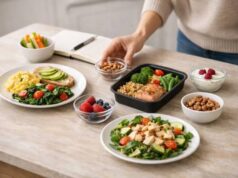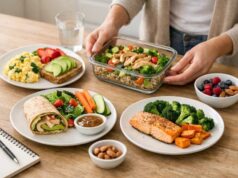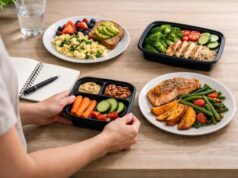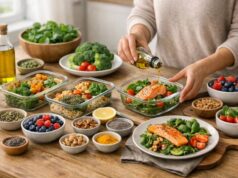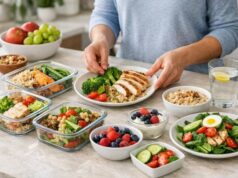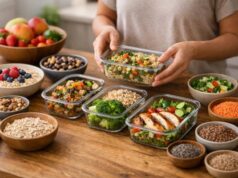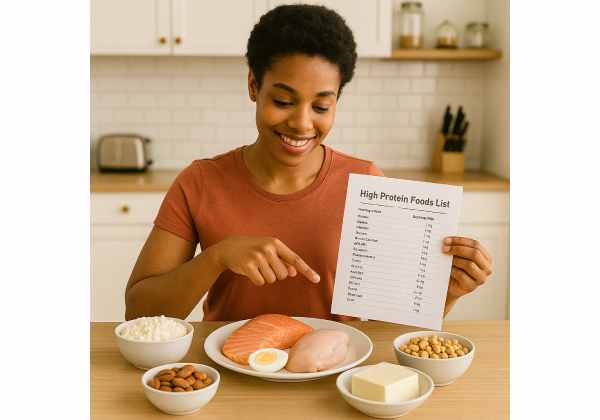
High-protein foods can make weight loss easier, but not just because protein sounds healthy. The real value is that protein helps meals feel more filling, supports muscle retention during a calorie deficit, and makes it easier to build meals that do not leave you hungry an hour later. That is why a good high-protein foods list is more useful than generic advice to “eat more protein.” You need to know which foods give you the most protein for a practical serving, how those servings fit into a fat-loss diet, and which options are easiest to keep on hand. This guide covers the best high-protein foods for weight loss, grouped by category, with realistic serving sizes and simple ways to use them.
Table of Contents
- Why Protein Helps With Weight Loss
- How Much Protein You Actually Need
- How to Use Serving Sizes and Protein Density
- Best Lean Meat and Seafood Options
- Dairy, Eggs and Refrigerator Staples
- Plant-Based High-Protein Foods
- High-Protein Snacks and Convenience Options
- How to Build Meals From This List
- Mistakes to Avoid When Buying High-Protein Foods
Why Protein Helps With Weight Loss
Protein helps with weight loss for three main reasons. First, it tends to be more filling than carbohydrates or fat calorie for calorie, which can make it easier to stick to a calorie deficit without feeling constantly hungry. Second, it helps preserve lean mass while you lose weight, which matters if you want to lose fat instead of simply seeing the scale drop at any cost. Third, meals built around protein are often easier to portion and structure than meals built mainly around refined carbs or snack foods.
That does not mean protein is magic. You can still overeat high-protein foods, especially when they come packed with added fats, sauces, sugar, or restaurant-sized portions. But when protein is used well, it usually improves the quality of your diet in a practical way. It pushes meals toward foods like yogurt, eggs, chicken, fish, tofu, cottage cheese, beans, and lean meat instead of foods that are easy to overeat and not very filling.
A strong protein intake can help with:
- Better appetite control
- Less mindless snacking between meals
- More stable energy across the day
- Better recovery if you exercise
- More muscle retention during fat loss
That last point is especially important. When calories are lower, your body has fewer resources available for recovery and maintenance. Protein gives your diet more support. This is one reason a high-protein approach overlaps so well with the kinds of foods that work best in a calorie deficit.
It also helps to understand that weight-loss success usually comes from food patterns, not one nutrient in isolation. Protein works best when it is part of meals that are also built around produce, fiber, and reasonable portions. A grilled chicken bowl with vegetables and rice usually supports weight loss better than a “high-protein” cookie or candy bar. The protein number alone does not tell the whole story.
This is why a useful high-protein foods list should do more than rank foods by grams. It should help you answer better questions: Which foods are filling? Which are easiest to keep around? Which are leaner? Which work well for breakfast, lunch, dinner, and snacks? And which give you enough protein without making calories climb too fast?
That is the real purpose of the list below. It is not to crown one perfect protein source. It is to help you build a repeatable, satisfying diet around foods that actually support fat loss.
How Much Protein You Actually Need
For most adults trying to lose weight, a practical daily protein target is roughly 0.7 to 1.0 grams per pound of goal body weight, or about 1.6 to 2.2 grams per kilogram of goal body weight. That range is useful because it is high enough to support fullness and lean mass without forcing extreme eating habits on most people.
Here is a simple example:
- Goal weight 140 pounds: about 100 to 140 grams per day
- Goal weight 170 pounds: about 120 to 170 grams per day
- Goal weight 200 pounds: about 140 to 200 grams per day
You do not need to land on the exact same number every day. But if you are routinely far below that kind of range, your diet may be harder than it needs to be. Many people trying to lose weight do not realize that their meals are built around carbs and fats while protein shows up almost as an afterthought.
It also helps to think in meals, not just daily totals. A day goes much better when protein is spread across breakfast, lunch, dinner, and possibly a snack instead of dumped almost entirely into one late meal. A lot of people do well when they aim for about 25 to 40 grams of protein per meal, depending on body size and total intake. If you want a deeper breakdown, it helps to understand broader daily protein targets and how much protein per meal makes sense.
The good news is that you do not need special foods to get there. You mostly need to recognize what a useful serving looks like. For example:
- 5 ounces cooked chicken breast gives roughly 40 to 45 grams
- 1 cup cottage cheese gives roughly 25 to 28 grams
- 1 cup Greek yogurt usually gives around 17 to 25 grams, depending on the brand
- 1 scoop protein powder often gives about 20 to 25 grams
- 2 whole eggs only give about 12 grams, which is a reminder that eggs alone are not always a full protein serving
That last example surprises people. Eggs are excellent foods, but many breakfasts built around “just eggs” are lower in protein than expected unless you use more eggs, add egg whites, or pair them with another protein source.
The most useful mindset is this: a high-protein food is only truly helpful if the portion gives you enough protein to matter inside your day. That is why serving sizes matter just as much as the food name itself. The list below is built around realistic portions, not abstract numbers per 100 grams that few people actually eat.
How to Use Serving Sizes and Protein Density
When people search for a high-protein foods list, they often end up with long charts that are technically accurate but not especially useful. A food can look impressive on a “protein per 100 grams” chart and still not be a very practical weight-loss staple. What matters more is the protein you get from a normal serving and how many calories come with it.
That is where protein density matters. Protein density means how much protein a food gives you relative to its calories. Foods that are more protein-dense tend to help weight loss more because they give you a stronger protein boost without using too much of your calorie budget.
Here is the practical difference:
- Chicken breast is highly protein-dense
- Salmon is still high in protein, but also carries more fat and calories
- Greek yogurt is often very protein-dense
- Nuts contain some protein, but they are mainly a fat source
- Beans are nutritious and helpful, but they are not as protein-dense as lean meat or dairy
This does not mean you should only eat the leanest food on the list. It means you should understand what role each food plays. Some foods are “protein anchors,” meaning they can carry a full meal. Others are “protein helpers,” meaning they add some protein but work best alongside another protein source.
A simple way to read the list is to sort foods into three groups:
- Strong protein anchors: chicken, turkey, tuna, Greek yogurt, cottage cheese, tofu, shrimp, lean beef, protein powder
- Moderate protein foods: eggs, edamame, tempeh, milk, higher-protein bread, legumes
- Helpful but not primary protein foods: nuts, seeds, oats, quinoa, nut butter
That distinction keeps you from building a meal around foods that sound protein-rich but do not add up very fast. A bowl of oats with peanut butter has some protein, but it is usually not the same as a breakfast anchored by yogurt or eggs.
This is also why many people do best when they combine protein density with fullness. Foods like yogurt, cottage cheese, eggs with vegetables, lean meat, tofu, beans, and fish often help more than protein bars and snack foods because they are easier to turn into real meals. They overlap well with the kinds of foods you would already use in a high-protein plate formula or a list of high-protein, low-calorie meals.
The tables below use approximate serving sizes because brands, cooking methods, and food cuts can vary. The goal is not perfect math. It is helping you quickly see which foods are worth centering your meals around most often.
Best Lean Meat and Seafood Options
Lean meats and seafood are some of the easiest high-protein foods for weight loss because they give you a lot of protein in a relatively moderate number of calories. They are also easy to plug into lunches and dinners without much guesswork.
Chicken breast is the classic example for a reason. It is widely available, versatile, and very protein-dense. Turkey breast works similarly. Lean beef can also fit very well, especially if you choose leaner cuts or use smaller portions in bowls, stir-fries, and salads. Seafood is especially useful because many fish and shellfish are high in protein while also adding nutrients people often underconsume.
| Food | Typical serving | Approximate protein | Why it works well |
|---|---|---|---|
| Chicken breast, cooked | 5 oz | 40 to 45 g | Very high protein for moderate calories |
| Turkey breast, cooked | 5 oz | 40 to 45 g | Lean, easy for sandwiches and meal prep |
| Lean ground turkey | 4 oz cooked | 22 to 28 g | Useful for bowls, chili and patties |
| Lean beef | 4 oz cooked | 24 to 28 g | Satisfying and iron-rich |
| Tuna | 1 can, drained | 25 to 30 g | Fast, shelf-stable, very protein-dense |
| Salmon | 5 oz cooked | 30 to 34 g | High protein plus healthy fats |
| Shrimp | 5 oz cooked | 30 to 32 g | Very lean and quick to cook |
| Cod or tilapia | 5 oz cooked | 28 to 32 g | Lean white fish with mild flavor |
A few practical notes make these foods easier to use. First, “lean” does not mean flavorless. Marinades, seasonings, salsa, mustard, yogurt sauces, herbs, and spice blends can make protein-heavy meals much easier to repeat. Second, fattier proteins like salmon are still excellent for weight loss. They just use more calories than very lean proteins, so the portion may need a bit more awareness.
If you want the easiest weight-loss structure, keep one or two ultra-lean proteins on hand for easy meals and one or two richer protein options for variety. That balance is often more sustainable than trying to live on chicken breast alone.
Dairy, Eggs and Refrigerator Staples
Refrigerator protein staples are some of the most underrated foods for weight loss because they make protein easier at breakfast, lunch, and snack time. They usually require little or no cooking, and that convenience matters more than people admit.
Greek yogurt and cottage cheese are two of the strongest options on the list. They are easy to portion, high in protein, and flexible enough to work in sweet or savory meals. They also help people who struggle to hit protein earlier in the day. Eggs are another obvious staple, though their protein content is often overestimated. Eggs are nutritious and filling, but a typical serving of two eggs is usually a moderate-protein start rather than a full protein-heavy meal unless you add egg whites or another protein source.
| Food | Typical serving | Approximate protein | Best use |
|---|---|---|---|
| Greek yogurt, plain | 1 cup | 20 to 25 g | Breakfasts, bowls, parfaits, snacks |
| Skyr | 1 container or 1 cup | 15 to 20 g | Portable snack or breakfast |
| Cottage cheese | 1 cup | 25 to 28 g | Snacks, toast, bowls, smoothies |
| Eggs | 2 large eggs | 12 to 13 g | Breakfasts and meal-building |
| Egg whites | 1 cup | 24 to 26 g | Boosting protein without many calories |
| Part-skim mozzarella | 1 oz | 6 to 8 g | Meal add-on, not full protein anchor |
| Milk or ultra-filtered milk | 1 cup | 8 to 13 g | Smoothies, cereal, coffee, oats |
| Plain kefir | 1 cup | 9 to 11 g | Drinkable breakfast or snack base |
The best use of these foods is often in combinations. Greek yogurt with fruit and oats, eggs plus egg whites with vegetables, or cottage cheese with toast and tomatoes usually works better than eating one item by itself. This is one reason high-protein breakfasts are often easier to build than people think. Many ideas in high-protein breakfast routines rely on exactly these staples.
Dairy proteins are also useful because they pair well with fruit, oats, cereal, and potatoes, which makes them easy to turn into balanced meals rather than just protein add-ons. If you tolerate dairy well, these foods are some of the simplest ways to push daily protein higher without needing more cooking time.
Plant-Based High-Protein Foods
Plant-based high-protein foods can fit very well into a weight-loss diet, but it helps to understand that they are a mixed group. Some are true protein anchors, while others are more balanced foods that contribute protein along with carbs or fats.
Tofu, tempeh, edamame, and seitan are some of the strongest plant options because they provide substantial protein in practical portions. Beans and lentils are excellent too, especially for fullness, but they are usually not as protein-dense as tofu or lean animal foods. That does not make them worse. It just means they play a slightly different role.
| Food | Typical serving | Approximate protein | How to think about it |
|---|---|---|---|
| Extra-firm tofu | 5 oz | 16 to 20 g | Strong plant protein anchor |
| Tempeh | 4 oz | 18 to 22 g | Dense, chewy and very filling |
| Edamame | 1 cup shelled | 17 to 18 g | Great snack or meal add-on |
| Seitan | 3 oz | 18 to 21 g | Very protein-dense if you tolerate gluten |
| Lentils, cooked | 1 cup | 17 to 18 g | High fiber and very filling |
| Black beans, cooked | 1 cup | 14 to 15 g | Helpful mix of protein and fiber |
| Chickpeas, cooked | 1 cup | 14 to 15 g | Works in bowls, salads and snacks |
| Soy milk | 1 cup | 7 to 8 g | Useful in smoothies and oats |
A common mistake is assuming that all plant proteins are automatically low-protein just because they are not meat. That is not true. Another mistake is assuming that nuts and nut butters are major protein foods. They do contain some protein, but they are mainly fat sources. They can absolutely fit into weight loss, but they are not the most efficient way to raise protein.
Plant-based eaters often do best when they use meals that combine a strong protein anchor with other supportive foods. Tofu stir-fries, tempeh bowls, lentil soups, edamame salads, and soy-based smoothies all work well. If you want more structure, a vegan high-protein plan or a vegetarian high-protein plan can make the day easier to organize.
For weight loss, plant proteins are often especially useful because many of them also bring fiber. That combination can make meals very satisfying, even if the protein density is sometimes lower than lean meat or dairy.
High-Protein Snacks and Convenience Options
Convenience matters. A high-protein foods list is much more useful when it includes options for days when cooking is not happening. This is where snacks, portable foods, and protein powders earn their place.
The best convenience proteins are the ones that help you stay on plan when time is short, not the ones that simply market themselves as “fitness food.” A good high-protein snack should either hold you over between meals or make it easier to hit your protein target without opening the door to mindless extra calories.
Useful convenience options include:
- Protein shakes
- Ready-to-drink protein drinks
- Greek yogurt cups
- Cottage cheese cups
- Tuna packets
- Jerky in measured portions
- Edamame
- Roasted chickpeas
- Deli turkey or chicken
- String cheese paired with fruit
| Food | Typical serving | Approximate protein | Best use |
|---|---|---|---|
| Protein powder | 1 scoop | 20 to 25 g | Smoothies, oats, quick recovery meals |
| Ready-to-drink shake | 1 bottle | 20 to 30 g | Travel, work, emergency backup |
| Jerky | 1 oz | 9 to 12 g | Portable snack, but watch sodium and portions |
| Tuna packet | 1 packet | 15 to 18 g | Fast lunch or snack add-on |
| Deli turkey | 3 oz | 15 to 18 g | Wraps, roll-ups, lunch boxes |
| Roasted edamame | 1 serving | 12 to 14 g | Crunchy plant-based snack |
| Protein bar | 1 bar | 15 to 20 g | Backup option, not always most filling |
Protein powder deserves a quick reality check. It is useful, but it is not mandatory. Whole food should still do most of the work if possible. Powders help most when they solve a real problem: mornings when you cannot cook, a post-workout gap before lunch, or days when your usual intake is running low. The same goes for protein bars. They can help, but they are not always the most filling choice for the calories.
If snacks are a weak spot in your routine, it helps to build around better high-protein snack options rather than hoping willpower will solve the problem. Convenience becomes an advantage when it is planned, not when it turns into grazing on random packaged foods.
How to Build Meals From This List
A food list is only helpful if you can turn it into real meals. The easiest way to do that is to start every meal by choosing one protein anchor, then adding foods that improve fullness and fit your calorie target.
A simple formula works well:
- Pick one strong protein food.
- Add vegetables or fruit for volume.
- Add carbs based on your needs and activity.
- Add fats in measured amounts.
That can look like chicken, potatoes, and vegetables. Or Greek yogurt with berries and oats. Or tofu, rice, and stir-fried vegetables. The exact meal matters less than the structure.
A few example combinations:
- Greek yogurt, berries, and oats
- Eggs plus egg whites, vegetables, and toast
- Cottage cheese, fruit, and high-fiber cereal
- Chicken bowl with rice and vegetables
- Tuna wrap with salad and fruit
- Tofu stir-fry with edamame and rice
- Lentil soup with a yogurt side
- Salmon, potatoes, and green beans
This is where the food list becomes more than a chart. You are not just chasing grams of protein. You are using protein to make the whole meal work better. The easiest way to simplify that process is to keep a few foods from a high-protein grocery list on hand and use them in repeat combinations.
You can also think in terms of daily distribution. A strong day might look like:
- Breakfast: 25 to 30 grams
- Lunch: 30 to 40 grams
- Dinner: 30 to 40 grams
- Snack: 15 to 25 grams if needed
That pattern makes it much easier to hit a useful protein total without turning dinner into a protein marathon. It also reduces the common mistake of eating very little protein earlier in the day and then wondering why hunger feels so hard to manage.
One more point matters: a high-protein meal still needs to fit your calories. That is why foods like nuts, cheese, fatty cuts of meat, or large “healthy” smoothie bowls sometimes cause confusion. They may contain protein, but they also use calories quickly. The best weight-loss meals usually balance protein with fiber and volume, not just richness.
Once you understand that, the food list becomes extremely practical. You stop asking, “What should I eat?” and start asking, “Which protein anchor fits this meal best?”
Mistakes to Avoid When Buying High-Protein Foods
Most people do not struggle because there are too few high-protein foods. They struggle because they choose foods that sound protein-rich but do not help much in practice. A few common mistakes explain most of the frustration.
1. Confusing “contains protein” with “high in protein”
Peanut butter, granola, oats, and nuts all contain some protein, but they are not always strong protein anchors. They work better as add-ons than as the main protein source of a meal.
2. Ignoring serving size
A food might look great on paper, but the serving you actually eat may be too small to matter. Two eggs, one slice of cheese, or a spoonful of seeds do not usually make a meal high in protein on their own.
3. Buying only processed “protein” products
Some protein bars, cereals, cookies, and shakes are helpful. Others are expensive dessert foods with protein sprinkled on top. Labels matter, but so does fullness.
4. Choosing fatty protein sources every time
Salmon, whole eggs, cheese, and higher-fat meats can all fit well. But if every protein choice is also heavy in fat, your calories rise quickly. A mix of leaner and richer proteins is usually easier to sustain.
5. Forgetting convenience foods need a role
Protein shakes, deli turkey, yogurt cups, and tuna packets are not inferior because they are easy. For many people, they are the exact foods that prevent skipped meals and vending-machine decisions.
6. Expecting the food list to do all the work
Protein helps, but it is still part of a bigger system. Sleep, meal structure, stress, activity, and calories still matter. A high-protein diet can stall if portions creep up or weekends erase the deficit.
7. Not checking the rest of the meal
A protein source works best when the meal around it also makes sense. Chicken with vegetables and potatoes is very different from chicken buried in creamy pasta, cheese, and garlic bread.
The simplest fix is to look at your shopping cart through three questions:
- Which foods are my main protein anchors?
- Which foods are just helpful extras?
- Which foods make hitting protein easier on busy days?
That approach tends to work better than chasing novelty or trying to find one perfect “superfood.” High-protein eating is most effective when it becomes ordinary.
References
- FoodData Central 2026 (Official Database)
- Enhanced protein intake on maintaining muscle mass, strength, and physical function in adults with overweight/obesity: A systematic review and meta-analysis 2024 (Systematic Review and Meta-Analysis)
- Effects of Varying Protein Amounts and Types on Diet-Induced Thermogenesis: A Systematic Review and Meta-Analysis 2024 (Systematic Review and Meta-Analysis)
- Impacts of protein quantity and distribution on body composition 2024 (Review)
- Are Dietary Proteins the Key to Successful Body Weight Management? A Systematic Review and Meta-Analysis of Studies Assessing Body Weight Outcomes after Interventions with Increased Dietary Protein 2021 (Systematic Review and Meta-Analysis)
Disclaimer
This article is for general educational purposes only and is not a substitute for medical advice, diagnosis, or treatment. If you have kidney disease, diabetes, a history of disordered eating, or another condition that affects your protein needs, get personalized guidance from a clinician or registered dietitian before making major diet changes.
If this article helped, please share it on Facebook, X, or your preferred platform so someone else can build a simpler and more effective high-protein eating routine.