Pilates has a reputation for improving posture, control, and core strength, but people often ask a more direct question: can it actually help with weight loss? The honest answer is yes, but not in the exaggerated way social media often suggests. Pilates can support fat loss, improve body awareness, and make exercise feel more sustainable, especially for people who want lower-impact training they can stick with. At the same time, it usually does not burn as many calories per session as faster-paced cardio or hard resistance circuits, so the best results come when Pilates is used as part of a broader weekly plan.
This guide breaks that down clearly. You will see where Pilates fits in a weight-loss program, what kinds of changes it is most likely to drive, who tends to benefit most, and how to build beginner, intermediate, and mixed-modality plans that actually progress. The goal is not to oversell Pilates. It is to show how to use it well.
Table of Contents
- Does Pilates help with weight loss?
- What Pilates burns and what it builds
- Who Pilates suits best
- Weekly Pilates programs for weight loss
- How to progress your Pilates plan
- Combine Pilates with other fat-loss tools
Does Pilates help with weight loss?
Pilates can help with weight loss, but it works best when you understand what it is doing well and what it is not doing on its own. It is not a shortcut to rapid fat loss, and it is not a magical “long, lean muscle” system that changes body composition without the usual rules of energy balance. What it can do is make movement more consistent, improve strength endurance, challenge the trunk and hips, and help some people exercise regularly without the joint stress or intimidation that comes with harder training styles.
That matters more than it sounds. Many weight-loss plans fail because the exercise choice is too punishing, too advanced, or too boring to sustain. Pilates often succeeds where those plans do not because it is easier to repeat. Regular attendance and repeatable effort are powerful advantages.
Pilates tends to support weight loss in three main ways:
- It adds structured activity to the week.
- It can improve body awareness and movement quality, which helps people stay active.
- It may support modest body-composition improvements, especially in beginners, sedentary adults, and people with overweight or obesity.
Still, the phrase “Pilates for weight loss” needs context. Fat loss depends on an energy deficit over time. That usually means exercise plus reasonable food intake, not exercise instead of food structure. If calories remain well above needs, Pilates alone is unlikely to create meaningful scale changes. A realistic plan often includes both movement and a manageable calorie deficit approach rather than relying on workouts to do all the work.
This is also why expectations matter. Some people start Pilates expecting dramatic weekly losses, then assume it “does not work” when the scale moves slowly. A better expectation is that Pilates can improve the quality of your routine, especially if you are currently inactive, dealing with aches, or trying to rebuild exercise consistency after a long break.
Pilates is also not the best stand-alone choice for every goal. If the main aim is maximum calorie expenditure in the shortest possible time, other modalities often do more. If the aim is the best overall long-term exercise mix for fat loss, a broader plan that includes Pilates alongside walking, cardio, or strength work usually performs better. That is the same conclusion many people reach when comparing training styles across a wider guide to the best exercise approaches for weight loss.
So, does Pilates help? Yes. It helps most when it is treated as a useful part of a bigger system, not as a complete replacement for every other type of exercise.
What Pilates burns and what it builds
Pilates is easy to underestimate if you judge every workout only by calorie burn. A typical mat session often burns fewer calories than steady cycling, brisk incline walking, or interval training. That is one reason Pilates sometimes gets dismissed too quickly in weight-loss conversations. But the better question is not just “How many calories did it burn?” It is also “What training effect did it create, and does that effect make the rest of the week better?”
Pilates tends to build qualities that are useful for fat loss even when they are not flashy:
- trunk strength and endurance
- better control through the hips and shoulders
- improved mobility and posture
- balance and coordination
- tolerance for regular training
- confidence in movement for people who feel stiff, deconditioned, or intimidated
Those changes matter because they can make other exercise easier to perform. Someone who moves better, feels steadier, and has fewer aches is often more likely to walk regularly, tolerate strength training, and stay physically active throughout the day.
Pilates may also contribute to body-composition improvement in a more indirect way. For some people, it becomes the first form of exercise they can do consistently for 8 to 12 weeks. That alone can change total weekly activity. It can also improve mood, reduce the “all or nothing” feeling around exercise, and make a routine feel more manageable.
Where Pilates tends to fall short is intensity. Traditional mat classes, slower technique sessions, and beginner routines often do not push heart rate high enough or challenge large muscle groups heavily enough to compete with more demanding cardio or resistance training for pure energy expenditure. Reformer classes can be harder, and fast-paced advanced sessions can create a stronger conditioning effect, but the average Pilates workout still sits in a moderate zone for most people.
That means Pilates is often better framed as a sustainable training base than as the single most powerful fat-loss tool. Think of it this way:
- Pilates improves movement quality and strength endurance.
- Better movement quality supports more total weekly activity.
- More weekly activity, combined with food structure, improves fat-loss odds.
This is also why many people see Pilates work best when paired with walking or cardio. A Pilates session plus regular daily steps often creates a much better fat-loss setup than Pilates alone. That wider activity base is one reason walking remains such a strong companion habit for weight loss.
Another useful mindset is to track more than the scale. Pilates can improve posture, waist control, movement confidence, and how clothes fit even when body weight changes slowly. For people trying to lose fat without becoming obsessed with short-term fluctuations, body recomposition and non-scale progress are often more informative than one weekly weigh-in.
Pilates does burn energy. It just tends to earn its place in a weight-loss plan by making consistency, comfort, and movement quality better.
Who Pilates suits best
Pilates is not ideal for every person in every phase of weight loss, but it is an unusually good fit for several groups. In practice, it often works best for people who need an exercise style that is structured, lower impact, and easier to recover from than repeated high-intensity workouts.
Pilates tends to suit these groups especially well:
- Beginners who feel deconditioned
If running, boot camps, or heavy lifting feel too aggressive right now, Pilates can be a useful on-ramp. It teaches body control, breathing, and trunk stability while keeping the barrier to entry relatively low. - People with joint sensitivity or low tolerance for impact
Pilates is often easier to tolerate than jumping-based cardio or repeated sprint intervals. It will not solve every pain issue, but it can give people a way to train without pounding. - People returning after a long break
Many former exercisers struggle because they try to restart where they used to be. Pilates offers a more controlled re-entry point. - People who dislike conventional gym culture
Some people are far more likely to stick with classes, guided sessions, or home mat videos than with machines and weight rooms. Adherence matters more than the “perfect” modality that never happens. - Adults who already do cardio and need balance
If your routine is mostly walking, running, cycling, or elliptical work, Pilates can fill the strength, control, and mobility gap.
Pilates may be less ideal as the main exercise mode for people whose top goal is preserving or building as much muscle as possible during a diet. In those cases, resistance training with progressive loading usually deserves a bigger role. A simple three-day strength routine often gives more direct support for muscle retention than Pilates alone.
It is also worth separating mat Pilates from reformer Pilates. Mat work is more accessible, cheaper, and easier to do at home, but it can be limited by bodyweight resistance. Reformer classes often allow more variation, more tension, and more obvious progression. That does not make reformer automatically better, but it can make sessions feel more challenging for some people.
A few signs Pilates is a strong fit for you right now:
- you want lower-impact training
- you struggle with consistency more than intensity
- you need better trunk control, balance, or posture
- you feel sore or drained by harder training styles
- you want something you can realistically do two to four times per week
A few signs Pilates should probably be only part of the plan:
- you already tolerate strength training well
- your goal is faster conditioning improvement
- you want larger changes in calorie expenditure
- you are comfortable combining modalities
In those cases, Pilates often works best as a support tool alongside cardio, steps, or lifting. It can also pair well with lower-impact cardio options if you need exercise that is easier on the joints without becoming sedentary.
The best question is not whether Pilates is universally “good” for weight loss. It is whether it solves the biggest problem standing between you and consistent movement.
Weekly Pilates programs for weight loss
A good Pilates plan for weight loss needs enough frequency to matter, enough structure to progress, and enough realism that you can actually keep doing it. Most people do well with 2 to 4 Pilates sessions per week, depending on the rest of their activity.
Here are three practical templates.
Program 1: Beginner Pilates start
Best for sedentary adults, people returning after time off, or anyone who feels overwhelmed.
- Monday: 25 to 35 minutes of beginner mat Pilates
- Tuesday: 20 to 30 minutes of walking
- Wednesday: 25 to 35 minutes of Pilates
- Thursday: rest or an easy walk
- Friday: 25 to 35 minutes of Pilates
- Saturday: longer relaxed walk
- Sunday: rest
This works well because the Pilates sessions build skill while walking adds extra weekly expenditure without much recovery cost.
Program 2: Pilates plus cardio
Best for people who enjoy Pilates but want a stronger fat-loss push.
- Monday: 35 to 45 minutes of Pilates
- Tuesday: brisk walk, cycle, or easy cardio
- Wednesday: 35 to 45 minutes of Pilates
- Thursday: cardio session
- Friday: Pilates or mobility-focused session
- Saturday: longer walk or easy zone 2 work
- Sunday: rest
This setup usually improves results because Pilates handles movement quality and muscular endurance while the cardio side raises total workload. If you want to structure those easier aerobic days more intentionally, zone 2 cardio is often a better pairing than constant hard intervals.
Program 3: Pilates plus strength
Best for people who want body-composition change, not just scale loss.
- Monday: full-body strength
- Tuesday: Pilates
- Wednesday: walk or easy cardio
- Thursday: full-body strength
- Friday: Pilates
- Saturday: steps or light activity
- Sunday: rest
This hybrid is often one of the strongest options for long-term fat loss. Strength training provides the clearer muscle-retention signal, while Pilates helps with control, recovery, and movement quality.
A typical Pilates session for fat loss should not be random. Build it around a sequence like this:
- Breathing and spinal control warm-up
- Core stability and trunk endurance work
- Hip and glute-focused exercises
- Upper-body control and posture work
- Standing or dynamic sequences
- Short cooldown
For home sessions, aim for 6 to 10 exercises done with control rather than rushing through a huge list. A 30- to 45-minute session is usually enough. Very short sessions can still help with consistency, but they work best when they are part of a larger active week.
One common mistake is doing Pilates daily at the same low difficulty and expecting results to keep climbing. Repeated easy sessions may maintain a routine, but they do not guarantee progression. You still need a plan that becomes more demanding over time.
Another mistake is assuming Pilates alone covers the weekly activity target. For many adults, it is more useful to think in terms of total weekly movement, not only class count. A broader look at how much exercise tends to support weight loss helps put Pilates in perspective.
Pilates programs work best when they are simple enough to follow and clear enough to build on.
How to progress your Pilates plan
Progression is the difference between “I do Pilates sometimes” and “Pilates is improving my fitness.” Many people stall because they repeat the same comfortable routine for months. The session still feels good, but the body no longer has much reason to adapt.
A better approach is to progress Pilates in deliberate steps. You do not always need more time. You need slightly more challenge.
Here are the main progression tools:
- increase session length modestly
- reduce long pauses between movements
- use harder exercise variations
- increase range of motion where control allows
- add more standing and whole-body sequences
- improve tempo control, especially slower lowering phases
- move from beginner classes to intermediate classes with stronger flow
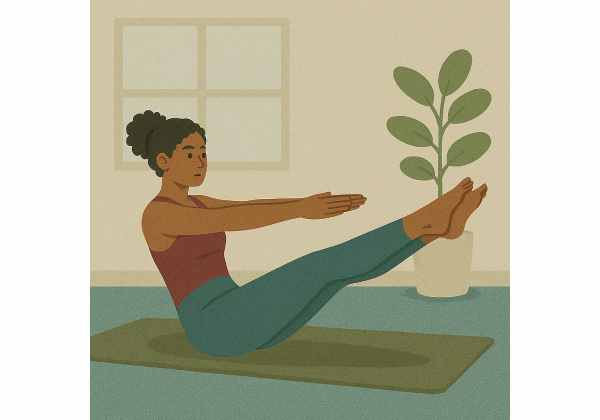
For example, a beginner might start with pelvic curl, dead bug variations, side-lying leg work, modified hundred prep, bird dog, and basic bridge series. After a few weeks, that same person may progress by using longer lever positions, more unilateral work, teaser progressions, side plank progressions, and standing balance patterns.
A simple four-week progression often works well:
Weeks 1 and 2
- 2 to 3 Pilates sessions
- 25 to 35 minutes each
- focus on technique, breathing, and control
- stop sets before form breaks down
Weeks 3 and 4
- keep 2 to 3 sessions, or add a fourth short session if recovery is good
- raise duration toward 35 to 45 minutes
- use harder options for selected exercises
- reduce transition time
- add more standing sequences or dynamic flows
After that, you can progress again by choosing one of three directions:
- Higher skill
More advanced movements and stronger coordination demands. - Higher density
Similar exercises, less downtime, smoother flow. - Better weekly mix
Keep Pilates volume steady but add walking, strength work, or moderate cardio.
The third option is often the most useful for weight loss because it improves the overall training week instead of trying to turn Pilates into something it is not. Pilates can become harder, but there is a point where other modalities deliver more direct returns.
Track progress with practical markers:
- better control and less shaking in familiar movements
- more reps or longer holds with clean form
- smoother transitions
- improved balance
- easier walking, stairs, or other workouts
- waist, clothing fit, or photo changes over time
Do not expect every progression to show up on the scale immediately. Pilates can improve function and shape before it produces dramatic scale movement. That is one reason it helps to think beyond pure weight loss and watch for performance and body-composition signals.
It is also smart to plan easier weeks every so often. If you increase class difficulty, daily steps, and diet intensity all at once, fatigue builds quickly. A lighter week with shorter sessions or simpler movements can help you recover without stopping entirely. Good programming always leaves room for recovery, just as a plan for warm-up, mobility, and recovery leaves room for better movement quality.
Progress should feel purposeful, not frantic.
Combine Pilates with other fat-loss tools
Pilates helps most with weight loss when it is part of a bigger routine that covers the gaps Pilates does not fully address by itself. The simplest way to think about it is this: Pilates can be your foundation, your recovery-friendly training, or your skill-building work, but fat loss usually improves when you add at least one or two more supports around it.
The most useful additions are usually:
- daily walking or step goals
- structured food intake
- enough protein
- some form of progressive resistance training if muscle retention matters
- sleep and recovery habits that keep adherence high
Walking is often the first thing to add because it is simple, low stress, and easy to recover from. A person doing Pilates three times per week plus daily steps usually has a stronger fat-loss setup than a person doing Pilates three times per week and staying seated most of the rest of the day. That is one reason a step-based plan can pair so well with Pilates.
Nutrition is the other major piece. Even an excellent exercise routine struggles if meals are consistently large, highly snack-driven, or low in satiety. Pilates often works best when paired with steady, protein-forward meals and some awareness of intake. Protein matters because it supports fullness and lean mass during a deficit. A practical guide to protein intake for weight loss can help if your training is improving but hunger keeps disrupting progress.
For people who want faster or more visible body-composition change, adding strength training is usually the next upgrade. That does not mean abandoning Pilates. It means letting Pilates support the parts of training it does best while strength work handles heavier loading. Even one or two resistance sessions per week can change how the overall program performs.
A few realistic combinations work especially well:
- Pilates plus daily walking
- Pilates plus two strength days
- Pilates plus one moderate cardio day
- Pilates plus better meal structure and sleep
A few combinations work less well:
- Pilates plus erratic crash dieting
- Pilates plus no daily movement
- Pilates plus six hard workouts in a week
- Pilates plus constant expectation of rapid scale loss
The goal is not to build the most complicated routine. It is to build the most sustainable one. For some people, that means Pilates is the main training mode that finally gets them moving consistently. For others, it is the lower-impact piece that makes a more complete weekly program work better.
That is the clearest answer to the original question. Pilates can absolutely help with weight loss. It just works best when it is used honestly: not as a miracle, but as a smart, sustainable tool inside a wider fat-loss plan.
References
- WHO guidelines on physical activity and sedentary behaviour 2020 (Guideline)
- Pilates for Overweight or Obesity: A Meta-Analysis 2021 (Meta-Analysis)
- Efficacy of Pilates in Functional Body Composition: A Systematic Review 2022 (Systematic Review)
- Effects of Pilates exercises on cardiorespiratory fitness 2023 (Systematic Review)
- Aerobic Exercise and Weight Loss in Adults: A Systematic Review and Dose-Response Meta-Analysis 2024 (Systematic Review)
Disclaimer
This article is for general educational purposes only and is not a substitute for medical advice, diagnosis, or treatment. If you have significant pain, balance problems, recent injury, pregnancy-related limitations, or a medical condition that affects exercise tolerance, check with a qualified clinician before starting or changing a Pilates program.
If this article was useful, please share it on Facebook, X, or any other platform you prefer.