Kettlebells can make fat-loss training feel more efficient without turning every workout into a long cardio session. One bell lets you combine strength work, power, grip, core control, and short conditioning blocks in a small space, which is why kettlebell workouts appeal to busy beginners and experienced lifters alike. They also create a kind of training density that matters for body composition: you can lift, move, recover briefly, and start again without spending half the session changing machines.
Still, kettlebells are not magic. They work best when the exercises match your skill level, the load is realistic, and the workout is built around good form rather than random fatigue. This guide explains why kettlebells can help with fat loss, how to choose the right bell, which movements deserve priority, and how to progress from beginner sessions to more demanding intermediate workouts. You will also see how to schedule kettlebell training across the week so it supports recovery, muscle retention, and steady fat-loss progress.
Table of Contents
- Why kettlebells help fat loss
- Choose the right bell and basics
- Best kettlebell moves for results
- Beginner kettlebell fat-loss workouts
- Intermediate kettlebell fat-loss workouts
- Weekly programming, recovery and progress
Why kettlebells help fat loss
Kettlebell workouts can support fat loss because they make it easier to train several qualities at once. In a single session, you can challenge major muscle groups, raise heart rate, improve work capacity, and build strength with less setup than many machine-based workouts. That does not mean kettlebells burn fat in a special way. Fat loss still depends mainly on a sustainable calorie deficit. What kettlebells do well is help you create enough useful training to support that process.
This matters because the best exercise for fat loss is often the one you can repeat consistently. Kettlebells work in a spare room, garage, gym corner, or small studio. A session can last 20 minutes or 45. You can build the workout around heavy sets with longer rest, faster circuits with shorter rest, or a mix of both. That flexibility makes them practical on weeks when life is not neat.
Kettlebells also encourage whole-body work. Swings train the hip hinge and posterior chain. Goblet squats load the legs and trunk. Presses and rows add upper-body work. Carries challenge grip, posture, and breathing control. Because many movements involve more than one major muscle group, the sessions often feel athletic and demanding without needing a long list of exercises.
A few reasons kettlebell training can fit a fat-loss plan well:
- It can preserve or build strength while dieting.
- It gives a mild conditioning effect even during strength-focused work.
- It usually requires less equipment and less transition time.
- It can be scaled from very basic patterns to demanding complexes.
- It often suits home training better than barbell-based programming.
That said, kettlebell training does have limits. It is not automatically better than barbells, dumbbells, machines, or bodyweight circuits. For pure maximal strength, other tools may be easier to load progressively. For beginners with poor hinge mechanics, some kettlebell movements can feel awkward at first. And for people with significant knee, shoulder, or low-back pain, exercise selection matters more than the tool itself.
Another important point: kettlebell workouts are often marketed as nonstop calorie-torching sessions. That version can work for some people, but it is not the only useful approach. For body composition, many people do better when kettlebells are used as resistance training first and conditioning second. That means focusing on good reps, sensible rest periods, and gradual progression rather than trying to survive random circuits.
The real advantage is efficiency. Kettlebells can help you keep muscle, improve fitness, and train hard enough to matter without needing a full gym. Used well, they fit naturally alongside walking, higher-protein eating, and other habits that make fat loss more sustainable.
Choose the right bell and basics
Before chasing kettlebell fat-loss workouts online, get two things right: load selection and movement quality. Most frustration with kettlebells starts here. A bell that is too light can make lower-body work feel pointless. A bell that is too heavy can turn a simple squat or press into a messy compensation pattern.
For many beginners, these starting ranges work reasonably well:
- Many women begin with 8 to 12 kg for learning squats, deadlifts, rows, and carries.
- Many men begin with 12 to 16 kg for the same patterns.
- Swings usually need a slightly heavier bell than presses.
- Single-arm overhead pressing usually needs a lighter bell than goblet squats and deadlifts.
These are starting points, not rules. Your training history, joint comfort, body size, and confidence matter more than any generic chart.
Start with the patterns that give the most return with the lowest technical cost:
- Deadlift
- Goblet squat
- Supported or one-arm row
- Overhead or half-kneeling press
- Suitcase carry
- Swing, once your hinge pattern is solid
If you rush straight into snatches and high-rep complexes without owning the basics, the workout becomes hard for the wrong reasons. Kettlebells reward precision. A good hinge, a packed shoulder, strong bracing, and controlled foot pressure make the bell feel stable. Without those, even light loads can feel unpredictable.
A short preparation routine helps a lot. Use five to eight minutes for:
- Brisk marching or easy cardio
- Hip hinge practice without load
- Bodyweight squats
- Glute bridges
- Shoulder circles or wall slides
- One or two light rehearsal sets
That kind of start pairs well with a broader warm-up and recovery routine and usually makes the first work set feel smoother and safer.
A few technical basics matter more than flashy cues:
- Keep the bell close to your body on rows, cleans, and deadlifts.
- Brace before each rep the way you would before lifting a heavy box.
- Drive through the floor instead of yanking the bell with your arms.
- In swings, the hips create the force. The arms guide the bell.
- Stop the set when form changes noticeably, not only when you cannot move the bell.
If you have very little training history, start with controlled sets rather than timed circuits. Learning a kettlebell deadlift for 3 sets of 8 with full attention is more productive than doing 40 rushed reps because a timer says so.
Finally, do not assume soreness equals success. Good kettlebell training often leaves you feeling worked and alert, not wrecked. That is especially important in a fat-loss phase, when recovery resources can be tighter and you still need enough energy for daily movement, work, and life outside the workout.
Best kettlebell moves for results
The best kettlebell exercises for fat loss are not necessarily the most advanced. They are the movements that let you train large muscle groups safely, create enough effort to matter, and progress over time. For most people, a relatively short list covers almost everything needed.
Foundational lower-body and full-body moves
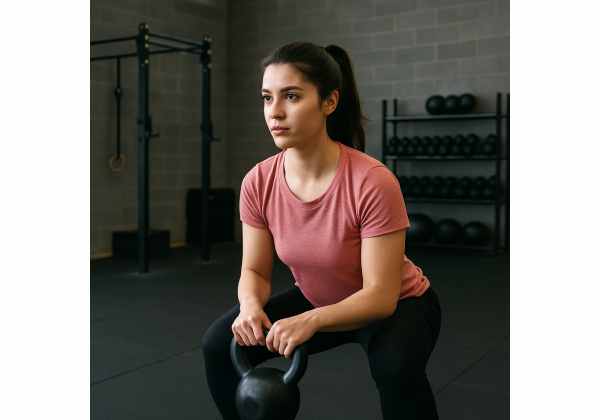
Kettlebell deadlift
This is often the first hinge pattern to learn. It teaches bracing, hip loading, and how to move the bell from the floor without rounding or jerking.
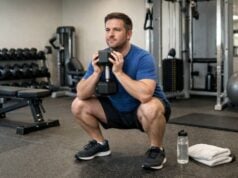
Goblet squat
A goblet squat is one of the most useful kettlebell exercises because the front-loaded position teaches posture and core tension while training the legs. It is beginner-friendly and easy to scale.
Kettlebell swing
The swing is probably the signature kettlebell movement, but it should come after the deadlift. When done well, it trains explosive hip extension, posterior-chain endurance, and conditioning. When done poorly, it becomes a loose, arm-driven motion that stresses the back.
Reverse lunge or split squat
Single-leg work is useful for balance, glute strength, and leg symmetry. Holding one kettlebell in the goblet position or at the side increases trunk demand without needing a huge load.
Upper-body and trunk-focused moves
One-arm row
Rows build upper-back strength, which helps posture and shoulder control. They also balance all the pressing and gripping that kettlebell programs can accumulate.
Overhead press
A strict press is valuable, but shoulder mobility and rib position matter. If standing presses feel awkward, half-kneeling presses often clean up the pattern.
Suitcase carry and rack carry
Carries look simple, but they are excellent for trunk stability, grip, and whole-body tension. They also fit well into fat-loss circuits because they keep you moving without adding high impact.
Turkish get-up
The get-up is more skill-heavy than most kettlebell basics. It can be extremely useful for coordination, shoulder stability, and controlled movement, but it is not mandatory for fat loss. Beginners often do better mastering squats, hinges, rows, and carries first.
A smart exercise menu usually includes:
- One squat pattern
- One hinge pattern
- One push
- One pull
- One carry
- One conditioning movement such as swings
That structure keeps the workout balanced and reduces the temptation to overdo only the flashy moves. If you want extra lower-body emphasis, add work from a focused glute and leg workout approach on another day rather than turning every kettlebell session into endless squats.
The main rule is simple: pick movements you can load and repeat well. A well-executed deadlift, squat, row, and carry circuit will usually beat a more advanced routine performed with poor timing, shaky positions, and rushed reps. The exercises that work are the ones that let you apply real effort while staying organized under fatigue.
Beginner kettlebell fat-loss workouts
Beginner kettlebell training should build skill first and conditioning second. That does not mean the sessions need to feel easy. It means the challenge should come from solid work, not confusion. For the first four to six weeks, focus on movement quality, moderate volume, and workouts you can repeat two or three times per week.
A good beginner plan uses full-body sessions. This keeps weekly training balanced and gives you multiple chances to practice the same key patterns.
Beginner workout A
- Goblet squat — 3 sets of 8 to 10
- Kettlebell deadlift — 3 sets of 8 to 10
- One-arm row — 3 sets of 8 to 10 per side
- Half-kneeling press — 3 sets of 6 to 8 per side
- Suitcase carry — 3 rounds of 20 to 30 meters per side
Rest about 45 to 75 seconds between sets. Use a load that leaves one or two solid reps in reserve.
Beginner workout B
- Dead-stop swing or hinge drill — 4 sets of 6 to 8
- Reverse lunge — 3 sets of 6 to 8 per side
- Floor press with kettlebell — 3 sets of 8 per side
- One-arm row — 3 sets of 10 per side
- Front rack carry — 3 rounds of 20 meters per side
Alternate A and B across the week.
A practical weekly setup:
- Monday: Workout A
- Wednesday: Workout B
- Friday: Workout A
- Next week: start with Workout B
If your schedule only allows two training days, that still works. Keep the sessions full-body and resist the urge to turn every workout into a breathless circuit.
Once the main lifts feel stable, you can add a short finisher. Keep it simple:
6-minute beginner finisher
Repeat at a controlled pace:
- 10 two-hand swings
- 6 goblet squats
- 20 to 30 seconds rest
This is enough to raise the training density without breaking form.
On non-kettlebell days, low-stress movement helps. Walking, easy cycling, or short mobility work can improve recovery and keep total activity high. If you want more training variety, a simple bodyweight workout can slot in on a separate day, but do not let extra work interfere with recovering from the main sessions.
Your first phase should feel almost boring in a good way. You are building patterns, work tolerance, and confidence with the bell. The reward comes later when swings feel sharp, squats feel stable, and you can move through a session without spending half your energy just figuring out where the weight should go.
Intermediate kettlebell fat-loss workouts
Once you can hinge well, squat with control, clean a bell safely, and keep your form under moderate fatigue, kettlebell training opens up. Intermediate workouts can use more density, slightly more complex exercise pairings, and better conditioning blocks. The goal is still not random exhaustion. It is organized effort that drives progress.
At this stage, you can usually train kettlebells three days per week or combine two kettlebell days with another structured strength day. Many people do well using kettlebells as their main resistance tool while borrowing programming ideas from a broader beginner strength plan for weekly structure and recovery.
Intermediate workout one
Strength block
- Double or heavy goblet squat — 4 sets of 6
- One-arm press — 4 sets of 6 per side
- One-arm row — 4 sets of 8 per side
Conditioning block
5 rounds:
- 15 swings
- 8 reverse lunges total
- 30 to 45 seconds rest
Intermediate workout two
Strength block
- Romanian deadlift or heavy deadlift — 4 sets of 6 to 8
- Front rack split squat — 3 sets of 6 per side
- Floor press or push-up variation — 3 sets of 8 to 10
Carry block
4 rounds:
- Suitcase carry left
- Suitcase carry right
- 30 seconds rest
Intermediate workout three
Complex format
Perform one exercise after another without putting the bell down if possible. Rest 60 to 90 seconds after each round.
4 to 6 rounds:
- 5 swings
- 5 cleans
- 5 front squats
- 5 presses
- 5 rows per side
Use a load that keeps every rep crisp. If press form degrades, reduce reps before reducing quality.
Intermediate trainees can also use timed sets, but the work period has to respect technique. A useful example:
10-minute density block
- Minute 1: 12 swings
- Minute 2: 6 goblet squats and 6 rows total
- Repeat for 5 rounds
This gives the session a conditioning effect without forcing nonstop sloppiness. It also creates a clear progression target. You can improve by using a slightly heavier bell, cleaning up technique, or finishing the same work with less strain.
What should not change at the intermediate level is exercise honesty. Advanced-looking kettlebell training is easy to fake. People often string together cleans, presses, and squats with compromised positions and call it conditioning. Good intermediate training still has standards: vertical forearms on the press, stable feet on the squat, powerful hips on the swing, and enough rest to make the next round worth doing.
When those standards hold, kettlebell training becomes one of the most efficient ways to combine resistance work and conditioning in the same session.
Weekly programming, recovery and progress
Kettlebell workouts help with fat loss most when they fit your week rather than compete with it. Two to three kettlebell sessions per week is enough for many people. Add more only when recovery is strong and life stress is manageable.
A practical weekly setup for fat loss might look like this:
- Monday: Kettlebell strength and conditioning
- Tuesday: Walking or easy cardio
- Wednesday: Kettlebell full-body workout
- Thursday: Easy movement or off
- Friday: Kettlebell workout or short conditioning session
- Saturday: Long walk, bike ride, or recreational activity
- Sunday: Off
This works because it leaves room for daily movement. Fat loss is rarely driven by workouts alone. Regular walking, errands on foot, short movement breaks, and higher general activity still matter. That is why daily movement outside formal workouts can quietly make a big difference over time.
Progression should be deliberate. Use one main change at a time:
- Add a rep or two per set
- Add a set
- Use a slightly heavier bell
- Reduce rest modestly
- Improve total work completed in the same time
Do not push all five at once. If workouts get harder every session in every direction, technique usually collapses before results improve.
Nutrition and recovery matter here too. When dieting, keep protein intake high enough to support muscle retention and satiety. A steady protein target often pairs well with kettlebell training because these workouts place real demand on the legs, trunk, shoulders, and grip. Sleep matters just as much. Poor sleep makes conditioning feel harder, recovery slower, and hunger less predictable.
Know when to back off. You may need a lighter week if:
- Swings feel heavy and uncoordinated for several sessions
- Grip strength is unusually flat
- Soreness lasts more than two or three days repeatedly
- Motivation crashes
- Sleep quality drops while training volume climbs
Planned rest days are part of the program, not a sign that you are losing momentum.
Finally, judge progress with more than scale weight. Better swing power, steadier pressing, faster recovery between rounds, and improved waist measurements all count. It also helps to track progress without the scale, especially during weeks when water retention, stress, or menstrual-cycle changes make body weight noisy.
The best kettlebell plan is not the one that leaves you on the floor after every session. It is the one that lets you train hard, recover well, and repeat the process for months. That is where fat loss, better fitness, and stronger movement patterns start to add up.
References
- World Health Organization 2020 guidelines on physical activity and sedentary behaviour 2020 (Guideline)
- Exercise training in the management of overweight and obesity in adults: Synthesis of the evidence and recommendations from the European Association for the Study of Obesity Physical Activity Working Group 2021 (Review and Recommendations)
- Obesity Management in Adults: A Review 2023 (Review)
- The effects of kettlebell training versus resistance training using the own body mass on physical fitness and physiological adaptations in obese adults: a randomized controlled trial 2024 (RCT)
- Effect of resistance exercise on body composition, muscle strength and cardiometabolic health during dietary weight loss in people living with overweight or obesity: a systematic review and meta-analysis 2025 (Systematic Review)
Disclaimer
This article is for general educational purposes only and is not a substitute for medical advice, diagnosis, or treatment. If you have significant back, shoulder, knee, or cardiovascular concerns, or you develop pain, dizziness, chest symptoms, or unusual shortness of breath during exercise, get individual guidance before starting kettlebell training.
If this article helped, please share it on Facebook, X, or any other platform where it may help someone train more safely and lose fat more sustainably.