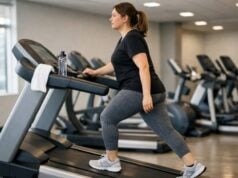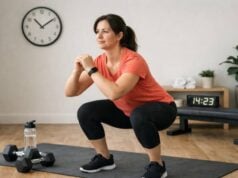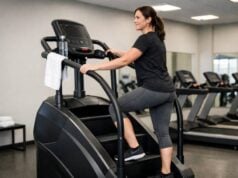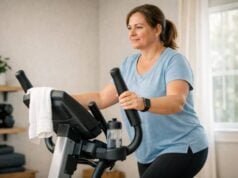
When people start exercising for weight loss, lower-body training often gets misunderstood. Some avoid it because leg day feels hard. Others turn every glute workout into a high-rep burn session and hope it will “tone” a specific area. In reality, well-designed glute and leg workouts do something more useful: they train some of the largest muscles in the body, help preserve lean mass during a calorie deficit, improve strength and daily function, and can make your overall plan more effective.
That matters because successful weight loss is not just about seeing the scale go down. It is also about keeping as much muscle as possible, maintaining performance, and building a routine you can stick with. This guide explains why glute and leg training deserves a place in a fat-loss plan, which exercises matter most, how to structure workouts for both calorie burn and muscle retention, and how to adapt training for home, gym, beginner, or joint-sensitive situations.
Table of Contents
- Why leg training matters for fat loss
- Best glute and leg exercises to use
- How to structure workouts that work
- Sample glute and leg workouts
- Joint-friendly and home training options
- How to support results between workouts
Why leg training matters for fat loss
Glute and leg workouts matter during weight loss for a simple reason: the lower body holds a large share of your total muscle mass. Your glutes, quadriceps, hamstrings, adductors, and calves do more than shape how you look. They help you walk, climb stairs, run, jump, carry loads, and keep moving well as body weight changes. When you train them properly during a calorie deficit, you give your body a stronger reason to keep that muscle instead of losing it along with fat.
That is the real value of lower-body strength work. It does not “melt fat” from your thighs or hips. Spot reduction is not how fat loss works. But hard, repeatable leg training can improve body composition by helping you hold on to lean tissue while you lose weight overall.
Glute and leg sessions also have a practical calorie-burning advantage. Big compound exercises usually recruit a lot of muscle at once, which raises the total work done in a session. A workout built around squats, hinges, split squats, step-ups, and carries often feels more demanding than a session built around smaller upper-body isolation movements alone. That does not mean every lower-body workout needs to leave you flattened, but it does mean lower-body training can meaningfully increase training density and energy expenditure.
A few benefits matter most in a weight-loss phase:
- Muscle retention: Strength training helps reduce the amount of lean mass lost during dieting.
- Higher training payoff: Lower-body muscles can handle substantial training volume when programmed well.
- Better function: Walking, climbing, lifting, and standing become easier as strength improves.
- Improved body composition: The goal is not just losing weight, but losing more fat relative to muscle.
- Better long-term adherence: Feeling stronger often improves motivation more than chasing sweat alone.
Another overlooked point is that stronger glutes and legs make cardio easier to do well. Walking hills, cycling, rowing, running, hiking, and even longer treadmill sessions become more efficient when the lower body is stronger and more fatigue-resistant. That is one reason a balanced plan often works better than trying to do endless cardio in isolation.
If weight loss is your goal, glute and leg training should sit beside a sensible calorie deficit, not replace it. Exercise supports the process, but it cannot fully outrun consistently high intake. And if you care about how your body performs and looks as you lose weight, this kind of training is not optional. It is one of the best tools you have.
Best glute and leg exercises to use
The best glute and leg exercises for weight loss are not the ones that create the biggest burn in a single set. They are the ones that let you train hard enough to challenge muscle, safely enough to repeat, and progressively enough to improve over time. That usually means focusing on movement patterns instead of chasing trendy exercises.
A good lower-body plan includes five basic patterns:
- Squat pattern: back squat, goblet squat, front squat, hack squat, leg press
- Hip hinge pattern: Romanian deadlift, deadlift variation, kettlebell hinge, good morning
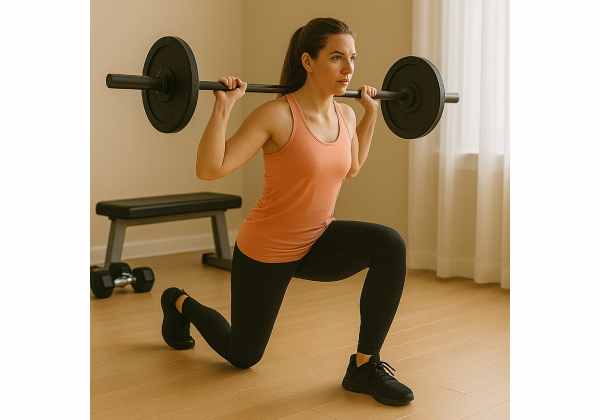
- Single-leg pattern: split squat, reverse lunge, walking lunge, step-up
- Hip extension and glute focus: hip thrust, glute bridge, cable kickback
- Hamstring and calf work: hamstring curl, sliding leg curl, seated or standing calf raise
Each pattern brings something different. Squats and leg presses load the quads heavily and create a strong overall training effect. Hinges train the glutes and hamstrings through a different range and often build strength that carries into daily life. Single-leg work improves balance, exposes side-to-side weaknesses, and adds intensity without requiring very heavy loads. Hip thrusts and bridges are useful when you want direct glute work with less spinal loading. Hamstring curls and calf raises do not replace big lifts, but they round out the session.
If you are trying to simplify exercise selection, prioritize these:
- One squat or leg press variation
- One hinge variation
- One unilateral leg exercise
- One direct glute exercise
- One hamstring or calf accessory
That combination is enough for most people to progress.
Beginners often make one of two mistakes. They either copy advanced bodybuilding routines with too many exercises, or they avoid difficult basics and do only bands and kickbacks. Neither extreme works well. The basics should do most of the work. Accessories should support them.
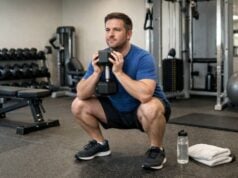
Exercise choice should also match your situation. A home trainee may use goblet squats, Bulgarian split squats, hip thrusts, and sliding leg curls. A gym trainee may prefer leg press, Romanian deadlifts, walking lunges, and machine hamstring curls. Someone training with minimal equipment can still build an effective lower-body plan with a bodyweight routine or a dumbbell-based approach if the sets are challenging enough.
One final point: you do not need a “glute day” built entirely around tiny isolation moves to train your glutes well. In many cases, your glutes get a strong stimulus from squats, hinges, split squats, and loaded carries before you ever add bridges or kickbacks. Isolation work can help, but the foundation should still be large, stable movement patterns that you can load and repeat.
How to structure workouts that work
A glute and leg workout for weight loss should do two jobs at once: give the muscles enough tension to help preserve or build strength, and keep the session efficient enough to support calorie burn and overall conditioning. That balance usually comes from smart structure, not from doing the most exhausting workout possible.
Start with the big lifts when you are freshest. These are the exercises that require the most coordination, stability, and force. Then move toward single-leg work and accessories. This order lets you perform the hardest exercises well instead of attacking them after fatigue has already wrecked your technique.
A practical lower-body session often looks like this:
- Main lower-body lift
- Secondary lower-body lift
- Single-leg movement
- Direct glute or hamstring work
- Optional calf, core, or conditioning finisher
The next question is sets, reps, and rest. For most people dieting for fat loss, moderate volumes work best. Enough to create a clear training signal, not so much that recovery collapses.
A useful starting range is:
| Exercise type | Sets | Reps | Rest |
|---|---|---|---|
| Main compound lift | 3 to 4 | 5 to 10 | 90 to 150 seconds |
| Secondary lift | 3 to 4 | 8 to 12 | 75 to 120 seconds |
| Single-leg movement | 2 to 4 | 8 to 12 each side | 60 to 90 seconds |
| Accessory glute or hamstring work | 2 to 4 | 10 to 15 | 45 to 75 seconds |
| Finisher or carry | 2 to 4 rounds | Time or distance | Short, controlled |
This approach works because it blends mechanical tension with enough density to keep the session moving. That is very different from randomly doing 40 minutes of jump squats and donkey kicks.
To make workouts productive, keep these programming rules in mind:
- Train close to effort, not to chaos. Most working sets should finish with 1 to 3 reps left in reserve.
- Progress gradually. Add load, reps, or control over time instead of constantly changing exercises.
- Do not rush heavy lifts. Short rests can increase fatigue, but they can also reduce quality.
- Use circuits selectively. Circuits are great for accessories, but not always for your heaviest movements.
- Recover well enough to repeat. A brutal leg day that ruins the next four days is often too much.
For weekly frequency, two lower-body sessions work well for many people. Three can be excellent if volume is distributed well and recovery is good. If you are also doing hard cardio, the answer is not always “more.” It is often “better organized.” A good strength schedule or a realistic plan for rest days usually beats stacking hard sessions back to back until performance drops.
The best structure is the one that lets you train the lower body hard, recover, and then come back stronger the next week.
Sample glute and leg workouts
Most people do better with a clear template than a long list of exercise ideas. Below are three lower-body workouts built for fat loss and muscle retention. They are not magic routines, but they cover the basics well and can be repeated for several weeks with small progressions.
Workout 1: Gym-based strength and muscle retention
This session works well as a primary lower-body day.
- Back squat or leg press — 4 sets of 6 to 8
- Romanian deadlift — 3 sets of 8 to 10
- Reverse lunge — 3 sets of 8 to 10 each side
- Hip thrust — 3 sets of 10 to 12
- Hamstring curl — 2 to 3 sets of 12 to 15
- Farmer carry or sled push — 3 rounds
This is a strong option when your goal is preserving muscle in a deficit. The main lifts do the heavy work, and the finisher raises session density without turning the whole workout into cardio.
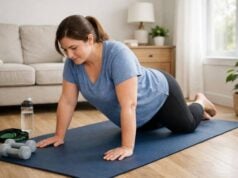
Workout 2: Home dumbbell and bodyweight session
This works when you have limited equipment.
- Goblet squat — 4 sets of 8 to 12
- Dumbbell Romanian deadlift — 4 sets of 8 to 12
- Bulgarian split squat — 3 sets of 8 each side
- Glute bridge or hip thrust off a bench — 3 sets of 12 to 15
- Sliding hamstring curl or towel curl — 2 to 3 sets of 10 to 12
- Walking lunges or step-ups — 2 rounds
Do not underestimate this workout. Unilateral work and longer set durations can make lighter equipment feel hard fast.
Workout 3: Lower-body metabolic session
Use this as a secondary session, not your only leg training.
- Kettlebell or dumbbell squat — 10 reps
- Romanian deadlift — 10 reps
- Step-up — 8 reps each side
- Hip thrust — 12 reps
- Bodyweight squat pulse or wall sit — 30 to 40 seconds
Run this circuit for 3 to 4 rounds with controlled transitions. The goal is steady effort with clean movement, not collapsing between stations.
A few rules make these workouts better:
- Keep one or two reps in reserve on most sets.
- Add weight only when technique stays solid.
- Progress by adding reps before load if equipment is limited.
- Keep one lower-body day heavier and one slightly more metabolic if recovery allows.
If your schedule is tight, one dedicated lower-body day and one shorter session can still work well. If you prefer mixed training, you can also combine these ideas into 30-minute fat-loss sessions or plug them into broader weight-loss training plans. The main thing is consistency. Repeating a good plan for 6 to 8 weeks usually beats bouncing between random workouts every few days.
Joint-friendly and home training options
Lower-body training should challenge muscles, not punish joints. If your knees, hips, lower back, or ankles get cranky, the answer is not to quit leg training. It is to change the way you do it.
The first adjustment is often range of motion and exercise selection. Some people tolerate box squats, split squats, step-ups, and hip thrusts much better than deep back squats or repetitive jumping. Others do better with leg press, sled work, or machine-based training that offers more stability. There is no prize for forcing an exercise that repeatedly hurts.
Common ways to make leg training more joint-friendly include:
- Choose stable exercises first. Goblet squats, supported split squats, and machine work often feel safer than highly technical lifts.
- Reduce impact. Swap jump lunges for step-ups or controlled reverse lunges.
- Use slower eccentrics. A 3-second lowering phase can make light loads more effective.
- Shorten the range temporarily. Work within a pain-free range, then expand as control improves.
- Bias the hips. Hip thrusts, bridges, and Romanian deadlifts can train the glutes hard without the same knee stress as some squat variations.
Home training also requires a mindset shift. Since load may be limited, difficulty often comes from unilateral work, tempo, pauses, and shortened rest. A set of split squats with a 2-second pause at the bottom can challenge the legs more than a much heavier bilateral exercise done carelessly.
Warm-ups matter more than people think, especially for lower-body sessions. Five to ten minutes is usually enough:
- Light cardio or brisk walking
- Hip and ankle mobility
- Bodyweight squats or hinges
- One or two lighter sets of your first main movement
This does not need to become a 25-minute ritual. You just want your joints warm, your movement pattern rehearsed, and your first work set to feel smoother than it would cold. A simple warm-up and recovery routine can make lower-body training feel much better without draining energy before the session starts.
If discomfort persists, lower-impact conditioning can help you maintain activity while you adjust training. Walking on an incline, cycling, rowing, and other joint-friendly cardio options can support weight loss while your lower-body strength work stays more controlled.
The goal is not to find the hardest version of each movement. It is to find versions you can load, tolerate, and improve. That is what turns glute and leg training into something sustainable instead of something you dread.
How to support results between workouts
Even the best glute and leg workout will underperform if the rest of your plan does not support it. Weight loss happens across the week, not only during your hardest session. What you do between workouts often determines whether lower-body training helps you look and perform better or just leaves you tired.
Nutrition is the first support layer. If you are dieting too aggressively, training quality usually falls, recovery gets worse, and muscle retention becomes harder. A moderate deficit is often enough. Protein matters even more. When calories are lower, adequate protein intake helps support satiety and gives your body better odds of holding on to lean mass.
Sleep and recovery are the second layer. Heavy lower-body sessions create a lot of fatigue, both local and systemic. If sleep is poor and life stress is high, your legs may feel flat, sore, or unusually weak. That does not always mean the workout is wrong. It may mean recovery is incomplete.
Cardio should complement your leg training, not sabotage it. Good pairings include:
- Easy walking on non-lifting days
- Zone 2 cardio after upper-body sessions
- One harder interval session per week if recovery allows
- Short post-meal walks for extra movement
This is where daily movement becomes a major factor. Formal workouts are important, but so is the activity that happens outside them. Extra steps, standing more, walking errands, and generally moving more through the day can meaningfully raise total expenditure. Many people stall not because their workouts are weak, but because overall movement falls as dieting fatigue sets in. That is where NEAT can quietly make or break progress.
Use these checkpoints to judge whether your plan is working:
- Are key lifts staying stable or improving slowly?
- Are you recovering within 48 to 72 hours most weeks?
- Is body weight trending down over time?
- Are waist, hip, or thigh measurements changing?
- Do daily steps stay reasonably high, even when calories are lower?
If the answer is no across the board, the fix is not always more volume. Sometimes the better solution is to reduce junk volume, improve food quality, walk more consistently, or stop turning every leg workout into a survival test.
Lower-body training is one of the best investments you can make during fat loss, but it works best inside a full system. Train hard enough to send a clear signal. Eat well enough to recover. Move enough between sessions to keep expenditure up. Then give the plan time to work.
References
- Resistance training effectiveness on body composition and body weight outcomes in individuals with overweight and obesity across the lifespan: a systematic review and meta-analysis 2022 (Systematic Review and Meta-Analysis)
- Aerobic Exercise and Weight Loss in Adults: A Systematic Review and Dose-Response Meta-Analysis 2024 (Systematic Review and Dose-Response Meta-Analysis)
- Physical activity 2024 (Guideline Summary and Fact Sheet)
- Physical activity and exercise within the context of obesity treatment: Enhancing health beyond weight loss 2026 (Review)
Disclaimer
This article is for general educational purposes only. Glute and leg workouts for weight loss should be adjusted to your health status, injury history, and training background, and they are not a substitute for personalized medical, physical therapy, or coaching advice.
If you found this article useful, please share it on Facebook, X, or your preferred platform.