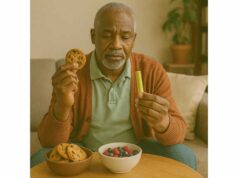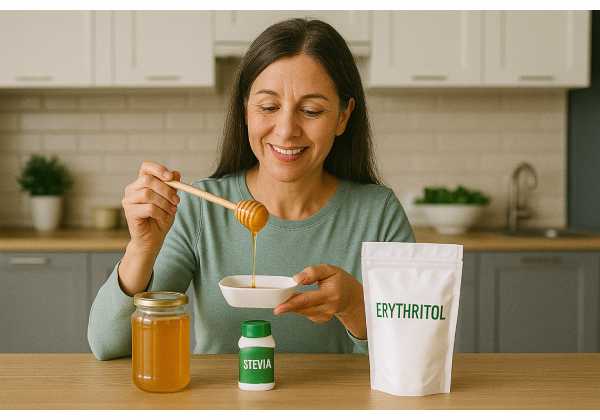
Sweet taste does not have to disappear from a healthy aging diet, but it needs a smaller, smarter role than it had in a typical modern food pattern. Added sugar, honey, stevia, and erythritol all solve different problems, and none of them turns dessert into a health food. The best use is strategic: keep sweetness enjoyable, protect blood sugar control, preserve appetite for protein and plants, and avoid turning “sugar-free” foods into a daily habit.
Honey brings flavor and small amounts of plant compounds, but it still counts as added sugar. Stevia provides sweetness without sugar or calories, but its best role is helping people reduce sugar while retraining the palate. Erythritol has a low glucose impact, yet newer cardiovascular research has made regular high-dose use less reassuring. A longevity-minded approach starts with food quality first, then uses sweeteners as tools.
Table of Contents
- Why Sweetness Needs a Smaller Role With Age
- How Much Sugar Fits Healthy Aging
- Honey Is Still Sugar With Some Differences
- Stevia Works Best as a Bridge
- Erythritol Deserves More Caution Than the Label Suggests
- How to Use Sweeteners Without Glucose Swings
- A Simple Sweetener Plan for Daily Life
Why Sweetness Needs a Smaller Role With Age
Sugar becomes more expensive nutritionally with age because the body usually has less room for empty calories. Muscle mass tends to decline unless it is protected with resistance training and enough protein. Insulin sensitivity often worsens when visceral fat rises, sleep shortens, or activity drops. Appetite also changes: some adults feel less hungry, while others crave more quick energy when sleep, stress, or protein intake slips.
That means sweet foods compete with higher-priority foods. A sweet drink, pastry, or large dessert does not only add sugar. It replaces room for protein, fiber, potassium, magnesium, calcium, omega-3 fats, and polyphenols. Those nutrients support muscle, blood pressure, gut function, bone health, vascular health, and brain aging.
The biggest concern is not one teaspoon of sugar in tea. The bigger problem is a pattern of sweetness that trains the palate to expect dessert-level flavor several times per day. Sweetened coffee drinks, flavored yogurts, granola bars, sauces, cereals, “healthy” cookies, protein bars, and late-night snacks all add up. The total often feels invisible because no single item looks extreme.
Added sugars also differ from sugars inside whole foods. Sugar in an orange arrives with water, fiber, chewing, volume, potassium, and plant compounds. Sugar in soda, syrup, candy, or honey arrives with little structure and less fullness. Fruit belongs in a healthy aging pattern; sweetened drinks and frequent desserts need tighter boundaries.
Healthy aging nutrition works better when sweet taste supports real food instead of replacing it. A small amount of honey in plain yogurt with berries and walnuts is very different from honey on white toast with sweet coffee. One sweet element inside a protein- and fiber-rich meal is easier on appetite and glucose than several sweet items eaten alone.
This is also why sweeteners need context. Replacing sugar with stevia in a drink reduces sugar grams, but it does not fix a low-protein breakfast. Replacing sugar with erythritol in a brownie lowers sugar, but the brownie still encourages dessert habits if it becomes a daily staple. The most useful first step is building meals around protein, fiber-rich plants, and healthy fats, then deciding whether a sweetener improves the meal or simply keeps cravings loud. For the broader meal structure, a protein plus produce plus healthy fat plate is a stronger foundation than any sweetener choice.
How Much Sugar Fits Healthy Aging
Added sugar fits best as a measured accent, not a daily calorie category to fill. The U.S. Daily Value for added sugars is 50 g per day on a 2,000-calorie diet, which equals 10% of calories. The World Health Organization recommends keeping free sugars below 10% of total energy, with additional benefit from going lower.
Those limits are ceilings, not targets. A longevity-minded intake is usually lower because older adults often need more nutrient density from fewer calories. A practical range for many active adults is 0–25 g of added sugar on most days, with planned exceptions for social meals, holidays, or favorite desserts. People with diabetes, fatty liver, high triglycerides, insulin resistance, or weight-loss goals often do better closer to the lower end.
Free sugars include table sugar, syrups, honey, sugar added by manufacturers, and sugars in fruit juice. Added sugars on U.S. labels include honey and syrups used as sweeteners. This matters because “natural” does not mean metabolically invisible.
One teaspoon of sugar contains about 4 g of sugar. One tablespoon of honey contains about 17 g of sugar. A sweetened coffee drink, bottled tea, dessert yogurt, or breakfast pastry often uses most of a day’s added-sugar room before lunch.
| Daily pattern | Added sugar range | How it looks in real meals |
|---|---|---|
| Very low | 0–10 g | Unsweetened drinks, whole fruit for sweetness, no routine desserts |
| Moderate | 10–25 g | One measured sweet item, such as 1–2 teaspoons honey plus a small square of dark chocolate |
| Upper-limit pattern | 25–50 g | Still within common label guidance, but easy to crowd out protein, fiber, and minerals |
| High pattern | Over 50 g | Often driven by sweet drinks, desserts, cereals, sauces, or frequent snacks |
A useful rule is to avoid spending added sugar when sweetness is not the main reason you are eating the food. Sweet salad dressing, ketchup, barbecue sauce, flavored nut butter, sweetened almond milk, and “healthy” packaged snacks often use sugar in ways that barely improve satisfaction. Save sugar for foods where you truly taste and enjoy it.
Blood sugar response also changes by meal. Sugar eaten after a protein- and fiber-rich meal usually causes a smaller rise than the same sugar eaten alone. A dessert after salmon, lentils, vegetables, and olive oil behaves differently from a cookie eaten with coffee in the afternoon. For more detail on meal structure and spikes, use food habits that flatten glucose spikes as the larger framework.
Sugar reduction works best when it protects pleasure. An all-or-nothing approach often backfires because it turns sweet foods into a forbidden category. A better plan is to make sweetness deliberate, portioned, and paired with real food. Plain yogurt with berries, cinnamon, and a teaspoon of honey beats a sweetened yogurt cup because it gives more protein, more texture, and less sugar. A small dessert after dinner beats grazing on sweet snacks all evening.
Honey Is Still Sugar With Some Differences
Honey is a flavorful sweetener, not a metabolic loophole. It contains mostly sugar, especially fructose and glucose, and it counts as added sugar when used to sweeten food. One tablespoon provides about 64 calories and 17 g of sugar, so it deserves the same measuring-spoon respect as syrup or table sugar.
Honey does have features that make it different from white sugar. Its flavor is stronger, especially in darker or floral varieties, so a smaller amount often satisfies. It also contains trace minerals, organic acids, enzymes, and polyphenols. The amount varies by floral source, processing, storage, and color. Buckwheat, chestnut, heather, and some darker honeys tend to have more intense flavor and higher polyphenol content than mild, pale varieties.
Controlled trials suggest honey used within an otherwise healthy dietary pattern has mixed but sometimes favorable effects on cardiometabolic markers. That does not mean large spoonfuls improve health. It means honey is not identical to refined sugar in every study setting, and small amounts used thoughtfully fit better than high intakes of any sweetener.
Honey works best when it delivers noticeable flavor in small doses:
- Stir 1 teaspoon into plain Greek yogurt with berries, chia, and walnuts.
- Add 1 teaspoon to a vinaigrette for a large salad or roasted vegetables.
- Brush a thin layer on salmon, tofu, carrots, or Brussels sprouts before roasting.
- Use it with cinnamon, ginger, lemon, or cocoa so the flavor feels larger than the dose.
- Choose stronger honey when it helps you use less.
Honey works poorly when poured freely into drinks, oatmeal, toast, smoothies, or desserts without measuring. A “healthy” bowl with oats, banana, dried fruit, sweetened protein powder, and honey quickly becomes a sugar-heavy meal. Oats and fruit fit healthy aging, but stacking sweet ingredients turns a good base into a glucose challenge. For people working on glucose control, glycemic load gives a better lens than judging one ingredient at a time.
Honey also has safety details. Infants under 12 months should never receive honey because of botulism risk. Adults with pollen or bee-product allergies should use caution. People with diabetes or significant insulin resistance should count honey as carbohydrate, not as a free natural remedy.
Raw honey is not automatically better for daily use. It has a less processed image, but the sugar load remains. Heating honey changes some delicate compounds, yet the difference is minor compared with the bigger issue: dose. The healthiest honey habit is not chasing the perfect jar. It is buying one you love and using it slowly.
Stevia Works Best as a Bridge
Stevia is useful because it gives intense sweetness without sugar, calories, or a direct glucose rise. The sweet compounds used in foods are steviol glycosides, purified from the stevia plant. They taste hundreds of times sweeter than sugar, so only tiny amounts are needed.
The strongest use for stevia is transition. It helps reduce sugar while a person retrains their palate toward less sweetness. Someone who drinks two sweetened coffees each morning might move from flavored syrup to half syrup, then to stevia, then to cinnamon or unsweetened coffee. That progression lowers sugar without making the change feel harsh.
Stevia does not provide bulk, browning, moisture, or texture the way sugar does. It works well in tea, coffee, yogurt, smoothies, chia pudding, protein shakes, and sauces. It works less well as the only sweetener in baked goods unless the recipe is designed for it. Many stevia baking blends contain erythritol, dextrose, maltodextrin, or other bulking agents, so label reading matters.
The taste also varies. Some people notice bitterness or a licorice-like aftertaste. Rebaudioside A and newer steviol glycoside blends often taste smoother than older products. Liquid drops give more control than packets because one packet sometimes oversweetens a drink. A pinch of salt, cocoa, vanilla, cinnamon, lemon, or berries often rounds out stevia’s edge.
Stevia is not a reason to keep everything sweet. A diet filled with sugar-free drinks, sugar-free desserts, sweet protein bars, and sweetened yogurt still trains the brain to expect intense sweetness. That habit keeps fruit tasting less sweet and plain foods less satisfying.
A good stevia plan follows three rules:
- Use the least amount that tastes pleasant.
- Use it in foods that already support health, such as plain yogurt or tea.
- Gradually reduce the dose over time instead of treating sweetness as unlimited.
High-purity steviol glycosides have regulatory safety reviews and an acceptable daily intake expressed as steviol equivalents. Normal household use usually stays far below that level. Still, concentrated sweeteners deserve the same mindset as salt: small amounts used intentionally, not automatic additions to everything.
Stevia is especially helpful when the alternative is a daily sweet drink. Replacing sugar in coffee or tea removes a repeated sugar source without removing the ritual. It also helps people who want dessert flavor after dinner without a high-sugar snack, such as plain yogurt with cocoa, vanilla, stevia, and berries. For more dessert structure, sweetness without the crash offers better options than simply swapping sugar for a packet.
Erythritol Deserves More Caution Than the Label Suggests
Erythritol is a sugar alcohol, also called a polyol. It tastes about 60–70% as sweet as sugar, has very few calories, and has little direct effect on blood glucose or insulin. Because it provides bulk, it appears in many keto, low-carb, diabetic-friendly, and sugar-free products. It is also common in blends with stevia or monk fruit.
Those features make erythritol attractive, especially for people trying to lower sugar. It performs better than stevia in baking because it adds volume and texture. It also does not feed cavity-causing mouth bacteria the way sugar does. Compared with some other sugar alcohols, erythritol usually causes fewer digestive symptoms because much of it is absorbed before reaching the colon.
The concern is regular high-dose exposure. Recent human and mechanistic studies have raised questions about erythritol, platelet activity, clotting potential, and cardiovascular event risk. The evidence does not prove that every small serving causes harm. It does show enough uncertainty to avoid treating erythritol-heavy foods as harmless daily staples, especially for people with higher cardiovascular risk.
This matters in healthy aging because the adults most likely to buy erythritol products often already have risk factors: insulin resistance, diabetes, obesity, high blood pressure, coronary artery disease, prior stroke, kidney disease, or high triglycerides. A product labeled “zero sugar” can look safer than it deserves.
A cautious approach is simple:
- Avoid daily erythritol-heavy desserts, bars, ice creams, candies, and baking mixes.
- Check labels for erythritol, sugar alcohol, polyol, and blends that list erythritol as the first ingredient.
- Treat erythritol-sweetened foods as occasional treats, not metabolic health foods.
- Use extra caution with a history of heart attack, stroke, clotting disorders, atrial fibrillation, or advanced kidney disease.
- Discuss regular use with a clinician when taking blood thinners or managing cardiovascular disease.
Erythritol also causes a cooling sensation in the mouth. In small amounts, that is pleasant. In larger amounts, it tastes odd and often encourages recipes to add stronger flavors or more sweetener. Large servings also cause nausea, bloating, or loose stools in sensitive people, even though erythritol is often better tolerated than sorbitol or maltitol.
The better replacement for sugar is usually not a daily sugar-free dessert. It is a smaller portion of a satisfying dessert, fruit paired with protein, or a less-sweet homemade option. If a person truly wants a birthday cake, a modest slice of real cake after a balanced meal is often more psychologically satisfying than repeated servings of “safe” keto cake.
How to Use Sweeteners Without Glucose Swings
Sweeteners create fewer problems when the meal slows digestion and improves fullness. Protein, fiber, water-rich plants, healthy fats, and movement all change the glucose response. The same 15 g of sugar lands differently in the body depending on what surrounds it.
The strongest pattern is dessert after a meal, not sugar before a meal. A sweet snack on an empty stomach gives quick energy with little staying power. A small dessert after a dinner with fish or tofu, beans or lentils, vegetables, and olive oil usually produces a smoother response and better satisfaction.
Liquid sugar is the hardest to justify. Soda, sweet tea, juice drinks, energy drinks, lemonade, flavored coffee drinks, and sweet cocktails deliver sugar quickly and weakly affect fullness. Even honey in tea or coffee adds up when the drink repeats daily. Unsweetened coffee, tea, sparkling water, and infused water protect the sugar budget better. For caffeine timing and polyphenol-rich drinks, coffee and tea habits fit naturally into this same discussion.
Breakfast deserves special attention. A sweet breakfast often drives a hungrier day. Cereal with sweetened milk, toast with jam, a muffin, or sweet coffee gives fast carbohydrate without enough protein. A steadier breakfast includes Greek yogurt, eggs, tofu scramble, cottage cheese, beans, nuts, seeds, or protein-rich leftovers. Sweetness then becomes a small topping, not the meal’s main event.
A 10- to 20-minute walk after a higher-carbohydrate meal also helps muscles pull glucose from the bloodstream. It does not erase a poor pattern, but it is one of the simplest tools for daily glucose control. The habit works especially well after dinner, when people otherwise sit for several hours. A broader routine of post-meal walking and everyday movement supports glucose control without turning every meal into a math problem.
| Situation | Better choice | Why it works |
|---|---|---|
| Daily coffee or tea | Gradual sugar reduction, cinnamon, or a tiny amount of stevia | Removes repeated sugar while keeping the ritual |
| Plain yogurt or oatmeal | Berries, cinnamon, nuts, plus 1 teaspoon honey if needed | Adds sweetness with fiber, protein, fat, and texture |
| Baking for a special event | Real sugar or honey in a smaller portion | Often tastes better and prevents overeating “free” desserts |
| Low-sugar dessert at home | Stevia in yogurt, chia pudding, or cocoa-based recipes | Works well when bulk and browning are not needed |
| Keto or diabetic packaged sweets | Occasional use only; check for erythritol-heavy labels | Low glucose impact does not equal unlimited safety |
| Cravings after dinner | Fruit with Greek yogurt, cottage cheese, or nuts | Combines sweet taste with protein and fullness |
People who use continuous glucose monitors often learn that portion, timing, sleep, stress, and meal composition matter as much as the sweetener. A CGM is not required for everyone, but it gives useful feedback when glucose patterns are unclear. The most helpful use is learning repeatable habits, not chasing perfect lines. For those using glucose data, continuous glucose monitoring basics helps separate useful signals from noise.
A Simple Sweetener Plan for Daily Life
A sustainable plan starts by lowering the default sweetness level. Taste adapts. When sugar drops gradually for two to four weeks, fruit tastes sweeter, plain yogurt tastes less sharp, and coffee needs less help. Sudden strictness is harder than a steady taper.
Start with the sources you barely value. Keep favorite desserts for planned moments, but remove the sugar that hides in routine foods. Choose unsweetened yogurt, unsweetened milk alternatives, low-sugar sauces, plain oats, and drinks without sugar. Add sweetness yourself when needed because a measured teaspoon gives more control than a manufacturer’s recipe.
A practical two-week reset looks like this:
- List daily sweet items for three days, including drinks, sauces, snacks, breakfast foods, and desserts.
- Keep the one sweet item you enjoy most.
- Cut or replace the two sweet items you enjoy least.
- Move sweet foods after meals instead of eating them alone.
- Use fruit, cinnamon, cocoa, vanilla, citrus, mint, ginger, or toasted nuts to make less sugar taste satisfying.
- Recheck cravings, energy, and evening snacking after two weeks.
For honey, set a clear serving: usually 1 teaspoon, sometimes 2. Do not pour from the jar. Use strong-flavored honey where it stands out. If a recipe needs 1/4 cup honey, treat it as a dessert recipe, not a wellness recipe.
For stevia, choose high-purity products and use tiny amounts. Avoid turning every drink into a sweet drink. If using packets, try half a packet. If using drops, start with one drop. The best sign is not needing more over time.
For erythritol, reduce frequency first. If it appears in a product eaten daily, look for alternatives. A sugar-free bar or dessert several times per week is not the same as a rare low-sugar treat. People at higher cardiovascular risk should be especially conservative.
Common mistakes are easy to spot:
- Calling honey “natural” and then using it freely.
- Replacing sugar with stevia but keeping drinks and snacks intensely sweet all day.
- Eating erythritol-heavy desserts because they are labeled keto or diabetic-friendly.
- Ignoring sweetened sauces, drinks, and flavored yogurts while focusing only on dessert.
- Eating sweet foods alone instead of after balanced meals.
- Letting low-sugar packaged foods replace fruit, nuts, yogurt, beans, and other whole foods.
The best sweetener strategy is boring in a good way. Drink mostly unsweetened beverages. Eat whole fruit often. Build meals around protein and plants. Keep desserts smaller and more satisfying. Use honey for flavor, stevia for transition, and erythritol sparingly. That pattern protects pleasure without letting sweetness steer the whole diet.
References
- Added Sugars on the Nutrition Facts Label 2026 (Official Page)
- Guideline: sugars intake for adults and children 2015 (Guideline)
- Use of non-sugar sweeteners: WHO guideline 2023 (Guideline)
- Effect of honey on cardiometabolic risk factors: a systematic review and meta-analysis 2023 (Systematic Review)
- Effect of stevia on blood glucose and HbA1C: A meta-analysis 2024 (Meta-analysis)
- Ingestion of the Non-Nutritive Sweetener Erythritol, but Not Glucose, Enhances Platelet Reactivity and Thrombosis Potential in Healthy Volunteers 2024 (Clinical Study)
Disclaimer
This article is educational and does not replace care from a qualified clinician, registered dietitian, or diabetes educator. People with diabetes, cardiovascular disease, kidney disease, prior stroke, clotting disorders, food allergies, or active eating-disorder concerns should get personalized guidance before making major changes to sugar or sweetener use.