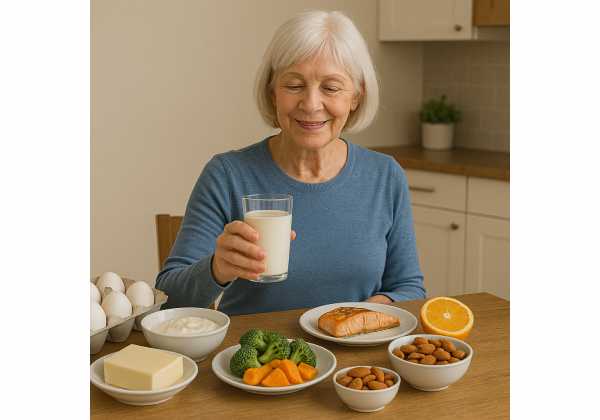
Bones stay alive and active throughout adulthood. They store minerals, rebuild damaged areas, respond to muscle pull, and help keep blood calcium in a narrow range. After midlife, that remodeling process becomes easier to disrupt, especially when meals run low in calcium, vitamin D, protein, and other bone-supporting nutrients. Food cannot reverse osteoporosis on its own, but it gives bone tissue the raw materials it needs while strength training, balance work, medications, sunlight, and medical care handle the rest of the plan.
Calcium and vitamin D work as a pair: calcium gives bone its mineral structure, and vitamin D helps the body absorb and manage calcium. The smartest approach is food-first, steady, and realistic. Instead of chasing one “bone superfood,” build repeatable meals with dairy or fortified alternatives, fish with bones, calcium-set tofu, leafy greens, legumes, eggs, mushrooms, and fatty fish. Small daily choices matter more than occasional perfect meals.
Table of Contents
- Why Bones Need Calcium and Vitamin D After Midlife
- How Much Calcium and Vitamin D Adults Need
- Best Calcium Foods for Aging Bones
- Best Vitamin D Foods and Where Food Falls Short
- Bone-Building Meals That Fit Real Life
- What Affects Absorption and Bone Use
- When Testing, Supplements, and Medical Care Matter
- Simple Weekly Plan for Stronger Bone Nutrition
Why Bones Need Calcium and Vitamin D After Midlife
Calcium gives bones their hardness. About 98% of the body’s calcium sits in the skeleton, mostly as hydroxyapatite, the mineral crystal that gives bone its strength under load. A small amount of calcium also circulates in blood and tissues, where it supports muscle contraction, nerve signaling, blood clotting, and normal heart rhythm. Because blood calcium must stay tightly controlled, the body pulls calcium from bone when intake and absorption fall short over time.
Vitamin D supports this system by helping the intestine absorb calcium and by helping maintain normal blood calcium and phosphate levels. Without enough vitamin D, the body absorbs less calcium from food. In adults, severe deficiency leads to osteomalacia, a condition where bone mineralization weakens and bones become painful, soft, or more fragile.
Aging adds several pressures at once. Stomach acid often declines. Appetite drops in some adults. Lactose intolerance, smaller meals, low-fat dieting, fewer fortified foods, and less sun exposure reduce intake. Menopause speeds bone loss because lower estrogen increases bone breakdown. Some medications, digestive disorders, kidney disease, and weight-loss surgery also interfere with calcium or vitamin D status.
Nutrition works best as part of a full bone plan. Bones respond strongly to mechanical loading, so resistance training and safe impact matter. Food supplies the building blocks, while movement tells the body to keep using them. For a broader movement plan, pair bone-focused eating with resistance and impact training for bone density when joints, balance, and medical history allow.
A good bone-supporting plate also includes enough protein. Bone is not only mineral; it has a collagen-rich protein matrix that gives it flexibility. Older adults who cut calories, skip protein at breakfast, or rely on tea and toast often miss both protein and calcium. A strong plate usually combines a calcium-rich food, a protein source, colorful plants, and enough energy to avoid unwanted weight loss.
How Much Calcium and Vitamin D Adults Need
Adult calcium needs rise for women after age 50 and for everyone after age 70. Vitamin D needs also rise after age 70. These targets include food, fortified foods, and supplements combined.
| Group | Calcium target | Vitamin D target |
|---|---|---|
| Adults 19–50 | 1,000 mg/day | 15 mcg/day, or 600 IU/day |
| Men 51–70 | 1,000 mg/day | 15 mcg/day, or 600 IU/day |
| Women 51–70 | 1,200 mg/day | 15 mcg/day, or 600 IU/day |
| Adults over 70 | 1,200 mg/day | 20 mcg/day, or 800 IU/day |
These numbers are daily averages, not a scorecard that resets every night. A day with 800 mg of calcium is not a failure if the week averages close to target. The bigger issue is a long-term pattern of low intake.
Calcium works better spread across the day. The body absorbs calcium more efficiently in moderate amounts than in one large dose. A simple rhythm is 300–500 mg at two or three meals. That looks like yogurt at breakfast, calcium-set tofu or fortified soy milk at lunch, and canned salmon or greens at dinner.
Vitamin D is harder to get from food. Fatty fish, fortified milk, fortified plant milks, UV-exposed mushrooms, egg yolks, and some fortified cereals help, but many adults still fall short from food alone. Sunlight contributes, yet season, latitude, clothing, sunscreen use, skin pigmentation, air pollution, age, and time outdoors change production. Food choices still matter because they provide a steady baseline without relying on uncertain sun exposure.
The upper limits also matter. For adults, the tolerable upper intake level for calcium is 2,500 mg/day through age 50 and 2,000 mg/day after age 50. For vitamin D, the adult upper limit is 100 mcg/day, or 4,000 IU/day. Higher intakes belong in medical care, not self-directed routine use. More is not better with these nutrients; the body needs enough, not excess.
Food labels help, but they require a small translation. In the United States, the Daily Value for calcium is 1,300 mg. A food with 20% Daily Value gives about 260 mg calcium. For vitamin D, the Daily Value is 20 mcg, or 800 IU. A food with 15% Daily Value gives about 3 mcg, or 120 IU.
Best Calcium Foods for Aging Bones
Calcium-rich foods fall into a few reliable groups: dairy foods, fortified drinks, fish with edible bones, calcium-set tofu, and select greens. The strongest plan uses several groups, especially when appetite, digestion, budget, or food preferences change.
| Food | Typical serving | Approximate calcium | How to use it |
|---|---|---|---|
| Plain low-fat yogurt | 8 oz | 400 mg | Breakfast bowl, sauce, smoothie, evening snack |
| Milk | 1 cup | 275–300 mg | Oatmeal, coffee, soups, smoothies |
| Fortified soy milk | 1 cup | About 300 mg | Cereal, chia pudding, protein shakes |
| Sardines with bones | 3 oz | About 325 mg | Toast, salads, grain bowls |
| Calcium-set firm tofu | 1/2 cup | Often 250 mg or more | Stir-fries, scrambles, soups, bowls |
| Canned salmon with bones | 3 oz | About 180 mg | Salmon patties, salads, wraps |
| Cooked kale | 1 cup | About 90 mg | Soups, eggs, pasta, beans |
| Chia seeds | 1 tablespoon | About 75 mg | Yogurt, oatmeal, pudding |
Dairy foods remain the simplest calcium source for people who tolerate them. Yogurt, kefir, milk, and cheese also provide protein, phosphorus, potassium, and often fortified vitamin D. Fermented dairy such as yogurt and kefir often suits people who do not tolerate large glasses of milk. For a gut-friendly angle, fermented dairy fits well with yogurt, kefir, kimchi, and miso habits.
Fortified plant milks work well when the label shows calcium and vitamin D levels similar to dairy milk. Soy milk usually brings the most protein among plant milks, which makes it especially useful for bone and muscle. Shake the carton before pouring because calcium added to plant milks settles at the bottom. Almond, oat, rice, and coconut drinks vary widely, so the label matters more than the category name.
Fish with edible bones gives calcium plus protein, omega-3 fats, and often vitamin D. Sardines and canned salmon with bones are soft enough to mash into spreads, patties, or salads. People who dislike the texture often accept them better when mixed with lemon, mustard, herbs, Greek yogurt, or mashed avocado.
Calcium-set tofu deserves special attention. Tofu made with calcium sulfate supplies much more calcium than tofu made with magnesium chloride or other coagulants. The nutrition label tells the truth. A stir-fry with calcium-set tofu, bok choy, and sesame gives a strong bone-supporting meal without dairy.
Leafy greens help, but not all greens behave the same way. Kale, bok choy, turnip greens, mustard greens, and broccoli provide usable calcium. Spinach contains calcium on paper, but its oxalates bind much of that calcium and reduce absorption. Spinach still belongs in a healthy diet; it simply should not carry the calcium job by itself.
Beans, lentils, nuts, seeds, and whole grains add smaller amounts that build up across the day. They also support the broader dietary pattern linked with healthy aging. A bean soup with kale, a spoon of tahini, and a side of fortified yogurt sauce gives more bone value than any single ingredient suggests.
Best Vitamin D Foods and Where Food Falls Short
Vitamin D foods are fewer than calcium foods. Fatty fish sits at the top, followed by fortified foods, UV-exposed mushrooms, eggs, and small amounts in some animal foods.
Salmon, trout, sardines, tuna, and mackerel provide meaningful vitamin D along with protein and omega-3 fats. The exact amount varies by species, wild versus farmed source, season, and feed. Two fish meals per week support vitamin D intake and fit a heart-healthy pattern. For people who avoid fish, fortified foods become more important.
Fortified milk and fortified plant milks usually provide about 2.5–3 mcg vitamin D per cup, or roughly 100–120 IU. Some yogurts, cereals, and orange juices are fortified, but not all. Cheese and ice cream are usually not fortified in the same way as milk. The label prevents guesswork.
UV-exposed mushrooms provide vitamin D2. Regular mushrooms contain little vitamin D unless they were treated with ultraviolet light. The package often says “UV-treated” or lists vitamin D on the nutrition label. Mushrooms work well in omelets, soups, pasta, and grain bowls, especially for people who eat mostly plant-based meals.
Egg yolks contribute smaller amounts. Eggs also bring protein, choline, and other nutrients, so they fit well in a bone-supportive breakfast when paired with calcium-rich foods. An omelet with UV-exposed mushrooms, kale, and a side of fortified yogurt gives more complete support than eggs alone.
Food does not always solve vitamin D inadequacy, especially in winter, in northern regions, with darker skin pigmentation, with little outdoor time, or with covered clothing. Older skin also makes vitamin D less efficiently from sunlight. That does not mean everyone needs high-dose supplements. It means vitamin D deserves a more personalized plan than calcium.
Sunlight is a real source, but it is not a precise dose. Midday summer sun differs greatly from winter sun. A short walk with face and hands exposed differs from gardening in shorts and sleeves. Skin cancer risk also matters. Avoid treating sun exposure like a prescription unless a clinician has helped weigh skin history, location, and vitamin D status.
For people tracking labs, 25-hydroxyvitamin D is the main blood marker used to assess vitamin D status. A dedicated explanation of vitamin D testing and interpretation helps make sense of results, units, and why “higher” is not automatically “better.”
Bone-Building Meals That Fit Real Life
Bone nutrition becomes easier when meals follow a pattern: calcium food, protein, plants, and enough energy. This structure protects against two common problems in aging nutrition: low mineral intake and low protein intake.
A strong breakfast might be Greek yogurt with berries, chia, and oats. It gives calcium, protein, fiber, and polyphenols in one bowl. Add fortified milk or soy milk to coffee or oatmeal for another calcium boost. People who prefer savory breakfasts might choose eggs with kale and mushrooms plus a glass of fortified milk or soy milk.
Lunch works well as a bowl, soup, or salad. Try calcium-set tofu with rice, bok choy, edamame, and tahini-lemon sauce. Another option is a sardine salad with whole-grain toast, cucumber, tomato, olive oil, and fruit. A lentil soup with kale plus a side of yogurt adds calcium without a large meal volume.
Dinner does not need to look like a supplement plan. Canned salmon patties with roasted potatoes and broccoli deliver calcium, vitamin D, protein, and potassium. A tofu and vegetable stir-fry with fortified soy milk in a smoothie also works. Mediterranean-style meals fit especially well because they combine fish, legumes, greens, yogurt, nuts, olive oil, and colorful produce. A broader Mediterranean eating starter guide pairs naturally with bone-friendly food choices.
Snacks fill gaps. Cottage cheese with fruit, kefir, yogurt, chia pudding, fortified soy milk, roasted edamame, or a small cheese plate with vegetables all contribute. Evening yogurt or cottage cheese also helps older adults who struggle to reach protein targets. For sleep-focused evening choices, cottage cheese, yogurt, and kiwi at night offer a calm way to support both nutrition and routine.
Here are simple meal combinations that reach roughly one-third to one-half of a day’s calcium target:
- Plain yogurt, berries, chia, and oats.
- Fortified soy milk smoothie with tofu, berries, and nut butter.
- Sardines with bones on whole-grain toast with tomato and greens.
- Calcium-set tofu scramble with kale and mushrooms.
- Canned salmon patties with broccoli and yogurt-dill sauce.
- Lentil and kale soup with a side of kefir.
People with smaller appetites often do better with “calcium anchors.” Choose two daily anchors, such as yogurt at breakfast and fortified milk at dinner. Then let smaller sources from greens, beans, seeds, and grains add to the total. This approach feels less forced than counting every milligram.
What Affects Absorption and Bone Use
Calcium on a label is not the same as calcium absorbed and used by the body. Absorption changes with vitamin D status, food source, dose size, age, stomach acid, and certain compounds in plants.
Dose size matters. A 300 mg calcium serving usually fits absorption better than a 1,000 mg serving taken all at once. This is another reason food-based calcium works well: meals naturally spread intake across the day.
Plant compounds matter too. Oxalates bind calcium in spinach, beet greens, rhubarb, and Swiss chard. Phytates in bran, beans, seeds, and grains also bind minerals, though normal mixed diets reduce the concern. Soaking beans, using fermented breads, cooking greens, and eating varied meals all help. Do not avoid beans or whole grains for fear of mineral binding; their benefits for metabolic and gut health are important.
Vitamin D status affects calcium absorption. Low vitamin D reduces active calcium transport in the gut. This is one reason vitamin D and calcium should be planned together rather than treated as separate nutrition chores.
Protein supports bone when calcium intake is adequate. Older advice sometimes warned that protein “leaches” calcium from bone. Current thinking is more balanced: adequate protein supports muscle, collagen matrix, balance, and recovery. Very low protein harms bones indirectly by weakening muscle and increasing fall risk. Adults trying to preserve muscle and bone often need more attention to protein distribution across meals. A complete plan for protein distribution in healthy aging fits well beside calcium and vitamin D planning.
Sodium and potassium also influence the bone picture. High sodium intake increases urinary calcium loss, especially when calcium intake is low. Potassium-rich foods such as fruits, vegetables, beans, and potatoes support a more favorable mineral balance. A food-first approach to sodium and potassium balance supports both blood pressure and bone-friendly eating.
Alcohol and smoking weaken bone health. Heavy alcohol intake increases fall risk and interferes with bone remodeling. Smoking damages bone cells and lowers estrogen earlier in life. Caffeine has a smaller effect, but very high intake with low calcium intake creates a poor combination. Coffee and tea fit a healthy pattern when calcium intake is adequate and caffeine does not replace meals.
Weight loss deserves special care. Rapid or unplanned weight loss in later life often reduces bone density and muscle. When weight reduction is medically needed, resistance training, higher protein, calcium adequacy, and vitamin D status become more important. Thin older adults with low appetite, prior fractures, or low bone density need a clinician-guided plan rather than casual dieting.
When Testing, Supplements, and Medical Care Matter
Food should carry the routine plan, but testing and supplements matter in specific situations. Calcium blood tests do not show whether your diet supplies enough calcium because the body keeps blood calcium tightly controlled. Bone density testing gives a better picture of accumulated bone strength and fracture risk. A DEXA scan measures bone mineral density and helps guide treatment decisions. For more detail, see DEXA scans for bone density.
Vitamin D testing measures blood 25-hydroxyvitamin D. Testing is most useful when risk is higher: osteoporosis, osteomalacia symptoms, prior low-trauma fracture, malabsorption, bariatric surgery, chronic kidney or liver disease, certain medications, limited sun exposure, or a history of deficiency. Routine testing in every healthy adult is less clear because ideal targets vary by guideline and lab methods differ.
Supplements fill gaps; they do not replace a bone-supportive diet. A calcium supplement makes sense when a person repeatedly falls short through food, especially after menopause or after age 70. The amount should cover the gap, not push total intake above the upper limit. If food provides 800 mg and the target is 1,200 mg, a 300–500 mg supplement is more reasonable than a large dose.
Calcium carbonate and calcium citrate are the most common forms. Calcium carbonate contains more elemental calcium and is best taken with food because stomach acid helps absorption. Calcium citrate works with or without food and often suits people taking acid-reducing medication or those with lower stomach acid. Both forms cause constipation or bloating in some people.
Vitamin D supplements require more care with dose. Many adults use 600–800 IU daily as a maintenance amount, while clinicians sometimes use higher doses for deficiency. Long-term high-dose vitamin D without monitoring risks high calcium levels, kidney stones, and soft-tissue calcification. Very large intermittent doses are not a casual bone strategy.
Calcium supplements also interact with several medications. They interfere with absorption of levothyroxine, some antibiotics, bisphosphonates, and certain HIV medicines when taken too close together. People with kidney stones, chronic kidney disease, hyperparathyroidism, high blood calcium, or a history of vascular calcification need individualized advice before supplementing.
Fracture prevention requires more than calcium and vitamin D. A person with osteoporosis, prior hip or spine fracture, or high fracture risk often needs medication that directly reduces fracture risk. Nutrition supports treatment, but it does not substitute for it. Fall prevention also matters: vision correction, balance training, footwear, home hazards, medication review, and leg strength all reduce the chance that weak bone becomes a fracture.
Simple Weekly Plan for Stronger Bone Nutrition
A weekly rhythm turns bone nutrition into habits. Start with repeatable anchors, then add variety.
Use this simple checklist:
- Choose two calcium anchors daily, such as yogurt, kefir, fortified soy milk, milk, calcium-set tofu, sardines, or canned salmon with bones.
- Eat fatty fish twice per week, or use fortified foods more consistently if you avoid fish.
- Include protein at every meal: dairy, eggs, fish, poultry, tofu, tempeh, beans, lentils, or lean meats.
- Add greens most days, favoring kale, bok choy, broccoli, turnip greens, mustard greens, or cabbage for usable calcium.
- Check labels on plant milks, tofu, cereals, and juices instead of assuming they contain calcium or vitamin D.
- Keep supplements modest and targeted when food does not meet the need.
Here is a realistic three-day rotation:
| Day | Breakfast | Lunch | Dinner |
|---|---|---|---|
| Day 1 | Greek yogurt with berries, chia, and oats | Lentil-kale soup with whole-grain bread | Salmon patties with broccoli and yogurt sauce |
| Day 2 | Oatmeal made with fortified milk or soy milk | Calcium-set tofu bowl with bok choy and rice | Chicken or bean tacos with cabbage slaw and kefir |
| Day 3 | Eggs with mushrooms and greens, plus fortified soy milk | Sardine toast with tomato, cucumber, and fruit | White bean and vegetable stew with a side of yogurt |
For dairy-free eating, focus on fortified soy milk, calcium-set tofu, sardines if you eat fish, canned salmon with bones, tahini, chia, almonds, beans, and low-oxalate greens. For fully plant-based eating, vitamin D usually needs fortified foods or clinician-guided supplementation because natural plant sources are limited.
For lactose intolerance, try lactose-free milk, hard cheeses, yogurt, kefir, or fortified soy milk. Many people tolerate yogurt better than milk because bacterial cultures help break down lactose. Start with small portions and pair them with meals.
For low appetite, use compact choices. A smoothie with fortified soy milk, Greek yogurt or tofu, berries, and nut butter delivers calcium, protein, and calories without a large plate. A small bowl of cottage cheese, a kefir drink, or salmon spread on toast also works.
For budget-friendly meals, choose canned salmon, sardines, dry beans, frozen greens, store-brand yogurt, fortified soy milk, eggs, and calcium-set tofu. Bone-supportive eating does not require specialty powders or expensive products.
The steady pattern is simple: feed bone daily, load it safely through movement, check risk when age or history calls for it, and avoid both neglect and megadoses. Calcium and vitamin D foods work best when they become ordinary parts of breakfast, lunch, dinner, and snacks.
References
- Calcium – Health Professional Fact Sheet 2025 (Official Fact Sheet)
- Vitamin D – Health Professional Fact Sheet 2025 (Official Fact Sheet)
- The clinician’s guide to prevention and treatment of osteoporosis 2022 (Guideline)
- Vitamin D for the Prevention of Disease: An Endocrine Society Clinical Practice Guideline 2024 (Guideline)
- Supplemental Vitamin D and Incident Fractures in Midlife and Older Adults 2022 (RCT)
Disclaimer
This article is educational and does not replace care from a qualified health professional. People with osteoporosis, kidney disease, kidney stones, high blood calcium, malabsorption, prior fractures, or medications that interact with calcium or vitamin D should discuss testing, dosing, and treatment with their clinician.