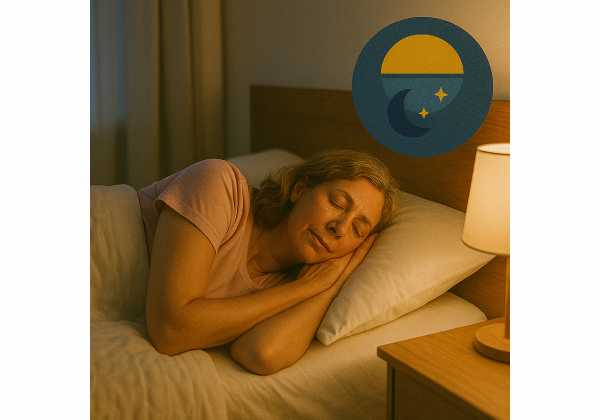
Your circadian rhythm is the 24-hour timing system that helps your body know when to feel alert, digest food, release hormones, cool down, repair tissue, and sleep. With age, this rhythm often becomes lighter, earlier, and easier to disrupt. That shift explains why some adults wake before dawn, feel sleepy after dinner, nap more, or struggle to sleep deeply even when they spend enough time in bed.
A stronger body clock supports healthy aging because it keeps sleep, metabolism, mood, blood pressure, immune activity, and brain function on a steadier schedule. The most reliable reset tools are simple: morning light, evening darkness, regular wake times, earlier meals, daily movement, and calm evenings. Small timing changes repeated every day often work better than intense routines done once in a while.
Table of Contents
- What Your Body Clock Controls
- How Aging Changes Circadian Rhythm
- Reset with Light, Darkness, and Wake Time
- Align Meals, Exercise, and Stress
- A 7-Day Body Clock Reset
- Common Mistakes That Keep Rhythm Weak
- When to Seek Help and Track Progress
What Your Body Clock Controls
Your circadian rhythm works like an internal timekeeper. The main clock sits in the brain in a small region called the suprachiasmatic nucleus, or SCN. It receives light signals from the eyes and uses them to coordinate clocks throughout the body, including clocks in the liver, pancreas, muscle, fat tissue, gut, immune cells, and blood vessels.
This system does more than make you sleepy at night. It sets a daily rhythm for many processes that matter for healthy aging:
- Alertness and focus: Most adults feel sharper when wake time, light exposure, and activity happen on a stable schedule.
- Sleep depth and timing: A strong circadian signal helps the brain separate daytime alertness from nighttime sleep.
- Glucose control: Insulin sensitivity is usually better earlier in the day than late at night.
- Blood pressure rhythm: Healthy blood pressure often dips during sleep and rises before waking.
- Hormone timing: Cortisol rises in the morning to support wakefulness; melatonin rises in darkness to signal biological night.
- Body temperature: Core temperature drops at night, which helps sleep begin and stay stable.
- Immune repair: Immune activity follows daily rhythms, including inflammatory signals and tissue repair.
- Appetite and digestion: Hunger hormones, gut movement, bile flow, and glucose handling all follow time-of-day patterns.
Circadian health improves when your daily signals agree with each other. Morning light tells the brain it is daytime. Breakfast and movement tell peripheral clocks the active phase has started. Dim light, a cooler room, and quiet routines tell the body that night has arrived.
Trouble starts when the signals conflict. Bright screens at 11 p.m., a heavy late dinner, irregular sleep times, weekend catch-up sleep, and little daylight all send mixed timing cues. The body still runs a 24-hour program, but the program loses strength and precision.
This is why circadian rhythm deserves more attention than “sleep hygiene” alone. A person who keeps the bedroom dark but spends most days indoors under dim light still gives the clock a weak daytime signal. A person who sleeps seven hours but shifts sleep by three hours every weekend still creates a form of social jet lag. The rhythm strengthens when daytime and nighttime feel clearly different.
How Aging Changes Circadian Rhythm
Aging does not erase the body clock, but it often lowers its amplitude. Amplitude means the difference between the body’s daytime and nighttime signals. A high-amplitude rhythm feels clear: alert during the day, sleepy at night, hungry at regular times, and able to sleep in one main block. A low-amplitude rhythm feels blurred: tired in the afternoon, restless at night, hungry late, awake too early, or sleepy at the wrong time.
Several age-related changes contribute:
- The eyes often transmit less circadian-strength light because of smaller pupils, lens yellowing, cataracts, or less outdoor time.
- The brain’s clock network becomes less robust in some adults.
- Melatonin timing and amount often shift with age.
- Sleep becomes lighter, with less deep sleep and more awakenings.
- Medical conditions, pain, urinary symptoms, medications, and stress interrupt sleep.
- Retirement, caregiving, bereavement, and fewer morning commitments reduce schedule anchors.
- Lower activity levels weaken daytime alerting signals.
Many adults also shift earlier with age. They feel sleepy earlier in the evening and wake earlier in the morning. That pattern is not automatically harmful. It becomes a problem when early waking shortens sleep, causes daytime fatigue, or leads to long evening naps that push the rhythm into a loop.
Circadian disruption also overlaps with common health issues in midlife and older adulthood. Poorly timed sleep and meals affect glucose regulation, appetite, blood pressure, mood, and cognitive performance. Late-night eating matters because the body handles the same food differently at 10 p.m. than at 10 a.m. Light at night matters because even modest brightness tells the brain that darkness has not fully arrived.
This does not mean every early wake-up, nap, or bad night signals disease. A few rough nights happen to everyone. The concern grows when the pattern repeats for weeks: irregular bed and wake times, frequent daytime sleepiness, long naps, late meals, low morning light, and reliance on alcohol or sleep aids.
The most useful question is simple: are your days and nights clearly different? A strong rhythm has bright, active, fed, social days and dark, quiet, fasted, restful nights. Healthy aging routines work best when they rebuild that contrast.
Reset with Light, Darkness, and Wake Time
Light is the strongest daily signal for the central body clock. Morning light usually advances the rhythm, meaning it helps the body feel sleepy earlier and wake more cleanly the next day. Evening and nighttime light usually delays the rhythm, meaning it pushes sleepiness later and makes mornings harder.
The first anchor is a stable wake time. Choose a wake time that fits your real life, then keep it within about 30–60 minutes every day, including weekends. Wake time matters because it sets the timing for light, meals, movement, caffeine, and bedtime pressure.
After waking, get bright outdoor light as soon as practical. For many people, 10–30 minutes outdoors works well. On cloudy days, winter mornings, or for people who spend most of the day indoors, longer exposure helps. Looking toward the sky or horizon is enough; never stare at the sun. A walk works especially well because it combines light, movement, and a clear start to the day.
Indoor light is usually much weaker than outdoor light. A bright kitchen or office often gives only a fraction of the light available outside. That is why “I opened the curtains” often does less than a short outdoor walk. In darker seasons, a properly used bright light box helps some people, especially those with delayed sleep timing, seasonal mood changes, or limited morning daylight. People with eye disease, bipolar disorder, migraine triggered by light, or photosensitizing medications should ask a clinician before using bright light therapy.
Evening darkness is the other half of the reset. Start lowering light levels 1–2 hours before bed. Use warm, dim lamps. Turn off overhead lights. Reduce screen brightness and use night settings, but do not rely on filters alone. Screen content also keeps the brain engaged. For a deeper guide to the evening side of light control, see blue light and screen hygiene at night.
A dark bedroom strengthens the nighttime signal. Blackout curtains, an eye mask, covered device lights, and dim motion-sensor floor lighting for bathroom trips all help. Night lights should be low and warm, aimed at the floor, not the face.
| Timing cue | Best practice | Why it helps |
|---|---|---|
| Wake time | Keep it within 30–60 minutes daily | Sets the rhythm for the whole day |
| Morning light | Get 10–30 minutes outdoors soon after waking | Strengthens daytime alertness and nighttime sleep timing |
| Daytime brightness | Work near windows, take outdoor breaks, avoid dim all-day indoor light | Raises circadian amplitude |
| Evening light | Dim lights 1–2 hours before bed | Allows melatonin and sleepiness to rise |
| Bedroom darkness | Use blackout curtains or an eye mask | Protects the biological night |
Morning light and evening darkness work best as a pair. Bright mornings without dark evenings give a mixed signal. Dark evenings without bright mornings often leave the clock too weak. Treat the day like a contrast dial: brighter and more active early, dimmer and calmer late.
Align Meals, Exercise, and Stress
Your central clock responds most strongly to light, but your peripheral clocks respond strongly to food, movement, temperature, and stress. These cues help the liver, gut, pancreas, muscles, and fat tissue stay in step with the brain.
Meal timing is one of the most practical levers. The body usually handles glucose better earlier in the day. A large late dinner or nighttime snacking asks the digestive and metabolic systems to work during a phase designed for repair and rest. Over time, that mismatch contributes to worse glucose control, reflux, poorer sleep, and next-day hunger.
A circadian-friendly eating pattern does not require extreme fasting. Start with three simple rules:
- Eat the first meal at a consistent time most days.
- Place more calories earlier rather than saving the largest meal for late evening.
- Finish dinner at least 2–3 hours before bed when possible.
People who use time-restricted eating should favor an earlier window over a late one. For example, eating between 8 a.m. and 6 p.m. usually fits circadian biology better than eating between noon and 10 p.m. Older adults also need enough protein, total calories, and resistance training to protect muscle. Long fasting windows are not a good trade if they reduce protein intake, worsen frailty, trigger binge eating, or interfere with medications. For a deeper nutrition-focused view, see chrononutrition and sleep meal timing.
Exercise also helps set the clock. Morning activity adds another daytime signal, especially when done outdoors. Afternoon exercise supports strength, glucose uptake, and body temperature rhythm. Vigorous late-night training is more individual: some people sleep fine after it, while others feel wired. If sleep is fragile, place intense sessions earlier and use gentle evening movement instead.
A simple pattern works well for most adults:
- Morning: light walk, mobility, easy cycling, or outdoor chores.
- Midday or afternoon: strength training, intervals, hills, or longer conditioning.
- Evening: relaxed walk, stretching, breathing practice, or light yoga.
Caffeine needs timing too. Its average half-life is about 5 hours, but some adults clear it more slowly. A noon coffee still leaves a meaningful amount in the body at bedtime for many people. If sleep is light or early waking is a problem, set a caffeine cutoff 8–10 hours before bed. People who metabolize caffeine slowly often do better with morning-only caffeine. For related timing rules around stimulants and late meals, see caffeine, alcohol, and late meals.
Alcohol deserves special caution. It often makes people sleepy at first, then fragments sleep later in the night. It reduces sleep quality, worsens snoring and sleep apnea risk, increases nighttime bathroom trips, and blunts recovery signals. An occasional drink with an early dinner is different from using alcohol as a sleep tool.
Stress timing matters because cortisol has its own rhythm. Cortisol should rise in the morning and fall at night. Evening rumination, work conflict, intense news, financial worry, and unresolved planning push the nervous system toward alertness. A short “shutdown routine” helps: write tomorrow’s first task, list any worries, choose one next action, then stop problem-solving for the night. Breathwork, mindfulness, prayer, calm reading, or gentle music gives the body a repeatable safety cue. For a specific recovery angle, HRV and recovery tracking helps explain how stress and rest show up in daily physiology.
A 7-Day Body Clock Reset
A body clock reset works best when it is boring, repeatable, and realistic. The aim is not a perfect week. The aim is seven days of strong morning signals and protected nighttime signals.
Day 1: Set the anchor
Choose your wake time and keep it tomorrow. Do not start by forcing an early bedtime. Most people fail because they go to bed before their body is ready, then lie awake and build frustration. Start with wake time, morning light, and activity. Bedtime will move naturally after a few days.
Write down four times: wake time, first light exposure, dinner cutoff, and lights-dim time. These are your reset anchors.
Day 2: Brighten the morning
Get outside within the first hour after waking. Walk for 10–30 minutes. If mobility is limited, sit near outdoor light on a balcony, patio, or open doorway. Add indoor brightness after that: open curtains, turn on lights, and avoid spending the first hours in dim rooms.
Keep naps short. If you need one, take 10–30 minutes before 3 p.m. Long or late naps reduce sleep pressure and confuse the rhythm.
Day 3: Move food earlier
Keep breakfast and lunch steady. Make dinner lighter and earlier than usual. Finish eating 2–3 hours before bed. If reflux, glucose swings, or poor sleep follow late meals, this one change often produces a noticeable difference.
Aim for protein at breakfast or lunch, not only at dinner. Older adults need protein spread across the day to protect muscle. Circadian eating should support strength, not compete with it.
Day 4: Dim the evening
Set a lights-dim alarm 90 minutes before bed. Turn off overhead lighting. Put devices on low brightness. Choose calmer content. Prepare the bedroom so darkness is easy: curtains closed, temperature cooler, phone away from the pillow, bathroom path safe.
This is also the night to stop checking the clock in bed. Clock-watching trains the brain to calculate, worry, and monitor sleep.
Day 5: Add a recovery cue
Add a 10-minute evening routine that you will actually repeat. Good options include slow breathing, stretching, a warm shower, journaling, or quiet reading. Keep it simple enough to do on a hard day.
Warmth has useful timing effects. A warm bath or shower 1–2 hours before bed helps some people because the body cools afterward, matching the natural nighttime temperature drop.
Day 6: Protect the weekend
Do not let the weekend shift your wake time by more than 60 minutes. Sleeping in for several hours feels good in the moment, but it often creates Sunday-night insomnia and Monday fatigue. A short early nap works better than a large schedule swing.
Social life still matters. The circadian-friendly approach is not isolation; it is consistency. Enjoy the evening, then return to your anchor the next morning.
Day 7: Review the signal
Look for changes in timing, not perfection. Did you get sleepy earlier? Wake with less grogginess? Need less caffeine? Nap less? Feel hungry at more predictable times? These early signs show that the rhythm is strengthening.
If sleep duration is still short, do not panic. Many adults need two to four weeks of stable cues before sleep becomes more consolidated. For sleep amount targets and age-related changes, see sleep duration for longevity.
Common Mistakes That Keep Rhythm Weak
Circadian routines usually fail because the daily signals are too weak, too late, or too inconsistent. The fixes are often small.
Mistake 1: Treating bedtime as the main control point.
Bedtime matters, but wake time leads the rhythm. A stable wake time plus morning light builds sleep pressure and circadian timing across the day.
Mistake 2: Getting too little outdoor light.
Many adults spend almost all day indoors, then wonder why they feel alert at night. Bright daytime light gives the brain a strong “day” signal. Outdoor light breaks are especially helpful in winter and for retirees, remote workers, caregivers, and people in long-term care settings.
Mistake 3: Making evenings too bright.
Overhead lights, tablets, phones, bathroom lights, and television all add up. The body does not only respond to blue light; it responds to brightness, timing, duration, and personal sensitivity. Dim the whole environment.
Mistake 4: Eating the largest meal late.
A heavy late dinner raises body temperature, increases digestive work, worsens reflux, and challenges glucose control at a biologically poor time. Shift more food earlier and keep dinner satisfying but not oversized.
Mistake 5: Using alcohol as a sleep aid.
Alcohol sedation is not the same as restorative sleep. It commonly worsens awakenings, snoring, heart rate, and next-day fatigue.
Mistake 6: Napping without a rule.
Naps are useful when they are short and early. Long naps after 3 p.m. steal sleep pressure from the night. People with insomnia often improve faster when they pause naps temporarily.
Mistake 7: Ignoring sleep apnea, pain, or restless legs.
A strong circadian routine cannot fully overcome untreated sleep apnea, severe pain, urinary frequency, restless legs, depression, medication side effects, or thyroid problems. Lifestyle timing helps, but medical causes need proper care.
Mistake 8: Changing everything at once.
The best reset starts with two anchors: wake time and morning light. Add dinner timing next. Then add evening darkness. A smaller routine repeated daily beats a complicated routine abandoned after three days.
Mistake 9: Trusting wearables too literally.
Wearables estimate sleep stages, not measure them with clinical precision. They are more useful for trends: bedtime, wake time, regularity, resting heart rate, nighttime awakenings, and how habits affect recovery. For a practical tracking approach, see what to track and ignore with sleep wearables.
Mistake 10: Expecting melatonin to act like a sleeping pill.
Melatonin is a timing signal, not a general sedative. Low doses taken at the right time help some circadian rhythm problems. Higher doses taken at random times often cause grogginess or strange dreams without fixing the clock.
When to Seek Help and Track Progress
Circadian changes respond well to routine, but some patterns deserve clinical help. Speak with a qualified health professional if sleep problems last more than three months, daytime sleepiness affects driving or work, or sleep changes arrive suddenly without a clear reason.
Seek assessment sooner if any of these signs appear:
- Loud snoring, choking, gasping, or witnessed pauses in breathing
- Morning headaches or dry mouth
- High blood pressure that is hard to control
- Restless legs, crawling sensations, or repeated limb movements at night
- Acting out dreams, punching, kicking, or falling out of bed
- Severe depression, anxiety, panic, or worsening memory
- Unexplained weight loss, night sweats, fever, or pain
- Regular need for over-the-counter or prescription sleep medicine
- Major sleep disruption after a new medication
- Shift-work sleep problems that do not improve with schedule changes
Sleep apnea is especially important in healthy aging because it affects oxygen levels, blood pressure, heart rhythm, mood, glucose regulation, and cognitive performance. It is also underdiagnosed in women and in adults who do not fit the stereotype of loud snoring and obvious obesity. For signs and testing options, see sleep apnea and longevity basics.
Tracking helps when it leads to better decisions. Use a simple two-week log before changing supplements or buying devices. Record:
- Bedtime and wake time
- Time outside in the morning
- Last caffeine time
- Dinner time and alcohol use
- Nap timing and length
- Exercise timing
- Night awakenings
- Morning energy from 1 to 5
- Daytime sleepiness from 1 to 5
After two weeks, look for patterns. If late caffeine predicts awakenings, move it earlier. If no morning light predicts a late bedtime, walk earlier. If long naps predict midnight alertness, shorten naps. If nothing improves despite consistent signals, medical evaluation becomes more important.
Melatonin deserves careful timing. For shifting a delayed rhythm earlier, many clinicians use low doses, often around 0.3–1 mg, several hours before the desired bedtime rather than at bedtime. For jet lag or unusual schedules, timing differs. Older adults, pregnant people, people with epilepsy, people using blood thinners or immune-suppressing drugs, and anyone with bipolar disorder should get medical guidance before using it. More is not always better.
Shift workers need a modified plan because their work schedule fights the solar day. The basics still apply: bright light during the work “day,” dark glasses on the commute home when appropriate, a dark cool bedroom, protected sleep time, and consistent meals. Rotating shifts are harder on the body than stable shifts. When schedule choice exists, a consistent shift or forward-rotating schedule is usually easier to manage than frequent back-and-forth changes. For broader strategies, see shift work, jet lag, and social jet lag.
The most reliable progress signs are not perfect sleep-stage charts. Better signs include a steadier wake time, less evening second wind, fewer long naps, easier mornings, better mood, improved glucose patterns, lower resting heart rate after restful nights, and a more predictable appetite. A healthy circadian rhythm feels less like a strict schedule and more like a body that knows what time it is.
References
- Circadian Rhythms in Aging and Age-Related Diseases 2025 (Review)
- Sleep Health in the Older Adults: Architecture, Circadian Changes, and Common Sleep Disorders 2026 (Review)
- The importance of sleep regularity: a consensus statement of the National Sleep Foundation sleep timing and variability panel 2023 (Consensus Statement)
- Effects of light therapy on sleep and circadian rhythm in older type 2 diabetics living in long-term care facilities: a randomized controlled trial 2024 (RCT)
- Effects of timing and eating duration of time restricted eating on metabolic outcomes: systematic review and network meta-analysis 2026 (Systematic Review)
- Chrononutrition and Energy Balance: How Meal Timing and Circadian Rhythms Shape Weight Regulation and Metabolic Health 2025 (Review)
Disclaimer
This article is educational and does not replace care from a qualified health professional. Sleep disruption, severe fatigue, mood changes, loud snoring, breathing pauses, restless legs, or sudden changes in sleep timing deserve individualized medical assessment. Always discuss supplements, light therapy, and major sleep schedule changes with a clinician if you have eye disease, bipolar disorder, epilepsy, pregnancy, complex medical conditions, or take medications that affect sleep, mood, or bleeding risk.