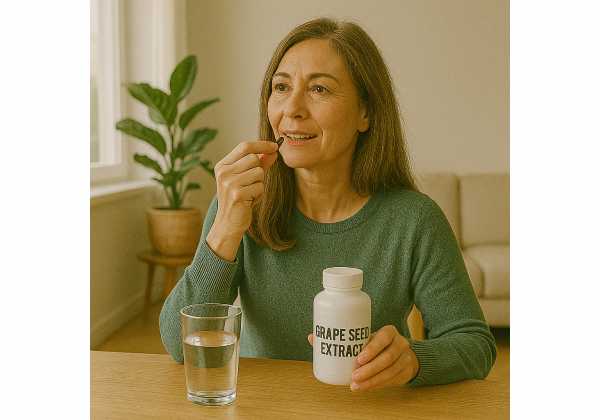
Grape seed extract is a concentrated source of proanthocyanidins, a family of polyphenols also found in berries, cocoa, apples, tea, and red wine. In supplement form, it is usually marketed for blood pressure, circulation, antioxidant support, skin, and general cardiovascular aging. The most credible human evidence sits in the vascular lane: modest effects on blood pressure, endothelial function, and some cardiometabolic markers, with results that vary by dose, product, study length, and baseline health.
Grape seed extract is not a substitute for exercise, sleep, blood pressure control, lipid management, or a Mediterranean-style diet. It fits best as an optional add-on for adults who already track the basics and want a low-burden supplement with plausible vascular benefits. The main questions are whether the product is well standardized, whether the dose matches human studies, and whether bleeding risk, medications, pregnancy, or surgery make it a poor fit.
Table of Contents
- What Grape Seed Extract Is
- How OPCs May Support Vascular Aging
- What Human Studies Show
- Where the Evidence Is Weaker
- Dose, Timing, and Product Quality
- Safety, Interactions, and Who Should Avoid It
- How to Use It in a Longevity Plan
What Grape Seed Extract Is
Grape seed extract comes from the seeds of grapes, usually wine grapes from Vitis vinifera. The seeds are dried and extracted to concentrate polyphenols, especially proanthocyanidins. These compounds belong to the flavonoid family and are built from smaller units called catechins and epicatechins.
The term OPC means oligomeric proanthocyanidin complex. “Oligomeric” means the molecules are linked in short chains. In plain language, OPCs are clustered polyphenols that plants use for defense and that humans study for blood vessel, oxidative stress, and inflammation-related effects.
Grape seed extract is different from grape seed oil. Grape seed oil is mostly a cooking oil with fatty acids and vitamin E. It contains far fewer OPCs. If a study used grape seed extract, a capsule of grape seed oil is not an equivalent substitute.
It is also different from drinking wine. Red wine contains polyphenols from grape skins and seeds, but it also contains alcohol. Alcohol adds sleep, blood pressure, liver, cancer, and injury risks. Grape seed extract gives a concentrated polyphenol dose without alcohol, which makes it a cleaner option for people focused on healthy aging.
Most supplements list grape seed extract in milligrams and often claim a percentage of “polyphenols,” “proanthocyanidins,” or “OPCs.” Those terms do not always mean the same thing. A product that says “95% polyphenols” is not automatically stronger or better than one that says “80% OPCs,” because testing methods differ. A label should clearly state the extract amount per serving and the standardized active fraction.
Grape seed extract belongs in the same broad conversation as other vascular nutraceuticals, such as aged garlic extract, beetroot and nitrate supplements, and hesperidin and diosmin. Each works through different pathways, and none replaces the basics: blood pressure measurement, lipid control, movement, sleep, and dietary pattern.
How OPCs May Support Vascular Aging
Blood vessels age through several overlapping processes. The inner lining of the arteries, called the endothelium, becomes less responsive. Arteries stiffen. Oxidative stress rises. Low-grade inflammation can damage nitric oxide signaling, the system that helps blood vessels relax. Blood pressure, glucose, visceral fat, smoking, poor sleep, and inactivity accelerate these changes.
Grape seed OPCs are studied because they touch several of these pathways at once. That does not mean they reverse vascular aging. It means they act on mechanisms that also matter for vascular health.
Endothelial function and nitric oxide
The endothelium releases nitric oxide, a small signaling molecule that tells the smooth muscle around blood vessels to relax. Better nitric oxide signaling helps arteries widen when the body needs more blood flow. Poor endothelial function often appears years before obvious cardiovascular disease.
Grape seed extract may support endothelial function by reducing oxidative stress around nitric oxide and by influencing endothelial nitric oxide synthase, the enzyme involved in nitric oxide production. In human studies, endothelial function is often measured by flow-mediated dilation, or FMD. FMD looks at how well an artery widens after a short period of reduced blood flow.
A small improvement in FMD does not guarantee fewer heart attacks or strokes. It is still useful because it reflects a real vascular process. In longevity terms, grape seed extract looks more like a support tool for vascular responsiveness than a direct anti-aging therapy.
Oxidative stress without “antioxidant megadosing”
OPCs are often called antioxidants, but that word can mislead readers. In the body, polyphenols do not work like tiny sponges that simply soak up free radicals. Many act more like signaling compounds. They interact with enzymes, gene expression, gut microbes, and inflammatory pathways.
This distinction matters because the body uses oxidative signals for exercise adaptation, immune defense, and cellular repair. The goal is not to erase oxidation. The goal is better redox balance. That is why large antioxidant megadoses deserve caution, especially around training. A moderate grape seed extract dose used consistently looks more reasonable than stacking many strong antioxidant supplements at once. For a broader view, see redox balance and antioxidants.
Arterial stiffness and capillary support
Arteries become stiffer with age, high blood pressure, insulin resistance, and chronic inflammation. Stiffer arteries push pressure waves back toward the heart and brain. This raises the load on the cardiovascular system and contributes to pulse pressure changes.
Some grape seed extract studies include measures related to vascular elasticity or peripheral blood flow. The findings are not strong enough to call grape seed extract an arterial stiffness treatment, but they fit the broader pattern: OPC-rich extracts appear more relevant to vascular tone and endothelial responsiveness than to dramatic changes in cholesterol or plaque.
Capillaries also matter. These tiny vessels deliver oxygen and nutrients to tissues. Plant polyphenols may influence microcirculation, but human evidence remains early. Claims about “strengthening every capillary” go beyond what clinical trials prove.
What Human Studies Show
Human evidence for grape seed extract is strongest for modest changes in blood pressure and vascular function. The trials are usually small, often last 4 to 16 weeks, and use different extracts. This creates mixed results, but a few patterns are useful.
Blood pressure effects are modest, not medication-like
Several controlled trials and meta-analyses suggest grape seed extract can reduce blood pressure by a small amount, especially in people with elevated blood pressure, metabolic syndrome, or higher cardiometabolic risk. Effects often appear in the range of a few mmHg, not 15 or 20 mmHg.
That size still matters at a population level. A sustained 2–5 mmHg reduction in blood pressure is meaningful for long-term cardiovascular risk. For one person, though, it is not enough to ignore hypertension, skip exercise, or stop prescribed medication.
Diastolic blood pressure sometimes improves more consistently than systolic blood pressure. Diastolic pressure is the lower number in a blood pressure reading. Systolic pressure is the higher number and often rises with arterial stiffness as people age. If systolic pressure is high, grape seed extract alone is unlikely to move it enough.
Home tracking matters because office blood pressure often misleads. Stress, caffeine, poor cuff size, and rushed technique can shift readings. A supplement trial is only useful if the measurement method stays consistent. A practical starting point is proper home blood pressure measurement, especially for anyone testing a vascular supplement.
Endothelial function may improve in some groups
Trials using flow-mediated dilation suggest grape seed extract may improve endothelial function, but the results vary. People with poorer baseline endothelial function may show more room for improvement. Healthy adults with already-normal blood pressure and good vascular function may notice little.
This is common in longevity supplements. The more normal the starting point, the smaller the measurable gain. A person with untreated sleep apnea, high sodium intake, low fitness, high alcohol intake, or insulin resistance has larger levers to pull before expecting much from OPCs.
Endothelial effects also depend on timing. Some polyphenols create short-term changes after ingestion, while others require weeks of steady use and gut microbial metabolism. A 7-day study and a 16-week study are testing different questions.
Lipids and cardiometabolic markers show mixed results
Grape seed extract has been studied for LDL cholesterol, triglycerides, glucose, insulin resistance, and inflammatory markers. Some reviews suggest small improvements in LDL cholesterol or triglycerides, while other trials show little change. The differences likely reflect study design, baseline risk, dose, and product composition.
Grape seed extract should not be treated as a primary lipid-lowering strategy. If LDL particle burden is high, ApoB and non-HDL cholesterol give a clearer picture of long-term risk than a supplement response. People using grape seed extract for “heart health” should still know their ApoB and non-HDL cholesterol numbers.
Glucose and insulin findings are also mixed. Some studies in people with metabolic risk or fatty liver report improvements in insulin resistance or liver-related markers. These results are interesting, but they do not make grape seed extract a diabetes treatment. Food quality, body composition, resistance training, walking after meals, sleep, and medication when needed remain the main tools.
Study quality limits strong claims
The evidence base has real limitations:
- Many studies are small.
- Extracts differ in OPC content and manufacturing.
- Trial lengths are often short.
- Some studies include people with different baseline risks.
- Endpoints are often biomarkers, not clinical events.
- Funding and product-specific interests appear in parts of the literature.
This does not make the evidence useless. It means grape seed extract belongs in the “promising but modest” category. It has enough human data to consider, but not enough to promise disease prevention, plaque reversal, or longer life.
Where the Evidence Is Weaker
Grape seed extract is marketed for many aging-related goals. Some uses have plausible mechanisms but limited proof. Separating plausible from proven helps prevent supplement creep.
Skin aging
Grape seed polyphenols may support collagen protection, wound healing pathways, and UV-related oxidative stress in laboratory or topical research. Oral grape seed extract is sometimes included in beauty supplements for skin elasticity and pigmentation. Human evidence remains too thin to treat it as a main skin-aging supplement.
For skin health, the stronger daily levers are sun protection, enough protein, vitamin C-rich foods, sleep, smoking avoidance, and resistance training for body composition. Grape seed extract may sit in the background, but it should not replace sunscreen or a nutrient-dense diet.
Brain aging
Blood vessel health supports brain aging. Midlife blood pressure, endothelial function, insulin resistance, and small vessel disease all influence cognitive risk. Because grape seed extract may support vascular function, it has indirect relevance to brain health.
Direct evidence for memory protection in humans is not strong. Animal and lab studies involving amyloid, neuroinflammation, or oxidative stress are not enough to claim cognitive benefits. For cognitive longevity, blood pressure control, hearing, sleep, movement, social connection, and metabolic health carry more weight. Vascular supplements should be viewed as secondary.
Inflammation and oxidative stress markers
Some studies measure markers such as CRP, oxidized LDL, or antioxidant enzyme activity. Results vary. This is not surprising. Inflammation is not one thing, and a single marker often moves with illness, sleep loss, body fat, oral health, infections, or training stress.
If inflammation is a concern, it is better to measure and interpret it in context rather than chase a vague “anti-inflammatory” effect. A structured approach to hs-CRP and other inflammation markers gives more useful feedback than guessing from how a supplement feels.
Longevity itself
No strong evidence shows grape seed extract extends human lifespan. That does not make it irrelevant. Many longevity tools aim to improve risk factors that shape healthspan, such as blood pressure, glucose control, endothelial function, muscle, sleep, and inflammation.
Still, a supplement should earn its place. If grape seed extract improves a measurable target for you, such as home blood pressure, it has a clearer role. If nothing changes after a fair trial, continuing it because it sounds “anti-aging” is less convincing.
Dose, Timing, and Product Quality
Most adult supplement routines use 100–300 mg per day of grape seed extract. Human studies commonly use about 150–400 mg per day, often for 4–16 weeks. Higher doses are not automatically better, especially when safety data for long-term high intake remain limited.
A practical starting dose is 100–150 mg once daily with food. For blood pressure or vascular goals, many people use 150–300 mg daily. People who are sensitive to supplements, take multiple medications, or have lower body weight should start at the lower end.
| Use case | Common daily range | Trial length to judge response | What to track |
|---|---|---|---|
| General vascular support | 100–150 mg | 8–12 weeks | Blood pressure, tolerance, medication changes |
| Elevated blood pressure add-on | 150–300 mg | 8–12 weeks | Morning and evening home BP averages |
| Metabolic risk or fatty liver context | 200–300 mg | 12–16 weeks | BP, lipids, glucose markers, liver enzymes if relevant |
| Sensitive users or cautious trial | 50–100 mg | 2–4 weeks for tolerance first | GI symptoms, bruising, headaches, dizziness |
Take grape seed extract with a meal if it causes nausea. Morning or midday works well for most people. If you are tracking blood pressure, keep the timing consistent. Changing dose timing, caffeine intake, sodium intake, and exercise all at once makes the result harder to interpret.
Product quality deserves attention. A good label should include:
- The exact amount of grape seed extract per serving.
- The part used: grape seed, not grape skin or grape seed oil.
- Standardization to proanthocyanidins, OPCs, or polyphenols.
- The botanical name, ideally Vitis vinifera.
- Third-party testing or clear quality controls.
- No hidden stimulant blend or unnecessary “circulation complex.”
Avoid products that make disease claims, such as curing hypertension, reversing plaque, treating diabetes, or preventing dementia. Those claims outrun the evidence and often signal poor supplement marketing standards.
Also be careful with stacks. Grape seed extract is often combined with resveratrol, pine bark extract, quercetin, green tea extract, vitamin C, nattokinase, garlic, or fish oil. Some combinations are reasonable, but stacking many blood-flow or antiplatelet-leaning supplements can raise bruising or bleeding concerns. It also makes it harder to know what helped or harmed.
Safety, Interactions, and Who Should Avoid It
Grape seed extract is generally well tolerated in short-term studies. Common side effects include digestive upset, nausea, headache, dry mouth, dizziness, itchy scalp, or rash. Many people notice nothing at all.
Safety still needs a serious look because “natural” does not mean risk-free. OPC-rich extracts have biological effects. They may influence platelet activity, blood vessel tone, and drug-metabolizing pathways. For a healthy adult taking no medications, the risk is usually low. For someone on anticoagulants, antiplatelet drugs, chemotherapy, blood pressure medication, or multiple supplements, the risk picture changes.
Do not use grape seed extract casually if you take warfarin, apixaban, rivaroxaban, dabigatran, clopidogrel, daily aspirin, or other medications that affect bleeding unless a clinician who knows your history agrees. The concern is not that grape seed extract always causes bleeding. The concern is additive risk, especially when combined with medications or procedures.
Stop-before-surgery advice varies by clinician and procedure, but many healthcare teams ask patients to stop nonessential supplements 1–2 weeks before surgery, dental surgery, or invasive procedures. Tell the surgical team about every supplement you take.
Pregnant and breastfeeding people should avoid grape seed extract unless their clinician specifically recommends it. Safety data are not strong enough for routine use in these periods. Children should not use concentrated grape seed extract unless directed by a qualified pediatric clinician.
Use extra caution if you have:
- A bleeding disorder or easy unexplained bruising.
- Low blood pressure or dizziness on standing.
- Planned surgery or dental extraction.
- Liver or kidney disease.
- Multiple prescription medications.
- A history of allergy to grapes or grape products.
- Active cancer treatment, unless cleared by the oncology team.
People with hypertension should also avoid using grape seed extract as a reason to delay proven care. Blood pressure is one of the most treatable drivers of cardiovascular and brain aging. If home averages remain high, the next step is not a higher supplement dose. It is better measurement, lifestyle tightening, and medical guidance.
For people with variable readings, nighttime hypertension, or suspected white-coat hypertension, 24-hour ambulatory blood pressure monitoring gives a better picture than occasional office readings.
How to Use It in a Longevity Plan
Grape seed extract works best as a measured experiment, not a permanent assumption. A simple trial keeps expectations realistic and helps you avoid taking another capsule for years without knowing whether it does anything.
Start with a clear reason. “Vascular support” is too vague by itself. Better reasons include mildly elevated home blood pressure, interest in endothelial support, metabolic risk with clinician oversight, or a preference for a polyphenol supplement instead of alcohol-based sources such as red wine.
Use this sequence:
- Measure your baseline for two weeks. For blood pressure, take readings at the same times each day with a validated cuff and proper technique.
- Choose one product and one dose. Avoid changing several supplements at the same time.
- Use it daily for 8–12 weeks. Keep sodium intake, caffeine, exercise, and medication routines as stable as practical.
- Compare averages, not single readings. Blood pressure changes from stress, sleep, hydration, and meals.
- Stop if side effects appear. Bruising, rash, dizziness, or digestive symptoms are enough reason to pause.
- Decide based on results. Keep it only if benefit, tolerance, cost, and safety all make sense.
A reasonable outcome would be a small drop in average blood pressure, better post-exercise vascular comfort, or improved cardiometabolic markers in a broader plan. A poor outcome would be no measurable change, more bruising, headaches, dizziness, or a supplement stack that becomes too complex.
Food should remain the foundation. You already get proanthocyanidins from berries, cocoa, apples, plums, beans, nuts, cinnamon, and tea. These foods bring fiber, minerals, and other polyphenols that a capsule lacks. Grape seed extract is concentrated and convenient, but it is narrower than a polyphenol-rich eating pattern.
The best pairing is boring but powerful: regular blood pressure tracking, zone 2 cardio, resistance training, enough potassium-rich plant foods, adequate protein, low alcohol intake, sleep apnea treatment when needed, and a lipid plan based on actual risk. In that setting, grape seed extract becomes one small tool rather than the centerpiece.
For healthy aging, that is the right scale. OPCs are biologically interesting, and grape seed extract has enough human evidence to deserve attention for vascular health. The likely benefit is modest, measurable, and context-dependent. Treat it as an optional support for blood vessels, not a shortcut around the habits and medical care that protect arteries over decades.
References
- The effect of grape (Vitis vinifera) seed extract supplementation on flow-mediated dilation, blood pressure, and heart rate: a systematic review and meta-analysis of controlled trials with duration- and dose-response analysis 2022 (Systematic Review)
- The effects of grape seed extract supplementation on cardiovascular risk factors, liver enzymes and hepatic steatosis in patients with non-alcoholic fatty liver disease: a randomised, double-blind, placebo-controlled study 2024 (RCT)
- Grape Seed Extract Positively Modulates Blood Pressure and Perceived Stress: A Randomized, Double-Blind, Placebo-Controlled Study in Healthy Volunteers 2021 (RCT)
- Summary of Health Canada’s safety assessment of grape seed extract for use as a supplemental ingredient 2025 (Safety Assessment)
- Grape Seed Extract: Usefulness and Safety 2025 (Official Page)
- Effects of grape seed extract on dyslipidaemia: a systematic review and dose-response meta-analysis of randomised controlled trials 2020 (Systematic Review)
Disclaimer
This article is educational and does not replace care from a qualified healthcare professional. Grape seed extract can interact with medications and may not be appropriate before surgery, during pregnancy or breastfeeding, or for people with bleeding risk. Discuss supplement use with your clinician, especially if you take blood pressure drugs, anticoagulants, antiplatelet medicines, or multiple supplements.