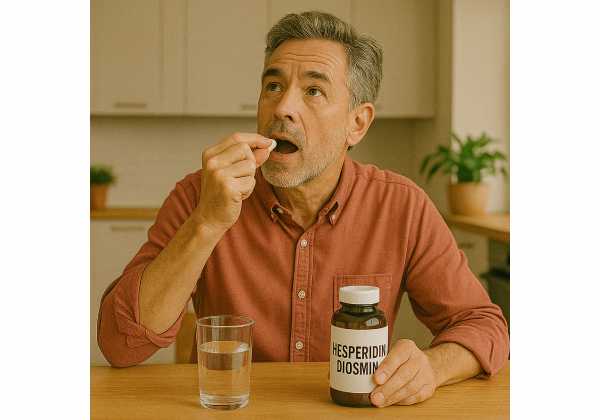
Hesperidin and diosmin are citrus-derived flavonoids best known for supporting vein comfort, leg swelling, and microcirculation. They also draw interest in healthy aging because blood vessels age long before obvious cardiovascular disease appears. Arteries lose some flexibility, the endothelium becomes less responsive, small vessels become more inflamed, and metabolic strain from glucose, blood pressure, and lipids accelerates the process.
Hesperidin is found naturally in oranges and other citrus fruits. Diosmin is closely related and is often used in micronized purified flavonoid fraction, or MPFF, a standardized blend used in chronic venous disease. These compounds are not replacements for blood pressure control, lipid management, exercise, or medical treatment. Their best role is narrower: adjunct support for venous symptoms, endothelial function, and cardiometabolic markers in people who already have the basics in place.
Table of Contents
- What Hesperidin and Diosmin Are
- Vascular Aging and the Endothelium
- Venous Support and Microcirculation
- Metabolic and Cardiovascular Markers
- Forms, Doses, and Timing
- Who Is a Good Fit
- Safety, Interactions, and Quality
- How to Track Results
What Hesperidin and Diosmin Are
Hesperidin and diosmin belong to the flavonoid family, a broad group of plant compounds that help explain some of the vascular benefits linked with citrus-rich and Mediterranean-style diets. Hesperidin is abundant in sweet oranges, especially in the peel and white pith. In the body, gut bacteria and intestinal enzymes convert it into hesperetin, a more absorbable form that reaches circulation.
Diosmin is a related flavonoid often made from hesperidin. After digestion, it converts mainly to diosmetin. Many clinical products use diosmin in micronized form, meaning the particles are made very small to improve absorption. The best-known standardized formula is MPFF, which usually contains 90% micronized diosmin and 10% other flavonoids expressed as hesperidin.
Food and supplements behave differently. Eating citrus provides hesperidin with fiber, vitamin C, potassium, water, and many other plant compounds. A supplement provides a more concentrated and repeatable dose. That makes supplements easier to study, but it also means they should be treated like active compounds, not casual “orange extract.”
| Compound or form | Main source | Common focus | Typical supplement context |
|---|---|---|---|
| Hesperidin | Sweet orange and other citrus | Lipids, blood pressure, endothelial signaling, inflammation | Often 500–1,000 mg/day in studies |
| Diosmin | Usually derived from hesperidin | Venous tone, leg heaviness, swelling, capillary permeability | Often 600–1,000 mg/day depending on formulation |
| MPFF | Standardized diosmin-rich blend | Chronic venous disease symptoms and microcirculation | Commonly 1,000 mg/day in clinical use |
The distinction matters because research on one form does not always transfer cleanly to another. A hesperidin study on cholesterol does not prove that every diosmin product improves lipids. A diosmin study on venous symptoms does not prove that orange juice treats chronic venous disease. The best interpretation stays close to the tested compound, dose, population, and outcome.
For everyday diet, citrus still has value. Whole oranges, mandarins, and small amounts of zest fit naturally into a broader pattern of polyphenol-rich foods. Supplements become more relevant when a person wants a specific dose for a specific vascular target and has checked safety with their clinician.
Vascular Aging and the Endothelium
Vascular aging starts in the vessel lining. The endothelium is a thin layer of cells that releases signals controlling vessel relaxation, clotting balance, immune cell adhesion, and permeability. Healthy endothelium produces nitric oxide, a molecule that helps blood vessels relax and supports smooth blood flow. With age, high blood pressure, high glucose, smoking, visceral fat, poor sleep, and chronic inflammation reduce nitric oxide availability and make vessels stiffer and more reactive.
Hesperidin and diosmin are interesting because they act on several parts of this system at once. They influence oxidative stress, inflammatory signaling, endothelial nitric oxide activity, and capillary permeability. That multi-target pattern suits vascular aging, which rarely comes from one pathway alone.
One underappreciated target is the endothelial glycocalyx. This is a delicate gel-like coating on the inner surface of blood vessels. It helps vessels sense blood flow, limits excess leakage, and discourages inflammatory cells from sticking to the vessel wall. Damage to the glycocalyx appears in states of high glucose, inflammation, disturbed flow, and vascular injury. Diosmin research has raised interest because it appears to support glycocalyx integrity in experimental vascular injury models.
This does not make diosmin a proven anti-aging therapy. It does give a biologically plausible reason why diosmin-rich formulas show benefits in venous disease and microcirculation. Better vessel tone and less inflammatory cell adhesion are directly relevant to swollen, heavy legs and fragile small vessels.
Endothelial function also responds strongly to lifestyle. Movement creates shear stress, the gentle friction of blood flow across the vessel lining. That shear stress stimulates nitric oxide production. Weight loss in people with visceral fat lowers inflammatory strain. Better glucose control reduces glycation and oxidative stress. Sleep and stress regulation reduce sympathetic tone that keeps vessels constricted.
Supplements work best when they ride alongside these stronger signals. For example, a person with mild leg swelling who walks daily, manages sodium intake, wears compression when needed, and uses a diosmin-hesperidin product has a more coherent plan than someone who takes a flavonoid while sitting all day. The same logic applies to arterial health. Hesperidin looks more useful as an adjunct to diet, exercise, and risk tracking than as a stand-alone tool.
Venous Support and Microcirculation
Diosmin and MPFF have their strongest human evidence in chronic venous disease. This condition includes a spectrum: leg heaviness, aching, visible varicose veins, evening swelling, night cramps, skin changes near the ankles, and in advanced cases, venous ulcers. It becomes more common with age, pregnancy history, obesity, prolonged standing, prior blood clots, and family history.
Venous disease is not only a “large vein” problem. Small vessels, capillaries, valves, inflammation, and lymphatic drainage all contribute. When venous pressure stays high, fluid leaks into tissues, inflammatory cells become more active, and the lower legs feel heavy or tight. MPFF appears to help by improving venous tone, lowering inflammatory adhesion, reducing capillary leakage, and supporting microvalve function.
People usually notice venous symptoms in predictable situations:
- Legs feel heavier late in the day than in the morning.
- Ankles look puffier after long standing or travel.
- Heat worsens discomfort.
- Walking often feels better than standing still.
- Elevation gives temporary relief.
- Compression socks reduce swelling or fatigue.
Diosmin-hesperidin products fit this symptom pattern better than vague “circulation support” claims. They are most relevant for leg heaviness, mild-to-moderate swelling, aching, and venous discomfort. They do not remove varicose veins, dissolve clots, or replace vascular evaluation when symptoms suggest deeper disease.
Compression remains central. Graduated compression socks apply more pressure near the ankle and less pressure higher up the leg, helping fluid move upward. Walking strengthens the calf muscle pump, which acts like a second heart for the lower limbs. Weight management reduces venous pressure. Leg elevation helps after long standing.
A practical venous plan often includes:
- Daily walking, preferably broken into several bouts.
- Calf raises or ankle pumps during long sitting.
- Compression during travel, standing work, or symptom-heavy days.
- Weight and waist management when abdominal pressure contributes.
- Medical evaluation for one-sided swelling, new pain, skin breakdown, or sudden worsening.
- A trial of diosmin-hesperidin support when symptoms match chronic venous strain.
Because venous symptoms overlap with other conditions, red flags need attention. Sudden one-sided calf swelling, warmth, redness, chest pain, shortness of breath, or coughing blood requires urgent care. Chronic swelling with skin discoloration, wounds, numbness, or severe pain also deserves medical assessment. Supplements should not delay diagnosis.
Metabolic and Cardiovascular Markers
Hesperidin has more direct evidence than diosmin for metabolic and cardiovascular markers. Recent meta-analyses of randomized trials suggest hesperidin supplementation produces modest improvements in triglycerides, total cholesterol, LDL cholesterol, fasting blood glucose, systolic blood pressure, and tumor necrosis factor-alpha, an inflammatory signaling molecule. Results are less consistent for insulin, HOMA-IR, HDL cholesterol, diastolic blood pressure, hs-CRP, body weight, and waist circumference.
The pattern is important. Hesperidin does not act like a statin, blood pressure medicine, or diabetes drug. The signal looks smaller and more supportive. It seems strongest when doses exceed 500 mg/day and trials last longer than 8–12 weeks. Short trials and low doses produce weaker results.
For vascular aging, the most relevant markers include blood pressure, ApoB or non-HDL cholesterol, triglycerides, fasting glucose, A1c, waist circumference, and inflammatory context. A small change in one marker rarely matters by itself. A repeated pattern across several markers gives a better picture.
For example, a person with high triglycerides, borderline fasting glucose, and elevated waist circumference likely needs a metabolic plan before a supplement plan. Protein distribution, fiber, resistance training, post-meal walking, sleep, and calorie balance carry more force. Hesperidin then becomes a possible add-on. Someone tracking A1c, fasting glucose, and fasting insulin will see whether the broader plan changes insulin resistance over time.
Lipids deserve the same discipline. LDL cholesterol is useful, but ApoB and non-HDL cholesterol give a clearer count of atherogenic particles for many people. Hesperidin’s modest LDL and triglyceride effects do not replace a serious lipid strategy when risk is high. Anyone using supplements for cardiometabolic support should still understand ApoB and non-HDL cholesterol as primary risk markers.
Blood pressure is another area where measurement quality matters. A clinic reading taken after rushing, caffeine, or stress gives poor feedback. Home readings taken with proper technique are more useful. People testing hesperidin for blood pressure support should use a validated upper-arm cuff, rest for five minutes, take two readings, and track morning and evening averages. A structured approach to home blood pressure measurement prevents false confidence and false alarm.
Hesperidin also overlaps with dietary nitrate and exercise pathways because all influence endothelial signaling. Leafy greens, beets, walking, intervals, and resistance training improve vascular function through stronger and better-proven routes. A person interested in nitric oxide support should compare hesperidin with food-based tools such as beetroot and nitrate supplements, especially if exercise capacity or blood pressure is the main target.
The most honest interpretation is this: hesperidin looks promising for small improvements across cardiometabolic risk factors, especially lipids, systolic blood pressure, fasting glucose, and inflammatory tone. It is not a primary treatment for hypertension, diabetes, coronary risk, or obesity.
Forms, Doses, and Timing
The right form depends on the reason for use. Venous symptoms point toward diosmin or MPFF. Cardiometabolic markers point more toward hesperidin. Combination products exist, but the label should make the amount of each compound clear.
Common research and clinical-use ranges include:
| Target | Form often used | Typical adult range | Reasonable trial length |
|---|---|---|---|
| Leg heaviness, aching, venous swelling | MPFF or diosmin-hesperidin blend | 600–1,000 mg/day | 8–12 weeks |
| Lipids, fasting glucose, systolic blood pressure | Hesperidin | 500–1,000 mg/day | 12 weeks or longer |
| General citrus flavonoid intake | Whole citrus foods | Food-based, not dosed like a drug | Ongoing dietary pattern |
MPFF is often taken as 1,000 mg/day, either once daily or split into two doses depending on the product. Diosmin-only products commonly appear at 600 mg/day. Hesperidin supplements often provide 500 mg per capsule, with studies frequently using 500–1,000 mg/day. Higher doses are not automatically better. More compound increases the chance of digestive side effects and does not guarantee a stronger effect.
Taking these supplements with meals improves tolerability. A meal also fits the biology: citrus flavonoids enter a digestive and microbial processing pathway, so the gut environment matters. People with sensitive stomachs should start at the lower end, use one daily dose with food, and increase only if needed.
Micronization matters most for diosmin. Standard diosmin has limited water solubility, so smaller particles improve exposure. Labels that use “micronized diosmin” or “MPFF” usually reflect this issue. For hesperidin, products vary widely in form and bioavailability. Some use standard hesperidin; others use more soluble derivatives or citrus bioflavonoid complexes. The evidence base is strongest when the label resembles the studied ingredient and dose.
Do not combine several vascular supplements at full dose on the same day just because each one looks “heart healthy.” A stack containing hesperidin, diosmin, aged garlic, high-dose fish oil, nattokinase, ginkgo, curcumin, and vitamin E creates unnecessary safety uncertainty, especially around bleeding risk and surgery. A clean trial uses one main change at a time. That approach fits safe self-experimentation better than supplement piling.
Timing expectations should stay realistic. Venous discomfort sometimes improves within a few weeks, but swelling and heaviness deserve an 8–12 week evaluation. Cardiometabolic markers need lab timing. Lipids and glucose markers usually require at least 8–12 weeks to show a stable trend. Blood pressure averages can shift sooner, but a two-week average is more meaningful than a single good day.
Who Is a Good Fit
Hesperidin and diosmin suit specific profiles better than broad anti-aging use. The best candidates have a clear vascular or metabolic reason, a way to track results, and no obvious safety conflicts.
A diosmin-hesperidin or MPFF trial fits someone with mild chronic venous symptoms: heavy legs, end-of-day ankle swelling, discomfort after standing, or recurring travel-related leg fatigue. It fits especially well when the person already uses walking, calf movement, elevation, and compression but wants additional support.
A hesperidin trial fits someone with mild cardiometabolic drift: borderline triglycerides, mildly elevated LDL cholesterol, higher fasting glucose, or slightly elevated systolic blood pressure. It makes more sense when these markers are not severe enough to demand medication changes, or when a clinician has already addressed the medical plan.
People with strong metabolic drivers need the foundation first. Waist gain, fatty liver, high triglycerides, high fasting insulin, and post-meal glucose spikes respond most strongly to food structure, resistance training, aerobic conditioning, sleep regularity, and weight loss when needed. Hesperidin will not compensate for a pattern of low activity and frequent refined carbohydrate intake. For metabolic vascular strain, practical habits such as post-meal walking often deliver a clearer signal.
People with blood pressure concerns should treat hesperidin as a helper, not a shield. Persistently high readings need diagnosis and a plan. Diet patterns rich in potassium, magnesium, fiber, and minimally processed foods pair well with medical care. A food-first approach to blood pressure and healthy aging should come before supplement fine-tuning.
People with advanced venous disease need clinical care. Skin darkening around the ankles, eczema-like irritation, hard swelling, wounds, recurrent bleeding varicose veins, or prior deep vein thrombosis changes the picture. MPFF has evidence in chronic venous disease, but advanced disease often needs duplex ultrasound, compression guidance, wound care, procedures, or anticoagulation review.
Hesperidin and diosmin are poor fits when the goal is vague. “Better circulation” is too broad to track. Good goals sound concrete: fewer heavy-leg evenings per week, reduced ankle circumference after standing, lower 12-week triglycerides, improved home systolic blood pressure average, or better tolerance during travel days.
Safety, Interactions, and Quality
Hesperidin and diosmin are generally well tolerated in studies, but “generally” does not mean risk-free. Common side effects include stomach discomfort, nausea, diarrhea, headache, dizziness, itching, or rash. Taking the supplement with meals and starting at a lower dose reduces avoidable problems.
Extra caution is sensible for people who take anticoagulants, antiplatelet drugs, or multiple supplements with blood-thinning potential. This includes warfarin, direct oral anticoagulants, clopidogrel, aspirin used for medical reasons, high-dose omega-3 supplements, ginkgo, nattokinase, and high-dose garlic extracts. The interaction evidence is not as clear as it is for many prescription drugs, but the combination deserves clinician oversight because bleeding risk depends on the whole stack.
Stop-before-surgery rules should come from the surgical team. Many clinicians ask patients to stop nonessential supplements one to two weeks before procedures. This is especially relevant when the procedure involves bleeding risk, anesthesia, or postoperative anticoagulation.
Pregnancy and breastfeeding require medical guidance. Diosmin-hesperidin products are used in some pregnancy-related venous contexts in parts of the world, but self-directed use is not appropriate. People with liver disease, kidney disease, active cancer treatment, bleeding disorders, or complex medication lists should also get individualized advice.
Citrus allergy is uncommon but relevant. A person who reacts to citrus peel, orange extracts, or bioflavonoid products should avoid these supplements unless an allergist or clinician gives clear guidance.
Quality varies widely. A good product should state:
- The exact amount of diosmin, hesperidin, or MPFF per serving.
- Whether diosmin is micronized.
- The serving size and daily dose.
- The other active ingredients in the blend.
- The manufacturer’s testing standards.
- Third-party testing or certification when available.
- Clear allergen and excipient information.
Avoid labels that hide the dose inside a “proprietary vascular complex.” Avoid products that promise to reverse vascular aging, erase varicose veins, detox arteries, or cure endothelial dysfunction. Strong claims usually signal weak quality control or exaggerated marketing.
Also avoid confusing citrus bioflavonoids with grapefruit drug interactions. Grapefruit is famous for affecting CYP3A4 metabolism and raising levels of certain medications. Hesperidin from sweet orange is not the same as concentrated grapefruit compounds. Still, people taking narrow-therapeutic-index drugs should ask a pharmacist before adding concentrated flavonoids.
How to Track Results
Tracking separates useful supplementation from wishful thinking. A good trial starts with one target, one dose, and one review date. For most people, 8–12 weeks is long enough to judge venous symptoms and early cardiometabolic changes.
For venous symptoms, use a simple weekly scorecard:
| Measure | How to track it | Useful sign |
|---|---|---|
| Leg heaviness | 0–10 evening score, 3–4 days/week | Lower average score after 8 weeks |
| Ankle swelling | Measure at the same ankle point in the evening | Smaller evening increase vs morning |
| Standing tolerance | Note discomfort after work, travel, or errands | Fewer symptom-heavy days |
| Compression need | Record days when compression feels necessary | Better comfort, not avoidance of needed compression |
Do not judge progress during unusual weeks. Heat waves, long flights, illness, menstrual cycle shifts, salty meals, and long standing can all worsen swelling. Compare similar conditions when possible.
For metabolic support, choose a lab review window before starting. Useful markers include fasting glucose, A1c, fasting insulin when appropriate, triglycerides, HDL cholesterol, LDL cholesterol, ApoB or non-HDL cholesterol, blood pressure averages, waist circumference, and body weight. Hesperidin’s expected effect is modest, so clean measurement matters.
A simple 12-week trial might look like this:
- Keep diet, exercise, and medications stable unless your clinician changes them.
- Record baseline blood pressure for 7 days.
- Check relevant labs near the start.
- Take the chosen hesperidin dose with meals.
- Track side effects and adherence.
- Repeat blood pressure averages and labs around week 12.
- Continue only if benefits are visible, meaningful, and safe.
If several lifestyle changes begin at once, do not credit the supplement automatically. A new walking habit, better sleep, weight loss, lower alcohol intake, or higher fiber intake often explains improved markers. That is still a win, but it changes the conclusion. Supplements deserve credit only when the pattern reasonably points to them.
Stop the trial if side effects appear, symptoms worsen, bruising or bleeding increases, or a clinician advises stopping. Also stop if no measurable benefit appears after a fair trial. Longevity-minded supplementation should earn its place. A supplement that adds cost, pill burden, and uncertainty without a clear result does not belong in a long-term plan.
Hesperidin and diosmin occupy a useful middle ground. They are more evidence-based than many “circulation” supplements, especially for venous symptoms and selected metabolic markers. They are also less powerful than the fundamentals: blood pressure control, lipid risk management, regular movement, healthy body composition, sleep, and medical care when needed. Used with clear targets and careful tracking, they can support a vascular aging plan without pretending to replace one.
References
- Effects of Hesperidin Supplementation on Cardiometabolic Markers: A Systematic Review and Meta-analysis of Randomized Controlled Trials 2024 (Systematic Review)
- Effect of hesperidin on blood pressure and lipid profile: A systematic review and meta-analysis of randomized controlled trials 2024 (Systematic Review)
- European Society for Vascular Surgery (ESVS) 2022 Clinical Practice Guidelines on the Management of Chronic Venous Disease of the Lower Limbs 2022 (Guideline)
- Improving Chronic Venous Disease Management with Micronised Purified Flavonoid Fraction: New Evidence from Clinical Trials to Real Life 2023 (Review)
- New Perspectives on Micronised Purified Flavonoid Fraction in Chronic Venous Disease: From Microvalves to Clinical Effectiveness 2022 (Review)
- Diosmin and its glycocalyx restorative and anti-inflammatory effects on injured blood vessels 2022 (Mechanistic Study)
Disclaimer
This article is educational and does not replace care from a qualified healthcare professional. Hesperidin, diosmin, and MPFF can affect symptoms and health markers, but they are not substitutes for diagnosis or treatment of venous disease, hypertension, diabetes, lipid disorders, blood clots, or cardiovascular disease. Ask a clinician or pharmacist before using these supplements if you take blood thinners, have surgery planned, are pregnant or breastfeeding, or have complex medical conditions.