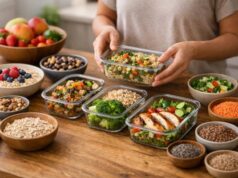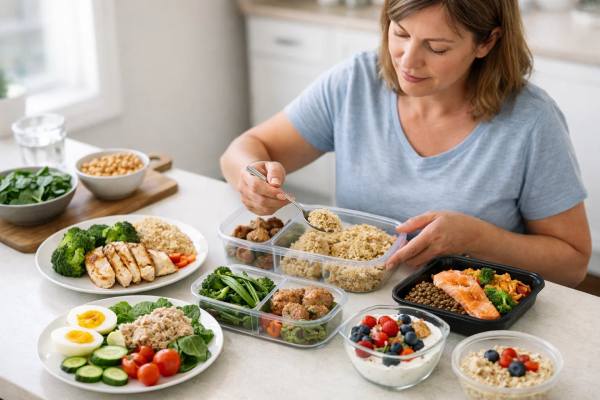
A high-protein, high-fiber meal plan works for weight loss because it tackles the two problems that derail most calorie deficits: hunger and inconsistency. Protein helps protect lean mass and improves fullness, while fiber adds volume, slows digestion, and makes meals more satisfying. Put them together, and it becomes easier to eat fewer calories without feeling like every day is a test of willpower.
The most useful version of this approach is not extreme, expensive, or complicated. It is a repeatable formula built around protein-rich foods, fiber-rich carbs, vegetables, fruit, and smart portions. This guide explains how to build that formula, how much protein and fiber to aim for, what a full day can look like, and how to make the plan practical for real life.
Table of Contents
- Why this meal plan works
- How much protein and fiber to aim for
- The simple meal-building formula
- Best foods to use most often
- Sample one-day high-protein high-fiber plan
- How to adjust calories and portions
- Meal prep and consistency strategies
- Mistakes that make the plan less effective
Why this meal plan works
A high-protein, high-fiber meal plan helps with weight loss because it makes a calorie deficit easier to sustain. That sounds simple, but it matters more than any fancy diet label. The best meal plan is the one that helps you stay reasonably full, keeps energy steady, and reduces the urge to overeat later in the day.
Protein is useful because it supports muscle retention during fat loss and usually increases satiety more than meals built mostly around refined carbs or fats. This is especially important if you are strength training, active, or trying to lose weight without looking and feeling “smaller but softer.” A meal plan that includes enough protein can make weight loss look better, feel better, and support better body composition over time.
Fiber matters just as much for everyday appetite control. Foods with more fiber usually take longer to eat, create more stomach volume, and keep meals from feeling tiny. A breakfast with Greek yogurt, berries, chia, and oats will usually hold you better than a sweet pastry. A lunch built around chicken, beans, vegetables, and grains tends to keep you steadier than a sandwich and chips that disappear fast and leave you hungry an hour later.
This combination also improves meal quality without making the plan feel rigid. Protein tends to pull in foods like Greek yogurt, eggs, cottage cheese, chicken, fish, tofu, edamame, and lean meat. Fiber tends to pull in fruit, vegetables, legumes, oats, potatoes, and whole grains. As those foods take up more room in your day, lower-satiety foods naturally have less space.
Another reason this formula works is that it helps reduce the “I was good all day, then I lost control at night” pattern. When breakfast and lunch are too light in protein and fiber, evening hunger often becomes a predictable result, not a motivation problem. A more balanced day can reduce that rebound effect. This lines up well with a broader approach to building a calorie deficit that reduces hunger rather than relying on constant restraint.
Most importantly, this kind of plan is flexible. It can be Mediterranean-style, lower carb, plant-forward, simple meal prep, or family-friendly. The formula stays the same even when the food choices change.
How much protein and fiber to aim for
A useful high-protein, high-fiber meal plan needs real targets, not vague advice to “eat more protein” and “get more fiber.” For most adults trying to lose weight, a practical starting point is to aim for roughly 1.2 to 1.6 grams of protein per kilogram of body weight per day, with some people going a bit higher depending on body size, training, age, and calorie deficit size. For fiber, a strong general target is at least 25 to 35 grams per day, and many people do well when they move toward the upper end of that range through whole foods.
That does not mean every meal has to be perfect. It means your day should consistently trend in that direction.
A simple way to spread intake across the day is:
- Protein: around 25 to 40 grams per meal
- Fiber: around 8 to 12 grams per meal
- Snacks: optional, but often most useful when they add 10 to 20 grams of protein or 3 to 8 grams of fiber, depending on the need
These are not rigid rules. They are practical ranges. A smaller person eating three meals may sit near the lower end. A larger or more active person may need more. Someone using a snack between meals might split protein more evenly across four eating occasions instead.
Here is a practical reference point:
| Target area | Helpful range | What that looks like in practice |
|---|---|---|
| Protein per day | 1.2 to 1.6 g/kg | Often 90 to 160 g for many adults |
| Fiber per day | 25 to 35 g or more | Usually requires fruit, vegetables, legumes, and whole grains most days |
| Protein per meal | 25 to 40 g | For example, eggs plus yogurt, or chicken plus beans |
| Fiber per meal | 8 to 12 g | For example, vegetables, fruit, oats, beans, potatoes, or whole grains |
If your current intake is far below these ranges, the best approach is not to overhaul everything in one day. Add one better breakfast. Improve one lunch. Replace a low-fiber snack. Increase gradually enough that your digestion can adapt. It also helps to improve hydration at the same time.
For more detailed planning, it can help to review protein targets per meal and fiber targets per meal. Those two numbers often make meal planning much easier than trying to think only in daily totals.
The simple meal-building formula
The easiest way to follow a high-protein, high-fiber meal plan is to stop thinking in terms of perfect recipes and start thinking in terms of a repeatable meal formula.
A simple formula looks like this:
- Choose a primary protein source.
- Add a fiber-rich carb or legume.
- Add at least one large serving of vegetables or fruit.
- Include a moderate amount of fat for satisfaction.
- Adjust portions based on calorie needs and hunger.
That is the whole system.
For example, breakfast might be Greek yogurt as the protein source, berries and oats for fiber-rich carbs, and chia seeds for added fiber and fat. Lunch might be chicken breast, black beans, roasted vegetables, and a small portion of rice or potatoes. Dinner might be salmon, lentils, and a large salad with olive oil. None of those meals are complicated, but all of them check the boxes.
This formula works because it improves the quality of the meal before you even count calories. Protein keeps the meal substantial. Fiber increases fullness. Produce adds volume. A moderate amount of fat makes it more satisfying and easier to stick with. That is one reason the plan often feels less restrictive than diets built around cutting major food groups.
A good plate often looks like this:
- Protein anchor: chicken, turkey, eggs, Greek yogurt, cottage cheese, tofu, tempeh, fish, shrimp, lean beef, edamame
- Fiber anchor: beans, lentils, oats, potatoes, berries, fruit, whole grains, high-fiber wraps, vegetables
- Volume foods: leafy greens, broccoli, cauliflower, zucchini, peppers, mushrooms, tomatoes, cucumbers
- Flavor and satisfaction: avocado, nuts, seeds, olive oil, cheese in measured amounts, sauces used intentionally
This structure overlaps with the logic behind building a high-protein plate for weight loss. The difference here is that fiber gets equal attention, not just protein.
A useful mental shortcut is to make every meal answer two questions:
- Where is the main protein?
- Where is the main fiber?
If you cannot answer both quickly, the meal is probably less filling than it could be.
That does not mean every meal must be large. It means each meal should have enough nutritional structure to prevent hunger from running the day. Once you start using that formula consistently, you stop needing so much decision-making. That makes the plan easier to follow on busy days, not just ideal days.
Best foods to use most often
The best foods for a high-protein, high-fiber meal plan are the ones you can repeat often without getting bored, overspending, or feeling like you are eating “diet food.” You do not need hundreds of foods. You need a reliable core list.
High-protein foods that work well
- Greek yogurt
- cottage cheese
- eggs and egg whites
- chicken breast or thigh
- turkey
- tuna and salmon
- shrimp
- lean beef
- tofu and tempeh
- edamame
- high-protein milk or soy milk
- protein powder when needed for convenience
High-fiber foods that work well
- berries
- apples and pears
- oranges
- oats
- beans and lentils
- chickpeas
- potatoes and sweet potatoes
- whole-grain bread or wraps
- high-fiber cereal
- chia seeds and flax
- vegetables of all kinds, especially broccoli, Brussels sprouts, carrots, and leafy greens
Foods that do double duty
Some foods help on both sides:
- beans
- lentils
- edamame
- chickpeas
- chia seeds
- high-protein high-fiber wraps
- some higher-protein whole grains and cereals
This is one reason legumes are so useful. They can raise both fullness factors at the same time.
A practical grocery rotation might include a few proteins, a few fiber-rich carbs, several vegetables, and a couple of easy snack staples. For example: Greek yogurt, eggs, chicken, canned tuna, frozen edamame, oats, potatoes, black beans, berries, apples, carrots, broccoli, salad greens, and high-fiber wraps. That alone can create many solid meals.
You can also use convenience foods strategically. Frozen vegetables, microwaveable grains, canned beans, rotisserie chicken, and pre-washed greens can make the plan much easier to sustain. That works well alongside a high-protein grocery list and a simple weight loss grocery list for beginners.
The main goal is not to eat “cleaner” in a vague sense. It is to make your most common meals more filling, more balanced, and easier to repeat.
Sample one-day high-protein high-fiber plan
A good high-protein, high-fiber meal plan should feel realistic. The point is not to build a perfect menu that no one follows twice. The point is to show what the formula looks like over a full day.
Here is one sample day:
Breakfast
Greek yogurt bowl with plain Greek yogurt, berries, oats, chia seeds, and a small sprinkle of nuts.
Why it works:
- high in protein from yogurt
- high in fiber from berries, oats, and chia
- enough texture and volume to feel substantial
Lunch
Chicken and bean bowl with grilled chicken, black beans, roasted vegetables, salsa, and a moderate portion of rice.
Why it works:
- protein anchor from chicken
- fiber from beans and vegetables
- carbs included, but not dominating the meal
Snack
Apple with cottage cheese, or roasted chickpeas with fruit.
Why it works:
- bridges the afternoon without a crash
- helps prevent arriving at dinner extremely hungry
Dinner
Salmon, roasted potatoes, broccoli, and a side salad with olive oil and vinegar.
Why it works:
- strong protein source
- fiber from potatoes, broccoli, and salad
- satisfying but still easy to portion
Optional evening snack if needed
High-fiber cereal with milk, or Greek yogurt with berries.
Why it works:
- supports fullness later in the evening
- usually better than grazing on random snack foods
This kind of day is flexible. You can swap the protein source, change the carb, or use vegetarian options without breaking the structure. A tofu stir-fry with edamame and brown rice can work just as well. So can eggs and beans at breakfast, or tuna with lentil salad at lunch.
The easiest way to create variety is to keep the structure the same while changing flavors. Use Mediterranean flavors one day, Mexican-style bowls the next, then simple sheet-pan meals later in the week. That is why a high-protein, high-fiber approach fits well with macro-friendly meals and a broader macro meal plan for weight loss without becoming repetitive.
If a full day like this feels like too much change, improve one meal first. Breakfast and lunch are often the highest-return places to start.
How to adjust calories and portions
The formula matters, but calories still matter. A high-protein, high-fiber meal plan works best when portions match your needs. The goal is not to eat as much protein and fiber as possible. The goal is to use them to make an appropriate calorie intake easier to sustain.
Start by thinking in layers.
If weight loss is not happening and adherence is reasonably good, adjustments usually come from portion sizes, fats, snacks, and extras, not from removing protein and fiber. In fact, cutting those first often backfires because hunger goes up and consistency gets worse.
Here are simple ways to scale the plan:
To reduce calories without wrecking fullness
- keep protein portions similar
- keep vegetables high
- reduce oils, dressings, cheese, nut butters, and other dense extras first
- shrink refined carb portions before removing legumes, fruit, or vegetables
- tighten snack portions if they have turned into mini-meals
To increase calories while keeping the structure
- add more rice, oats, potatoes, or whole grains
- increase fats moderately
- add another snack
- increase protein portions slightly if needed
To make meals more filling without many extra calories
- add more vegetables
- swap refined carbs for beans, potatoes, oats, or fruit
- use broth-based soups or big salads alongside meals
- choose foods with more chew and volume
This is where portion awareness matters. A meal can be high in protein and fiber and still be too calorie-dense if it is loaded with oils, nuts, granola, avocado, cheese, and sauces all at once. Healthy foods still count.
It helps to know your general calorie target, even if you do not track closely forever. Resources on how many calories to eat for weight loss and portion sizes and the plate method can make this easier. If you prefer not to count forever, the plan can eventually become more visual and habit-based. But early on, some structure helps.
A good sign you have found the right balance is that meals feel satisfying, hunger is manageable, and progress happens without needing constant white-knuckling.
Meal prep and consistency strategies
A meal plan only works if it survives real life. That means the best version is usually the one with enough repetition to reduce decisions, but enough variety to prevent burnout.
Meal prep does not need to mean a fridge full of identical containers. A better approach for many people is “component prep.” Cook a few proteins, a few fiber-rich carbs, and a batch of vegetables, then mix and match.
A simple prep session might include:
- grilled or baked chicken
- cooked lentils or black beans
- roasted potatoes
- washed salad greens
- chopped vegetables
- hard-boiled eggs
- Greek yogurt and berries
- overnight oats or pre-portioned oats
With those pieces ready, you can assemble bowls, wraps, salads, breakfasts, and quick dinners without starting from zero each time.
Other consistency strategies that help:
- keep one or two default breakfasts
- keep two easy lunches on repeat
- have at least one emergency dinner option in the freezer
- stock protein and fiber snack staples
- plan the hardest time of day, not just the ideal meals
- decide in advance what you will eat on busy days
This is especially important if your weak point is decision fatigue. People often do not “fail” because they lack knowledge. They fail because every meal becomes a fresh negotiation. A plan with defaults lowers that friction. That is why structured meal prep often supports weight loss better than relying on daily improvisation.
A simple weekend system can help a lot, especially when it includes breakfasts, lunches, and one or two dinner anchors. That works well with a one-hour weekend meal prep approach or even a repeatable 30-day meal plan template if you want more structure.
You do not need perfect discipline. You need fewer situations where hunger and inconvenience make the decision for you.
Mistakes that make the plan less effective
A high-protein, high-fiber meal plan can still fail if the execution is off. Most problems come from one of a few common mistakes.
Making the plan too low in calories
Some people build meals that look healthy but are too small. That often happens with tiny salads, low-fat everything, or meals built mostly around vegetables without enough actual protein or carb substance. The result is predictable: hunger rebounds, cravings rise, and evening eating gets harder to control.
Chasing protein while ignoring fiber
It is easy to focus only on protein shakes, bars, chicken, and yogurt while forgetting produce, legumes, oats, potatoes, and whole grains. That can leave meals technically high in protein but still not very filling. Protein works better when fiber is doing its job too.
Chasing fiber while ignoring protein
The reverse can also happen. Someone may eat lots of fruit, vegetables, oatmeal, and high-fiber snacks, but still fall short on protein. That can leave meals less satisfying and make muscle retention harder during weight loss.
Relying too much on “healthy” packaged foods
A bar with added fiber or a cereal with extra protein can be useful, but too many engineered foods make the plan less satisfying than whole-food-based meals. Convenience is good. Dependence on packaged products is usually less helpful.
Forgetting palatability and practicality
A meal plan has to taste good enough to repeat. Bland food often leads to abandonment, not discipline. Herbs, spices, sauces, salsa, lemon, mustard, yogurt-based dressings, and smart seasoning matter.
Not planning for real life
Restaurant meals, travel, family dinners, and stressful weeks all happen. The goal is not perfection. The goal is to keep the core pattern intact most of the time. That means knowing what a good-enough breakfast looks like, what a solid takeout order looks like, and how to recover after an off-plan meal without overreacting.
If progress slows, it is worth checking simple issues first before assuming the meal plan stopped working. Common problems include portion drift, extra snacks, underestimating calorie-dense toppings, and weekend inconsistency. That overlaps with common diet mistakes that stall weight loss and the need to adjust calories and macros when progress slows.
The best high-protein, high-fiber meal plan is not the most impressive one. It is the one you can repeat long enough for results to show.
References
- Protein, fiber, and exercise: a narrative review of their roles in weight management and cardiometabolic health 2025 (Review)
- The role of dietary fibers in regulating appetite, an overview 2024 (Review)
- Effects of dietary fibre on metabolic health and obesity 2024 (Review)
- Enhanced protein intake on maintaining muscle mass during weight loss in adults with overweight and obesity: a systematic review and meta-analysis 2024 (Systematic Review)
- Protein requirement in obesity 2025 (Review)
Disclaimer
This article is for general educational purposes only and is not a substitute for medical, nutrition, or weight-loss advice. If you have kidney disease, digestive conditions, diabetes, a history of disordered eating, or other medical concerns, speak with your doctor or a registered dietitian before making major changes to protein, fiber, or calorie intake.
If this article helped, share it on Facebook, X, or your preferred platform so others can use a simpler, more satisfying approach to weight loss.