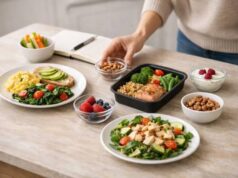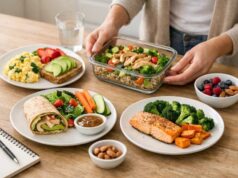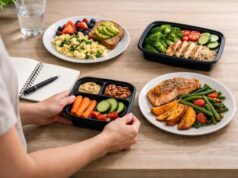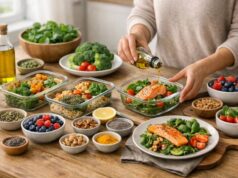
Healthy fats can help with weight loss, but only when you use them strategically. They make meals more satisfying, improve flavor, and help a lower-calorie diet feel less restrictive. The catch is that fat is calorie-dense, so even very nutritious choices can slow progress if portions drift.
That is why the best healthy fats for weight loss are not the ones with the lowest calories or the trendiest label. They are the fats that help you stay full, enjoy your meals, and control portions without turning every salad, snack, or smoothie into a hidden calorie bomb. This guide explains which fats are most useful, how much to use, which ones are easiest to overeat, and how to fit them into meals that actually support fat loss.
Table of Contents
- Why fat matters in a weight loss diet
- What makes a fat choice better for weight loss
- Best healthy fats to eat more often
- How much fat you actually need
- Easy ways to use healthy fats without overdoing it
- Fat traps that can slow weight loss
- Who may need a different approach
Why fat matters in a weight loss diet
A lot of people try to lose weight by cutting fat aggressively. That can work on paper, but in real life it often makes meals less satisfying and harder to stick with. Fat adds richness, slows down the pace of eating, and helps a meal feel complete. Without enough of it, people often end up chasing snacks, craving dessert, or overdoing refined carbohydrates later in the day.
That does not mean more fat is always better. Fat provides about 9 calories per gram, which is more than double the calories in protein or carbohydrate. So while fat improves satisfaction, it also raises the calorie content of meals fast. One extra drizzle of olive oil, a large handful of nuts, and half an avocado can turn a modest lunch into something far more calorie-dense than intended.
The useful middle ground is understanding what fat is supposed to do in your diet. Its job is not to dominate the plate. Its job is to support fullness, flavor, nutrient absorption, and overall diet quality. A tablespoon of olive oil on roasted vegetables, some salmon at dinner, or a measured spoonful of peanut butter with fruit can help you feel more satisfied than a completely fat-free meal.
There is also a behavioral benefit. Diets that are too low in fat often feel like “diet food” in the worst sense: dry chicken, plain rice, steamed vegetables, and constant hunger. That tends to reduce adherence. A better approach is to include enough healthy fat that meals feel normal, enjoyable, and repeatable.
Healthy fats also usually come packaged with other benefits. Nuts and seeds bring minerals and some fiber. Fatty fish bring protein. Avocados add fiber and volume. Olive oil fits naturally into meals built around vegetables and lean proteins. That is why focusing on food sources tends to work better than obsessing over individual fatty acids.
For weight loss, fat should be viewed as a support player. Protein and fiber usually do more of the heavy lifting for fullness, but healthy fat makes the whole system easier to live with. It works especially well when paired with the broader ideas behind how much fat you need for satiety and what to eat in a calorie deficit.
What makes a fat choice better for weight loss
Not all fat sources are equally useful in a fat-loss phase. The best healthy fats for weight loss usually have at least one of these advantages: they improve satisfaction a lot, come in a naturally portioned food, bring other nutrients with them, or fit easily into balanced meals without adding too many “invisible” calories.
Four traits that matter most
A fat choice tends to be more helpful when it is:
- Paired with protein, fiber, or both
- Easy to portion
- Part of a real food rather than just added oil
- Satisfying enough to reduce later overeating
That last point is important. A food can be calorie-dense and still be useful if a modest portion genuinely helps you feel settled after a meal. The problem is that some fats are easier to overconsume than others. Drinking calories in a coffee drink with cream is different from eating a measured serving of walnuts with plain yogurt and berries.
Whole foods usually beat “free-pour” fats
In general, fats that come inside whole foods tend to be easier to manage than fats poured or spread without much attention. For example:
- Almonds are usually easier to track than several casual glugs of olive oil
- Half an avocado is easier to picture than a heavy swipe of aioli
- Salmon at dinner may be more filling than a very lean meal covered in dressing
This does not make oils bad. Olive oil is still one of the better fat choices overall. It just means you often get more satiety per calorie when fat comes attached to protein, fiber, water, or chewing.
Unsaturated fats are usually the better default
For everyday eating, fats from olive oil, nuts, seeds, avocado, and fish are generally better default choices than large amounts of butter, cream, fatty processed meats, or foods high in trans fat. That is a health-quality point, but it also helps meal quality. Meals built around unsaturated fats often come bundled with vegetables, seafood, legumes, and whole foods rather than pastries, fast food, or snack foods.
There is also a practical lesson here: a “healthy fat” does not automatically become a weight-loss food. Coconut oil, butter coffee, and large nut butter servings may fit certain diet communities, but that does not mean they are the easiest tools for appetite control in a calorie deficit. Fat quality matters, but so does calorie cost.
That is why the most useful perspective is not “eat more fat” or “avoid fat.” It is “choose fats that buy you the most satisfaction for the fewest extra calories.” That logic fits well with the broader balance described in macro ratios for weight loss and in foods that work best in a calorie deficit.
Best healthy fats to eat more often
The best healthy fats for weight loss are the ones that make meals more satisfying without quietly blowing up your calorie budget. In practice, that means fats you can portion well, repeat consistently, and pair with protein- and fiber-rich foods.
| Food | Why it helps | Easy portion idea |
|---|---|---|
| Extra-virgin olive oil | Easy way to improve flavor and meal satisfaction | 1 teaspoon to 1 tablespoon in cooking or dressing |
| Avocado | Provides fat plus fiber and volume | One quarter to one half avocado |
| Nuts | Satisfying, portable, crunchy, and nutrient-dense | Small handful or pre-portioned serving |
| Seeds | Add texture, healthy fats, and some fiber | 1 to 2 tablespoons |
| Nut butters | Can make snacks more filling when measured | 1 tablespoon |
| Fatty fish | Combines healthy fat with high-quality protein | One normal entrée portion |
| Olives | Flavorful and useful in small amounts | Small serving added to meals |
| Plain yogurt with some fat | Often more satisfying than fully fat-free versions | Single-serve bowl with fruit |
Olive oil
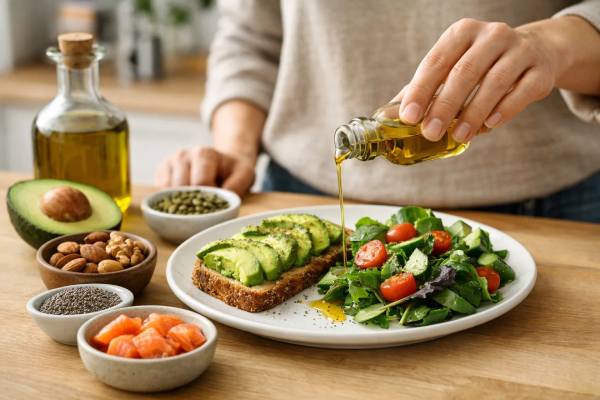
Olive oil is one of the easiest fats to use well. It makes vegetables taste better, works in dressings and marinades, and helps simple meals feel complete. The main caution is portion drift. A careful teaspoon is very different from free-pouring three tablespoons into a pan.
Avocado
Avocado stands out because it adds both fat and fiber. That combination can make toast, salads, bowls, and wraps more satisfying than oil alone. It is still calorie-dense, but a smaller serving goes a long way.
Nuts and seeds
Almonds, pistachios, walnuts, pumpkin seeds, sunflower seeds, chia, and flax can all fit nicely into a weight-loss plan. They work best when they are used to support a meal or snack, not as a mindless desk snack from a large container. Pre-portioned servings help a lot.
Fatty fish
Salmon, sardines, trout, and mackerel are especially useful because the fat comes attached to a strong protein source. That tends to be more filling than using added fats alone. For many people, this makes seafood one of the most practical “healthy fat” foods in the diet. If you like seafood-based eating patterns, there is a natural overlap with a pescatarian approach for weight loss.
Nut butters and olives
These can absolutely fit, but they are best treated as flavor boosters rather than free foods. A measured spoonful of peanut butter with apple slices is helpful. Eating directly from the jar is not. The same goes for olives, pesto, tahini, and similar foods.
The common thread is simple: the best healthy fats are the ones that improve satisfaction without turning every meal into a calorie surplus.
How much fat you actually need
There is no single perfect number that works for everyone, but most people trying to lose weight do well with a moderate intake rather than an extreme low-fat or very high-fat approach. The more useful question is not “How low can I go?” It is “How much helps me feel satisfied while still leaving room for protein, fiber, and a calorie deficit?”
For many adults, fat often lands somewhere around 25% to 35% of total calories, though some do well slightly outside that range depending on food preferences and calorie level. On a practical level, that might look like:
- Some olive oil used in cooking or dressing
- One serving of nuts or seeds during the day
- A meal with salmon, eggs, or avocado
- Reasonable portions of dairy or other fat-containing foods
That is very different from a plan built around heavy cream, large cheese portions, buttered coffee, and multiple handfuls of nuts. Both can be described as “including healthy fats,” but only one is usually easier to fit into a sustainable deficit.
Why going too low can backfire
Very low-fat diets can make people hungrier, especially when meals are mostly starch and lean protein with little flavor. You may start feeling deprived, which often leads to rebound eating later. Some people also notice more cravings and less meal satisfaction when every fat source is stripped away.
Why going too high can also backfire
The opposite problem is more common in people who eat “clean” but still do not lose weight. A salad with olive oil, avocado, nuts, seeds, and salmon can be nutritious, but it can also contain a surprising number of calories. The same goes for smoothie bowls, energy bites, granola, and snack mixes.
If your results have stalled, fat intake is often worth checking before cutting out carbs entirely. A moderate reduction in dressings, oils, nut butters, cheese, or trail mix can create more room for high-volume foods without making the diet feel harsher. That is one reason structured meals sometimes work better than constant grazing.
If you are not sure where to set your fat intake, it helps to look at the bigger macro picture. Your target should leave enough room for protein and fiber-rich carbohydrate sources while still letting meals feel satisfying. That is where guides on calculating protein, carbs, and fat for weight loss and protein intake for weight loss become useful. Fat is important, but it should fit into the whole plan rather than crowd out the rest of it.
Easy ways to use healthy fats without overdoing it
The easiest way to use healthy fats well is to add them with intention, not by accident. You want enough fat to make meals satisfying, but not so much that calories climb before you notice.
Use “one main fat source” per meal
A good practical rule is to choose one clear fat source for most meals instead of stacking several. For example:
- Eggs plus avocado toast can work, but maybe skip the extra cheese
- Salmon with vegetables is satisfying on its own, so the meal may not need lots of added oil
- Greek yogurt with berries and walnuts may not also need nut butter and granola
That approach makes meals simpler and portions easier to control.
Measure the most calorie-dense fats at first
You do not need to weigh food forever, but it can be eye-opening to measure:
- Oil
- Nut butter
- Nuts
- Seeds
- Salad dressing
- Pesto
- Tahini
- Mayonnaise
These foods are healthy in the right context, but eyeballing them often leads to double servings.
Pair fats with foods that stretch fullness
Healthy fats work better when combined with high-volume foods and protein. Strong pairings include:
- Apple plus peanut butter
- Salad plus chicken and olive-oil vinaigrette
- Oatmeal plus chia and Greek yogurt
- Roasted vegetables plus salmon
- Cottage cheese bowl with walnuts and berries
This is one reason healthy fats tend to work better in real meals than as standalone snacks. A tablespoon of almond butter does more for you when it turns fruit into a more satisfying snack than when it is licked off a spoon between meetings.
Build meals around protein and produce first
A simple order of operations helps:
- Pick your protein.
- Add vegetables or fruit.
- Add your main carbohydrate if the meal needs it.
- Finish with a measured fat source.
That keeps fats in the meal without letting them dominate it. It also fits naturally with building a high-protein plate and with high-volume, low-calorie foods that help control hunger.
Fat traps that can slow weight loss
Most people do not gain weight because they added one tablespoon of olive oil to dinner. They struggle because healthy fats are easy to overconsume in subtle ways that do not feel like overeating.
Common fat traps
These are some of the biggest ones:
- Free-pouring oil into pans or onto salads
- Eating nuts or trail mix straight from large bags
- Adding avocado, cheese, dressing, seeds, and crunchy toppings to the same salad
- Using “healthy” coffee add-ins like creamers, butter, or coconut oil
- Treating nut butter as a free food
- Snacking on granola, keto treats, or energy balls that are mostly fat and sugar
- Assuming restaurant bowls are light because they contain greens
Another trap is combining high-fat foods with highly refined foods that are easy to overeat. Think pastries, pizza, ice cream, chips, fast food, creamy desserts, and fried takeout. Those foods tend to deliver a lot of calories without much satiety. Even when the fat itself is not the only issue, the combination of fat, refined carbs, salt, and reward value makes portion control harder.
There is also a “health halo” problem. Foods like coconut oil, MCT oil, fancy nut bars, paleo sweets, and keto desserts are often marketed as supportive of fat loss. Some may fit certain diets, but that does not make them especially efficient for staying full on fewer calories. Many of them are simply calorie-dense foods with better branding.
A useful test is this: after eating the food, do you actually feel more satisfied and more in control, or did you just add calories to the day? If the answer is the second one, that food may still be fine occasionally, but it is not doing much to support fat loss.
When progress slows, people often blame carbs first. In many cases, the quiet problem is calorie-dense extras, especially fats that were never measured and snacks that never felt important. That overlaps strongly with hidden calories that stall weight loss and the problem of portion creep during plateaus.
Who may need a different approach
A moderate healthy-fat intake works well for many people, but not everyone feels best with the same setup. Your calorie target, appetite, digestion, medical history, and food preferences can all shift what works.
People with very low calorie targets often need to be especially careful with fat portions because fat uses up calories quickly. In that situation, fats still matter, but they need to earn their place. A little olive oil, a smaller serving of nuts, or a controlled amount of avocado may work better than a very high-fat approach.
People using appetite-suppressing medications may also need to adjust. If your appetite is already reduced, very rich meals can feel too heavy, especially if nausea or reflux is an issue. In those cases, smaller amounts of fat spread through the day may feel better than large, fatty meals. That is one reason some people do well with a more structured meal plan for people on GLP-1 medications.
Digestive tolerance matters too. Some people tolerate nuts, seeds, avocado, and oils easily. Others do better with smaller portions, simpler meals, or less grease overall. Gallbladder issues, reflux, and certain digestive conditions may change what feels comfortable.
There is also the question of preference. Some people genuinely feel more satisfied with a bit more fat and slightly fewer carbs. Others feel better with more fiber-rich carbs and less added fat. Either can work if calories and protein are appropriate. The best plan is often the one that gives you consistent satiety and realistic adherence, not the one that wins online debates.
The broader point is that healthy fats should support your weight loss plan, not become the whole identity of it. They work best as part of a balanced diet built around protein, produce, and repeatable meals. If your intake feels too low and you are constantly hungry, bring fat up slightly. If you are eating “healthy” but not losing weight, check whether portions of calorie-dense fats have quietly drifted too high.
References
- Saturated fatty acid and trans-fatty acid intake for adults and children: WHO guideline 2023 (Guideline)
- Recommendations and supporting information – Total Fat Intake for the Prevention of Unhealthy Weight Gain in Adults and Children: WHO Guideline 2023 (Guideline)
- Nuts, Energy Balance and Body Weight 2023 (Review)
- The effect of different edible oils on body weight: a systematic review and network meta-analysis of randomized controlled trials 2024 (Systematic Review)
- Healthy diet 2026 (Fact Sheet)
Disclaimer
This article is for general educational purposes only and is not a substitute for medical advice, diagnosis, or treatment. If you have a digestive condition, gallbladder disease, trouble tolerating fats, or weight concerns linked to medication or a medical condition, get personalized advice from a qualified clinician or registered dietitian.
If this article helped, please share it on Facebook, X, or your preferred platform so more people can build a weight loss plan that is satisfying, realistic, and easier to stick with.