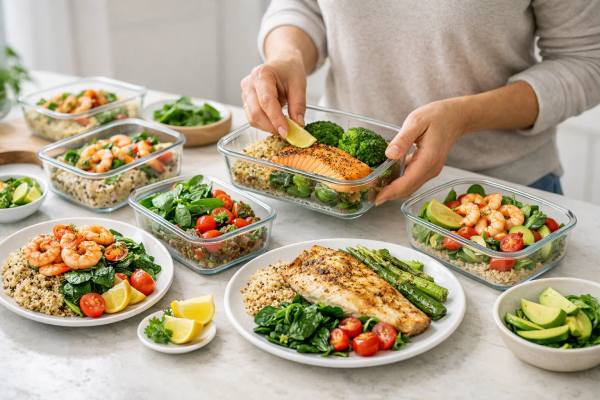
A pescatarian meal plan can be a strong fit for weight loss because it makes room for lean seafood, high-protein dairy, eggs, beans, whole grains, fruit, and plenty of vegetables without relying on red meat or processed diet foods. That combination can make a calorie deficit easier to stick with while still keeping meals satisfying.
The plan below gives you a full 7-day pescatarian menu for fat loss, along with portion guidance, a grocery list, meal-prep tips, and practical ways to adjust the week for your calorie needs. The focus is simple: enough protein, enough fiber, and enough flexibility that the plan still works on a busy schedule.
Table of Contents
- Why a pescatarian plan can work
- How to build a pescatarian weight loss day
- 7-day pescatarian meal plan
- Grocery list and meal prep
- Easy swaps and calorie adjustments
- Common mistakes and safety notes
Why a pescatarian plan can work
A pescatarian diet for weight loss is not automatically better than every other eating style, but it does have several practical advantages. Seafood gives you access to high-quality protein with relatively modest calories, especially when you use fish like cod, tuna, tilapia, shrimp, scallops, and salmon in sensible portions. At the same time, the broader pescatarian pattern naturally pulls in foods that tend to support fullness and better diet quality, including beans, lentils, oats, potatoes, Greek yogurt, fruit, and vegetables.
That matters because successful fat loss usually depends less on finding a “perfect” diet and more on building meals that help you stay in a consistent calorie deficit without feeling constantly hungry. A good pescatarian plan can do that well when it is built around:
- lean protein at each meal
- high-fiber carbohydrates instead of oversized refined-carb portions
- plenty of produce for volume
- moderate amounts of healthy fats rather than heavy pours of oil, cheese, or creamy sauces
Another reason this style works is variety. People often do better when a plan feels broad instead of restrictive. A pescatarian approach can include seafood, eggs, yogurt, cottage cheese, tofu, edamame, beans, lentils, and whole grains, so the week does not feel like the same chicken-and-rice plate over and over.
It also fits well with several other weight loss strategies. If you like Mediterranean-style eating, this plan overlaps naturally with a 7-day Mediterranean menu. If your main issue is hunger control, the best parts of pescatarian eating also line up with a high-protein, high-fiber approach.
Still, a pescatarian diet only works for fat loss when portions and calories make sense. Fish can be lean, but battered seafood, restaurant pasta dishes, creamy chowders, giant sushi rolls, and oil-heavy grain bowls can push calories up fast. The real advantage is not just “eating fish.” It is using seafood as one part of a structured, balanced routine that makes a deficit easier to maintain.
How to build a pescatarian weight loss day
Before getting into the 7-day menu, it helps to know what makes a pescatarian meal plan effective for weight loss in the first place. The simplest formula is protein first, plants second, starches in measured portions, and fats used intentionally instead of casually.
A strong pescatarian weight loss plate often looks like this:
- Protein anchor: fish, shrimp, canned tuna or salmon, Greek yogurt, cottage cheese, eggs, tofu, tempeh, edamame, or beans.
- High-volume produce: salad greens, broccoli, zucchini, peppers, tomatoes, cucumbers, green beans, cabbage slaw, mushrooms, berries, citrus, apples, and similar foods.
- Smart carbohydrate: oats, potatoes, brown rice, quinoa, beans, lentils, fruit, or whole-grain bread.
- Flavor and fat: olive oil, avocado, nuts, seeds, feta, pesto, tahini, or a yogurt-based sauce in controlled portions.
That structure is useful because many people drift into one of two extremes. Some build pescatarian meals that are too light, like a plain salad with very little protein. Others build meals that sound healthy but are quietly calorie-dense, like a grain bowl with salmon, avocado, nuts, dressing, and a large rice base. Both can make progress harder. The first leaves you hungry. The second can erase the deficit.
A more reliable target for many adults is to make each meal pull its weight. Breakfast should not just be “something small.” Lunch should not leave you scavenging for snacks an hour later. Dinner should feel satisfying enough that the night does not end with random grazing.
A practical way to think about the day is:
- breakfast with 20 to 30 grams of protein
- lunch with seafood or another solid protein source plus vegetables
- dinner built around fish or shellfish, produce, and a measured starch
- one or two snacks that add protein or fiber instead of only sugar and crunch
That is also why many pescatarian eaters do well with tools like a high-protein plate formula and a better sense of fiber targets per meal. They help you avoid turning a good food pattern into an underpowered or overly snacky one.
For this article, the daily menus land around a moderate weight loss range rather than an aggressive crash-diet intake. Exact calories vary by brand and portion size, but most days fall close to the kind of intake many people can realistically follow for longer than a few days.
7-day pescatarian meal plan
This 7-day pescatarian meal plan is built for simplicity. It uses overlapping ingredients, realistic portions, and meals that do not require advanced cooking skills. Calorie counts are approximate, not lab measurements.
| Day | Breakfast | Lunch | Dinner | Snacks |
|---|---|---|---|---|
| Day 1 | Greek yogurt bowl | Tuna wrap | Salmon, potatoes, broccoli | Apple and string cheese |
| Day 2 | Egg toast plate | Lentil soup and cottage cheese | Shrimp rice bowl | Berries and almonds |
| Day 3 | Protein oats | Salmon salad | Tofu stir-fry | Orange and yogurt |
| Day 4 | Smoothie | Chickpea tuna salad | Cod tacos | Popcorn and grapes |
| Day 5 | Cottage cheese toast | Egg and edamame grain bowl | Sheet-pan shrimp dinner | Kiwi and pistachios |
| Day 6 | Yogurt parfait | Sardine toast and soup | Salmon pasta bowl | Carrots and hummus |
| Day 7 | Veggie omelet | Mediterranean tuna plate | Miso-glazed cod with rice | Berry chia cup |
Day 1
- Breakfast: 1 cup nonfat Greek yogurt, 1/2 cup berries, 1/4 cup oats, and 1 tablespoon chia seeds
- Lunch: Whole-grain wrap with tuna mixed with Greek yogurt, celery, mustard, lettuce, and tomato
- Dinner: 4 to 5 ounces baked salmon, roasted baby potatoes, and broccoli
- Snack: 1 apple and 1 light string cheese
This day works well because it starts high in protein and ends with a filling dinner that still feels clean and simple.
Day 2
- Breakfast: 2 eggs, 1 slice whole-grain toast, sliced tomato, and fruit
- Lunch: Lentil soup with a side of low-fat cottage cheese and cucumber slices
- Dinner: Shrimp bowl with rice, black beans, cabbage slaw, salsa, and a small spoon of avocado
- Snack: Berries and a small portion of almonds
Day 2 leans heavily on fiber and volume. It is especially useful if you tend to get hungry in the afternoon.
Day 3
- Breakfast: Oatmeal with protein powder mixed in, cinnamon, and banana slices
- Lunch: Big salad with canned salmon, chickpeas, cucumbers, tomatoes, and light vinaigrette
- Dinner: Tofu stir-fry with mixed vegetables and brown rice
- Snack: Orange and plain Greek yogurt
This is a good example of a pescatarian day that does not rely only on seafood. You can keep variety without letting protein drop too low.
Day 4
- Breakfast: Protein smoothie with berries, spinach, unsweetened milk, and a scoop of protein powder
- Lunch: Tuna and chickpea salad over greens with red onion, cucumber, and lemon
- Dinner: Fish tacos with baked cod, cabbage slaw, salsa, and corn tortillas
- Snack: Air-popped popcorn and grapes
This day is fast and practical. It is a strong option for people who want one or two meals they can assemble rather than cook extensively.
Day 5
- Breakfast: Cottage cheese on whole-grain toast with sliced berries and cinnamon
- Lunch: Grain bowl with quinoa, edamame, chopped vegetables, and 2 hard-boiled eggs
- Dinner: Sheet-pan shrimp with zucchini, peppers, onions, and a side of roasted potatoes
- Snack: Kiwi and pistachios
Day 5 is a good reminder that seafood weight loss meals do not need to be fancy. One tray, one pan, and a few staples often work better than complicated recipes.
Day 6
- Breakfast: Greek yogurt parfait with berries and a small portion of granola
- Lunch: Sardines on toast with tomato and arugula plus a cup of vegetable soup
- Dinner: Salmon pasta bowl using a modest serving of whole-grain or legume-based pasta, spinach, and a light lemon yogurt sauce
- Snack: Carrots and hummus
This day gives you a slightly more robust dinner while keeping the rest of the day lighter. That can be a helpful structure if dinner is when you want the most satisfaction.
Day 7
- Breakfast: Vegetable omelet with mushrooms, spinach, and a little feta
- Lunch: Mediterranean tuna plate with greens, cucumber, cherry tomatoes, olives, and a small serving of quinoa
- Dinner: Miso-glazed cod with steamed rice and green beans
- Snack: Chia pudding or a chia yogurt cup with berries
The final day feels balanced rather than restrictive, which is exactly what you want from a meal plan you may want to repeat.
Across the week, the best results usually come from three habits:
- keep seafood portions consistent rather than oversized
- measure calorie-dense extras such as oils, nuts, pesto, and avocado
- repeat the meals you enjoy instead of forcing constant novelty
If you prefer even more structured meal repetition, a 30-day meal plan template can make it easier to rotate your best breakfasts, lunches, and dinners without starting from scratch every week.
Grocery list and meal prep
A good pescatarian meal plan becomes easier when your grocery cart matches the way you actually eat. The simplest version is to buy a few seafood options, two or three backup proteins, several vegetables you already like, and one or two starches you can portion easily.
Seafood and protein staples
- Salmon fillets
- Cod, tilapia, haddock, or another lean white fish
- Shrimp
- Canned tuna
- Canned salmon or sardines
- Eggs
- Greek yogurt
- Cottage cheese
- Tofu
- Edamame
- Protein powder, if you use it
Produce
- Spinach
- Mixed greens
- Broccoli
- Zucchini
- Bell peppers
- Onions
- Mushrooms
- Cabbage slaw
- Tomatoes
- Cucumbers
- Green beans
- Potatoes
- Berries
- Apples
- Bananas
- Oranges
- Kiwi
- Grapes
Carbs and pantry items
- Oats
- Brown rice or jasmine rice
- Quinoa
- Whole-grain bread or wraps
- Corn tortillas
- Beans and lentils
- Popcorn
- Hummus
- Chia seeds
- Nuts or pistachios
- Olive oil
- Mustard
- Salsa
- Light vinaigrette
- Low-sodium soy sauce or miso
- Herbs and spices
The best meal-prep strategy for this kind of week is usually not full recipe prep for every meal. It is component prep. Cook what saves time, but leave enough flexibility that the food still feels fresh.
A simple weekend prep flow:
- Roast a tray of potatoes and a tray of vegetables.
- Cook a batch of quinoa or rice.
- Hard-boil eggs for grab-and-go lunches.
- Wash greens and chop crunchy vegetables.
- Mix one easy sauce, such as lemon yogurt dressing.
- Portion snacks like nuts, popcorn, fruit, and hummus.
Seafood deserves a slightly different prep approach from chicken or turkey. Some fish tastes best freshly cooked, so you may want to prep everything around it and cook the seafood closer to the meal. Shrimp, cod, and salmon can still be weeknight-fast if vegetables and starches are already ready to go.
If cost is a concern, canned tuna, sardines, frozen shrimp, frozen fish fillets, eggs, and beans can make the week much more affordable. A smart backup list of healthy frozen staples also helps when fresh seafood is not practical, and budget meal-planning strategies matter even more when fish prices run high.
Easy swaps and calorie adjustments
One of the biggest reasons meal plans fail is rigidity. People assume they have to follow the week exactly, then one missed grocery item or restaurant meal knocks the whole plan off course. A better approach is to keep the structure and swap within it.
Here are easy substitutions that preserve the purpose of the meal:
- salmon instead of cod, or cod instead of shrimp
- tuna instead of salmon in salads or wraps
- Greek yogurt instead of cottage cheese, or the reverse
- tofu or edamame in place of seafood for one or two meals
- potatoes instead of rice, or rice instead of quinoa
- fruit swaps within similar calorie ranges
You can also scale the plan up or down depending on your size, activity, and rate of loss.
To lower calories slightly:
- reduce oil by 1 teaspoon where you do not miss it
- shrink starch portions before shrinking vegetables
- use yogurt-based sauces instead of mayo-heavy or cream-based sauces
- keep nuts and avocado as accents instead of large toppings
To increase calories moderately:
- add another half cup of rice, quinoa, or potatoes
- include an extra fruit serving
- add a second snack with protein
- increase seafood portions modestly if hunger is an issue
For many people, the real upgrade is not making the plan lower in calories. It is making it more sustainable. That might mean moving from a strict low-calorie week to something closer to a 1,400-calorie menu or using more macro-friendly meal ideas when training volume is higher.
If you eat out once or twice during the week, keep the same pattern: seafood or another lean protein, vegetables, one measured starch, and a sauce you control when possible. That mindset protects progress better than trying to find a perfect restaurant order.
Common mistakes and safety notes
The most common mistakes in a pescatarian weight loss plan are usually not about seafood itself. They come from calorie creep, poor meal structure, or unrealistic expectations.
Mistake 1: Assuming all seafood meals are automatically low-calorie
Grilled fish can fit a deficit very well. Fried fish baskets, creamy seafood pasta, takeout poke bowls with multiple sauces, and oversized sushi meals often do not. A healthy label does not cancel out portion size.
Mistake 2: Underestimating fats
Olive oil, nuts, seeds, avocado, pesto, tahini, aioli, and full-fat dressings are nutritious, but they are easy to overpour or over-scoop. Small measuring habits can make a big difference.
Mistake 3: Eating too little protein at breakfast and lunch
If the first half of the day is built around toast, fruit, coffee, and snacks, appetite often rebounds later. That is one reason many people do better with a stronger breakfast or one of several high-protein breakfast prep ideas.
Mistake 4: Forgetting fiber and volume
Seafood gives protein, but you still need vegetables, fruit, beans, lentils, oats, and potatoes to create meals that feel substantial. A useful list of high-volume vegetables can help if your meals still feel too small.
Mistake 5: Expecting dramatic fat loss in one week
A week is enough time to get organized, reduce bloating from chaotic eating, and start a deficit, but it is not enough time to judge your long-term potential. Some early scale change may reflect water and digestion shifts rather than pure fat loss.
On the safety side, vary your seafood choices instead of eating the same large predatory fish every day. People who are pregnant, trying to conceive, or breastfeeding should be especially careful about seafood selection and should follow medical guidance on fish choices and serving frequency. Also, if you have kidney disease, severe digestive issues, a history of disordered eating, or you take medication that changes appetite or blood sugar, it is wise to get individual guidance before changing your diet aggressively.
A good pescatarian meal plan should feel structured, filling, and manageable. If it leaves you exhausted, preoccupied with food, or stuck in repeated overeating after “good” days, the issue is usually not a lack of discipline. It is a plan that needs adjustment.
References
- Obesity Management in Adults: A Review 2023 (Review)
- Behavioral Lifestyle Interventions for Weight Loss in Adults with Overweight or Obesity: A Systematic Review, Meta-Analysis and Meta-Regression 2024 (Systematic Review)
- The role of dietary fibers in regulating appetite, an overview of mechanisms and weight consequences 2024 (Review)
- Fish Consumption: A Review of Its Effects on Metabolic and Hormonal Health 2021 (Review)
- Enhanced protein intake on maintaining muscle mass, strength, and physical function in adults with overweight or obesity: A systematic review and meta-analysis 2024 (Systematic Review and Meta-Analysis)
Disclaimer
This article is for general educational purposes only. A pescatarian meal plan for weight loss may need to be adjusted based on your calorie needs, health conditions, seafood tolerance, medications, and life stage. For personal nutrition advice, especially if you are pregnant, managing a medical condition, or have a history of disordered eating, talk with a doctor or registered dietitian.
If you found this article useful, please share it on Facebook, X, or your preferred platform.