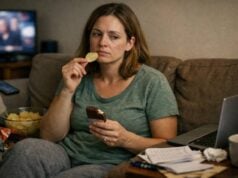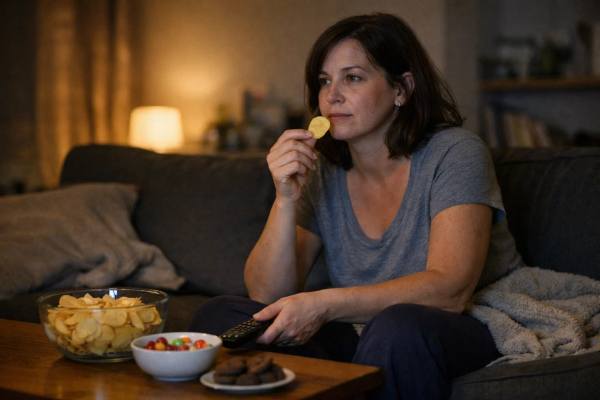
TV snacking at night usually is not about hunger alone. It is often a learned routine: you sit down, the show starts, your brain expects something crunchy, sweet, or salty, and the habit runs on autopilot. That is why simply telling yourself to “have more willpower” rarely works for long. To break the pattern, you need to understand what is driving it, change the setup before the snack urge kicks in, and build an evening routine that still feels satisfying.
This article explains why TV snacking is so sticky, how to tell the difference between true hunger and habit eating, what to do if you are actually hungry at night, and how to create a practical plan that supports weight loss without leaving you feeling deprived.
Table of Contents
- Why TV snacking becomes a nightly habit
- What is really driving the urge to snack
- Change the environment before you sit down
- Build a better evening routine
- What to do if you are truly hungry
- A simple plan to break the cycle
- When night snacking needs more support
Why TV snacking becomes a nightly habit
TV snacking feels harmless because each episode or snack seems small on its own. The problem is repetition. A few handfuls of chips, a bowl of cereal, ice cream straight from the carton, or “just a little something” during two hours on the couch can quietly become a nightly calorie source that does not make you much fuller and does not feel memorable enough to count in your mind.
The habit gets stronger because television lowers awareness. Your attention is split, your pacing slows, and your brain has fewer natural stopping points. Eating while distracted often makes it easier to miss fullness cues and easier to keep reaching back into the bag or bowl without deciding to do it. That is one reason the connection between screen time and appetite matters so much for weight control.
There is also a strong cue effect. Over time, the couch, remote, streaming app intro sound, and certain times of night become signals that predict food. This is classic habit learning. The cue appears, the routine follows, and the reward can be comfort, stimulation, relief, or simply completion of a familiar ritual. Once that loop is established, the urge can show up even when you just finished dinner. That is why understanding habit loops and eating behavior is more useful than blaming yourself for lacking discipline.
Nighttime adds extra vulnerability. After a long day, decision fatigue is high. You are more likely to want an easy reward and less likely to want friction. TV also tends to happen during the transition from “I have responsibilities” to “I am finally off.” Food can start to symbolize that switch. The snack is not only about taste. It becomes the marker that the day is done.
This matters for weight loss because recurring evening overeating can erase a calorie deficit without feeling like a major lapse. It can also reinforce the idea that the hardest part of the day is the end of it. The goal is not to make evenings rigid or joyless. It is to stop letting one automatic routine control how your day finishes.
What is really driving the urge to snack
Not every TV snack urge is the same. Some come from real hunger. Others come from stress, fatigue, boredom, habit, or the simple desire for a reward. If you treat all of them like a willpower problem, you will keep using the wrong fix.
A helpful question is: What feels unfinished right now? If the answer is “I have not eaten enough,” the solution is different than if the answer is “I am tired, restless, or emotionally drained.”
A few common patterns show up again and again:
| Pattern | What it usually feels like | Most helpful response |
|---|---|---|
| True hunger | Physical stomach hunger, low energy, eating sounds appealing even without TV | Have a planned, balanced snack and eat it intentionally |
| Habit hunger | Urge starts when the show starts, even after a filling dinner | Change the cue, seat, routine, or hand-to-mouth pattern |
| Stress eating | You want relief, numbness, or a reward more than food itself | Use a decompression routine before TV |
| Boredom or stimulation | You want something to do during slow scenes or long episodes | Keep hands busy, shorten screen time, or use a non-food ritual |
| Under-eating earlier | Evenings are always the hungriest part of the day | Improve breakfast, lunch, protein, fiber, or dinner structure |
| Sleep-related cravings | You feel exhausted and crave sugar or salty snacks late | Work on bedtime, sleep quality, and a calmer wind-down |
For many people, TV snacking at night is partly emotional. The food helps smooth over the transition from work stress, parenting stress, loneliness, or mental exhaustion. If that sounds familiar, advice for stress eating at night may fit better than generic diet tips.
Poor sleep and late nights also make the problem worse. When you are overtired, highly palatable foods become more tempting and “just one treat” becomes harder to regulate. If nighttime snacking is much worse after short sleep, irregular schedules, or staying up too late, the pattern may be strongly linked to sleep-related hunger and cravings rather than hunger alone.
The key is to stop asking only, “What snack should I allow?” and start asking, “What problem am I trying to solve with the snack?” That question gives you far more leverage.
Change the environment before you sit down
The easiest way to lose the nightly battle is to wait until you are already on the couch, tired, and negotiating with yourself. By that point, convenience usually wins. The best fixes happen earlier, when your brain is still a little more rational and the cue has not fully taken over.
Start with visibility and friction. If ultra-processed snack foods are the first thing you see when you open the pantry, evening restraint becomes harder than it needs to be. A simple food environment reset can make a real difference. Put trigger foods out of sight, buy smaller packages instead of family-size bags, and avoid keeping “just in case” snacks in the living room. The goal is not to make food forbidden. The goal is to stop making overeating effortless.
Next, separate eating from screen setup. Do not carry open packages to the couch. Do not eat from bags, boxes, or tubs. Do not make the coffee table your snack station. If you choose to have food, portion it first, sit at the table, finish it, and then move to the show. That single change breaks the link between endless scrolling or binge-watching and unconscious grazing.
It also helps to redesign the first five minutes of the evening. People often think the danger window is the whole show, but the strongest habit moment is usually the start. Once the snack is in hand, the rest follows. So create a competing routine before the show begins:
- Make tea or sparkling water
- Brush your teeth after dinner
- Dim the kitchen lights
- Put the snack cabinet “out of service” for the night
- Sit with a blanket, not a food bowl
- Charge your phone away from the couch if doomscrolling makes snacking worse
These are not magic tricks. They work because they reduce automaticity and make healthier choices easier. That same principle shows up in strategies for making healthy choices easier at home: the less effort the good choice takes, the more often it happens when you are tired.
One more useful rule is to make the living room a “closed kitchen” zone. That does not mean rigid perfection. It means no casual eating in the main TV spot unless it is planned. Structure removes the need for constant in-the-moment decisions, and that is often what night snacking needs most.
Build a better evening routine
Many people try to break TV snacking by focusing only on the snack. A better approach is to fix the evening itself. When the whole night feels chaotic, overstimulating, or reward-deprived, food becomes the fastest relief.
Start by looking at the hour before you usually snack. What happens there? Do you work late, skip dinner structure, rush through cleanup, collapse on the couch, and then reach for food because you never really shifted gears? If so, the snack is part of a transition problem.
A stronger evening routine often includes three phases:
- Closure: a short action that tells your brain the workday is over
- Recovery: something that lowers stress without food
- Wind-down: habits that make sleep more likely and grazing less likely
Closure can be simple: tidy the kitchen, write tomorrow’s top three tasks, take a shower, change into comfortable clothes, or do a five-minute reset of the living room. Recovery might be stretching, walking, journaling, light chores, a crossword, or simply talking to your partner without a screen in front of you. Wind-down is where a solid bedtime routine for weight loss becomes valuable, especially if your snacking stretches because bedtime keeps drifting later.
This matters because the longer you stay up, the more chances you create to eat for reasons that are not physical hunger. Late-night TV often becomes late-night snacking partly because fatigue lowers restraint and because sleep gets pushed back by “just one more episode.” That same cycle is why a practical sleep hygiene checklist can help with appetite control as much as with sleep quality.
Try replacing “TV and snack” with “TV after routine.” That routine does not need to be long. Even 10 to 15 minutes can change the tone of the night:
- Clear the kitchen and close it mentally
- Put tomorrow’s lunch or breakfast in place
- Make a non-caloric drink
- Do a quick walk or gentle mobility work
- Lower overhead lights
- Decide in advance whether you are eating again tonight
The final step is important. Pre-deciding beats debating. If you already know, “Dinner is done, and if I am hungry later I have one planned option,” the night feels less vague and less likely to slide into random eating. Good routines reduce the number of choices you need to make when your self-control is lowest.
What to do if you are truly hungry
Not every night snack is a bad habit. Sometimes you really are hungry. The mistake is assuming that the only two options are white-knuckling it or eating whatever is easiest in front of the TV.
If you are physically hungry, the best move is to respond on purpose. That means eating a planned snack, in a normal portion, without turning it into a free-for-all because “the day is already ruined.” Hunger is information. It may be telling you that dinner was too light, your protein or fiber intake was too low, lunch was rushed, or you are trying to force too aggressive a deficit.
A good night snack usually does three things:
- Takes the edge off hunger
- Includes some protein, fiber, or both
- Is portioned before you eat it
Examples include Greek yogurt, cottage cheese with fruit, a small apple with peanut butter, high-protein pudding, a boiled egg with crackers, or a measured bowl of cereal with extra protein on the side. A resource like a late-night snack guide can help if you want specific options that are more satisfying than random grazing.
What matters most is how you eat it. Sit down. Put it on a plate or in a bowl. Pause long enough to notice whether it solves the hunger. Then decide whether TV still needs to be paired with food. Usually it does not.
If you are not sure whether you are hungry, do a quick test: would a simple balanced snack sound good, or do you only want chips, cookies, popcorn, or ice cream while watching a show? If a basic snack sounds unappealing, that is often a clue that the urge is more about reward or habit than hunger. In that case, a non-food coping option or a delay strategy may work better than eating.
It is also worth looking upstream. Repeated nighttime hunger often points to earlier problems in the day. Dinner may be too light. You may need more staying power from meals, better planning, or more protein and fiber. In some cases, keeping a small list from a craving toolkit built around protein and fiber is enough to prevent the nightly scramble.
The goal is not to ban eating after dinner. It is to stop mixing true hunger with automatic TV snacking in a way that makes both harder to understand.
A simple plan to break the cycle
Trying to “just stop” usually fails because the old routine is specific and the replacement plan is vague. A better approach is to create a script you can follow every night for two weeks. That is long enough to expose patterns and short enough to feel manageable.
Use this simple sequence:
- Decide your evening cutoff rule.
Example: after dinner, I do not eat in front of the TV. If I am truly hungry later, I have one planned snack at the table. - Pick one replacement ritual.
Tea, flavored water, brushing your teeth, knitting, stretching, or a five-minute walk all work better than “nothing.” The replacement should make evenings feel better, not just more restricted. - Use an if-then plan.
Example: if I want a snack when the show starts, then I wait 10 minutes and make tea first.
Example: if I still feel physically hungry after 10 minutes, then I eat my planned snack at the table.
This type of scripting is why if-then planning for cravings works so well for repetitive triggers. - Make the urge visible.
Keep a small note on your phone: time, trigger, hunger level, and what you did. You do not need a full food diary. You just need enough information to see whether stress, boredom, certain shows, sleep loss, or under-eating earlier are the main drivers. - Practice eating without the screen at least once per day.
The point is to rebuild awareness. Even a few minutes of more deliberate eating can help if you tend to drift into automatic hand-to-mouth behavior at night. - Measure progress by repetition, not perfection.
You do not need 14 perfect nights. You need more interrupted cycles than usual.
A few practical guardrails help:
- Keep episodes shorter on weekdays if late nights trigger overeating
- Avoid saving all your calories for the evening
- Do not over-restrict after a snacky night
- Get back to your routine the next evening instead of “starting Monday”
Most people break TV snacking faster when the goal is “change the pattern” rather than “never eat at night again.” Consistency matters more than drama. A boring, repeatable plan usually beats an intense one.
When night snacking needs more support
Sometimes TV snacking is mostly a habit. Sometimes it is a sign that something bigger is going on. That does not mean you should panic, but it does mean the solution may need to go beyond snack rules and pantry changes.
Pay closer attention if you notice any of these patterns:
- You often feel unable to stop once you start eating at night
- You regularly eat large amounts while feeling out of control
- You wake from sleep to eat
- You hide food, feel ashamed, or feel panicked without the snack routine
- Evening eating is tied to anxiety, depression, or a very stressful life period
- The urge is much worse after poor sleep, alcohol, or long stretches of restriction
- Reflux, diabetes management, certain medications, or a very late schedule are part of the picture
In those cases, the issue may overlap with binge-eating patterns, night eating syndrome, mood-related eating, or sleep disruption. Self-help strategies can still help, but they may not be enough on their own. A registered dietitian, therapist, or clinician can help you sort out whether the main driver is under-fueling, emotional regulation, a sleep issue, medication effects, or an eating disorder pattern.
This matters for weight loss because repeated night eating is often treated as a character flaw when it is really a signal. The right response depends on the cause. Someone who is chronically under-eating all day needs a different plan than someone whose main issue is emotional decompression, and both need a different plan than someone who is waking to eat from sleep.
There is also no prize for handling everything alone. If you have tried multiple times to stop TV snacking and the habit keeps returning, that does not mean you are lazy or weak. It usually means the routine serves a function that has not been replaced yet, or the problem is larger than the food itself.
The good news is that nightly snacking patterns are changeable. They respond well to structure, better sleep, better meal timing, less all-or-nothing thinking, and more intentional evening routines. What matters is matching the strategy to the real problem instead of fighting the symptom on repeat.
References
- Watching Television While Eating Increases Food Intake: A Systematic Review and Meta-Analysis of Experimental Studies 2025 (Systematic Review and Meta-Analysis)
- Examining the evidence between screen time and night eating behaviour with dietary intake related to metabolic syndrome: A narrative review 2024 (Review)
- A Narrative Review on Sleep and Eating Behavior 2025 (Review)
- Meal Timing and Anthropometric and Metabolic Outcomes: A Systematic Review and Meta-Analysis 2024 (Systematic Review and Meta-Analysis)
- Sleep Deprivation: Effects on Weight Loss and Weight Loss Maintenance 2022 (Review)
Disclaimer
This article is for general educational purposes only and is not a substitute for medical advice, diagnosis, or treatment. If nighttime eating feels compulsive, you wake to eat, or your snacking is tied to sleep problems, mood symptoms, reflux, diabetes, or medication changes, speak with a qualified healthcare professional.
If this article helped you, please share it on Facebook, X, or your preferred platform so others can break the TV snacking habit with a more practical plan.