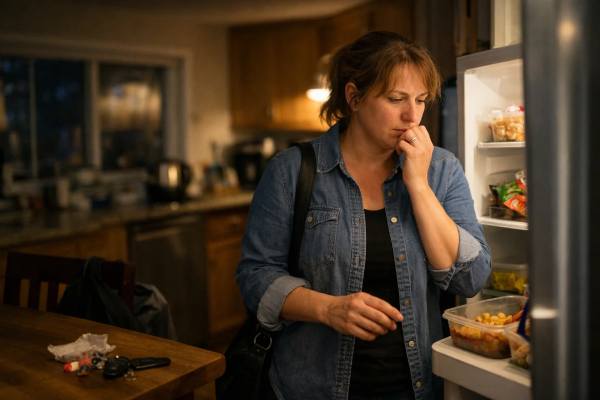
Getting home and suddenly wanting everything in the kitchen is a common pattern, especially after a demanding day. In many cases, after-work overeating is not just about hunger. It is a mix of stress, mental fatigue, habit, and easy access to rewarding food right when your guard is down. That is why willpower alone usually does not fix it.
The good news is that this habit is highly changeable. Once you understand why the after-work window feels so vulnerable, you can make a few targeted changes that lower cravings, reduce overeating, and make evenings feel calmer instead of harder. This article explains what drives stress eating after work, how to tell it from real hunger, and what to do before, during, and after the urge hits.
Table of Contents
- Why After Work Feels So Triggering
- Stress Eating Is Not the Same as Hunger
- What Makes Evening Overeating More Likely
- Build a Short Transition Before You Eat
- Make Dinner and Snacks Easier to Manage
- What to Do When the Urge Hits
- When to Get Extra Support
Why After Work Feels So Triggering
After-work stress eating often looks irrational from the outside. You may have planned to eat a normal dinner, yet the moment work ends, you start reaching for chips, sweets, takeout, or repeated handfuls of food while standing in the kitchen. That pattern makes more sense when you view it as an end-of-day vulnerability window.
By the time work is over, several things may be hitting you at once:
- physical hunger from a long gap since lunch
- mental fatigue from constant decisions and self-control
- emotional tension from pressure, conflict, boredom, or overwhelm
- a learned routine that links “I am finally home” with “I deserve a reward”
This is why after-work eating is rarely just about food. It is often a fast way to shift your state. Food can create relief, distraction, comfort, stimulation, or a sense of transition from work mode to personal time. If you regularly eat to soften the edge of the day, your brain starts to expect that reward on cue.
That cue is usually not subtle. It may be the commute home, shutting your laptop, walking through the front door, seeing the pantry, or changing clothes. Over time, the habit loop becomes automatic: cue, craving, eating, temporary relief. That is the same basic pattern behind many repetitive behaviors, not just overeating. If you want a deeper explanation of how those loops work, habit loops around eating behavior help explain why this can feel automatic even when you genuinely want to stop.
Another reason evenings are risky is that your decision-making is not at full strength. A stressful day can leave you mentally drained, which makes convenience and instant comfort more persuasive. That is one reason decision fatigue and overeating often show up together. The issue is not a lack of discipline. It is that your brain is less interested in long-term goals when immediate relief is available.
This also explains why people can do “well” all day and then feel out of control at night. Holding yourself tightly together for hours can create a rebound effect later. If your workday requires constant restraint, politeness, focus, and pressure management, evening eating may become the release valve.
The most useful mindset shift is this: after-work overeating is usually a system problem, not a character flaw. You do not fix it by judging yourself harder. You fix it by reducing the strain, interrupting the cue, and making the first hour after work easier to navigate.
Stress Eating Is Not the Same as Hunger
One reason this habit is hard to break is that stress eating can feel physical. You may think, “I must be hungry,” even when what you really need is food plus relief, or relief instead of food. Learning the difference matters, because the right response depends on what is actually driving the urge.
Real hunger tends to build gradually. It usually feels steady rather than frantic. Stress eating is more likely to feel sudden, emotionally loaded, and tied to a specific mood or moment. It often comes with a desire for a certain kind of food rather than food in general.
| Sign | More likely physical hunger | More likely stress eating |
|---|---|---|
| How it starts | Gradual, noticeable over time | Sudden, often right after a stressor or transition |
| What you want | Many foods sound acceptable | Specific comfort foods sound urgent |
| Body signals | Stomach emptiness, low energy, light hunger cues | Tension, restlessness, irritability, mental craving |
| Eating speed | Can slow down once you begin | Often fast, distracted, or hard to stop |
| After eating | You feel satisfied and more settled | You may still want more or feel guilty, numb, or unsatisfied |
Of course, the two can overlap. Many people come home both genuinely hungry and emotionally frayed. In that case, the answer is not to deny food. It is to respond more deliberately.
A helpful question is not “Am I hungry or emotional?” but “What is the main thing I need right now?” Your answer might be:
- a real meal
- a quick balanced snack before dinner
- quiet and decompression
- movement after sitting all day
- comfort, distraction, or a way to mark the end of work
This distinction also helps prevent an unhelpful all-or-nothing response. People often label any non-perfect eating as “emotional eating,” then feel they failed. But eating when stressed is not automatically a problem. The problem is when food becomes the main or only coping tool, especially when it regularly leads to overeating and regret. That is why it helps to understand how this pattern overlaps with emotional eating after a hard day but can still be handled with practical habit changes, not shame.
Try a simple 30-second check before you eat after work:
- When did I last have a balanced meal or snack?
- Does a normal dinner sound good, or only highly rewarding food?
- What emotion is strongest right now: stress, anger, exhaustion, boredom, loneliness, or relief?
- What would help me feel better in the next 10 minutes besides eating?
That quick pause does not need to be perfect. Its purpose is to slow the automatic sequence. Even naming the urge correctly can lower its intensity. If you discover that what feels like stress eating is often boredom or emptiness instead, the difference between boredom and stress eating can make your next step much clearer.
What Makes Evening Overeating More Likely
Not every stressful workday turns into overeating. Usually, several risk factors pile up and make the urge stronger. When you know your own pattern, you can stop treating overeating as random and start preventing it earlier.
One of the biggest drivers is under-fueling earlier in the day. Skipping breakfast, eating a tiny lunch, relying on coffee, or going too long without protein and fiber makes evening cravings much more intense. In that state, your body is not just seeking comfort. It is trying to catch up. That is one reason meal timing habits for better appetite control can matter more than people think.
Common after-work overeating triggers include:
- long gaps between meals
- a lunch that was too light to hold you
- low protein intake during the day
- poor sleep the night before
- alcohol before or with dinner
- coming home to an unplanned food environment
- eating dinner while distracted by screens
- using food as the first signal that the workday is over
Sleep deserves special attention. A short or poor night often makes evening coping harder. When you are tired, stress feels sharper, patience drops, and high-reward food becomes harder to resist. If this pattern gets worse after bad sleep, that is not your imagination. why poor sleep makes you hungrier is directly relevant to evening cravings.
There is also the “I earned this” story. After a difficult day, food can feel like compensation. This is especially common among people who are highly responsible and often depleted. The internal dialogue may sound like this:
- I dealt with so much today.
- I have nothing left.
- This is the only enjoyable part of my evening.
- I will start over tomorrow.
That story matters because it turns eating into a reward for endurance. Once that link is strong, stress itself becomes a trigger for permission. You are no longer just hungry. You are seeking relief, reward, and a feeling of being taken care of.
Your environment can quietly make all of this worse. If the first foods you see are snack foods, sweets, leftovers, or takeout menus, you will need more effort to stay on plan at the exact time effort is lowest. On the other hand, if your first visible option is a prepared dinner, a protein-forward snack, fruit, or a simple meal formula, the same stressful day may end very differently.
It is also important to notice whether the overeating starts before dinner or after dinner. Some people arrive home ravenous and eat while preparing food. Others eat dinner normally, then keep grazing because the real issue is emotional decompression. Those are different patterns and need slightly different solutions.
The key point is that after-work overeating usually becomes predictable before it becomes preventable. Keep track for one week. Note your last meal, stress level, sleep, commute, and what happened in the first hour home. Patterns appear quickly when you stop looking only at the moment you overate and start looking at the hours that set it up.
Build a Short Transition Before You Eat
One of the most effective ways to break this habit is to stop going straight from work stress to food. What many people need is not stricter control. They need a transition.
The purpose of a transition ritual is simple: create a small buffer between the cue and the eating response. That buffer helps your nervous system downshift and gives you a chance to choose instead of react.
This does not need to be elaborate. A useful after-work transition often takes 5 to 15 minutes. What matters is consistency. You want your brain to learn a new sequence: work ends, I reset, then I decide what to eat.
A strong transition routine often includes three parts:
- A clear end-of-work signal. Shut the laptop, change clothes, wash your hands, or put your work bag away in the same spot every day.
- A fast regulation step. Take a short walk, breathe slowly for two minutes, stretch, shower, or sit quietly without your phone.
- A planned food decision. Eat the dinner you already chose, or have a specific bridge snack if dinner is still 30 to 60 minutes away.
This works better than vague promises like “I will try to be good tonight.” Specific plans win because they reduce decision-making in the vulnerable moment. That is where if-then planning for cravings becomes especially useful. For example:
- If I walk in feeling frantic, then I will drink water, change clothes, and wait five minutes before opening the pantry.
- If I am truly hungry but dinner is not ready, then I will have Greek yogurt, fruit, and a handful of nuts.
- If I want to stress-eat after a hard meeting, then I will take a 10-minute walk before deciding.
Movement works especially well here because it changes your state without requiring much mental effort. A short walk can reduce tension, break the work-to-kitchen autopilot pattern, and make the first food decision easier. Even a few minutes of walking for stress relief and appetite control can be more effective than trying to argue with the urge while standing in front of the pantry.
A few practical transition ideas:
- change out of work clothes immediately
- light a candle or put on different music to mark the shift
- do a two-minute breathing drill before entering the kitchen
- sit down with tea for five minutes
- unload your bag and prep tomorrow first
- take a short walk around the block
- eat a planned mini-meal before starting dinner if you are genuinely hungry
The transition ritual should feel supportive, not punishing. It is not a delay tactic meant to “test” your discipline. It is a tool to reduce reactivity. If you still decide to eat after the ritual, that is fine. The goal is not to avoid food at all costs. The goal is to eat from a steadier place.
One more important detail: build the ritual around your actual life. If you get home with kids, your version will be shorter and noisier. If you commute late, it may be a pre-planned snack in the car plus a calmer dinner at home. A good routine is not the most impressive one. It is the one you will repeat.
Make Dinner and Snacks Easier to Manage
Once you have a better transition, the next step is to make evening food choices less chaotic. This is where many people fail by accident. They try to stop overeating without changing the setup that makes overeating easy.
Start with dinner. If you regularly come home stressed and hungry, dinner should not require too many decisions. Build a small rotation of easy meals that are satisfying and repeatable. The best options are usually high in protein, include fiber, and take little effort to assemble. Think simple, not perfect.
A practical dinner formula looks like this:
- a clear protein source
- a high-volume vegetable or fruit
- a starch or carb that makes the meal satisfying
- enough fat and flavor that you do not feel deprived
This matters because under-satisfying dinners often backfire. A salad that leaves you prowling for snacks 30 minutes later does not solve the problem. A balanced meal is far more protective than a “light” dinner that turns into repeated grazing.
It also helps to decide in advance whether you need a bridge snack. If there is a long gap between work ending and dinner, pre-plan something that steadies you without opening the floodgates. Good examples include:
- Greek yogurt and fruit
- cottage cheese and berries
- apple slices with peanut butter
- a protein shake with fruit
- edamame or roasted chickpeas
- eggs and toast
If you want ideas that are easy to keep around, a small craving toolkit with protein and fiber options can save the first hour after work.
Your kitchen setup matters just as much as your meal plan. Use the environment to reduce friction for the choice you want and increase friction for the choice you do not.
Helpful changes include:
- put ready-to-eat whole foods at eye level
- move highly snackable foods out of immediate view
- portion foods into bowls instead of eating from packages
- keep one default freezer or pantry meal for hard days
- avoid cooking dinner when extremely hungry without a bridge snack
- decide before dinner whether you want dessert, instead of negotiating with yourself later
This is where a broader food environment reset can make a real difference. The goal is not to ban every treat. It is to stop relying on exhausted, stressed decision-making in the exact environment that makes overeating easy.
Another smart move is to create a kitchen-closing habit. Once dinner and any planned dessert are done, give the eating part of the evening a clear endpoint. That might mean cleaning up, putting food away, brushing your teeth, making tea, or dimming the kitchen lights. This signals completion. Without a clear ending, many people drift into “still eating” mode for hours.
Finally, plan for the hardest days, not the ideal ones. You do not need a strategy only for calm Wednesdays. You need one for the day you are angry, tired, late, and tempted to order everything. Keep the easiest good-enough option visible and available. Consistency gets built from those nights.
What to Do When the Urge Hits
Even with a better routine, the urge will still hit sometimes. That does not mean the habit is not changing. It means you are in the normal middle of the process. What matters most is what you do next.
The most useful response is not white-knuckling. It is skillful interruption.
Start with this: do not argue with the urge like it should not be there. That usually increases tension. Instead, name it plainly: “I want to stress-eat right now.” This sounds simple, but it creates a small amount of distance between you and the behavior.
Then work through a short sequence:
- Pause for one minute. Not forever. Just enough to stop the automatic reach.
- Check the basics. When did you last eat? Are you physically hungry, emotionally overloaded, or both?
- Match the response to the need. If you are hungry, eat something balanced. If you are wound up, regulate first.
- Choose the smallest effective action. Do not make the situation bigger than it is.
A few in-the-moment tools work especially well:
Breathe and lower the surge
A strong craving often feels urgent, but urgency rises and falls. Slow breathing for even one or two minutes can take the edge off enough to let you choose. This is one reason breathing exercises for stress eating can be useful in real life, not just in theory.
Eat a real snack instead of foraging
If you are genuinely hungry, do not wander through the kitchen grabbing random food. Make one clear choice and plate it. A protein-and-fiber snack or a normal dinner works much better than a grazing spiral that leaves you feeling unsatisfied.
Change your state, not just your thoughts
When the urge is emotional, a state shift often works better than self-talk. Try:
- stepping outside for five minutes
- taking a hot shower
- changing clothes
- texting someone
- doing a short cleanup task
- putting on music and moving around the room
These actions are not distractions in a dismissive sense. They are alternative ways to regulate. If food has become your main soothing tool, learning how to self-soothe without food is one of the most important long-term skills.
Use planned permission instead of rebellion
Sometimes the urge grows because you feel trapped between “be perfect” and “give up.” A better option is planned permission. You can say, “I am going to eat dinner, then if I still want dessert, I can have one portion sitting down.” This lowers the rebellion effect that comes from rigid rules.
Do not let one slip become the whole evening
If you already overate, stop the second mistake: turning it into a hopeless night. One episode does not require more eating, punishment, or starting over Monday. The quickest reset is usually very ordinary:
- put the food away
- drink water if you want it
- return to your evening
- eat normally at the next meal
This is critical. Many people keep overeating less because of the first bite and more because of the “I already blew it” reaction afterward.
A useful question in the moment is: “What would help Future Me most in the next 15 minutes?” Usually the answer is not perfection. It is one stabilizing decision. That may be a meal, a pause, a walk, a shower, or simply sitting down to eat on purpose instead of continuing the autopilot loop.
When to Get Extra Support
After-work stress eating is common, and many people can improve it with better meal structure, stronger transition routines, and a more supportive environment. But sometimes the pattern is a sign that you need more than self-help strategies.
Consider getting extra support if:
- the episodes feel frequent, intense, or hard to interrupt
- you often eat past comfort and feel numb or out of control
- the behavior is causing significant distress, secrecy, or shame
- stress eating happens alongside depression, anxiety, or burnout
- you are swinging between restriction and overeating
- sleep problems, medication changes, or major life stress are making things worse
A registered dietitian can help you untangle real hunger, under-eating, and meal structure. A therapist can help with the emotional regulation side, especially if food has become your main coping tool for stress, loneliness, anger, or exhaustion. If the eating feels compulsive or resembles binges, it is worth learning more about when this overlaps with binge eating disorder and weight loss rather than assuming it is just a bad habit.
Support is also useful when the bigger issue is chronic stress rather than food itself. In that case, working on stress management habits that lower cravings may reduce the pressure that keeps the pattern alive.
You do not need to wait until things feel severe. If evenings regularly feel like a battle, getting help early can shorten the cycle and make progress much easier.
References
- Stress and eating behaviours in healthy adults: a systematic review and meta-analysis 2022 (Systematic Review and Meta-Analysis)
- ‘Mindful eating’ for reducing emotional eating in patients with overweight or obesity in Primary Care settings: A randomized controlled trial 2023 (RCT)
- Are Emotional Eating and Other Eating Behaviors the Missing Link in the Relationship between Inadequate Sleep and Obesity? A Systematic Review 2023 (Systematic Review)
- Emotional Eating Interventions for Adults Living with Overweight or Obesity: A Systematic Review and Meta-Analysis 2023 (Systematic Review and Meta-Analysis)
- Overweight and obesity management 2025 (Guideline)
Disclaimer
This article is for general educational purposes only and is not a substitute for medical, mental health, or nutrition advice, diagnosis, or treatment. If after-work overeating feels compulsive, causes significant distress, or happens alongside low mood, anxiety, major sleep problems, or medication changes, speak with a qualified healthcare professional.
If you found this article helpful, please share it on Facebook, X, or any other platform you use most.