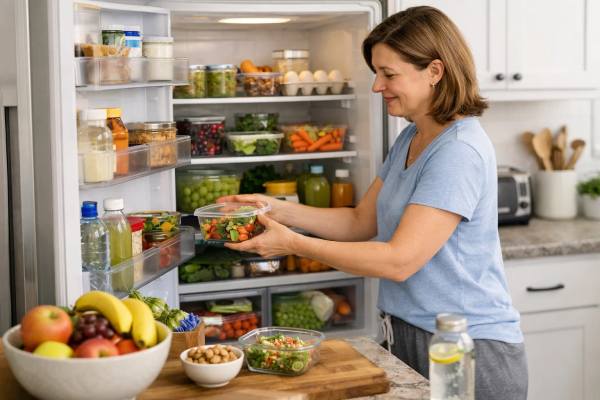
Weight loss gets harder when your home keeps asking you to make the hard choice over and over. If the easiest option is takeout, grazing, oversized portions, or late-night snacking, motivation has to work far too hard. The better strategy is to change the setup so healthy choices require less thought, less effort, and less restraint.
That does not mean turning your home into a strict, joyless food zone. It means designing your kitchen, routines, and visual cues so the choices that support your goals become more automatic. This article explains how to make healthy eating easier at home by reducing friction, reshaping your food environment, planning for weak moments, and building simple defaults that work on busy days.
Table of Contents
- Why your home setup matters so much
- Use friction and convenience to your advantage
- Reset your kitchen for better defaults
- Make meals and snacks easy before you need them
- Build home routines that reduce overeating
- Plan for evenings, weekends, and other danger zones
- A simple seven-day home reset
Why your home setup matters so much
Most people think healthy eating at home is mainly about knowledge. In practice, it is often about environment. You can know exactly what to eat and still end up making choices that do not match your goals if your home keeps pushing you in the wrong direction.
Home is where repetition happens. It is where you open the fridge after work, reach into the pantry during stress, snack while cooking, eat in front of screens, and decide what counts as “easy” when you are tired. Those repeated moments matter more than one perfect grocery trip or one ambitious meal-prep session.
A useful way to think about this is that your home silently votes for certain behaviors. It can vote for grazing or for structure. It can vote for cooking or for ordering in. It can vote for fruit, yogurt, and leftovers, or for cookies, chips, and whatever is visible first. The environment does not completely control you, but it changes how much effort each choice takes.
That is why people often do much better when they stop asking, “How can I be more disciplined?” and start asking, “How can I make the helpful choice easier and the unhelpful choice less automatic?”
A few common examples:
- If cut fruit is visible and cookies are hidden, fruit gets chosen more often.
- If your freezer has quick protein and vegetables, takeout becomes less necessary.
- If your dinner plates are always overloaded before they reach the table, portion control feels harder.
- If you walk into the house and head straight into the kitchen without a plan, snacking becomes the default.
This is also why broad “eat less, move more” advice often falls short. It ignores context. People do not make food decisions in a vacuum. They make them while distracted, tired, stressed, late, hungry, and surrounded by cues. A smarter approach is to reshape those cues.
If you want a bigger picture look at how your space influences choices, food environment reset connects well with this topic. And if your goal is to stop relying on willpower in the moment, pre-commitment strategies for weight loss are one of the most useful mindset shifts.
The core idea is simple: healthy choices become easier when your home lowers the cost of doing the right thing. That cost might be time, effort, mess, planning, or decision fatigue. Reduce those costs, and better habits stop feeling like constant resistance.
Use friction and convenience to your advantage
One of the most effective behavior tools at home is friction. Friction means anything that makes a behavior slightly harder to do. Convenience means anything that makes it easier. Small differences matter a lot because most daily eating decisions are not deep moral choices. They are quick reactions to what is fastest, easiest, and closest.
When you use friction and convenience well, you stop depending so much on self-control.
Make helpful choices easier
This usually means:
- keeping filling foods at eye level
- washing and prepping produce soon after shopping
- storing quick meal ingredients together
- having a few default breakfasts, lunches, and dinners
- keeping water visible and easy to grab
- portioning snacks before you are hungry
Make less helpful choices less automatic
This does not have to mean banning foods. It can simply mean:
- moving highly tempting foods out of immediate sight
- not storing them in large open bags on the counter
- buying smaller packages when certain foods are hard to moderate
- freezing extras instead of leaving them ready to eat
- avoiding browsing food apps when you are tired and hungry
| Situation | High-friction healthy choice | Low-friction healthy choice |
|---|---|---|
| After-work hunger | Need to cook from scratch with no plan | Protein, vegetables, and a quick starch already available |
| Snack craving | Fruit unwashed in the bottom drawer | Ready-to-eat fruit visible at eye level |
| Late-night eating | Open snack foods on the counter | Kitchen closed routine and pre-portioned options |
| Busy morning | No breakfast ingredients ready | Simple grab-and-go meal already planned |
| Ordering takeout | No dinner backup at home | Frozen and pantry staples for a fast meal |
This approach works because it respects how people actually behave at home. When you are calm and motivated, almost any system seems fine. When you are tired, overwhelmed, or emotionally depleted, the path of least resistance wins.
That is also why healthy choices should not require your best self every time. A good home setup helps your average self on ordinary days. It is built for real evenings, not ideal ones.
One useful principle is this: make the first step ridiculously easy. If cooking a full meal feels like too much, prep one thing. If eating fruit feels inconvenient, cut it ahead of time. If portion control feels hard, plate the food before sitting down rather than eating from containers. If you struggle with impulse choices, create them earlier with implementation intentions for weight loss so you are not deciding from scratch every evening.
Friction is not punishment. It is structure. The goal is not to make life harder. It is to stop the least helpful behaviors from staying effortless.
Reset your kitchen for better defaults
If you want to make healthy choices easier at home for weight loss, the kitchen is the biggest leverage point. You do not need a full makeover. You need better defaults.
A useful kitchen reset starts with one question: What do I usually choose when I am hungry and not thinking clearly?
Then you shape the space around that reality.
Start with what is visible
People eat what they see and reach first more often than they realize. Visibility is not everything, but it matters.
Good uses of visibility:
- fruit bowl on the counter
- water bottle or pitcher in plain sight
- protein-rich and high-fiber foods at eye level in the fridge
- leftovers stored in clear containers
- washed vegetables easy to grab
Less helpful foods do not need to disappear forever, but they should not dominate the most obvious spots. The most tempting items are usually best kept less visible, less central, or harder to open mindlessly.
Organize by decision speed
A smart fridge or pantry is not just neat. It is organized around real-life use.
Try grouping foods by purpose:
- quick breakfasts
- packable lunches
- easy dinner building blocks
- planned snacks
- meal rescue foods for busy nights
This reduces the mental load of “What can I even make?” which is often what leads people to graze or order food.
Keep the right staples in the house
Healthy eating gets easier when your home contains foods that are both helpful and realistic. That often includes:
- proteins you actually like
- vegetables that fit your cooking style
- fruit that keeps well
- convenient frozen options
- whole-grain or higher-fiber staples
- sauces and seasonings that make simple meals taste good
For many people, better shopping is the real beginning of better eating at home. If that is your weak point, grocery shopping habits for weight loss and a solid high-protein grocery list are often more useful than another motivational reset.
Do not let “healthy” mean inconvenient
One of the biggest mistakes in home setup is buying healthy foods that are tedious to use. If every supportive option requires chopping, cooking, assembling, and cleanup, it will lose to easier alternatives. That is not a character flaw. It is predictable.
That is why convenience foods can absolutely belong in a weight-loss-friendly kitchen. Prewashed greens, frozen vegetables, microwave rice, rotisserie chicken, high-protein yogurt, canned beans, and frozen protein sources can all make home eating much easier.
Your kitchen should help you build a decent meal quickly, especially on days when motivation is low. The more often your home offers a fast, satisfying, reasonable option, the less often you will feel trapped between perfection and takeout.
Make meals and snacks easy before you need them
Healthy choices rarely feel easy when you wait until you are already hungry, rushed, and mentally tired. That is why the best time to make eating easier is before the decision point arrives.
You do not need a huge Sunday prep marathon unless you enjoy that. What you need is enough preparation to reduce evening chaos and random snacking.
Create a short list of default meals
Most people do better with repeatable meals than with constant variety. Aim for a small set of home meals that are:
- fast
- filling
- easy to shop for
- hard to overcomplicate
- appealing enough to repeat
A good default dinner formula is:
- one protein
- one high-volume vegetable
- one satisfying carb or starch
- one flavor booster such as sauce, herbs, salsa, or seasoning
That simple structure makes it easier to eat well without turning dinner into a creative project every night. If you need ideas that fit busy evenings, 15-minute meals for weight loss and easy dinners for weight loss fit well with this approach.
Prep ingredients, not just full meals
Some people like full meal prep. Others get bored fast. A flexible middle ground often works better. Prep a few components instead:
- cooked protein
- chopped vegetables
- washed fruit
- rice, potatoes, or another easy starch
- a ready-to-use sauce or seasoning mix
That gives you options without making every meal feel pre-decided.
Make snacks intentional, not accidental
A home setup that supports weight loss usually includes snacks, but in a more deliberate form. The problem is not snacking itself. The problem is uncontrolled, low-satiety grazing.
Better snack setup often means:
- pairing protein with fiber when possible
- putting snacks into bowls or portions instead of eating from large packs
- keeping one or two satisfying go-to options ready
- avoiding a pantry full of foods that are easy to start and hard to stop
A planned snack might be yogurt and berries, apple and peanut butter, cottage cheese and fruit, or one of several smart snacks for weight loss. The exact food matters less than the principle: make the supportive snack as easy to reach as the impulsive one.
Another important point is that meals and snacks should feel like relief, not punishment. If your home food setup is technically healthy but emotionally unsatisfying, it will not last. Better choices need to be tasty enough, convenient enough, and filling enough to compete with the foods that currently win.
Healthy eating at home becomes much easier when your future hungry self has already been taken into account.
Build home routines that reduce overeating
Food choices at home are not shaped only by what is in the kitchen. They are also shaped by what happens before eating starts. Small routines can reduce overeating because they make your evenings less chaotic and your eating less reactive.
A routine is powerful because it removes repeated negotiation. Instead of deciding from scratch every day, you create a sequence that carries you toward a better choice.
Use anchor habits
Anchor habits are actions tied to an existing moment. For example:
- when I get home, I drink water before opening the fridge
- after I put my bag down, I change clothes before going into the kitchen
- after dinner, I make tea instead of wandering for dessert automatically
- when I start cooking, I plate a vegetable first
This works especially well because the cue is already built into your day. You are not trying to remember a new habit out of nowhere. You are attaching it to something that already happens.
That is one reason habit stacking for weight loss is so useful at home. It turns vague intentions into repeatable sequences.
Create a pause between stress and food
Many overeating episodes at home happen because there is no transition between the stress of the day and the food environment. You get home, feel the emotional drop, and eat before you have even registered what is happening.
A short buffer can change that. It might be:
- five minutes outside
- a shower
- putting on home clothes
- unloading your bag first
- playing one song before entering the kitchen
- sitting down for two minutes without your phone
This buffer is not wasted time. It helps you stop treating food as your first decompression tool.
Eat from a place, not from the environment
One simple routine that helps more than people expect is deciding where eating happens. When food is eaten while standing at the counter, scrolling, cooking, watching television, or picking at leftovers, portions become harder to notice.
Try making meals and most snacks happen in one defined place. That often improves awareness without requiring calorie counting or strict rules.
Use routine to reduce “decision leakage”
Decision leakage is what happens when lots of tiny unplanned choices add up. A bite while cooking, a handful from the pantry, a taste while cleaning up, an extra snack because dinner was late. None seems dramatic, but together they change intake and make eating feel out of control.
Routine reduces that leak. It gives meals a shape, reduces random foraging, and makes home eating more deliberate. If your daily structure is loose, meal planning habits for weight loss can make healthy choices easier without making life feel overly rigid.
The goal is not perfection. It is creating a home rhythm that makes overeating less automatic.
Plan for evenings, weekends, and other danger zones
Most people do not struggle equally at all times of day. They struggle in predictable windows. At home, the biggest trouble spots are often evenings, weekends, and emotionally depleted moments.
That is why a good home strategy is not just about general healthy eating. It is about identifying the moments when your environment needs to help you most.
Evenings
Evenings are hard because hunger, fatigue, stress, and reward-seeking often all show up together. If your usual pattern is dinner followed by grazing, dessert drift, or television snacking, you need a specific evening plan.
Helpful evening changes include:
- deciding what happens after dinner
- putting away leftovers promptly
- closing the kitchen in a consistent way
- having a planned dessert or snack instead of an open-ended free-for-all
- separating relaxation from eating when possible
If nighttime is your main struggle, night routine to prevent overeating and stop late-night snacking are especially relevant.
Weekends
Weekends often break structure. Wake times shift, meals get delayed, takeout becomes more frequent, and social eating increases. The problem is not that weekends are “bad.” It is that your weekday systems disappear.
A better weekend setup usually means preserving a few anchors:
- a roughly similar breakfast or first meal
- a grocery refresh before the house runs out of useful food
- one or two default home meals
- a plan for restaurants, social events, or treats
- a clear boundary around all-day grazing
This is why weekend routines that support weight loss often matter more than trying to “make up” for weekends later.
Stress and boredom moments
Some home choices are not about hunger at all. They are about wanting relief, stimulation, or a reward. These moments need a different fix. Food may still play a role, but it should not be the only tool available.
That can mean:
- a five-minute walk
- tea or sparkling water
- music
- a shower
- a simple task that changes state, like folding laundry or tidying one room
- a planned treat instead of impulsive grazing
The broader point is that danger zones should be planned for in advance. You do not need a perfect answer for every scenario. You need a small, realistic response ready before the moment arrives.
The more predictable your weak points become, the less power they have.
A simple seven-day home reset
If your home currently makes healthy choices harder, do not try to fix everything in one afternoon. A gradual reset usually lasts longer because you can see what actually helps.
Here is a simple seven-day approach.
Day 1: Clear visual clutter
Remove open snack foods, sweets, and random grazing items from counters. Put one supportive item in view instead, such as fruit or a water pitcher.
Day 2: Rebuild your grocery baseline
Buy a small set of foods that make decent meals easy:
- protein
- produce
- one or two easy starches
- planned snacks
- freezer backups
Day 3: Set up one fast breakfast and one fast lunch
Do not aim for variety first. Aim for reliability.
Day 4: Prep a few components
Wash produce, cook protein, portion snacks, and store leftovers clearly.
Day 5: Create an after-work routine
Decide what happens in the first 10 minutes after you get home so eating is not the automatic first step.
Day 6: Fix your hardest evening trigger
Choose one:
- television snacking
- dessert drift
- pantry grazing
- takeout impulse
- eating while cooking
Make one targeted change.
Day 7: Review what became easier
Ask:
- What healthy choice felt more automatic?
- What still felt annoying or unrealistic?
- What one change would make next week easier?
This final step matters because a home system should be judged by usefulness, not by how impressive it looks. If something is too fragile to survive a stressful week, simplify it.
Many people also benefit from tracking the system instead of tracking every calorie. That might mean checking off habits such as “fruit visible,” “protein prepped,” “kitchen closed after dinner,” or “packed lunch ready.” If that approach fits you better, tracking without counting calories and weight loss habits for busy people offer the right mindset.
The best home setup is not the strictest one. It is the one that quietly helps you repeat better choices often enough that they stop feeling like a fight.
References
- Overweight and obesity management 2025 (Guideline)
- Food environment and obesity: a systematic review and meta-analysis 2024 (Systematic Review and Meta-Analysis)
- Nudges and choice architecture to promote healthy food purchases in adults: A systematized review 2023 (Systematized Review)
- Self-Monitoring of Weight as a Weight Loss Strategy: A Systematic Review 2024 (Systematic Review)
- Dietary and Behavioral Strategies for Weight Loss and Weight Loss Maintenance: A Narrative Review 2025 (Review)
Disclaimer
This article is for general educational purposes only and is not a substitute for medical, nutrition, or behavioral health advice. If you have an eating disorder, binge eating symptoms, major appetite changes, or a medical condition affecting weight or food intake, get personalized guidance from a qualified clinician.
If this article helped you, please share it on Facebook, X, or your preferred platform so others can make healthy choices easier at home too.